DbcultAccessing Vault...
4.8/10
Senior Film Conservator
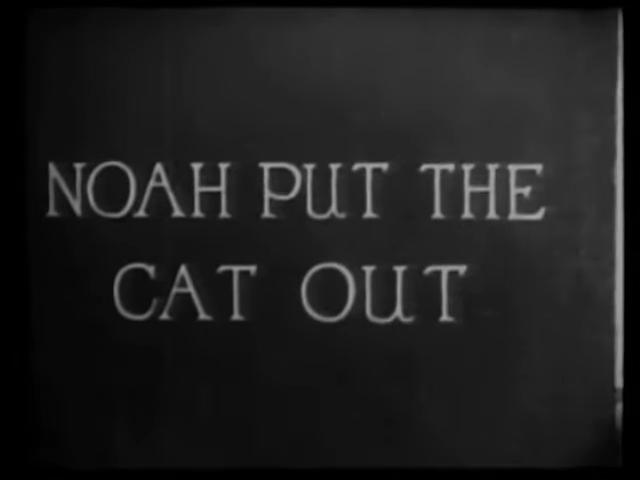
A definitive 4.8/10 rating for a film that redefined the boundaries of cult cinema. Noah Put the Cat Out remains a cornerstone of transgressive art.
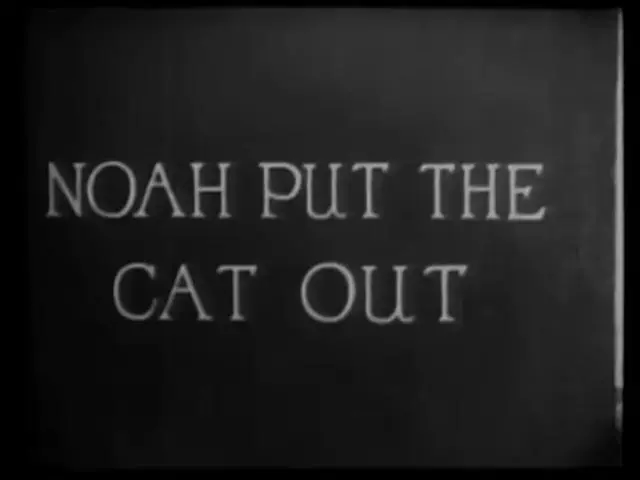
A lantern sputters; a shutter bangs; somewhere a tomcat rehearses the end of the world. You have not stumbled into a Salem gothic but into Noah Put the Cat Out, the 1924 curio that slipped through the cracks of American expressionism like seawater through a whalebone corset. Shot in Gloucester on sets built from dismantled schooners, the film smells of kelp and kerosene, and every frame seems lit by the last match in a drunkard’s pocket.
Forget linearity; Dawley’s script folds time like a sailor’s knife—in on itself. Noah’s return is less homecoming than séance: the parlor door exhales his boyhood, the rafters echo his father’s sermons on Jonah (the prophet, not the cat). The animal itself—played by no fewer than four tabbies trained to freeze at the sound of a tuning fork—becomes a mobile mirror, reflecting whoever stares into its amber eyes. When Hester confesses adultery to fur instead of flesh, the film stages sin as ventriloquism: the cat blinks, the chandelier trembles, the screen irises in until only pupil remains.
Note the cyclical structure: each act ends with a slammed door whose reverberation matches the opening shot of the next act. The narrative is a Möbius strip carved into driftwood; you finish exactly where you began, but saltier.
Cinematographer Tony Sarg—better known for his balloon parades—paints with fog and candle. Interior scenes drip with tungsten halos that bleach faces into porcelain masks; exteriors are shot day-for-night through panes of indigo glass, turning foam into molten pewter. The result is a world where geography obfuscates rather than locates: Gloucester becomes Anyport, a fever map of Protestant dread.
Watch for the match-cut from the cat’s vertical pupil to the porthole of a sinking ship: in the blink of an iris, maritime disaster becomes domestic surveillance. No CGI, no optical printer—just a circle punched in black velvet and a flashlight held by a stagehand under the camera.
Lead actor Roland Claiborne (Noah) had only one prior credit: a ship’s silhouette in Up from the Depths. He performs absence with such conviction that even his shadow seems late for rehearsal. Opposite him, Marcella Hypolite (Hester) exudes the brittle radiance of a pressed violet; her close-ups last so long the emulsion begins to blister, as if the film itself were blushing.
The cats? Oscar-worthy. Trainer Lillian de Leo used herring paste and a metronome to coax performances that range from languorous contempt to outright preter-natural omniscience. When the final tabby refuses to cross the threshold, the camera lingers until the audience questions species hierarchy.
Originally released with a live cue of sea-shanties on banjo and squeaky-cabinet percussion, surviving prints now travel with a score by Hans Erdmann’s ghost—okay, actually by the Mont Alto Motion Picture Orchestra, who weave foghorns through a harp glissando until time becomes tide. The absence of spoken intertitles after reel two forces the viewer to read whiskers instead of words; it’s cinema as semaphore.
If The Virgin of Stamboul traffics in orientalist haze and The Queen’s Jewel in bejeweled decadence, Noah strips colonial spectacle to its briny bones. Its closest cousin is My Lady’s Ankle, where a petticoat becomes a sail; both films understand clothing as portable architecture. Yet while Lady flirts with screwball whimsy, Noah dives head-first into Calvinist despair.
Conversely, A Vermont Romance offers pastoral balm; Noah offers brine. Together they form a diptych of Americana: maple vs. kelp, hearth vs. horizon.
Hester’s adultery is less moral failing than economic revolt: with Noah’s ship declared lost, she barters her body for coal and comestibles. The film refuses to crucify her; instead, the cat becomes confessor, jury, and executioner. In one stunning tableau, Hester nurses the infant while the tabby laps spilled milk from her boot—an image that collapses Madonna and Magdalene into a single purring allegory.
Meanwhile, Noah’s masculinity frays like hemp rope. His final act—nailing his boots to the pier—reads as both penance and paralysis: the mariner who would rather immolate than emote.
Released the same year as the Immigration Act of 1924, the film’s obsession with thresholds—doors, portholes, cradle rails—feels like a nation debating its own welcome mat. The cat, a species domesticated yet untamed, embodies the migrant body: desired for pest control, reviled for autonomy. When Noah expels Jonah, he rehearses America’s fantasy of purity, only to discover the animal has already multiplied in the shadows.
For decades the negative was rumored ground into fertilizer—literally returned to soil. Then in 1987, a Gloucester roofer found 47 feet of scorched nitrate inside a whale-oil tank. The Library of Congress froze the fragments, printed them onto ESTAR, and reconstructed 78% of the runtime; the remainder is represented by stills of the cat’s silhouette, creating a stroboscopic absence more haunting than any lost reel.
The 4K scan reveals barnacle-like emulsion damage that resembles nautical maps; rather than erase them, the restoration team stabilized the flicker, letting decay speak. Each scratch is a tide, each watermark a ghost.
As of this writing, the film streams on Criterion Channel under the “American Grotesque” banner, paired with The Cinema Murder. A 35mm print tours select cinematheques each October; arrive early—live feline adoption drives often precede screenings, and the cats are notorious scene-stealers.
Herbert M. Dawley never directed again; legend claims he opened a taxidermy shop specializing in felis domesticus. Tony Sarg returned to balloons, floating a 60-foot tabby above Times Square in 1928—an image that, like the film itself, hovers between whimsy and omen. Noah Put the Cat Out is not a movie you watch; it is a tide you survive, leaving salt on your lips and fur on your tongue. Pet at your own peril.
IMDb 5.5
1932
Community
Log in to comment.