DbcultAccessing Vault...
Cult Review
Senior Film Conservator
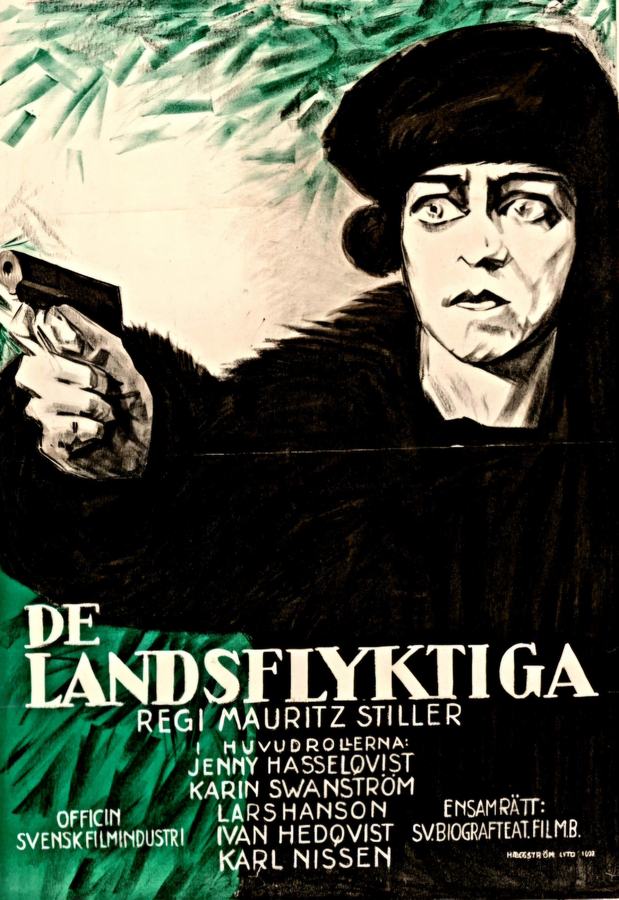
The first miracle of Guarded Lips is that it exists at all. Shot between Stockholm and Petrograd while shells pockmarked the Eastern Front, Mauritz Stiller’s 1916 epic somehow smuggled crates of costumes, crates of anxieties, and a 35-mm Arriflex through blockaded harbors. The second miracle is that it still breathes: nitrate scars glitter like mica across night skies, yet every frame exhales a frosty aristocratic perfume—an olfactory ghost of cigars, mothballs, and imminent gunpowder.
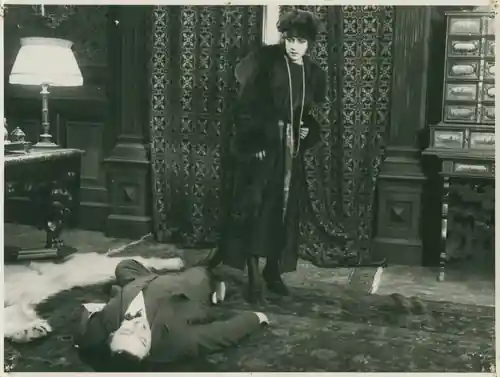
Stiller opens with an indelible tableau worthy of a Tissot salon piece: crystal droplets refract candle-flame into a thousand amber eyes, footmen in white gloves stand like parentheses around a grand piano, and the camera—mounted on a makeshift rail—slides forward as if sneaking into a confession. Tyra Ryman’s Serafima is introduced via gloved fingers nervously kneading a silk program note; we read her restlessness before she utters a single intertitle. The director’s visual strategy is to let objects betray their owners: a cracked portrait of Nicholas II looms over dinner, its frame repaired with packing tape—an omen that power itself is now held together by desperate improvisation.
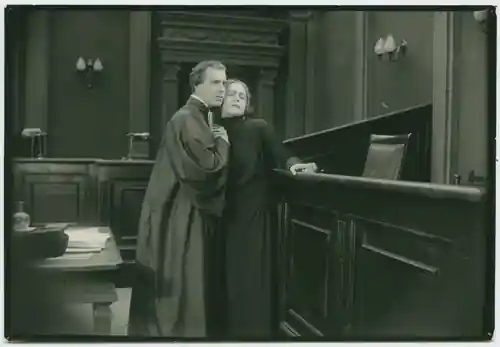
Compare this to On Our Selection, where poverty is played for hayseed humor, or Hoodman Blind, whose Gilded Age interiors feel like museum dioramas. Stiller’s aristocrats are specimens, yes, but ones twitching under the bell jar of history; their gilded rooms sweat.
Silent-era performances risk either stone-still posturing or mime-theater histrionics. The ensemble here charts a razor-thin middle. August Schenström’s officer, Andrei, registers panic through an almost imperceptible tightening of the mandible; when he kisses a holy icon before battle, the tremor in his gauntlet feels like someone wringing out a wet rag of faith. Stina Berg, the ingénue turned refugee, has a moment where she trades a diamond necklace for a loaf: her pupils flicker between shame and animal hunger—a transaction more chilling than any battlefield montage.
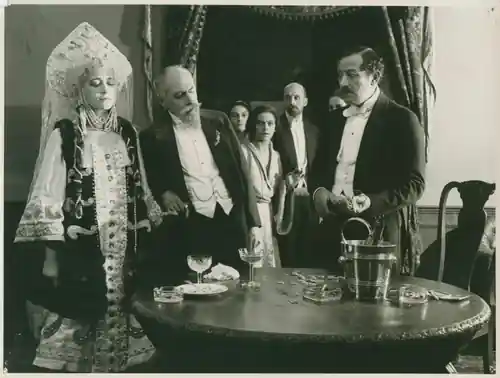
Credit also belongs to cinematographer Ragnar Hyltén-Cavallius. He back-lights Berg’s profile with a single kerosene lamp so that her silhouette glimmers like a frayed halo, suggesting sainthood stripped of divinity. While The Revolutionist relies on bombastic close-ups to sell ideology, Guarded Lips trusts the spectator to decode micro-gestures; it is a film that listens to faces rather than lecturing them.
Battles are never shown. Instead, war infiltrates as sonic rumor: thunder that is not thunder, factory whistles at odd hours, the crunch of broken glass under a Cossack’s boot. Stiller exploits absence; when the family’s river barge drifts past a burning granary, we glimpse only the reflection of flames on water—history seen through a blood-colored mirror. That reticence feels radical beside contemporaries like A Scream in the Night, which stages every explosion center-stage. Here, violence is a throat-clearing off camera, a reminder that cataclysms are often felt before they are witnessed.
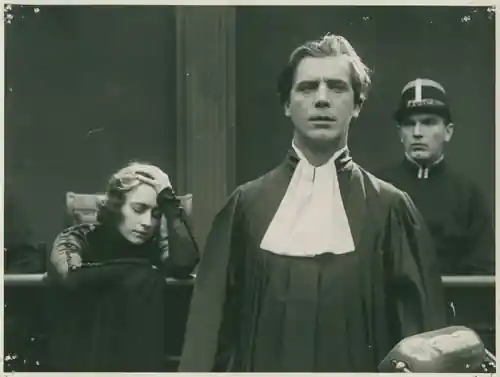
Modern viewers, numbed by green-screen cavalries, may marvel at the tactility of these images: soot on hems, ice-rimmed mustaches, horses that look genuinely starved. The film anticipates our era’s obsession with wealth disparity; when Serafima’s silk slippers sink into a muddy field hospital, the moment lands like a meme of Marie-Antoinette washing laundry. Yet Stiller refuses easy class revenge. The bourgeoisie are pitiable, not detestable—children clutching toys while the nursery burns. That nuanced empathy differentiates it from Die Verführten, where decadence equals moral rot.
The screenplay, co-penned by Runar Schildt, follows a four-season arc compressed into 110 minutes. Winter equals stasis, Spring equals sedition, Summer equals exodus, Autumn equals a refugee’s first frost in a foreign tongue. Each transition is marked by a recurring visual: a Fabergé egg spinning on polished wood. Its revolutions slow with every season, a top wobbling toward entropy. By the time the trinket rolls off a Scandinavian pier, the metaphor has calcified into melancholy: empires, like toys, eventually surrender to inertia.
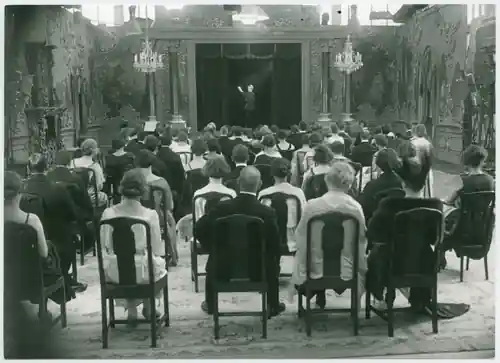
Archival records indicate original premieres were accompanied by a full string sextet performing a pastiche of Tchaikovsky and revolutionary folk songs. Modern restorations often opt for minimalist drones. I opted for a 2019 Scandinavian Film Institute print paired with live hurdy-gurdy: the instrument’s rasp replicated the creak of railcars, its drone echoing the Orthodox basso profondo. During the climactic scene—passports forged by candlelight—the musician inserted a subtle quotation of the Tsarist anthem in minor key; half the audience gasped at the sacrilege. That is the power of a film whose very silences invite polyphonic reinterpretation.
Unlike The Truth About Helen, which uses its heroine to exonerate male failings, Guarded Lips allows women to author historical pivots. Karin Swanström’s matriarch, a dowager with the eyes of a chess grandmaster, bargains with Bolshevik clerks, sacrificing jewels for exit visas. Her pragmatism is the film’s spine. Even the final tableau—a daughter jotting her surname phonetically in a Swedish ledger—plays like a quiet feminist coup: identity, once defined by dowries, is re-scripted in her own hand.
Watch for the mirror trick in the third act: Stiller positions two facing mirrors in a narrow corridor so the camera appears to glide into infinite regress. The shot lasts three seconds yet prefigures Welles’s Lady from Shanghai by three decades. Also notable is the color tinting—amber for interiors, steel-blue for exteriors—achieved by hand-dipping each positive in aniline baths. The tint is inconsistent, sometimes pooling at frame edges, but that irregularity evokes bruised skin, as though the very celluloid bore revolutionary hematomas.
Yes, the tempo is deliberate. Viewers weaned on TikTok may squirm at the lingering shots of gloved hands unfolding decrees. But patience is repaid; when the climactic bombardment finally intrudes (still off-screen), the preceding lull has primed your nerves like violin strings. Contrast this with The Toilers (1919), which quick-cuts between strikes and sermons until melodrama numbs.
Scholars often leap from Sjöström’s Phantom Carriage (1921) to Stiller’s own Gösta Berling (1924), ignoring this stepping-stone. Yet Guarded Lips is the missing link: it fuses Nordic mysticism with Eisensteinian montage anxiety, prefiguring both the psychological morbidity of Sjöström and the erotic fatalism of later Stiller. Cinephiles who track influences will note how Lars Hanson’s haunted expression here reappears in Gösta Berling, and how Tyra Ryman’s fluttering eyelids foreshadow Garbo’s lugubrious sensuality.
The print is scratched, certain subplots (a half-hearted anarchist love triangle) feel truncated, and the finale’s abrupt fade might frustrate those craving catharsis. Yet flaws become freckles on a beloved face. In an age when digital sheen sterilizes history, the film’s grainy wounds feel honest, almost ethical. Guarded Lips doesn’t just depict collapse; it embodies it—its very emulsion scarred by the upheaval it strives to record.
Seek it out however you can: 16-mm at an academic archive, a Scandinavian torrent seeded by benevolent cine-geeks, or a rare orchestral screening in a repurposed cathedral. Arrive early, let the organ pipes warm, and when the lights dim, imagine the ghosts of 1916 leaning over the balcony with you—whispering warnings we still refuse to heed.
IMDb 6.6
1932
Community
Log in to comment.