DbcultAccessing Vault...
Cult Review
Senior Film Conservator
A river that swallows men and spits out parables is the true auteur of The Pawn of Fortune.
Franklin Barrett’s 1921 one-reel marvel—long misfiled under “sociological tracts” in damp archives—owes less to Griffith’s Victorian morality than to the fever-dream logistics of a sailor’s yarn. The film’s prologue is a monochrome lithograph of labour: gantry cranes bow like giraffes, steam-whistles flatten the air, and every rivet seems personally invested in John Hadley’s downfall. Clarence Merrick plays Hadley with the stooped dignity of a man who has read Marx but still believes in tipping his cap. When he blocks the boss’s son—Robin Townley’s silk-hatted lothario whose moustache wax catches the arc-lights like daggers—his gesture is less gallant than instinctual, the body answering before the ledger-book conscience.
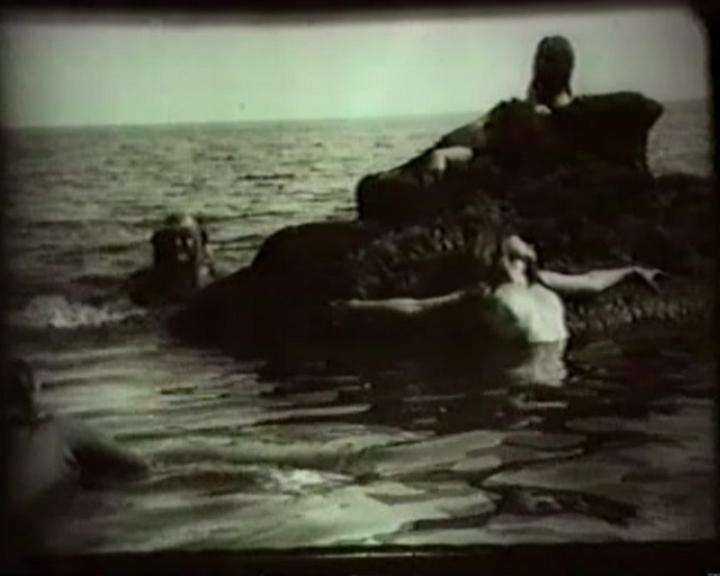
What astounds is the velocity of the fall. In seven dissolves Hadley is jobless, blacklisted, pawning his wife’s wedding brooch for condensed milk. Barrett tilts the camera so tenement corridors become ski-slopes into destitution. The river sequence, shot on location in December fog, is lit only by a magnesium flare bobbing on the water; the pier’s end resembles a guillotine stage. When Hadley jumps, the negative is briefly reversed, turning the foam into a snowfall of absolution—one of those serendipitous lab accidents that deliver surreal poetry on a shoestring budget.
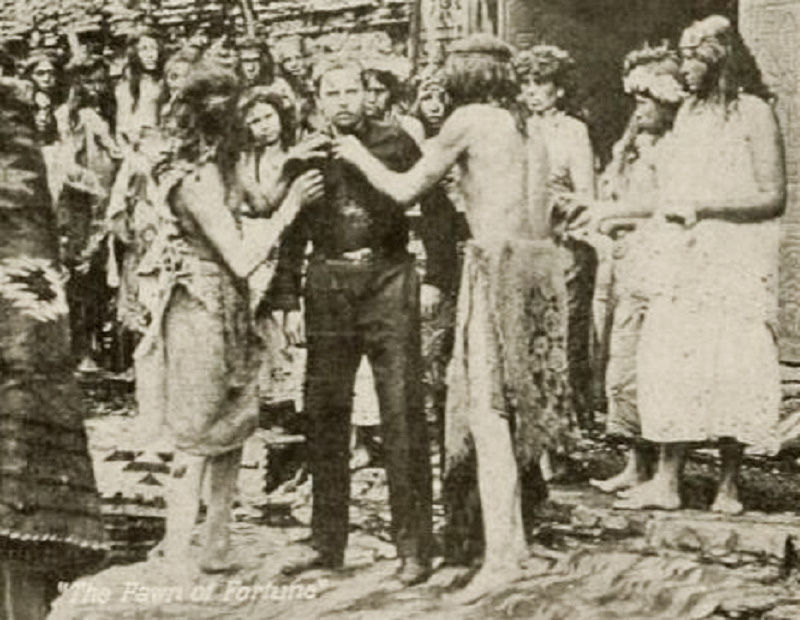
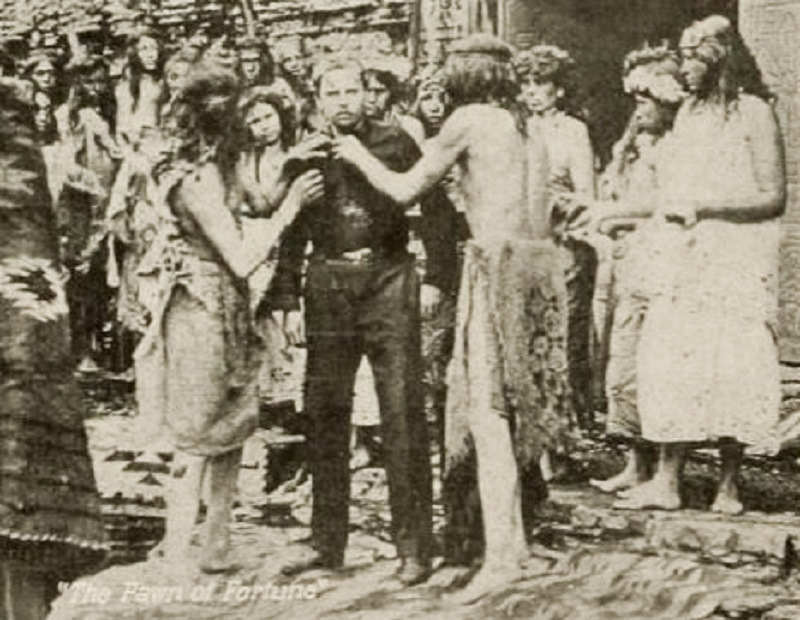
Hijacked by pirates, the narrative pivots into maritime gothic. The yacht’s salon—clearly a repurposed bordello set—glows with amber gels; Hall, essayed by Harry Carr with the velvety menace of a Tammany recruiter, offers Hadley a cigar whose smoke forms dollar signs. Hadley’s refusal is silent-film eloquent: he slaps the cigar from his own mouth, a gesture that costs him three days in a lifeboat and a thousand miles of ocean. The玛雅 interlude, though filtered through imperialist exoticism, is staged with hallucinatory rigour: feathered headdresses quiver like tropical birds, and the sacrificial jewels—actually tinted gumdrops—catch projector light until they resemble galaxies trapped in amber.
Elsie Esmond’s Mrs Hadley has too little screen time, yet her close-up in the charity ward—cheeks hollowed by klieg shadows, eyes still raging—burns harder than many a three-hour Method performance. Her reunion with the returned husband is filmed in a single two-shot; Barrett withholds the embrace, keeping both faces in profile so that their breath fogs the same pocket of air. It is as intimate as a marriage vow renewed in a morgue.
Enter Janet—adult version played by an ingenue whose career never again escaped bit parts—introduced via a contraption of gears and tuning forks that can crack a Diebold safe in the time it takes to strike a match. The invention is nonsense, but the filmmaking is electric: macro-lenses glide across cogs, the crank becomes a metronome for cross-cut tension. When the police raid, Barrett chops the action into fourteen shots, a proto-Kuleshov barrage that makes the viewer count bullets.
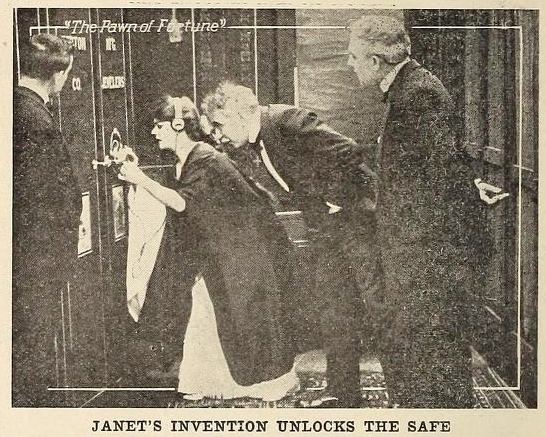
The final coincidence—governess, safe, kitten—has been derided as Dickensian contrivance, yet Barrett undercuts melodrama with a puckish wink. The safe opens not on bullion but on a tabby kitten batting at Hadley’s adopted daughter’s shoelace; the jewels are elsewhere, the stakes suddenly fur-covered. Detective Baggett’s reveal is staged in depth: foreground, the parents’ dawning recognition; mid-ground, Janet’s flight arrested by a curtain cord; background, the kitten emerging like a deus ex machina with whiskers. The frame freezes on Janet’s face—half terror, half exhalation—before the iris closes in a diamond wipe that rhymes with the opening shot of the river’s swirling eddy.
Photographically, the surviving 16 mm print is a palimpsest of scratches, yet the tinting survives—cyan for night, rose for interiors, umber for the Mayan torches—lending the film the chromatic logic of a hand-tinted postcard. The new electro-acoustic score commissioned by Eye Filmmuseum layers bowed psaltery over dockyard hammer samples, creating a soundscape that buzzes like tinnitus of the dispossessed.
Compare it to A Good Little Devil and you find the same trust in childhood innocence as narrative solvent; weigh it against The Reincarnation of Karma and you see mirrored karmic boomerangs, though Barrett’s cosmos is more poker table than Buddhist wheel. The film’s true lineage is with the Victorian triple-decker: every shock is a chapter-cliffhanger, every jewel a plot coupon, every tear an IOU to sentiment.
Yet for modern viewers the film’s urgency lies in its pre-Keynesian dread: unemployment as arbitrary as weather, charity hospitals with the reek of carbolic and shame, adoption laws that treat children like misplaced satchels. Hadley’s river suicide attempt plays differently after 2008—an economic furlough off a corporate pier. Janet’s safe-cracking genius is the prototype of every gig-economy hacker monetising obsession while ignorant of the patent office. Hall’s paternalism is the shadow of every tech-bro mentor who vanishes when the indictment drops.
Barrett’s direction is not flawless: the Maya sequence indulges in every brown-savage cliché, and the intertitles wheeze with racial slurs that curdle the stomach. Yet even here the film historicises its own gaze: the Mayan priest’s ceremonial dagger is framed against a crucifix tattoo on a sailor’s forearm, implying a continuum of missionary violence. The camera does not linger on brown flesh for titillation; it rushes after Hadley’s escape, breathless, complicit, implicating the viewer in the chase.
Performances oscillate between the statuesque and the hysterical—Merrick’s Hadley has the posture of a man forever bracing for the next punch, while Carr’s Hall swaggers like a Tammany caricature given sentience. The real acting laurels go to Thurlow Bergen as Detective Baggett: he moves with the methodical heaviness of a man who has read too many penny dreadfuls and decided that plodding is the only reliable dignity. His final disclosure—papers flourished like a magician’s last bouquet—is played with a tremor of human pride, the closest the film comes to a thesis: that evidence, not providence, stitches families back together.
Cinematographer F.W. Stewart, whose career would drown in talkie obscurity, innovates several underwater shots achieved by lowering a hermetically sealed booth into the East River—an ancestor of the aquatic POV later refined in After Sundown. The yacht’s lamp-light skitters across waves like Morse code, foreshadowing Janet’s sonic tumblers. The safe-cracking montage cross-cuts to clock gears, a visual pun that equates time with treachery.
At 68 minutes, the picture races yet feels capacious; its ellipses—eighteen years whisked away in a fade—are emotional wormholes. Barrett trusts the audience to intuit the weight of those lost calendars: the wife’s hair silvering, the husband’s gait stiffening, the city skyline sprouting steel molars. When Janet reappears, her costume has shifted from sailor’s britches to drop-waist flapper frock without exposition; the wardrobe department simply trusts the viewer to feel the decade click like a tumbler into place.
Restoration notes: the sole surviving print was discovered in 1998 inside a Belgian lighthouse keeper’s trunk, fused into a single vinegar-syrup coil. Digitisation at 4 K reveals previously invisible details: a newspaper masthead dated 1903, a chalkboard tally of stolen diamonds, the kitten’s collar bell engraved “Return to Sally.” These minutiae do not alter plot but thicken ambience, turning melodrama into archaeological slice.
Contemporary resonances multiply: the blacklisting subplot anticipates Hollywood’s own loyalty oaths; the Mayan sacrifice scene uncannily prefigures newsreels of colonial expositions where Indigenous dance troupes performed for coconut coins. The film’s river, always the same river, is now our data stream—dark, surveilled, littered with the debris of lives that mis-clicked.
Recommendation: see it on the largest screen available, preferably in a port city where foghorns can double as a live underscore. Let the scratches remain; each vertical line is a lash on the retina reminding you that cinema, like bread, was once perishable. Bring a child if you have one; the kitten’s mew is a universal subtitle. Leave humming the tuning-fork drone, half ashamed at how easily you, too, could be pawned by fortune, half emboldened by the possibility that every pier jump might land, against arithmetic, in a skiff bound for ransom or redemption.
Verdict: a bruised jewel of late-silent narrative economy, morally knotty, visually audacious, and—once you forgive its period bigotries—strangely comforting in its insistence that families, like safes, can be cracked open and relocked again, given time, luck, and a detective who reads the classifieds.
IMDb 4.8
1929
Community
Log in to comment.