DbcultAccessing Vault...
Cult Review
Senior Film Conservator
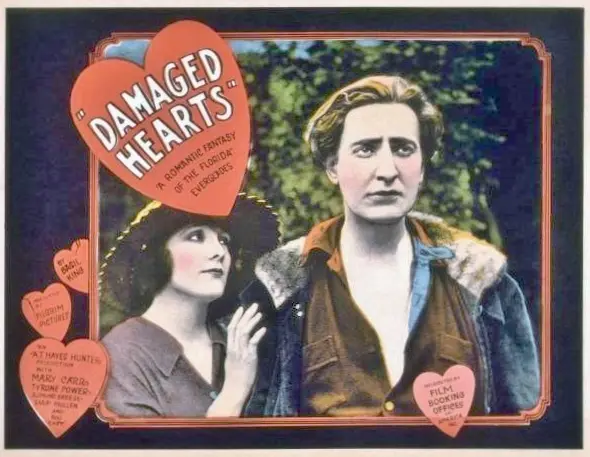
Damaged Hearts, a 1937 film directed by an uncredited team, presents a scathing critique of the foster care system, laying bare the traumatic consequences of neglect and abuse. The movie's narrative, penned by Basil King and Barbara Kent, is a searing indictment of the callous treatment meted out to vulnerable children.
The story commences with the heart-wrenching separation of David and his sister, orphaned as youngsters and sent to live with separate families. This fracturing of the sibling bond sets the stage for a lifetime of emotional turmoil, as both characters struggle to cope with the trauma of their circumstances.
The sister, whose adoptive family proves to be particularly cruel, suffers an untimely demise, a devastating event that ignites a fire of vengeance within David. As he grows into adulthood, David's existence becomes defined by an all-consuming hostility, a burning need to hold accountable those responsible for his sister's tragic fate.
The cast, comprising Jean Armour, Eugene Strong, and Edmund Breese, deliver performances that are, at times, riveting. Armour, in particular, brings a sense of vulnerability to her portrayal of David's sister, making her eventual demise all the more impactful. The chemistry between the leads is palpable, lending an air of authenticity to the narrative.
One of the most striking aspects of Damaged Hearts is its unflinching portrayal of the darker aspects of human nature. The cruelty exhibited by certain characters is shocking, serving as a stark reminder of the capacity for human beings to inflict harm upon one another. This bleakness is offset, however, by moments of tenderness, as David and his sister cling to one another in the face of adversity.
In terms of cinematic craftsmanship, Damaged Hearts demonstrates a keen sense of storytelling, with a narrative that unfolds at a measured pace. The direction, while uncredited, is effective in conveying the emotional intensity of the characters' experiences. The score, though not particularly memorable, complements the on-screen action, adding to the overall sense of tension.
In comparison to other films of its era, Damaged Hearts stands alongside The Yosemite Trail and Gates of Brass as a searing critique of societal ills. While not as polished as some of its contemporaries, such as Mile-a-Minute Romeo, Damaged Hearts possesses a raw emotional power that is undeniable.
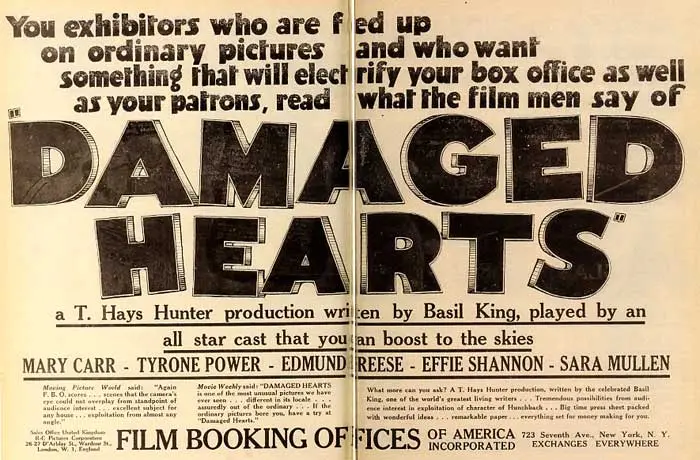
The film's exploration of themes such as trauma, abuse, and the long-term effects of neglect is both thought-provoking and unsettling. It is a testament to the resilience of the human spirit, as embodied by David's unwavering determination to seek justice, that the movie ultimately offers a glimmer of hope amidst the darkness.
Upon reflection, it becomes clear that Damaged Hearts is a film that will resonate with audiences seeking complex, thought-provoking cinema. While not without its flaws, the movie presents a compelling narrative, bolstered by strong performances and a keen sense of storytelling. For those interested in exploring the cinematic landscape of the 1930s, Damaged Hearts is certainly worth consideration, particularly when viewed in conjunction with other films that tackle similarly weighty themes, such as Das Geheimnis der Lüfte and The Daughters of Men.
In conclusion, Damaged Hearts is a gripping tale of vengeance and heartbreak, one that will leave viewers moved and contemplative. Its exploration of the human condition, though imperfect, is undeniably compelling, making it a film that will linger in the minds of audiences long after the credits roll.
Ultimately, the film serves as a poignant reminder of the importance of empathy and compassion, highlighting the need for a more supportive and nurturing environment for vulnerable children. As a cinematic work, Damaged Hearts is a testament to the power of storytelling, demonstrating the capacity of film to educate, to provoke, and to inspire.
The movie's influence can be seen in later works, such as From Hand to Mouth and Shadows of Paris, which also tackle themes of social justice and personal struggle. As a piece of cinematic history, Damaged Hearts remains a significant work, offering a window into the societal concerns of its era.
In the context of its time, Damaged Hearts was a bold and unflinching portrayal of the darker aspects of human nature. While it may not have achieved the same level of recognition as some of its contemporaries, such as An Auto Nut or Brace Up, the film remains a powerful exploration of the human condition.
The film's use of Who Goes There? and other cinematic techniques adds to the overall sense of tension, underscoring the narrative's themes of uncertainty and fear. This, in turn, serves to heighten the emotional impact of the film's conclusion, making Damaged Hearts a truly unforgettable viewing experience.
IMDb —
1917
Community
Log in to comment.