DbcultAccessing Vault...
7.9/10
Senior Film Conservator
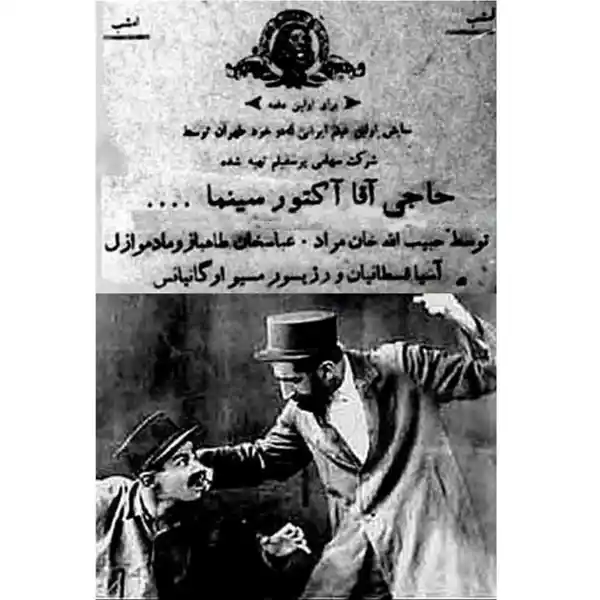
A definitive 7.9/10 rating for a film that redefined the boundaries of cult cinema. Haji Agha, the Cinema Actor remains a cornerstone of transgressive art.
If you have any interest in how movies started in other parts of the world, you should probably watch this. It is a silent film from 1933, so it is definitely for the history nerds or people who don't mind a bit of flicker on the screen. If you can’t stand black and white movies without sound, you will probably hate it within five minutes.
Haji Agha is this incredibly stiff, traditional guy. He hates the idea of movies. He thinks they are corrupting or something.
But his daughter and her husband are secretly obsessed with acting. It is that classic 'strict dad vs. artistic kids' vibe you see in stuff like Wedding Blues, but with a lot more 1930s slapstick thrown in.
The director in the movie—who is actually played by the real director, Ovanes Ohanian—needs a subject for his new film. Parviz, the son-in-law, basically says, "Hey, why don't we just stalk my father-in-law and film him without him knowing?"
It is basically the first 'prank' video ever made. Seriously.
The middle of the movie turns into this big chase because a servant named Poori steals Haji Agha’s watch. Haji Agha gets so mad he starts sprinting after him.
The camera follows them through these old streets and it feels very real. Not like a set. You can see real people in the background just watching the actors run by.
There is a surreal sequence during the chase that feels totally out of place but in a good way. It gets a bit trippy.
I noticed the editing is a bit jumpy in the version I saw. Sometimes a character is on one side of the frame and then suddenly they are on the other. It’s not smooth, but it adds to the charm.
The way Haji Agha moves is hilarious. He has this very specific way of holding his robes while he runs. It reminded me of some of the physical comedy in Why They Love Cavemen! where the movements are just a bit exaggerated for the camera.
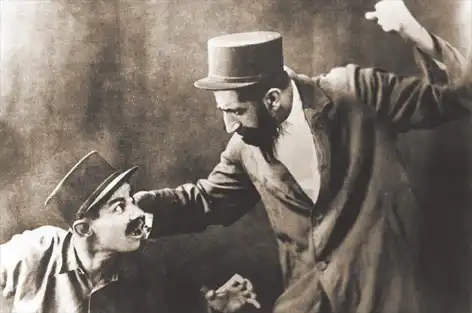
One reaction shot of the director watching Haji Agha through a window lasts way too long. He just stands there grinning. It’s a little creepy if you think about it too much.
The movie is mostly about the clash between the old world and the new world. Haji Agha represents the old ways, and the camera represents the future.
It gets a bit preachy at the end. Like the movie is trying to convince the audience that cinema isn't evil.
The daughter, Asia Ghostantin, doesn't get as much to do as I hoped. She’s mostly there to look worried or happy when the plan works. Still, her acting is more natural than some of the stuff you see in Becky or other early silent dramas.
There is this one moment where Haji Agha trips and almost loses his hat. I can't tell if it was scripted or if the actor actually tripped. It looks painful though.
The film is actually quite short. It doesn't overstay its welcome.
I liked seeing the old architecture of Tehran. It looks so different from anything you see now. The dusty alleys and the big wooden doors give it a great texture.
Is it a masterpiece? Maybe not in the technical sense. But it’s very human.
You can feel the filmmakers just having fun with the idea of 'tricking' a movie onto the screen. It’s a movie about making a movie, which is a trope that usually feels annoying, but here it feels fresh because it was one of the first times anyone did it.
Check it out if you want to see something that feels like a time capsule. Just don't expect 4K resolution or a complex plot. It’s just a grumpy guy getting pranked. 🎥
IMDb —
1921
Community
Log in to comment.