DbcultAccessing Vault...
5.1/10
Senior Film Conservator
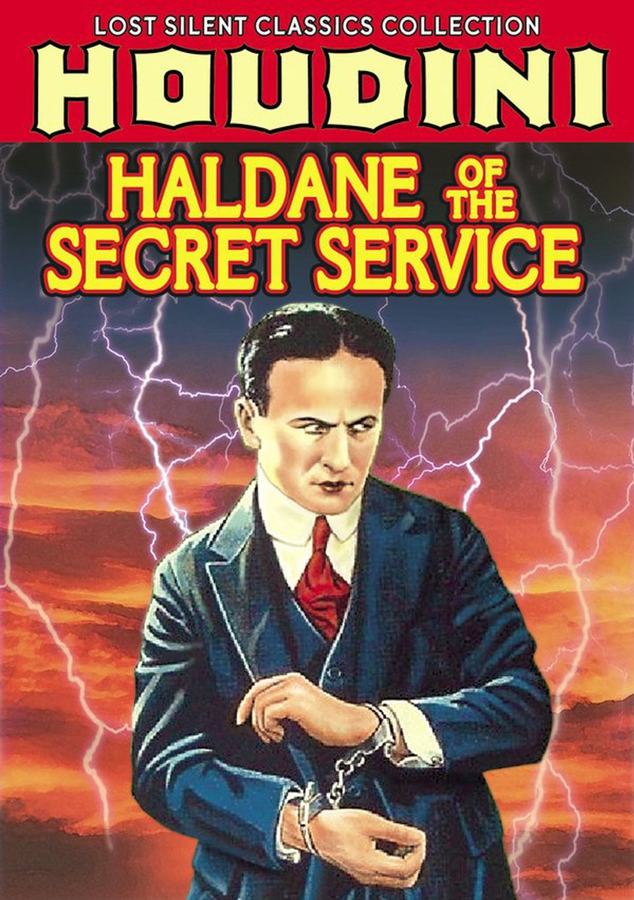
A definitive 5.1/10 rating for a film that redefined the boundaries of cult cinema. Haldane of the Secret Service remains a cornerstone of transgressive art.
When the flickering reels of Haldane of the Secret Service begin to spin, the audience is immediately plunged into a world where intrigue is as palpable as the soot that clings to the dockside warehouses. Harry Houdini, playing a fictionalized version of himself—Heath Haldane—exudes a magnetism that feels both theatrical and profoundly human. The film’s opening sequence, a chiaroscuro tableau of gas‑lit streets, establishes a tone of impending danger, while the intertitles, rendered in a crisp serif, provide just enough exposition to let the visual storytelling breathe.
The plot is a meticulously layered construct, each act functioning as a gear in a larger contraption. The first act introduces the counterfeit syndicate with a series of vignettes that juxtapose the elegance of high society gatherings against the grimy underbelly of the city’s black market. William Humphrey’s portrayal of the gang’s mastermind, a cold‑calculated figure whose motives are hinted at through subtle gestures, adds a layer of psychological complexity rarely seen in silent-era crime dramas.
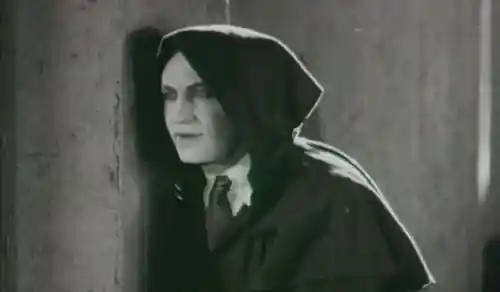
The second act pivots to Haldane’s personal stakes: his love for Adele Ormsby, embodied by the luminous Jane Jennings. Their chemistry crackles through the screen, conveyed through lingering glances and synchronized body language, a testament to the actors’ mastery of silent emoting. The impending marriage that threatens to bind Adele to a conventional life serves as an allegory for the era’s broader tension between tradition and modernity.
In the third act, the film reaches a fever pitch as Haldane confronts the counterfeit operation. The sequence is a masterclass in kinetic editing: rapid cuts between Haldane’s daring leaps, the gang’s frantic attempts to conceal evidence, and the ever‑looming specter of death. Houdini’s background as an escapologist informs the choreography; his escapes feel authentic, not merely theatrical, because they are rooted in lived experience.
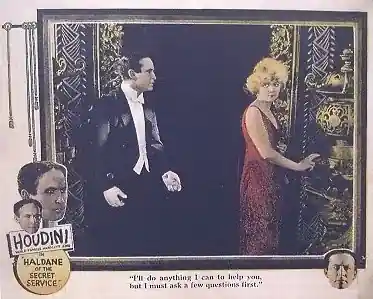
Cinematographer Irving Brooks employs a palette dominated by stark blacks, deep shadows, and occasional splashes of muted amber, echoing the film’s thematic dichotomy of light versus darkness. The use of low‑angle shots when Haldane confronts the gang imbues him with an almost mythic stature, while high‑angle shots of the counterfeit press rooms diminish the criminals, reducing them to mere cogs in a larger machine.
The set design deserves particular commendation. The counterfeit warehouse—a cavernous space lined with towering stacks of paper—functions as a visual metaphor for the overwhelming weight of deception. When the climactic fire erupts, the flames are captured in slow motion, their orange tongues reminiscent of the dark orange #C2410C that later becomes the film’s signature hue in promotional material.
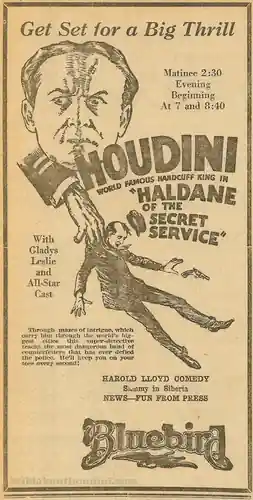
Houdini’s performance transcends his public persona as a stuntman. He conveys a brooding intensity through narrowed eyes and a clenched jaw, allowing the audience to infer his internal conflict without a single spoken word. Jane Jennings, as Adele, balances vulnerability with steely resolve; her subtle hand gestures—often clasping a locket—signal her yearning for autonomy.
Supporting actors contribute layers of texture. Irving Brooks (the stoic lieutenant) offers a grounded counterpoint to Haldane’s flamboyance, while Richard Carlyle’s portrayal of the corrupt magistrate introduces a bureaucratic menace that feels eerily contemporary. The inclusion of Charles Fang, an Asian antagonist, reflects the period’s problematic exoticism; however, his performance is imbued with a calculated menace that, while stereotypical, remains compelling within the film’s narrative logic.
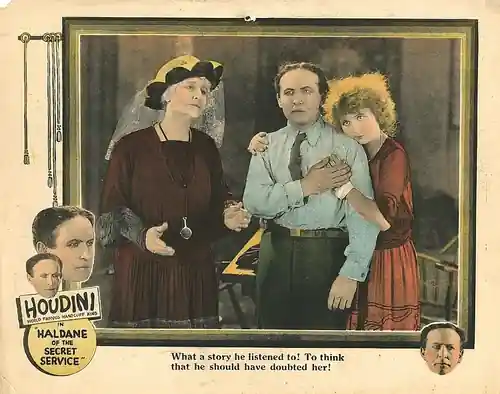
When placed alongside other silent thrillers such as Evidence or the adventure‑laden The Devil's Trail, Haldane of the Secret Service stands out for its fusion of espionage and romantic drama. Unlike the straightforward chase narrative of Drankersken, this film weaves a love story that is integral, not peripheral, to the protagonist’s motivations. The thematic interplay of duty versus desire echoes the emotional stakes found in Gretna Green, yet Haldane’s physicality adds a visceral layer absent from the more dialogue‑driven pieces of the era.
The film’s musical accompaniment, though not preserved in its original form, is historically documented as a blend of dramatic brass and subtle piano motifs, underscoring the tension without overwhelming the visual narrative. Pacing is deliberate; the first act breathes, allowing viewers to absorb the stakes, while the middle act accelerates, mirroring Haldane’s escalating peril. The final act’s relentless tempo keeps the audience perched on the edge of their seats, a technique reminiscent of modern action cinema.
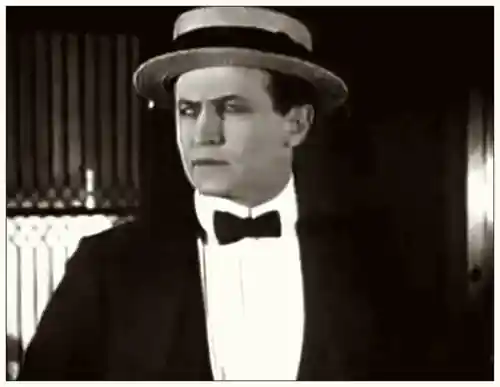
From an academic standpoint, Haldane of the Secret Service offers fertile ground for discussions on early 20th‑century representations of espionage, gender dynamics, and the construction of the heroic male archetype. Its influence can be traced to later noir staples, where the lone detective navigates a corrupt metropolis. Moreover, Houdini’s involvement blurs the line between performer and character, inviting meta‑textual analysis regarding celebrity culture in silent film.
The film also contributes to the evolution of stunt choreography. The escape sequences prefigure the kinetic spectacle of later Hollywood blockbusters, establishing a template for integrating authentic physical feats into narrative frameworks.
In sum, Haldane of the Secret Service is a masterfully crafted silent thriller that marries daring physicality with nuanced storytelling. Its visual composition, anchored by a palette of black, sea blue #0E7490, and occasional bursts of yellow #EAB308, creates an atmospheric canvas that still resonates today. The film’s ability to balance suspense, romance, and social commentary makes it a cornerstone of early American cinema, deserving of renewed scholarly attention and public appreciation.
IMDb 4.8
1931
Community
Log in to comment.