DbcultAccessing Vault...
Cult Review
Senior Film Conservator
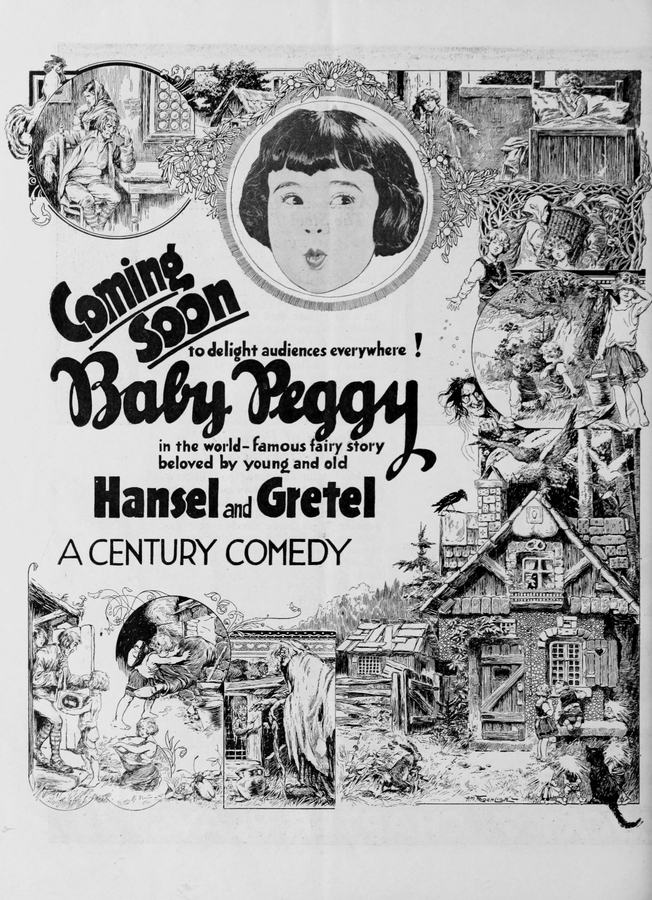
The 1920s rendition of Hansel and Gretel invites viewers into a stark tableau where poverty, desperation, and sibling solidarity intersect. From the opening tableau, the mother—portrayed with a chilling austerity by Blanche Payson—exudes a palpable weariness that transcends mere hardship; it becomes an existential dread that fuels her ruthless calculus. Her husband, the meek James T. Kelley, is rendered almost as a puppet, his compliance a tragic echo of societal pressures that demand sacrifice at the altar of survival.
The film’s mise‑en‑scene in the forest is a masterclass in chiaroscuro, reminiscent of the atmospheric tension found in Bits of Life. Shadows loom like silent sentinels, while the muted palette—enhanced by the stark contrast of the original black backdrop—accentuates the children’s vulnerability. When Gretel, embodied by the luminous Baby Peggy, releases a cascade of breadcrumbs, the camera lingers on each crumb as if it were a fragile promise. The subsequent devouring by wild fowl is filmed with a kinetic energy that transforms a simple act of nature into a symbolic erasure of hope.
The narrative pivot to the witch’s cottage introduces a grotesque architectural motif that recalls the surreal set designs of The Mummy and the Humming Bird. The witch, played with a wicked glee by Fritzi Fern, occupies the frame like a looming, confectionary predator. Her intent—to fatten the children for a gingerbread feast—serves as a darkly satirical commentary on consumption and exploitation. The film’s pacing here is deliberately languid, allowing the audience to savor the dread that builds as the children are coaxed into a false sense of safety.
A pivotal moment arrives when Gretel, displaying a precocious blend of ingenuity and bravery, outwits the witch. The sequence is choreographed with a kinetic rhythm that mirrors the frantic beats of a heart racing toward freedom. The witch’s eventual plunge into the furnace is captured in a blaze of orange and amber, a visual echo of the dark orange hue #C2410C that permeates the film’s promotional material. This fiery climax is not merely a spectacle; it is a cathartic release of the oppressive forces that have haunted the siblings since their abandonment.
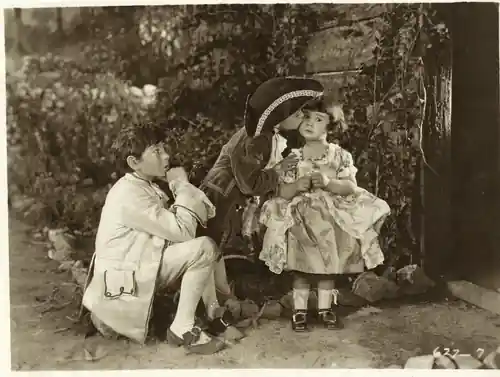
Parallel to the children’s ordeal, the mother’s transformation is rendered with a subtlety that avoids melodrama. Her remorse is not shouted but whispered through lingering glances and a trembling hand that reaches out to the villagers. The rescue effort, led by a collective of neighbors, underscores a communal ethic that contrasts sharply with the earlier individualistic cruelty. This thematic duality—isolated suffering versus collective redemption—finds resonance in the moral undercurrents of A Good Little Devil and Fate.
Performance-wise, Baby Peggy delivers a tour de force, her expressive eyes conveying a spectrum of emotions without the crutch of dialogue—a testament to the silent era’s reliance on physicality. Jack Earle as the older brother provides a sturdy counterbalance, his stoic demeanor anchoring the sibling dynamic. The supporting cast, including Buddy Williams and Johnny Fox, populate the forest with a chorus of peripheral characters whose brief appearances enrich the world-building without detracting from the central narrative.
From a technical perspective, the cinematography employs a fluid camera that glides through the forest canopy, echoing the kinetic wanderings of the children. The use of deep focus allows foreground and background action to coexist, a technique reminiscent of the visual storytelling in The Third Kiss. Lighting is meticulously crafted; the witch’s interior glows with a sickly yellow #EAB308, casting elongated shadows that seem to reach for the children, while the furnace’s inferno is rendered in a saturated orange that dominates the frame, reinforcing the thematic motif of fire as both destroyer and purifier.
The screenplay, credited to the legendary Grimm brothers and adapted by Alfred J. Goulding, retains the core moral of the original folktale while infusing it with a nuanced social critique. The dialogue—though sparse—carries weight, each intertitle a distilled essence of the characters’ internal states. The narrative’s pacing oscillates between languid dread and rapid, breath‑shortening action, a rhythm that mirrors the emotional rollercoaster experienced by the protagonists.
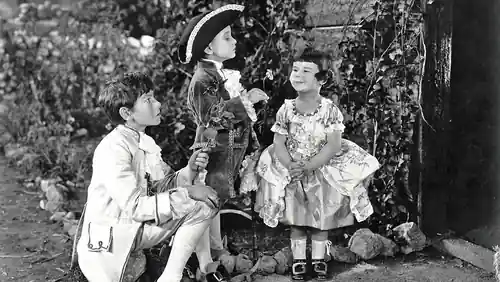
Comparatively, the film’s exploration of abandonment and redemption aligns with the thematic concerns of Men, Women, and Money, where economic desperation drives moral compromise. Yet, unlike the latter’s urban setting, Hansel and Gretel situates its drama within a primordial wilderness, amplifying the isolation and primal fear that pervade the story.
The set design of the witch’s cottage deserves particular commendation. Its crooked timbers and grotesque gingerbread motifs are rendered with a tactile realism that invites the viewer to almost taste the impending danger. This attention to detail parallels the meticulous production design of An Alabaster Box, where every prop serves a narrative purpose, reinforcing the film’s immersive quality.
The film’s soundscape—though limited to the era’s musical accompaniment—leverages a haunting score that swells during moments of tension and recedes into a plaintive lullaby during the children’s moments of hope. The orchestration, employing low brass and muted strings, underscores the oppressive atmosphere while allowing brief melodic interludes to signal fleeting triumphs.
In terms of cultural impact, Hansel and Gretel stands as a bridge between the silent era’s narrative experimentation and the emerging talkies that would soon dominate the industry. Its preservation of visual storytelling techniques offers modern audiences a window into a period where image alone bore the weight of narrative conveyance.
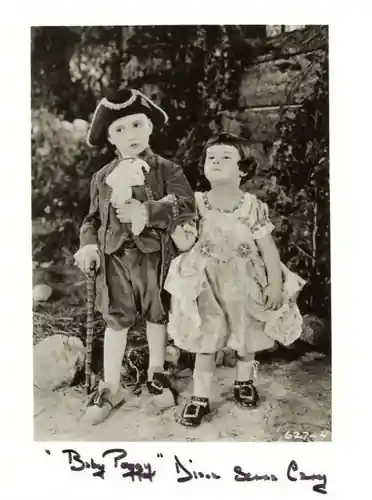
The film’s legacy is further cemented by its influence on later adaptations of the Grimm tale, many of which echo its visual motifs—the breadcrumb trail, the foreboding forest, the fiery climax. Contemporary directors continue to draw upon these iconic images, attesting to the enduring power of the original cinematic vision.
For scholars interested in the evolution of fairy‑tale cinema, the film provides a fertile case study. Its interplay of gender dynamics—where the mother’s agency is both destructive and redemptive—offers a nuanced perspective that predates modern feminist readings. The father’s passive complicity, meanwhile, reflects societal expectations of masculinity during the era, a theme explored in depth in Forty‑Five Calibre Law.
The film’s pacing, while occasionally languid, never succumbs to monotony. Each scene is meticulously crafted to either heighten suspense or provide a brief respite, a rhythm that mirrors the ebb and flow of a forest’s natural sounds. This structural balance ensures that the audience remains engaged throughout the 90‑minute runtime.
In sum, the 1920s Hansel and Gretel is a richly layered work that marries visual poetry with a timeless moral narrative. Its deft handling of character arcs, atmospheric cinematography, and thematic depth render it a cornerstone of early 20th‑century cinema, deserving of both scholarly attention and casual appreciation.
IMDb 6.2
1930
Community
Log in to comment.