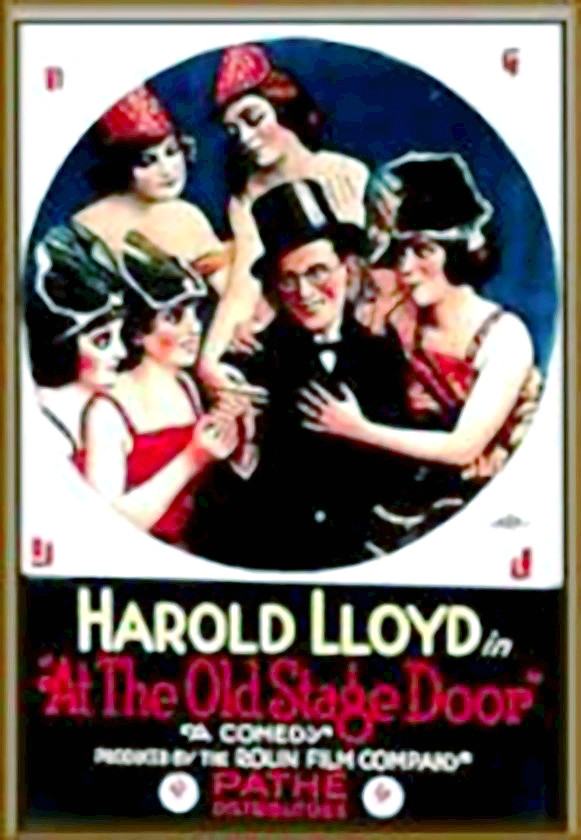
Oh, the sheer audacity of it all! Imagine, if you will, strolling into a grand opera house, perhaps a little lost, a tad bewildered, and suddenly finding yourself thrust into the role of its esteemed manager. That, my dear cinephiles, is the delicious premise at the heart of At the Old Stage Door, a delightful 1919 silent comedy that serves as a sparkling testament to the enduring power of mistaken identity in the realm of cinematic hilarity. This isn't just a fleeting gag; it's an elaborate dance of social pretense, a comedic ballet of errors orchestrated with the precision only early masters of the form could achieve.
The film, a vibrant snapshot from the golden age of one-reelers, places its unassuming protagonist – a character often embodied by the incomparable Harold Lloyd in his early, pre-glasses days, though the specific role here is taken by an uncredited actor who channels that everyman charm – right into the heart of an operatic whirlwind. He's not seeking fame, nor fortune, merely an evening of cultural enrichment. But fate, that capricious old stagehand, has other plans. Through a series of perfectly timed coincidences and the eager readiness of the staff to assume the presence of their awaited boss, our hero finds himself adorned with an undeserved aura of authority. Suddenly, doors swing open, obsequious bows are offered, and requests are met with an alarming alacrity. It’s a dream, or perhaps a delightful nightmare, depending on one's tolerance for unearned privilege.
The genius of this setup lies in its universal relatability. Who hasn't, at some point, wished for a moment of unearned recognition, a taste of the high life without the corresponding effort? Our protagonist, initially bewildered, quickly adapts, or rather, attempts to adapt, to his newfound status. His expressions, a blend of wide-eyed surprise and a burgeoning, somewhat nervous confidence, are a masterclass in silent film acting. He's a fish out of water, desperately trying to swim with the sharks, all while hoping his gills don't give away his true species. The comedy doesn't just spring from the initial mistake, but from the escalating efforts to maintain the facade, the subtle (and sometimes not-so-subtle) blunders, and the sheer absurdity of the situations he finds himself in.
Early silent comedies, particularly those emerging from the fertile grounds of Hal Roach's studio, where many of these talents honed their craft, often excelled at this kind of situational humor. They didn't rely on intricate dialogue or complex psychological profiles; instead, they leveraged the visual language of film to its fullest. Physical comedy, exaggerated reactions, and tightly choreographed sequences were the order of the day. At the Old Stage Door is no exception. Every glance, every hurried gesture, every nervous gulp contributes to the overarching comedic tapestry. The opera house itself, with its grandiosity and inherent theatricality, provides a magnificent backdrop for this masquerade. It’s a place where performance is everything, making the hero’s accidental performance as manager all the more fittingly ironic.
The supporting cast, a veritable who's who of early comedic talent, breathes vibrant life into this bustling world. While
Harold Lloyd might not be in the starring role here, his presence in many similar productions of the era, such as
Skinner's Dress Suit, highlights the comedic sensibilities prevalent at the time – the earnest young man striving, often awkwardly, for success or acceptance. Here, the ensemble works in concert to build the illusion that traps our hero.
Bebe Daniels, a captivating screen presence even in these nascent years, likely contributes her characteristic charm and vivacity, perhaps as a performer or a bewildered assistant, adding another layer of dynamic interaction. The sheer number of familiar faces, from
James Fitzgerald and
James Parrott to the inimitable
'Snub' Pollard and
Noah Young, ensures that every corner of the screen is populated with expressive characters, each reacting in their own delightfully over-the-top manner to the unfolding absurdity.
The pacing of these early shorts is often remarkable. Within a compressed runtime, they manage to establish a premise, develop the escalating comedic tension, and deliver a satisfying, often explosive, resolution. There's no fat on these bones; every scene, every gag, serves a purpose. The film's narrative arc, from initial confusion to comfortable deceit and inevitable exposure, is a textbook example of comedic structure. The moments leading up to the deception's uncovering are particularly potent, filled with a delicious sense of impending doom for our hero, even as we, the audience, revel in his temporary triumphs. It's a tightrope walk of hilarity, where one false step could send the entire delicate construct tumbling down.
What makes At the Old Stage Door resonate even today is its timeless exploration of human nature. The desire to belong, to be respected, to momentarily escape the humdrum of ordinary life – these are universal aspirations. Our hero's journey, however brief, offers a vicarious thrill. We see him navigating the perils of his assumed identity, making snap decisions, and narrowly avoiding disaster, all while a mischievous twinkle dances in his eye. It's a celebration of the underdog, even if his 'underdog' status is temporarily suspended by a fortunate misunderstanding. The film doesn't preach; it simply observes, with a knowing wink, the follies and foibles that arise when social roles are suddenly, unexpectedly, inverted.
The visual gags are plentiful and inventive. Think of the subtle ways the hero tries to assert authority he doesn't possess, or the increasingly frantic efforts to maintain composure as the situation spirals. The physical comedy, a hallmark of the era, is executed with a charming earnestness that makes it all the more effective. You can almost hear the rapid-fire piano accompaniment, the laughter of the audiences in packed theaters, as the protagonist stumbles through his managerial duties. Films like
The Bull's Eye or
Marked Men, while often featuring more dramatic or action-oriented plots, shared this common visual language, relying on clear, unambiguous storytelling through action and expression. Here, that language is expertly twisted for maximum comedic impact.
The eventual uncovering of the deception, the moment when the house of cards inevitably collapses, is handled with an exquisite balance of dramatic tension and outright farce. It’s not a moment of tragedy, but one of triumphant comedic release. The audience knows it's coming, anticipates it, and when it finally arrives, it’s met with a cathartic burst of laughter. The film doesn't linger on the hero's embarrassment; instead, it focuses on the sheer absurdity of the situation and the delightful chaos that ensues. It's a reminder that sometimes, the most profound truths about society and self can be found in the most outlandish of scenarios.
Looking back at these early cinematic treasures, one gains a profound appreciation for the foundational artistry that shaped the medium. Without dialogue, filmmakers had to be incredibly inventive with their storytelling, relying on visual cues, character expressions, and dynamic staging. At the Old Stage Door exemplifies this ingenuity, crafting a narrative that is both simple in premise and rich in execution. It’s a testament to the skill of its creators and performers that a film from over a century ago can still elicit genuine chuckles and admiration. The energy, the innocence, and the sheer joy of creation are palpable in every frame.
This film, like many of its contemporaries, served as a crucial stepping stone in the development of comedic cinema. It helped refine the tropes and techniques that would later become staples of the genre, influencing generations of comedians and filmmakers. The art of the gag, the power of a well-timed reaction shot, the construction of escalating comedic tension – all are on brilliant display here. It’s a vibrant piece of cinematic history, not just for its entertainment value, but for its role in shaping the very language of film comedy. It's a delightful romp that proves laughter truly is timeless, transcending the absence of sound and the passage of decades. So, if you ever find yourself with an unexpected opportunity to step into someone else's shoes, just remember the lessons learned At the Old Stage Door – it's all fun and games until the real manager shows up!