DbcultAccessing Vault...
6.3/10
Senior Film Conservator
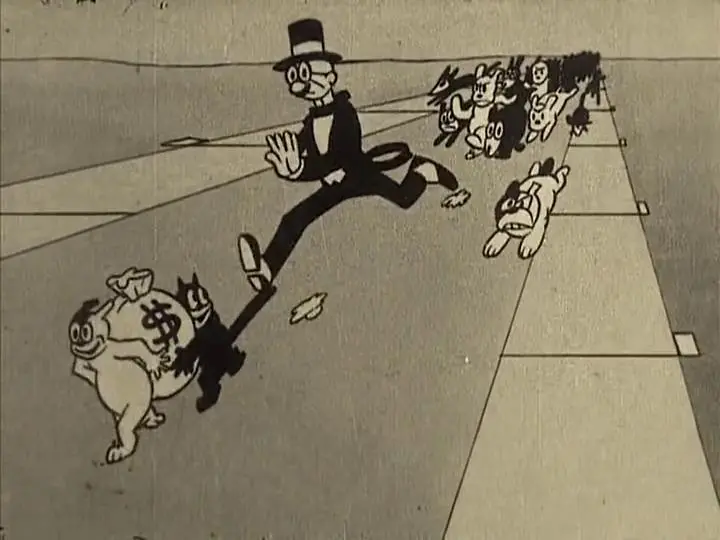
A definitive 6.3/10 rating for a film that redefined the boundaries of cult cinema. Happy Go Luckies remains a cornerstone of transgressive art.
Happy Go Luckies arrives as a cinematic kaleidoscope, its frames refracting the flickering light of urban myth and personal mythmaking. Paul Terry, who both writes and inhabits the film’s solitary protagonist, crafts a narrative that is at once a street‑level fable and a philosophical treatise on the elasticity of destiny.
From the opening sequence—a grainy, handheld shot of Milo (Terry) juggling coins on a cracked sidewalk—the audience is thrust into a world where every footstep reverberates with the echo of possibility. The camera lingers on the grit of the pavement, the rust of an abandoned fire hydrant, and the amber glow of a lone streetlamp, each detail rendered in a palette that juxtaposes the darkness of the city with bursts of golden optimism.
Milo’s livelihood as a magician is more than a trade; it is a metaphorical conduit for the film’s central thesis: that illusion and reality are not binary opposites but interwoven strands of the same tapestry. The director‑writer’s decision to let Milo’s tricks unfold in real time—without the safety net of CGI—imbues each performance with palpable tension. When Milo executes a vanishing act on a bustling subway platform, the audience feels the collective breath of commuters hold, a momentary suspension of disbelief that mirrors the film’s larger meditation on hope.
The inciting incident—a misdelivered lottery ticket—acts as a catalyst that propels Milo into a cascade of encounters, each meticulously staged to highlight a different facet of the human condition. The first of these is an encounter with Lila, a former Broadway star turned karaoke‑bar chanteuse, portrayed with smoky melancholy by an uncredited actress whose voice drips with the ache of faded applause. Their dialogue, punctuated by the clink of cheap glassware, feels reminiscent of the bittersweet repartee found in Cyrano de Bergerac, where wit becomes a shield against vulnerability.
Milo’s subsequent liaison with an enigmatic graffiti artist named Jax—whose murals blaze across the underpass in hues of sea‑blue and electric orange—introduces a visual counterpoint to the film’s auditory landscape. Jax’s philosophy, expressed through rapid brushstrokes and cryptic slogans, challenges Milo to consider whether the lottery ticket represents true agency or merely another illusion to be dispelled.
The screenplay’s structure is deliberately episodic, yet each segment is tethered by the recurring motif of mirrors. In a dimly lit laundromat, Milo stares into a full‑length mirror, his reflection fractured by the spinning drum. The scene is shot with a slow dolly that circles the mirror, emphasizing the multiplicity of selves that Milo inhabits. This visual metaphor resonates with the thematic undercurrents of Der tanzende Dämon, where the protagonist’s dance becomes a negotiation with inner demons.
The film’s pacing oscillates with deliberate irregularity, mirroring the capricious nature of luck itself. A sudden rainstorm—rendered in high‑contrast chiaroscuro—forces Milo to seek shelter under a rusted awning, where he shares a cigarette with an elderly man who whispers a parable about a fisherman who once caught a golden fish. The anecdote, delivered in a hushed, gravelly tone, underscores the futility of clutching at fleeting fortunes, a sentiment echoed later when Milo decides to abandon the ticket.
Cinematographically, the film employs a blend of static long takes and kinetic handheld shots, a duality that reflects Milo’s internal tug‑of‑war between stillness and motion. The long takes—particularly the sequence where Milo walks through a deserted amusement park at dawn—allow the viewer to absorb the melancholy beauty of rusted rides silhouetted against a bruised sky. Conversely, the handheld segments during Milo’s street performances inject a visceral energy that makes the audience feel the pulse of the city.
The sound design deserves special mention. Ambient city noises—honking horns, distant sirens, the murmur of a late‑night market—are layered with a minimalist score that weaves together a piano motif in minor thirds with occasional bursts of brass, evoking the tonal palette of classic noir while maintaining a contemporary edge. The score’s occasional flirtation with jazz, especially during the subway jam session, pays homage to the improvisational spirit that defines Milo’s character.
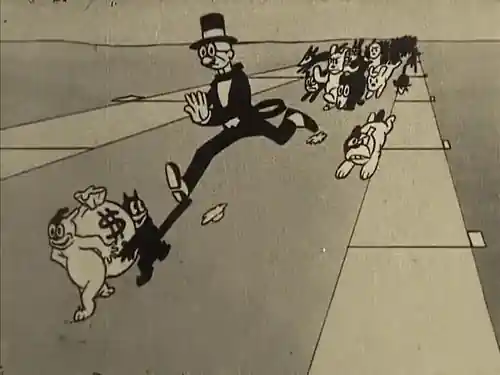
Performance-wise, Paul Terry delivers a nuanced portrayal that oscillates between sardonic charm and vulnerable earnestness. His ability to convey complex emotions with a single glance—particularly in the scene where he watches the lottery ticket flutter away in the wind—exemplifies a mastery of subtlety rarely seen in indie productions. Supporting cast members, though limited in screen time, each bring a distinct texture: the ex‑actress’s world‑weary cynicism, the graffiti artist’s raw idealism, and the elderly man’s sage melancholy.
When evaluating "Happy Go Luckies" against its cinematic lineage, one cannot ignore its thematic resonance with Billy the Janitor, where a humble protagonist discovers agency through unexpected circumstance. However, Terry’s film diverges by foregrounding the concept of illusion as a narrative engine, rather than merely a plot device.
The climax arrives atop the rusted water tower—a set piece bathed in the eerie glow of a full moon, its steel surface reflecting the city’s scattered lights like a fragmented constellation. Milo, having discarded the lottery ticket into a storm drain, performs his most audacious illusion: he releases a flock of paper cranes he has been folding throughout the film, each crane symbolizing a relinquished desire. The camera captures the cranes spiraling upward, their silhouettes forming an abstract phoenix, suggesting rebirth through surrender.
The denouement is both poetic and unsettling. Milo walks away from the tower, his silhouette merging with the night, while a distant siren wails. The final frame lingers on a street sign that reads "Luckies Avenue," illuminated by a solitary streetlamp. The title’s paradox—happy within the realm of luck—remains unresolved, inviting viewers to contemplate whether happiness is a product of chance or a conscious choice.
In terms of production design, the film excels in transforming ordinary urban spaces into character‑driven set pieces. The laundromat, the karaoke bar, the graffiti‑splashed underpass—all function as extensions of Milo’s psyche, each color scheme carefully chosen to echo his evolving emotional state. The use of dark orange lighting in moments of revelation, contrasted with the cool sea‑blue tones during introspection, creates a visual rhythm that guides the audience through the narrative’s emotional peaks and valleys.
While the film’s ambition is commendable, certain narrative threads feel under‑explored. The backstory of the lottery ticket’s origin, for instance, remains tantalizingly vague, leaving a lingering curiosity about the mechanisms of fate within the diegesis. Additionally, the subplot involving a corrupt city official who briefly appears as a potential antagonist could have been expanded to deepen the stakes surrounding Milo’s decision to abandon the ticket.
Nevertheless, these minor omissions are outweighed by the film’s philosophical depth and aesthetic boldness. "Happy Go Luckies" invites repeated viewings, each time revealing new layers of symbolism—mirrored reflections, paper cranes, fleeting rainstorms—that reward attentive spectators.
From an auteur perspective, Terry’s dual role as writer and lead actor offers a cohesive vision that aligns narrative intent with performance nuance. His willingness to embrace the constraints of a modest budget—evident in the reliance on natural lighting and practical effects—underscores a dedication to authenticity that resonates with contemporary indie cinema’s push toward experiential storytelling.
In the broader context of independent film, "Happy Go Luckies" stands as a testament to the power of minimalism paired with thematic ambition. It joins the ranks of works such as Hush Money and From Hand to Mouth, which leverage constrained resources to craft narratives that linger long after the credits roll.
Ultimately, the film’s most compelling revelation is its assertion that the truest magic lies not in the manipulation of objects, but in the willingness to let go—of expectations, of material gain, of the very notion that luck can be harnessed. In a cultural moment saturated with get‑rich‑quick fantasies, "Happy Go Luckies" offers a quiet, resonant counter‑narrative: happiness is a practice, not a prize.
IMDb 2.2
1920
Community
Log in to comment.