DbcultAccessing Vault...
Cult Review
Senior Film Conservator
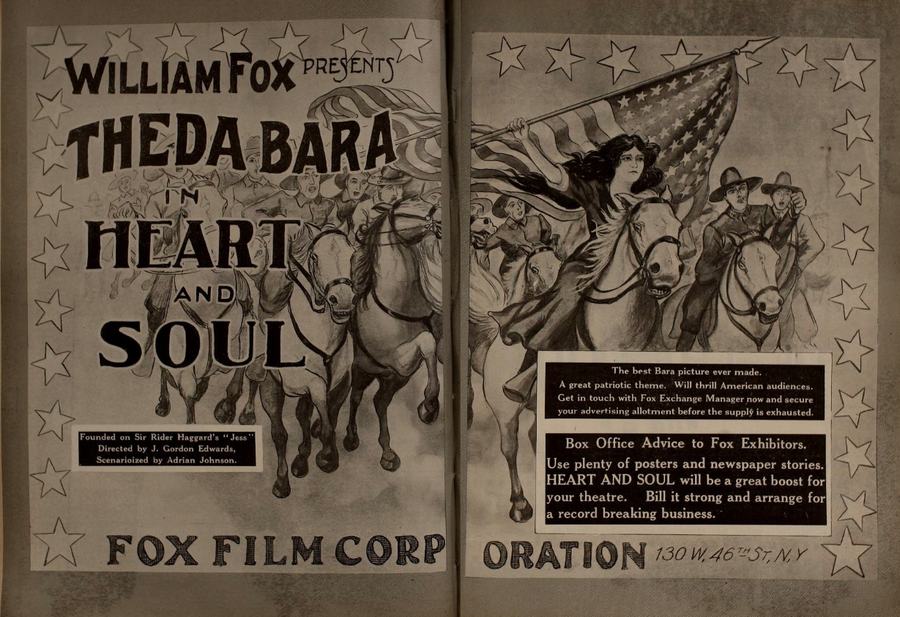
To discuss Heart and Soul (1917) is to traverse the haunting landscape of lost cinema. In an era where the celluloid medium was still grappling with its own linguistic boundaries, this Fox Film Corporation production emerged as a pivotal departure for its lead, the enigmatic Theda Bara. Known predominantly for her 'Vamp' persona—a predatory archetype that defined her career—Bara here pivots toward a role of saintly abnegation, a shift that is as jarring as it is fascinating for the modern archivist.
The cinematic landscape of 1917 was often binary, oscillating between the hyper-moralistic and the scandalous. Bara, who had previously occupied the latter with a ferocious intensity, finds in Jess a character of immense psychological density. Unlike the protagonist in The Salamander, who maneuvers through social strata with a predatory grace, Jess is anchored by a burdensome sense of duty. The narrative, adapted from H. Rider Haggard’s novel Jess, transplants the original South African setting to the tropical humidity of Puerto Rico, a choice that infuses the film with a distinctively American colonial anxiety.

The relationship between Jess and Bess is the fulcrum upon which the entire emotional apparatus of the film rotates. While many contemporary films of the era, such as Selskabsdamen, dealt with the domestic tribulations of women, Heart and Soul elevates the sisterly bond to a level of religious fervor. Jess is not merely a caretaker; she is a surrogate mother, a role she assumed with a grim solemnity upon their mother's death. When John Neil enters the frame, he acts as the catalyst for a tragic zero-sum game of affection. In the lexicon of silent film melodrama, love is rarely a shared resource; it is a prize that demands a forfeit.
One cannot ignore the literary DNA provided by Adrian Johnson and H. Rider Haggard. Haggard, the master of the 'Lost World' genre, often explored themes of destiny and the clash of civilizations. While Heart and Soul lacks the overtly supernatural elements found in The Land of the Lost, it retains a sense of 'Colonial Gothic.' The plantation, run by the sisters' uncle, is a fragile enclave of Western order surrounded by a simmering, untamed political landscape.
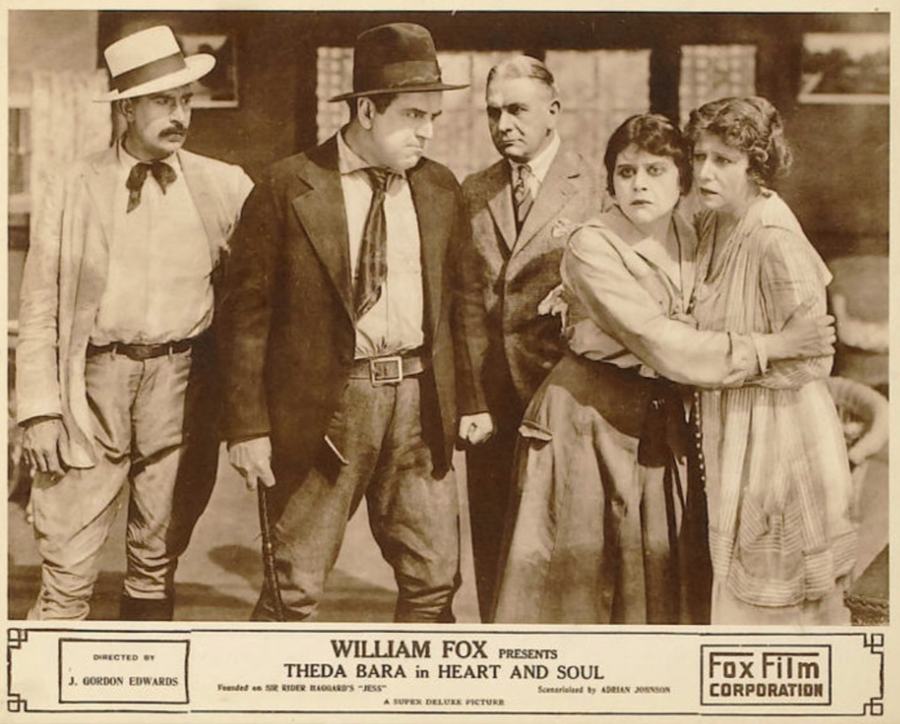
The introduction of Drummond, the corrupt planter, serves as the narrative’s shadow. If Neil represents the idealized romantic interest, Drummond represents the decaying moral fiber of the frontier. His instigation of a revolution against the United States government is not merely a plot device to facilitate the climax; it is a reflection of the era's anxieties regarding territorial stability. This political subplot provides a much-needed kineticism that prevents the film from descending into a static drawing-room drama, a trap that caught many of its contemporaries like The Second Mrs. Tanqueray.
The second act of the film shifts gears with a visceral intensity that mirrors the high-stakes adventure of Michael Strogoff. When the plantation is besieged, the film sheds its melodramatic skin and adopts the structure of a proto-action thriller. The sequence of Jess escaping and riding to the American garrison is a masterclass in silent film editing—or at least, as contemporary accounts suggest, it was a moment of unparalleled tension for 1917 audiences.
This 'Great Ride' is a recurring trope in early cinema, often used to signify the protagonist's transition from passivity to agency. For Jess, this ride is a literalization of her internal struggle. She is riding not just for the safety of her family, but toward her own inevitable end. The sacrifice she makes is twofold: she gives up her love for John Neil to her sister, and then she gives up her life to ensure their safety. It is a dual martyrdom that resonates with the same tragic weight found in Redeeming Love.
Though we are forced to rely on production stills and written records due to the film's status as a lost work, the technical ambition of Heart and Soul is evident. Director J. Gordon Edwards was known for his grand scale, often collaborating with Bara to create visual spectacles that rivaled the theatricality of Samson. The use of location shooting (or elaborate sets mimicking the Puerto Rican landscape) would have provided a stark contrast to the claustrophobic urban settings of films like A Wall Street Tragedy.
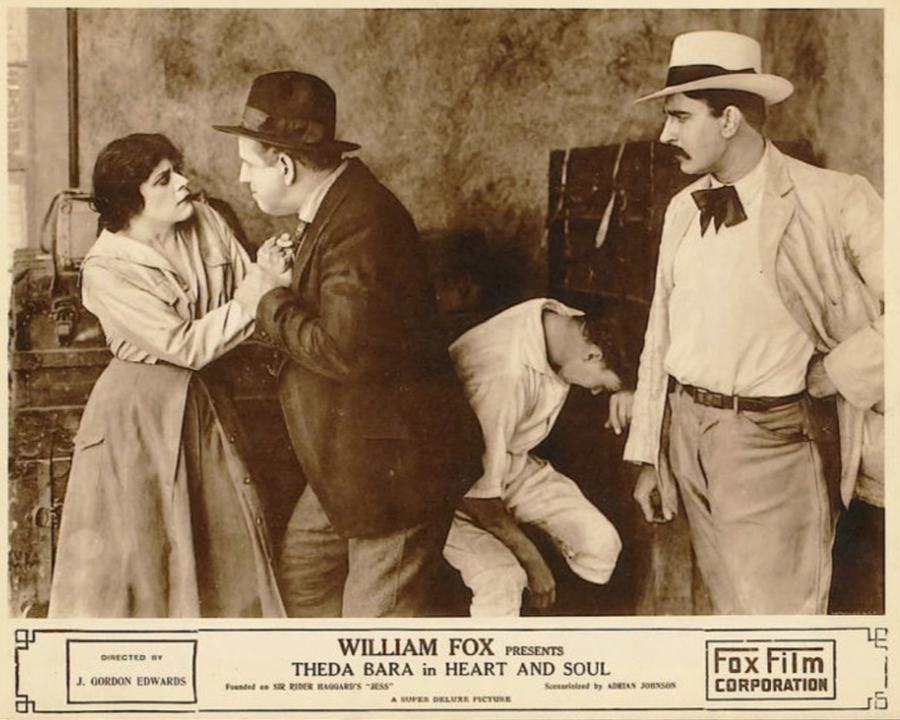
The lighting, a crucial tool in the silent era, would have been utilized to differentiate the two sisters. Bess, played by Claire Whitney, likely enjoyed high-key, soft lighting to emphasize her innocence and 'damsel' status. In contrast, Jess would have been captured with more complex, perhaps even chiaroscuro-adjacent techniques to highlight the internal conflict and the 'dark silence' of her unrequited love—reminiscent of the tonal depth in The Dark Silence.
The ensemble cast provides a robust framework for Bara’s central performance. Glen White as John Neil offers a stoic, if somewhat typical, romantic lead, while Walter Law as Drummond delivers the kind of mustache-twirling villainy that was the bread and butter of the era's antagonists. It is interesting to compare this dynamic to The Penitentes, where religious fervor and villainy are similarly intertwined with the survival of the protagonists.
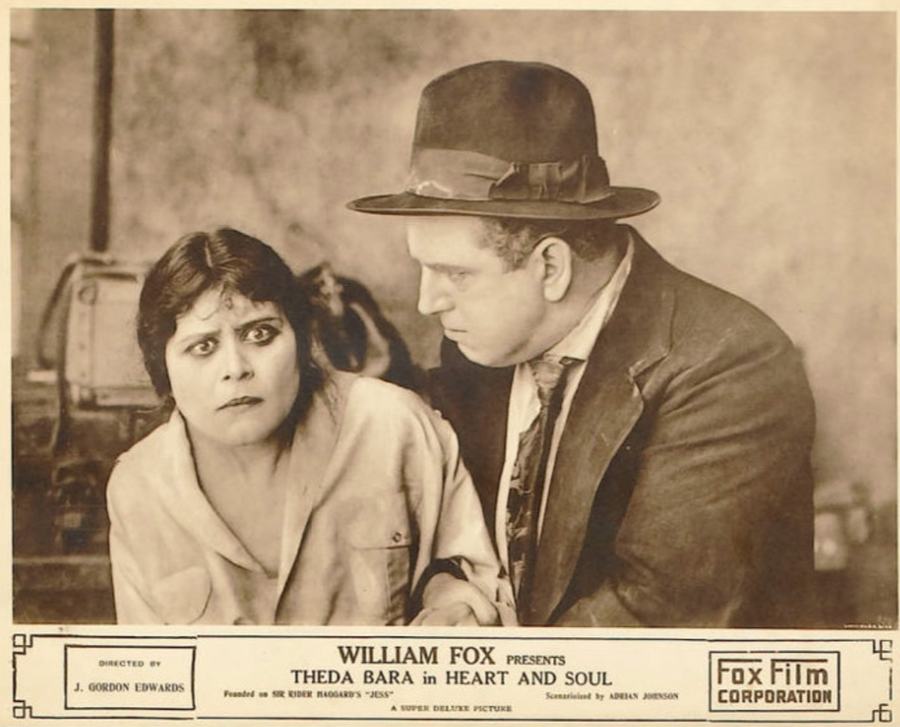
The presence of Art Acord and John Webb Dillion adds a layer of physical gravitas to the production. These actors were seasoned in the demands of early action-oriented cinema, ensuring that the insurrection sequences felt grounded and perilous. The film avoids the caricature-heavy performances found in Snobs, opting instead for a heightened realism that was necessary to sell the gravity of the war-torn setting.
Why does Heart and Soul matter in the 21st century? Beyond its status as a piece of 'Theda Bara lore,' it represents a moment of transition in film history. It was a time when the medium was moving away from short, episodic content—like the serial thrills of The Iron Claw—and toward feature-length narratives that demanded sophisticated character arcs.
The theme of the 'noble sacrifice' is one that would be revisited countless times, but rarely with the operatic intensity of this Fox production. The film’s conclusion, with Jess’s dying words acting as a bridge between her sister and her lover, is a quintessential example of the Victorian sentimentality that still clung to early cinema. It lacks the cynicism of modern drama, offering instead a pure, albeit tragic, resolution that feels both earned and inevitable.
While we may never again see the flickering images of Jess’s ride or the subtle expressions of Bara’s altruism, the script and the historical impact of Heart and Soul remain indelible. It stands alongside other monumental works of the time, such as The Golem or The Empress, as a testament to the power of silent storytelling. It is a film that explored the depths of the human spirit, the complexity of familial bonds, and the high cost of honor in a world on the brink of collapse.
In the end, Heart and Soul is not just a title; it is a description of the film’s core. It is the heart of a sister and the soul of a martyr, captured briefly on nitrate film before vanishing into the ether of history. For those of us who study the evolution of the moving image, it remains a vital, if invisible, chapter in the hagiography of the silver screen. Like The Last Volunteer, it reminds us that the most powerful stories are often those that end in a quiet, selfless blessing.
IMDb —
1933
Community
Log in to comment.