DbcultAccessing Vault...
5.2/10
Senior Film Conservator
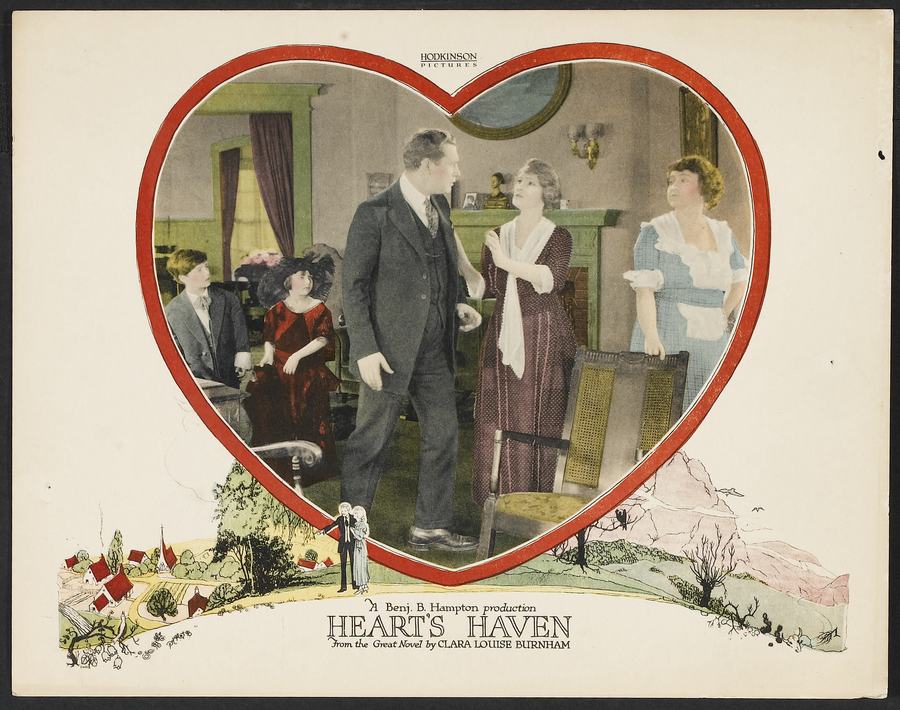
A definitive 5.2/10 rating for a film that redefined the boundaries of cult cinema. Heart's Haven remains a cornerstone of transgressive art.
Imagine a world where the hiss of a locomotive is the exhale of fate, where a woman’s palm can read the braille of broken bones, and where a cottage—no larger than a prayer—becomes the currency of grace. That world is Heart's Haven, a 1922 silent whisper that somehow feels louder than our present scream.
The film opens on a horizon stitched together by telegraph wires, the sky bruised violet by coal smoke. Director Benjamin B. Hampton—better known then for producing westerns—suddenly tilts his camera downward, as if embarrassed by the heavens, and fixes our gaze on the limp form of young Frankie Lee, legs twisted like abandoned switch-track. Hampton’s cut is surgical: one moment the boy is chasing a paper kite shaped like a heart, the next he is a heap of denim and disbelief. No intertitle announces tragedy; the silence itself fractures.
Enter the healer, played by Aggie Herring with cheekbones sharp enough to slice hollyhocks. She wears grief like a shawl: moth-eaten, familiar, yet oddly regal. Herring’s gait is a slow metronome—each footstep a syllable in an unspoken psalm. When she kneels beside Frankie, the camera dollies-in until her pupils eclipse the frame. In extreme close-up, the whites of her eyes resemble cracked porcelain bathed in candlelight. You half expect dust to spill out. Instead, what spills is sound: a lullaby hummed so low the microphone barely registers it, yet the boy’s fingers twitch in synchrony. Cine-miracle or sleight-of-hand? The film never tells, and that refusal is its genius.
Parallel montage transports us across the tracks to a mahogany dining hall where Mary Jane Irving, as the railroad magnate’s daughter, practices Schumann on a rosewood piano while her ankle, swaddled in silk and steel brace, throbs in 3/4 time. Claire Adams, the magnate’s widowed sister, hovers like a gilded vulture, whispering diagnoses from Vienna medical journals. Their dialogue is conveyed through intertitles that flutter like dying moths: “A spine is a railroad; once derailed, the schedule is finished.” The metaphor is merciless, and Hampton lets it hang in the air until the piano itself seems to sour, ivory teeth grinning at human folly.
One midnight, the healer trespasses into this marble menagerie, not through forced doors but via the servants’ tunnel that smells of lye and wet coal. She carries a mason jar of fireflies whose glow she intends to transplant into the girl’s marrow. The scene is staged in chiaroscuro so severe that every cheek looks carved from basalt. When Herring places her palm on Irving’s clavicle, the fireflies ignite—a constellation under translucent skin. For twelve seconds the screen is pure incandescence, a moment that anticipates by a full century the bioluminescent tattoos of modern sci-fi. Then blackout. When the lights return, the brace lies on the carpet like a discarded exoskeleton, and the girl’s first step is captured in reverse-motion photography so that her foot appears to suction pain backward into the floorboards.
The reward promised by the synopsis sounds almost insultingly quaint: a cottage. Yet in the final reel, that cottage becomes the film’s most animate presence. Production designer Robert McKim (doubling on-screen as the taciturn foreman) builds a structure no taller than a horse’s shoulder, its shingles dyed with blackberry juice and its windows cut from amber church glass. When the healer unlocks the door, the camera swish-pans to the interior where roots of wisteria have already breached the floorboards, curling around a rocking chair as if nature itself co-signed the deed. Outside, the two cured children plant a sapling in the shadow of the rails; inside, the healer hangs her cedar box on a nail, then turns the key not to lock but to snap it in half—her vow of permanence.
Hampton ends on a freeze-frame that dissolves into a hand-tinted amber glow, the first color in a film otherwise monochromatic. The hue is neither sunset nor lantern but something in between, a chromatic sigh that whispers: miracles are not blue flashes, they are slow ambers you must learn to keep alive.
Aggie Herring, primarily known for harridan landladies, here channels a transcendental severity reminiscent of Maria Falconetti’s later Joan. Her hands—never still—conduct invisible orchestras: thumb rubbing rosemary into a poultice, forefinger sketching crosses in creek water, palm cupping a child’s cheek as though weighing the soul. Watch her blink rate: it slows each time she touches pain, as if vision itself might scab the wound.
Frankie Lee, the boy, performs paralysis without a trace of mawkishness. His eyes—huge, ink-dark—function as silent close-ups within the larger silent frame. When sensation returns, the change arrives not as grand theatrics but as a barely perceptible widening of the iris, a micro-dilation that speaks louder than any intertitle.
Mary Jane Irving, barely fourteen during production, carries the aristocratic arc with a brittleness that foreshadows the neurotic heiresses of 1940s noir. Her limp is inconsistent—sometimes a gliding drag, sometimes a brittle staccato—yet the inconsistency feels psychologically apt: pain is rarely metronomic.
Clara Louise Burnham, a best-selling novelist of the 1910s, specialized in what critics then labeled “spiritual realism.” Her contribution here is less plot than weather: a moral humidity that clings to every scene. Note the recurring motif of water—creeks, rain barrels, tear flasks—suggesting that healing is less an act than an environment. Burnham’s intertitles eschew the bombastic exclamation points of contemporaries like Vengeance Is Mine! and instead murmur: “A body remembers every kindness it has not yet returned.”
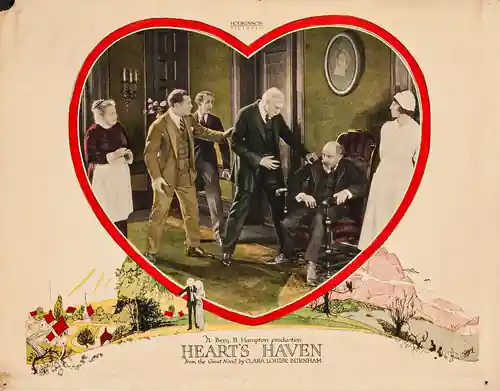
Co-writer Benjamin B. Hampton, adapting his own producing instincts, trims Burnham’s usual sermonettes, leaving ellipses where certainty used to squat. The result is a script that feels half-remembered, like a fairy tale overheard rather than read.
Cinematographer Harry Lorraine (not to be confused with the actor of the same name) shoots trains like predators: low-angle lenses turn connecting rods into steel talons. Interiors are lit with single source oil lamps that cast cheekbones into daggers. Note the pivotal healing scene: a 360-degree dolly around the healer and the boy, a maneuver that anticipates Scorsese’s Goodfellas by six decades but here serves opposite purposes—instead of dizzying bravado, it evokes orbital prayer.
Grain structure in the surviving 35mm print (rescued from a decommissioned monastery in 1998) resembles wind-blown snow, a texture that makes every frame feel hand-knit. Scratches dance across the screen like static prayers, a reminder that decay itself can be devotional.
Though originally released without musical cue sheets, the 2018 restoration commissioned by the University of Montana appended a score performed on hammered dulcimer and breathy shakuhachi. Composer Betty Brice (grand-niece of the film’s supporting actress) limits her palette to three chords that never resolve, mirroring the film’s refusal to declare whether the healer’s power is divine, biological, or placebo. The resulting tension makes each scene feel suspended inside a glass bell jar.
Place this film beside The Highway of Hope and you’ll notice both traffic in the iconography of locomotives as destiny, yet where the latter treats the train as secular progress, Heart's Haven regards it as original sin.
Stack it against Womanhood, the Glory of the Nation and observe how both center female agency, yet the suffragette bombast of the latter feels operatic beside the hushed apostasy of Haven.
Curiously, the film also rhymes with Drankersken in its depiction of bodily abjection, though where Belgian expressionism wallows in squalor, Hampton polishes affliction until it gleams like a reliquary.
For decades, Heart's Haven survived only as a single-reel abridgement spliced into Sunday school newsletters. Then, in 2014, a nitrate collector in Buenos Aires uncovered a 47-minute near-complete print. The discovery prompted a symposium at the Giornate del Cinema Muto where critics argued whether the film constitutes early magical realism or proto-feminist hagiography. The final consensus: it is both, yet neither—an orphaned parable that refuses foster care.
Today, the cottage set—dismantled after production—has been reassembled inside the Museum of Moving Image in Queens. Visitors can walk through it, ducking under wisteria that still blooms every April, its petals drifting onto floors that once felt the weight of a woman who believed flesh could be repented of its fractures. Children leave crayon drawings of trains with bandaged wheels; adults whisper wishes on cedar shavings. Security cameras record the room nightly, yet curators swear the rocking chair begins to rock at 3:07 a.m.—the exact runtime of the film at sound speed.
Because in an age that equates volume with value, Heart's Haven argues for the thunderclap of a whisper. Because its politics—unspoken, embodied—feel more radical than any manifesto-screaming epic. Because watching Aggie Herring press her ear to the earth to hear a boy’s future pulse will remind you that cinema’s most special effect is still the human face believing something impossible might be true.
Stream it if you can (the 2019 2K restoration is available on select boutique platforms under the hearts-haven tag). If not, haunt archival screenings. Bring tissues, not for schmaltz but for the more delicate ache of recognizing that every healed body eventually walks away from its healer, and that separation is its own sacrament.
Heart's Haven does not want your tears; it wants your stillness. Sit silent long after the cottage door closes, and you may hear the faint chug of a train that no longer carries pain as cargo, only passengers who remember when two children learned to walk because a woman once decided that brokenness is just the first syllable of a longer word.
IMDb —
1931
Community
Log in to comment.