DbcultAccessing Vault...
5.7/10
Senior Film Conservator
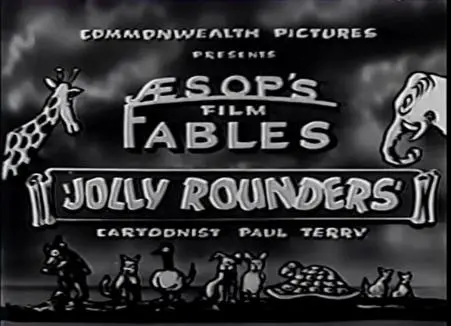
A definitive 5.7/10 rating for a film that redefined the boundaries of cult cinema. The Fable of the Jolly Rounders remains a cornerstone of transgressive art.
The annals of early cinema are replete with narratives exploring the delicate, often tumultuous, landscape of domestic life. Among these, 'The Fable of the Jolly Rounders' emerges as a particularly spirited, if perhaps simplistic, comedic romp through the perils of marital neglect and the lengths to which one might go to salvage a crumbling union. This film, a fascinating relic that speaks volumes about the social mores and comedic sensibilities of its era, offers a delightful, albeit cautionary, tale of a husband's misadventures and a friend's misguided intervention. It's a testament to the enduring appeal of universal themes — love, jealousy, and the desperate yearning for reconciliation — presented with a particular brand of theatricality that often defined the medium's nascent years.
At its core, the narrative revolves around Harry Hippo, a character whose very name suggests a certain ponderousness, perhaps even a gentle, oblivious nature. Harry's nightly ritual, a pilgrimage to the local pub, serves as the primary catalyst for the domestic disarray that ensues. This isn't merely a casual drink; it's a sustained, habitual abandonment of his familial responsibilities, a nightly disappearing act that leaves his wife and children in the lurch. The pub, a symbol of camaraderie and escape, becomes Harry's preferred sanctuary, a place where the pressures of home life are temporarily forgotten amidst the clinking of glasses and boisterous laughter. This portrayal of the pub as both a haven and a hazard for the working man was a common trope in many films of the period, reflecting genuine societal concerns about alcoholism and its impact on the family unit, as seen in more serious dramas but here repurposed for comedic effect.
The film truly ignites when Harry, in a state of advanced inebriation, finally stumbles home. His wife, a figure of long-suffering patience pushed to her absolute limit, greets him not with tears or pleas, but with a weapon of domestic justice: a rolling pin. This iconic image, frequently deployed in silent comedies and early talkies alike, powerfully conveys her exasperation and her newfound resolve. The rolling pin isn't just a prop; it's a symbol of her agency, a declaration that enough is finally enough. Harry's expulsion from the marital home is swift and decisive, a moment of profound humiliation that forces him to confront the consequences of his habitual dereliction. This scene, no doubt played for broad laughs, also carries an undercurrent of genuine pathos, reminding us of the emotional toll of Harry’s actions.
Enter Bill, Harry's well-meaning but utterly naive friend, whose solution to Harry's predicament is nothing short of preposterous. Bill suggests that the only way to win back his wife's affection is to ignite her jealousy, a strategy as old as storytelling itself, yet one fraught with peril. The plan's execution, however, elevates it from mere cliché to outright farce: Bill himself will pose as Harry's mistress. This audacious proposal immediately sets the stage for a series of comedic misunderstandings and gender-bending antics that are the hallmark of many classic farces. The very notion of a male friend attempting to impersonate a woman to save a marriage is a comedic goldmine, promising a cascade of visual gags and awkward encounters.
The casting of Paul Terry, a name often associated with pioneering animation, as part of this comedic ensemble, whether as Harry, Bill, or another pivotal character, adds an intriguing layer. If Terry, known for his keen understanding of visual storytelling and character exaggeration, brought his sensibilities to a live-action performance, one can only imagine the nuanced physical comedy and expressive portrayals that would have ensued. His involvement suggests a commitment to robust characterization, even within the confines of a relatively simple plot. In the realm of early cinema, where expressions and physicality often carried the weight of dialogue, a performer of Terry's potential caliber would have been instrumental in conveying the emotional stakes and the comedic timing necessary for such a narrative to succeed.
The 'jealousy' trope is a cinematic staple, explored in countless variations. In films like Let's Get a Divorce, marital discord is often resolved through elaborate schemes or misunderstandings. However, 'The Fable of the Jolly Rounders' takes this concept to a particularly absurd extreme by introducing the cross-dressing element. This isn't merely about feigning affection; it's about a complete inversion of social norms for a supposedly noble cause, opening up a Pandora's box of potential complications. The comedic tension arises from the precarious balance between the success of the deception and its inevitable unraveling. Will Harry's wife truly be fooled? And what will be the fallout when the truth, as it always does, comes to light?
To fully appreciate 'The Fable of the Jolly Rounders', one must place it within the broader context of early 20th-century filmmaking. This era was a fertile ground for experimentation, where filmmakers were still discovering the language of cinema. Comedies, in particular, often relied on exaggerated situations, physical humor, and easily recognizable character types to elicit laughter. The plot's simplicity belies its potential for rich comedic execution, especially if it leveraged the visual gags and rapid pacing characteristic of the period. Think of the frenetic energy found in shorts like Toonerville's Fire Brigade, where absurdity often drives the narrative forward. The humor here likely stems from the spectacle of Bill's transformation and the escalating chaos it precipitates.
The theme of marital strife and reconciliation, often through unconventional means, recurs throughout cinema history. Films like Nearly Married or A Bachelor's Wife often explore the intricate dance of relationships, though perhaps with less overt slapstick than suggested by Bill's cross-dressing scheme. 'The Fable of the Jolly Rounders' appears to lean heavily into the more farcical end of the spectrum, using humor to mask, or perhaps highlight, the underlying tension of a marriage on the brink. The success of such a film would have depended heavily on the comedic timing of its performers, their ability to sell the absurdity with conviction, and the director's knack for staging laugh-out-loud moments.
The film's exploration of deception for a 'greater good' also brings to mind elements present in narratives like Blackmail, albeit in a vastly different genre. While 'Blackmail' deals with the grim consequences of a secret, 'The Fable of the Jolly Rounders' uses a similar premise of hidden truths to fuel its comedic engine. The audience is privy to the deception, creating dramatic irony that heightens the humor as Harry's wife remains oblivious, at least initially, to the true identity of her husband's 'mistress'. This narrative device ensures engagement, as viewers eagerly await the moment of revelation and the inevitable comedic explosion.
Harry Hippo, despite his flaws, is likely designed to be a sympathetic character, a man who has strayed but genuinely wishes to return to the fold. His desperation, coupled with Bill's outlandish advice, paints a picture of a man willing to try anything, no matter how ridiculous, to mend his fractured home life. This human element, the yearning for connection and forgiveness, grounds the farce in something relatable. His wife, on the other hand, represents the wronged party, a character whose anger is entirely justified. Her resilience and her decisive action with the rolling pin position her as a strong, independent figure, challenging the passive female archetypes sometimes found in older films. Her eventual reaction to the 'mistress' — whether it be renewed fury, confusion, or even a spark of the desired jealousy — would be central to the film's comedic payoff.
The film, through its comedic lens, inadvertently touches upon deeper societal observations. It highlights the communication breakdown that can plague relationships, the destructive nature of unchecked habits, and the sometimes-absurd lengths people will go to avoid genuine confrontation and open dialogue. While it’s a comedy, it subtly critiques Harry's initial behavior and perhaps even the societal pressures that might have led him to seek solace outside the home. The resolution, whatever it may be, would likely emphasize the importance of understanding and forgiveness, albeit after a healthy dose of comedic chaos.
One might draw parallels to other films that delve into the complexities of human relationships and societal expectations. While 'The House of Mirth' and 'The Silent Call' explore vastly different dramatic territories, they too grapple with the consequences of personal choices and societal pressures. 'The Fable of the Jolly Rounders', in its own comedic idiom, offers a lighter, yet still insightful, look at the human condition when faced with the consequences of one's actions and the desperate attempts to rectify them. The comedic exaggerations serve to amplify these underlying truths, making them palatable and entertaining for an audience seeking both laughter and a touch of relatable human drama.
The genius of early cinematic farce often lay in its reliance on visual storytelling and physical performance. Dialogue, if present, was often secondary to the action. Bill's impersonation of a mistress, for instance, would have been a masterclass in physical comedy – the awkward gestures, the exaggerated femininity, the constant fear of exposure. Paul Terry, if indeed he was one of the actors, would have been tasked with bringing these moments to vivid life. The humor isn't just in the situation but in the execution, the subtle (or not-so-subtle) nuances of performance that sell the deception and the subsequent reactions. This form of comedy, rooted in Vaudeville and stage traditions, translates exceptionally well to the screen, creating memorable moments that transcend time.
The film's title itself, 'The Fable of the Jolly Rounders', hints at a certain allegorical quality, suggesting that this isn't just a story but a lesson wrapped in a comedic package. 'Jolly Rounders' could refer to Harry and his pub friends, or perhaps even the cyclical nature of his misbehavior and attempts at redemption. Fables, by their very nature, simplify complex ideas into digestible narratives, and this film appears to do just that for the intricacies of marital dynamics. It’s a lighthearted take on heavy themes, designed to entertain while perhaps subtly imparting a moral about responsibility and commitment.
Comparing it to other films from the period, one can see how 'The Fable of the Jolly Rounders' fits into a broader tapestry of cinematic storytelling. While Mother o' Mine might offer a more sentimental look at family bonds, and Their Mutual Child explores complex parental relationships, 'Jolly Rounders' opts for the direct, often outrageous, approach of comedy to navigate similar domestic waters. It's a reminder that even in its nascent stages, cinema was capable of addressing a wide spectrum of human experience, from the profound to the purely farcical.
Ultimately, 'The Fable of the Jolly Rounders' stands as a charming example of early comedic filmmaking. Its narrative, while straightforward, is rich with potential for uproarious laughter and subtle character insights. The film’s lasting impression would likely stem from its memorable characters, particularly the beleaguered Harry and his audacious friend Bill, and the sheer audacity of their plan. The rolling pin scene, the cross-dressing antics, and the inevitable chaotic reveal would have cemented its place in the minds of audiences. It’s a film that, even with a concise plot description, promises a journey through the absurdities of love, loss, and the desperate pursuit of happiness.
In an era where films like The Girl Alaska might offer thrilling adventure or Lonesome Corners delve into frontier life, 'The Fable of the Jolly Rounders' carves out its niche by focusing on the universal, often comical, struggles within the domestic sphere. It reminds us that sometimes, the greatest adventures, and the most profound lessons, are found not in distant lands but within the confines of our own homes and relationships. The film, in its own playful way, offers a timeless reflection on human folly and the enduring power of forgiveness, all wrapped up in a package of delightful, if slightly scandalous, humor.
The simple premise, executed with the wit and visual flair characteristic of its time, ensures that 'The Fable of the Jolly Rounders' remains a fascinating subject for study and enjoyment. It’s a snapshot of a particular moment in cinematic history, a time when storytelling was often broad, heartfelt, and unapologetically entertaining. The ingenuity of the plot, the comedic potential of its central deception, and the universal themes it explores make it a compelling piece of early cinema, reminding us that laughter, even at the expense of a poor, misguided husband, is truly timeless.
IMDb —
1928
Community
Log in to comment.