DbcultAccessing Vault...
Cult Review
Senior Film Conservator
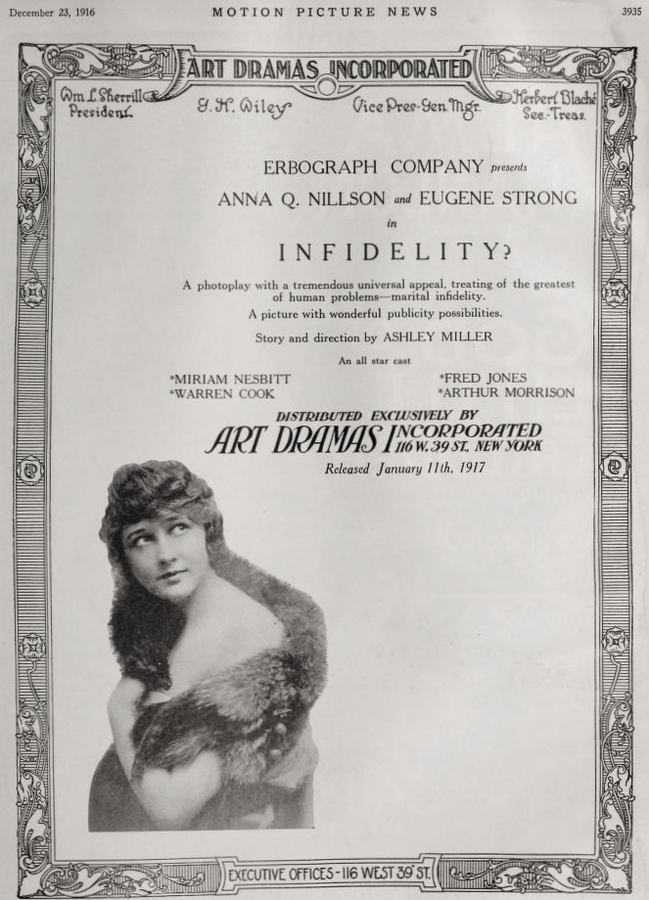
A gaol-bird artist steps back into the cage of memory, only to discover the bars are made of human misunderstanding.
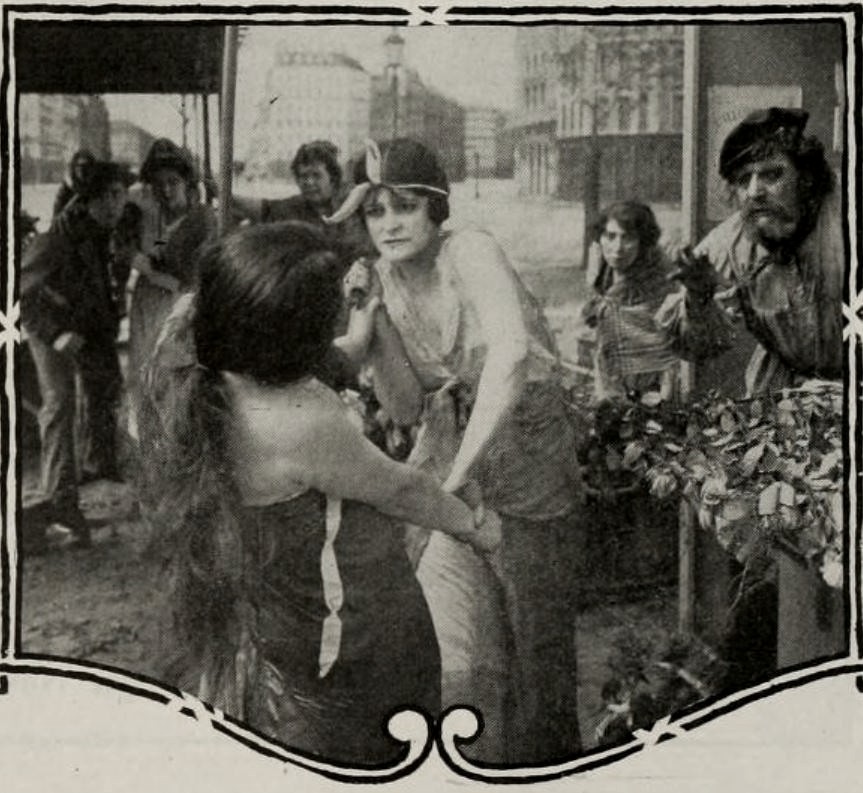
There is a moment, roughly halfway through Ashley Miller’s Infidelity, when Frank Mayne’s eyes—rimmed with the soot of two lost decades—refuse to blink. They become projectors: every frame of suffering he endured unspools across his corneas while, in the foreground, his unknown daughter clutches ripped chiffon like a failed canvas. That single sustained shot, achieved with nothing more sophisticated than a stubborn camera and an actor willing to stare down eternity, is the fulcrum on which the entire picture pivots. Silent cinema is often caricatured as semaphore melodrama; here it is forensic psychology conducted in grainy chiaroscuro.
Plot, as commodity, can be synopsized in three lines; plot, as lived experience, stains the mind like turpentine on cotton.
Mayne’s wrongful conviction for murder was prompted by the same cocktail of jealousy and snap judgment that now threatens to metastasize inside the next generation. The cosmic joke: even the audience, privy to every angle of the studio fracas, must watch characters lacerate one another with half-facts. We are thereby implicated in the very epistemic arrogance the film excoriates.
Miller’s screenplay is a nesting doll of ironies:
Visually, director of photography Fred C. Jones opts for tenebrism that would make Caravaggio gasp. The studio skylight becomes a moral barometer: when Ford berates Elaine, cross-hatched shadows crucify her body; after Mayne’s conciliatory intervention, a cloud drifts and a shaft of yellow salvation pours over the reconciled lovers. Lighting is not decorative—it is narrative theology.
Anna Q. Nilsson, as the wife revenant, performs grief like a slow fuse. Watch her hand, gloved in jet silk, tremble as she lowers it toward her husband’s shoulder—only to retreat mid-air, fearing the past might scald. The glove itself is a palimpsest: once white, now dyed funereal, it hints at her emotional colorfastness bleeding away.
Eugene Strong’s Frank Mayne is a study in skeletal charisma. Having relinquished vanity, he allows the camera to map every furrow, every prison-sutured tic. His gait—part ballet, part penitentiary shuffle—speaks of space compressed and then abruptly returned to him. When he ultimately folds Elaine and Ford into an embrace, the gesture is both benediction and self-amnesty.
Elizabeth Spencer’s Elaine oscillates between Pre-Raphaelite martyr and flapper defiance. In one insert, she tears a canvas from its stretcher; the rip is heard only through the orchestra’s cymbal crash, yet the audience invariably winches as though sinew were severed.
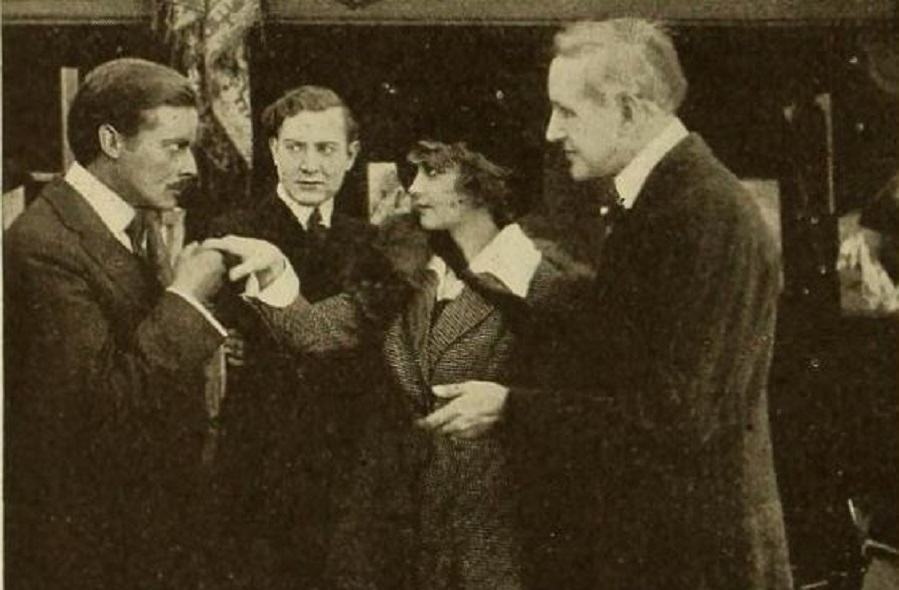
Composer Arthur Morrison’s original score, if you’re lucky enough to attend a restoration with live musicians, interpolates a sitar-like motif whenever Delna appears. Exoticizing? Perhaps. Yet situating the motif inside a twelve-bar blues progression slyly westernizes the “mystic,” rendering him less oriental Other and more nouveau-cosmopolitan, a gambit that prefigures later diasporic cinema.
Infidelity’s DNA shares strands with Scandal (another silent predicated on reputational combustion) and His Vindication (where masculine honor must be retroactively burnished). Yet where those titles externalize guilt through courtroom set pieces, Miller keeps the drama hermetically sealed inside the atelier—an echo chamber where every brushstroke can accuse.
Also invoked, though set continents away, is Potop; both films equate personal reconciliation with national healing, albeit Infidelity trades Polish battlefields for Bohemian floorboards.
Contemporary viewers may flinch at the term “Hindoo,” yet the film’s racial optics are more slippery than they first appear. Delna’s assailant status is not genetically predetermined but situationally provoked; conversely, the white fiancé’s violence toward Elaine is framed as moral, not ethnic, pathology. A progressive undercurrent bubbles: colonial bodies are not inherently menacing—contextual stressors are.
Editing rhythms deserve laurels. Miller employs a triple-overlay dissolve—prison gate, studio door, Elaine’s eye—within ninety feet of celluloid, collapsing twenty years into a heartbeat. Soviet montage theorists would not formalize such temporal compression until the mid-’20s; here it is, casually revolutionary in 1920.
What lingers longest is the film’s refusal of punitive closure. No one is marched back to jail; no suicide plummets from the rafters. Instead, Mayne hangs a fresh canvas on the easel, his wife stands beside him palette in hand, and Elaine sketches Ford’s profile in pastel. The cyclical implication: tomorrow may birth fresh misreadings. Redemption is not a certificate but a reprieve—renewable only through daily acts of interpretive humility.
Is Infidelity flawless? Hardly. The comic-relief janitor who shuffles in clutching a bucket feels grafted from a two-reel farce, and the intertitle that declaims “The Hindoo’s eyes blazed with unholy fire” would require contextual footnotes in any modern program. Yet blemishes themselves become instructive, reminding us that even progressive texts carry the birthmarks of their era.
Technical dexterity (lensing, tinting, pacing) earns a 9; thematic courage a 10; sociocultural residues a 6. Weighted, the film settles at an 8.7—formidably high for a century-old obscurity that most cineastes have encountered only as a footnote in Nilsson retrospectives.
Seek it out, whether via DCP at Pordenone or a 16 mm print in your local cine-club. Let its shadows crawl across your retina, let Mayne’s cracked whisper (yes, whisper—even in silence) remind you that to accuse is human, to interpret compassionately is divine. And when the lights rise, notice how the gallery of strangers beside you blinks as though waking from the same nightmare of misapprehension. That collective blink is the final reel, the one Miller spliced into your bloodstream. It runs indefinitely, a ghost reel, reminding you that the most corrosive infidelity is the betrayal of another’s story before it has been fully told.
IMDb —
1917
Community
Log in to comment.