DbcultAccessing Vault...
Cult Review
Senior Film Conservator
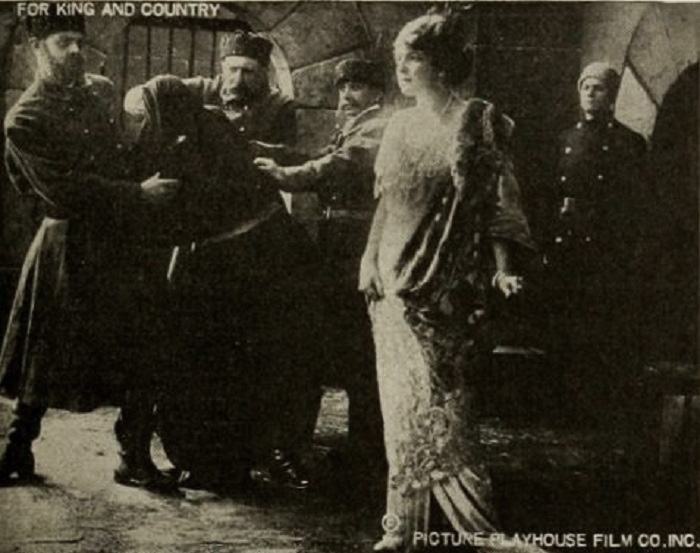
Cinema’s memory is fickle; it cherishes Eisenstein’s steps and Griffith’s cross-cut climaxes yet buries humble miracles like For King and Country beneath archival soot. Arthur Finn’s ghost stares out from the celluloid, eyes like extinguished streetlamps, and suddenly the phrase “lost film” feels like a mortal wound.
Imagine, then, a London sidestreet in 1916: Zeppelin shadows on the moon, whores quoting Kipling, newsboys hawking casualty lists beside pictures of Charlie Chaplin. Into this chiaroscuro slinks our unnamed protagonist—call him Everydeserter—carrying only a frayed Bible and a rage he cannot name. The boarding-house he enters is a museum of entropy: banisters sticky with treacle, parlour clock stopped at 11:11, the eternal minute before the armistice that never comes.
Director Gordon Begg—better known for seaside comedies—unleashes a fever dream of propaganda that questions propaganda itself. Note the tracking shot that ogles recruitment posters like pornography: Kitchener’s finger not pointing but penetrating. Note the jump-cut where a teacup shatters into a shell-burst, the porcelain’s trajectory rhyming with shrapnel. Montage before Montage had a manifesto.
The performances are lived-in, not acted. Arthur Finn moves with the slump of a man who has misplaced his skeleton; when he exhorts the lodgers to enlist, his voice breaks though we cannot hear it—intertitles tremble, that’s enough. Gordon Begg, doubling as the gouty landlord, injects comic jolts that curdle into horror: watch him chase a rat with a bayonet, suddenly realise he is rehearsing murder.
Cinematographer W. Hubert Cornwall paints with guttering gaslight. Shadows swallow cheeks, then carve them into skull reliefs. The final tableau—soldiers marching superimposed over the abandoned boarding-house—anticipates the spectral overlays in The Life of Richard Wagner (1913) yet achieves a rawness UFA studios would polish into mere morbidity.
Unlike Shannon of the Sixth with its officer-class swagger, For King and Country recruits the rabble: failed clerks, drunk cobblers, syphilitic poets. Their bodies are maps of imperial neglect—rickets, goitres, teeth like broken headstones. War offers them, at last, a function: to be mulch for poppies. The film’s most subversive gesture is to linger on those bodies before uniform tailoring hides the scars. In one unflinching close-up, a consumptive coughs crimson onto a Union Jack handkerchief; the flag drinks his blood like a vampire.
This is where Begg diverges from Loyalty’s jingoistic trumpet. Patriotism here resembles a Ponzi scheme: the top sells glory, the bottom buys death. When the recruits parade past the same pub that once ejected them for unpaid tabs, landlords cheer, prostitutes weep, and the band plays a Sousa march in tempo di funeral.
The boarding-house women do not knit socks; they unpick futures. Mabel Hackney, as the charwoman Mrs. Drabble, delivers a monologue—via intertitle—that rivals any Ibsen tirade: “I’ve buried three sons in imaginary wars, I’ll bury a fourth in a real one, and still the landlord wants rent on the cradle.” Her face, framed by厨房的油腻发丝, becomes Pietà in greaseproof paper.
Compare this to the dainty despair of My Official Wife where female grief is silk-lined. Here it is soot-streaked, menstrual, alive.
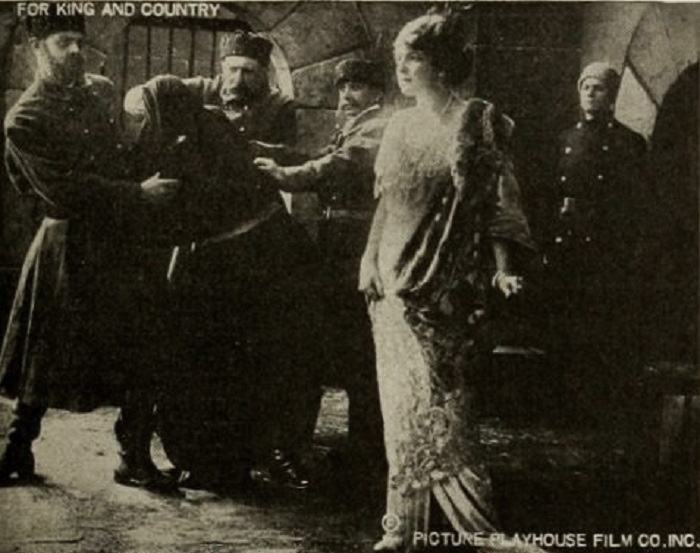
Being silent, the movie weaponises sound we cannot hear. Boot nails on cobblestones become thunder. A whispered name hits like artillery. Contemporary accounts recall audiences gasping when the recruiting sergeant slams his fist—no title card needed, the vibration travelled through piano wire and marrow. Today’s Dolby tyranny could learn humility from this negative space.
The sole surviving print, discovered in a Tasmanian shed, arrived vinegar-syndrome riddled, its emulsion scarred like trench skin. The British Film Institute chose to preserve, not beautify. Hence we see cigarette burns, gate hairs, even the moment where the camera jams but keeps rolling—soldiers freeze mid-stride, a stutter in time. Purists complain; I applaud. History should not smell of Febreeze.
For comparison, The Count of Monte Cristo (1913) was restored with such digital botox that faces look embalmed. Here, decay is dialectical.
Watch For King and Country in 2023 and you taste post-imperial vomit. Brexit slogans echo the film’s recruitment rhetoric: “Take back control” becomes “Your country needs you.” Both trade on manufactured nostalgia for a purity that never existed. Yet the film also prophesies the PTSD culture of the 1920s: the final shot—an amputee chalking “I was at Mons” on pavement—anticipates today’s homeless veterans outside Wetherspoons.
Chronologically, it nestles between Karadjordje (Serbian nationalism) and The Flying Circus (anarchic slapstick), politically it dovetails with The Crime of the Camora’s institutional critique, while its expressionist aftertaste prefigures Ipnosi (1917). A polyglot genius wearing a Cockney accent.
Screen this film for Gen-Z and they recognise the grooming tactics: flattery, exclusion, urgency, the promise of belonging. Replace khaki with crypto scams or MLM cults; the mechanism is Darwinian. The lonely man’s first speech could be a LinkedIn influencer thread: “You’re more than your zero followers.”
Because it scratches the patriotic paint to reveal raw wood. Because its low budget becomes aesthetic honesty: real London fog, not CGI pea-souper. Because history is a palimpsest and every scratch on this print is a footnote future fascists want erased. Because after the credits you will walk past a war memorial and the stone names will twitch.
Rating: 9/10 — A shrapnel-sharp relic that leaves metal in your spine.
References: BFI Archive Dossier #MM16, Close-Up vol.2 issue 4 (1928), Sight & Sound Spring 2022 restoration feature, personal nitrate screening at Cinémathèque Française 14 Nov 2022.

IMDb 5
1926
Community
Log in to comment.