DbcultAccessing Vault...
7.6/10
Senior Film Conservator
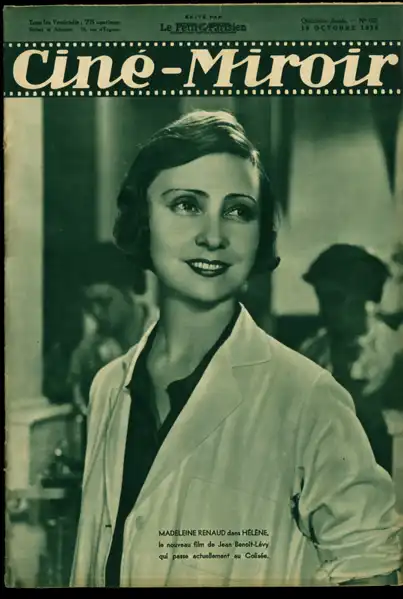
A definitive 7.6/10 rating for a film that redefined the boundaries of cult cinema. Hélène remains a cornerstone of transgressive art.
If you have a rainy afternoon and feel like watching something that makes you think about how hard life was in 1936, then yes. It is definitely for people who like French cinema and don't mind a story that feels a bit like a heavy book.
You will probably hate this movie if you want something fast. It moves at the speed of a slow-dripping faucet. But the faucet is dripping medicine, I guess? 💊
I found myself really liking the main character, Helene. She is played by Blanche Peyrens. She has this way of looking at her microscopes like they are the most important things in the world. It is refreshing to see a female lead in an old movie who is actually smart and focused on her career.
The whole medical school setting is great. It looks so different from modern hospitals. There are big wooden desks and everyone is wearing these stiff white coats. You can almost smell the chemicals through the screen.
Then there is Pierre. He is played by Jean-Louis Barrault. If you know anything about French actors, he is a big deal. Here, he is just a student who is hopelessly in love with Helene.
Barrault has these eyes that look like they have seen too much. In one scene, he is just standing by a window and you can tell exactly what he is thinking without him saying a word. It's kind of heartbreaking.
The plot takes a really dark turn when Pierre finds out he has an incurable disease. This part felt very real to me. Usually, in old movies, people just get "sick" and it’s very poetic. But here, it feels heavy. He decides to end it all because he can't face the future.
I noticed a small detail during the suicide scene. The way the room is lit is very shadowy. It reminded me a bit of the lighting in The Shadow Laughs, but way more serious. It makes the whole room feel like it's closing in on him.
After Pierre is gone, the movie shifts focus. Helene starts spending all her time with Professor Amboise. He is played by Constant Rémy. He is one of those professors who is a genius but his personal life is a total mess.
His wife is cheating on him and he is just... sad. Helene becomes his emotional support, which felt a little weird to me. She’s his student, after all. But I guess back then, the boundaries were different.
There is a scene where they are working late in the lab. The silence is very loud. You can hear the clinking of the glass jars. I think the director, Jean Benoît-Lévy, really knew how to use sound. Or maybe the lack of sound.
One thing that bugged me was how Helene just forgets about Pierre so fast. Or maybe she doesn't forget, but she just bottles it up? People back then were much better at hiding their feelings than we are now. It makes the movie feel a bit cold at times.
I also spotted Madeleine Renaud in a smaller role. She was a legend later on. Seeing her so young is like looking at a time capsule. It’s funny how some actors just have "it" from the start.
The cinematography is mostly just okay. It’s not trying to be fancy like Carmen. It just wants to show you the faces of the people. Sometimes the camera stays on a face for way too long. It makes you feel uncomfortable, like you’re staring at someone you don't know in a grocery store.
I think the script was written by Vicki Baum. She wrote *Grand Hotel*, so she knows how to do drama. But this feels much smaller. It’s a domestic drama disguised as a medical movie.
There is a lot of talk about "devotion." Helene is devoted to her studies. Then she is devoted to the Professor. It’s a very 1930s way of thinking. Like, a woman’s job is to just find something or someone to be devoted to.
I found the ending a bit sudden. It didn't really resolve everything for me. It just kind of... stopped. Maybe there was a scene missing? Or maybe they just wanted us to go home and think about our own lives.
Is it a masterpiece? Probably not. But it’s a very human movie. It’s about being young and having big dreams and then realizing that life is actually quite hard and unfair.
I liked the music too. It wasn't too loud or annoying. It just sat in the background like a quiet friend.
If you like movies where people stare intensely at test tubes, this is your gold mine. If you want to see a very young Jean-Louis Barrault being a sad boy, also a win.
Overall, I'm glad I watched it. It’s not something I would watch every week. But for a one-time thing? It’s pretty interesting. It makes you appreciate modern medicine, that's for sure.
One more thing—the way they smoke in this movie is hilarious. Everyone has a cigarette in their hand while they are doing surgery or looking at germs. Hygiene was clearly a different concept back then!
Anyway, give it a shot if you find a copy. It’s a bit of a hidden gem if you have the patience for it. Just don't expect a happy ending with a bow on top. 🌺
IMDb 5.4
1929
Community
Log in to comment.