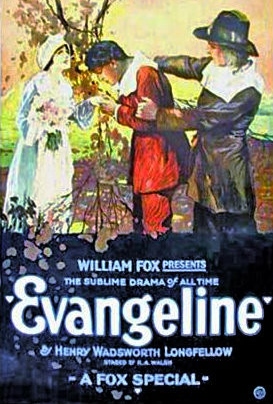
"In Evangeline's ceaseless wandering, Walsh sculpted cinema's purest monument to love as geographical obsession—a woman mapping her heartache across an emerging nation's wilderness."
The Landscape as Emotional Cartography
Raoul Walsh's directorial vision transforms terrain into psychological testament. The opening Acadia sequences shimmer with bucolic idealism—dappled sunlight through birch groves, linen gowns billowing in riverine breezes, Gabriel carving wooden songbirds at twilight. Cinematographer Georges Benoît bathes these moments in ethereal soft focus, rendering the subsequent violence with crushing starkness. When redcoats torch barns and wrest children from wailing mothers, the frame adopts jagged angles and destabilized compositions that physically unsettle. This geographical rupture becomes Evangeline's internal compass; her journey south mirrors the displacement trauma imprinted on her psyche.
Walsh's mastery manifests in environmental storytelling: Louisiana's oppressive bayous materialize through dripping Spanish moss that curtains the frame like funeral veils, while Philadelphia's plague streets emerge via Expressionist shadows stretching like grasping fingers. Compare this to the static backdrops in contemporaneous works like The Prison Without Walls—Walsh makes topography breathe with Evangeline's anguish. Particularly transcendent is the sequence where she navigates Mississippi riverboats at dusk, her silhouette melting into rippling water reflections as if the land itself absorbs her sorrow.
Miriam Cooper: Silent Cinema's Unheralded Thespian
Cooper's performance remains a masterclass in ocular acting. Watch how her eyes metamorphose across decades: the wide-blossoming hope when Gabriel places engagement ring on her finger; the flinty determination as she bribes ship captains; the hollowed resignation staring at another empty cabin where Gabriel recently slept. Without title cards, Cooper articulates complex emotional shifts through infinitesimal muscle contractions—a tremor in the jawline when hearing Gabriel's name, vertebrae straightening upon entering unfamiliar towns. Her physicality evolves from light-footed grace to weighted trudge, shoulders curving under invisible burdens.
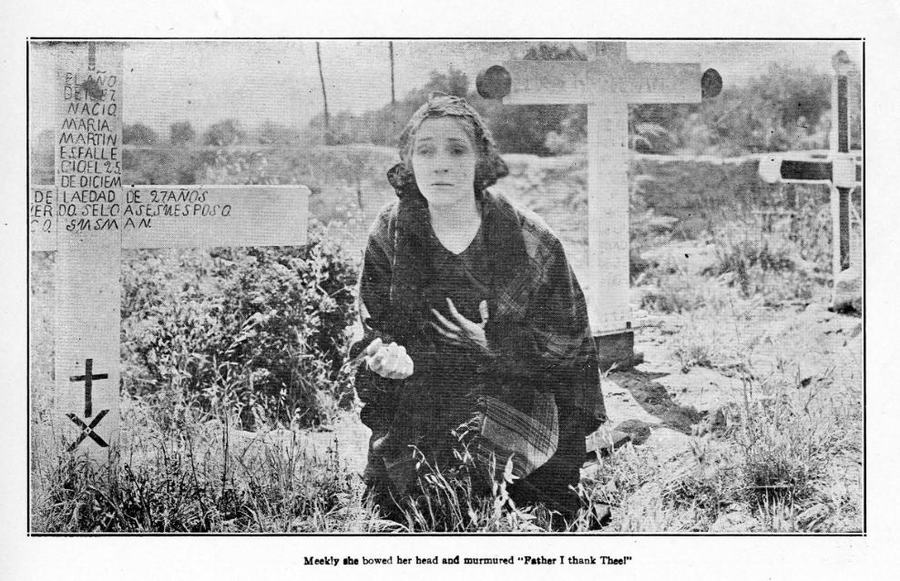
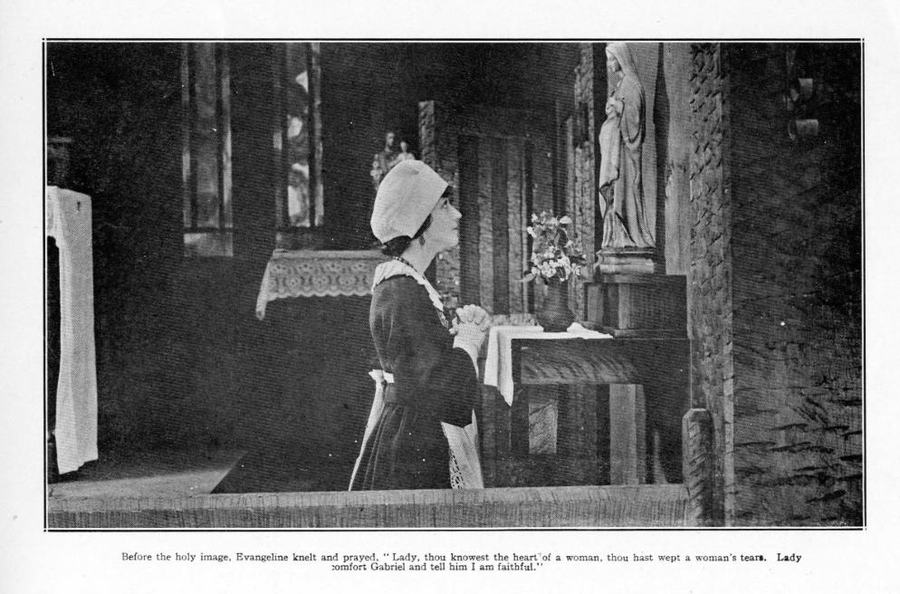
In the convent transformation scene, Cooper achieves profound spirituality through restraint. As she dons the wimple, her hands move with ceremonial slowness, yet her gaze burns with undimmed worldly longing—a sacred/profane duality unmatched until Falconetti's Joan of Arc. Unlike the performative hysterics common in 1910s melodramas (see The Fires of Youth), Cooper radiates interiority. Her final moments cradling the dying Gabriel communicate volumes through fingertips alone: the hesitant touch confirming his identity, the desperate clutch against his weakening breath, the tender rearrangement of his hair as death arrives. It's acting that transcends silent film convention.
Visual Motifs & Symbolic Language
- ⛵ The Schooner: Reappearing in backgrounds and dreams, its sails morph from wedding celebration decor to phantom vessel haunting Evangeline's quest
- 🕊️ Wooden Bird: Gabriel's engagement carving becomes Evangeline's talisman, its chipped paint mirroring her eroded hope
- 🚪 Thresholds: Doorways frame missed connections—Gabriel always exiting left as Evangeline enters right, spatial poetry of perpetual separation
Colonial Violence as Unspoken Character
Walsh daringly critiques imperial machinery without didacticism. The Great Expulsion unfolds via chilling bureaucratic efficiency: officers reading proclamances with disinterested monotony, ledger books open beside burning homes. James A. Marcus embodies institutional cruelty not through mustache-twirling villainy but cold administrative detachment—calculating confiscated acreage while children weep nearby. This resonates with anti-colonial themes later explored in Niños en la alameda, though Walsh emphasizes systemic over individual evil.
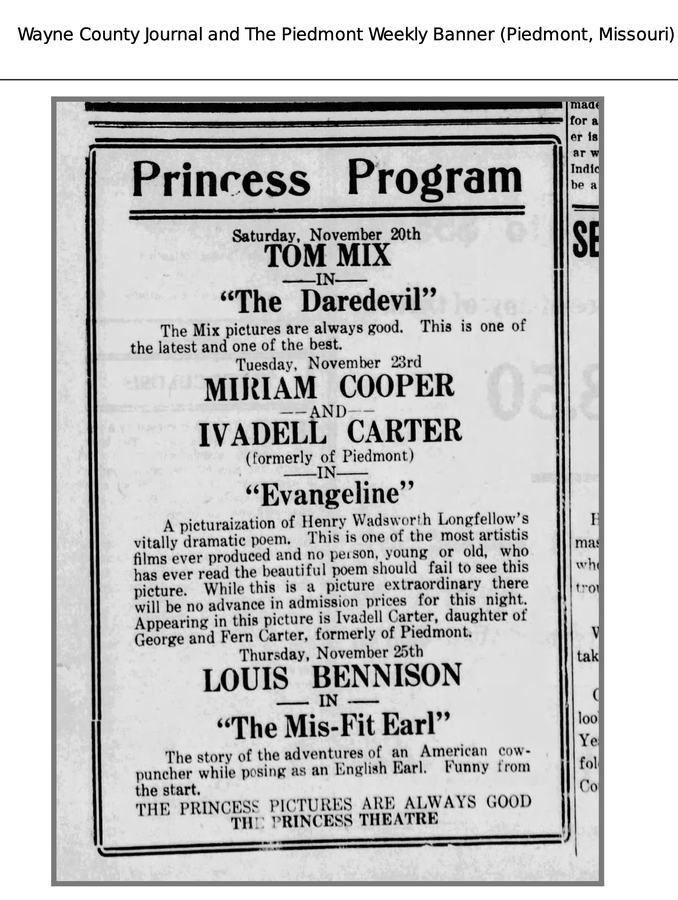
Notably, indigenous presence remains conspicuously absent—a vacuum speaking volumes about colonial narratives. The Acadians' dispossession occurs without acknowledgement of preceding Mi'kmaq displacement, rendering the wilderness Evangeline traverses as politically sanitized space. This elision reflects period blind spots, yet inadvertently strengthens the film's central tragedy: these characters are both victims and inheritors of settler-colonial displacement cycles.
Adapting Longfellow's Verse: Cinematic Challenges
Translating the epic poem's hexameter required radical innovation. Walsh solves rhythmic limitations through visual cadence—swaying wheat fields cut to oar strokes on exile ships, Evangeline's footsteps syncing with galloping hooves as she pursues rumors. The famous "forest primeval" invocation becomes a staggering dolly shot through old-growth pines, their towering canopies dwarfing human figures to emphasize nature's indifference.
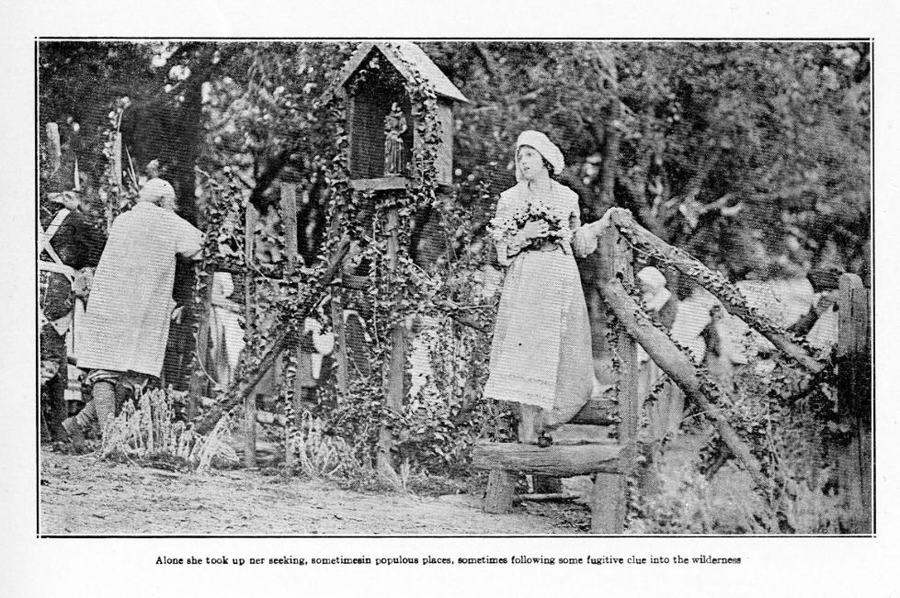
Screenplay choices reveal fascinating compromises. Gabriel's character gains dimensionality through Alan Roscoe's rugged physicality—his lumberjack labors and feverish delirium scenes showcase silent film's bodily expressiveness. Conversely, the poem's metaphysical contemplations manifest as symbolic interludes: Evangeline kneeling before roadside crucifixes, her reflection fracturing in rain-puddled streets. Where Longfellow dwells on divine purpose, Walsh fixates on human perseverance, aligning with contemporary post-WWI sensibilities.
Curiously omitted is the original's emphasis on Acadian community resilience. The film isolates Evangeline's saga from collective survival, rendering her a mythic wanderer rather than cultural emblem. This distillation anticipates later individualistic epics like Old Hartwell's Cub but sacrifices socio-political richness.
Comparative Cinematic Legacy
Evangeline's production design pioneered location shooting innovations. While most 1919 films relied on painted backdrops (witness the artificiality of A Camouflage Kiss), Walsh dragged cast and crew through Louisiana swamps, capturing authentic mud-caked desperation. The decision to film Quebec's Saguenay region for Acadia sequences established a realism benchmark, influencing later wilderness sagas.
Its temporal structure—compressing decades via match cuts (young Evangeline's hand on cabin door dissolving into aged hand)—revolutionized time manipulation. This technique would echo through European art cinema, notably De mystiske fodspor. Yet the film's greatest legacy lies in its gender inversion: Evangeline predates the male-centric odyssey template, positioning female constancy as heroic catalyst. Her quiet endurance offers stark contrast to the vigilante feminism in The New Mission of Judex.
Technique Innovations
First use of brackish water tanks for bayou scenes • Experimental fog diffusion with cornstarch • Animal-drawn camera sleds for tracking shots
Lost Elements
Original 145-minute runtime • Hand-tinted sunset sequences • Extended Philadelphia cholera outbreak scenes
The Spiritual Alchemy of Longing
Evangeline transcends romance through devotional metaphysics. Her search evolves into secular sainthood—feeding yellow fever victims not from charity but hope Gabriel might be among them. When she dons nun's habit, it's less religious conversion than pilgrimage uniform. Walsh suggests that obsessive love, when stripped of possession, approaches the divine. The film's profoundest moment arrives not at Gabriel's deathbed, but when Evangeline pauses mid-chase through a bustling port. Watching newlyweds disembark, her face registers not jealousy but transcendent empathy—a recognition that her unfinished love story safeguards others' happy endings.
This spiritual dimension distinguishes it from similar period sacrifices in Little Women. Where Alcott's heroines find fulfillment in domesticity, Evangeline discovers purpose in perpetual seeking. Her final walk into the mist after Gabriel's funeral implies the search itself was always the destination—a notion both heartbreaking and mystically liberating. The film thus becomes cinema's earliest meditation on love as directional force rather than consummation event.
Ultimately, Evangeline endures not as historical recreation but mythic mapping of the human heart's terrible persistence. Its power lies in the unbearable tension between motion and stasis—a woman forever traveling toward a moment already receding into memory. In Cooper's achingly still performance amidst continental upheaval, Walsh bottled the essence of devotion as gravitational pull stronger than empires, geography, or time itself.