DbcultAccessing Vault...
6.4/10
Senior Film Conservator
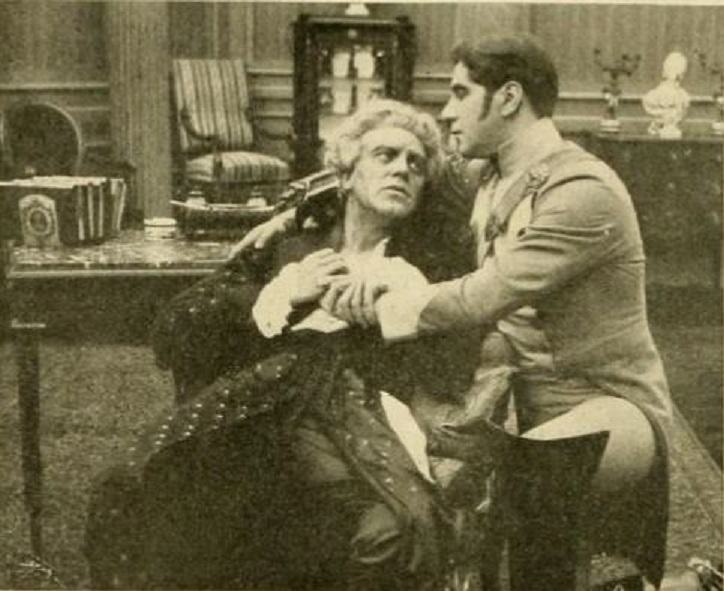
A definitive 6.4/10 rating for a film that redefined the boundaries of cult cinema. The Face in the Moonlight remains a cornerstone of transgressive art.
Moonlight has always been cinema’s accomplice, but in The Face in the Moonlight it becomes a prosecuting attorney, illuminating the same face twice and charging each half with the other’s crime.
Set during the Bourbon twilight—after Napoleon’s first exile yet before the Hundred Days—this 1920 silent weaves a twin-identity parable so baroque it makes The Child of Paris feel like a nursery rhyme. Ambrose, a powdered marquis, chooses patrimony over pulse, sacrificing Jeanne—the kind of peasant girl whose wrists smell of wheat and iron—on the altar of entail. Their infant vanishes into the Parisian underbelly, reared by cutpurses until he becomes Rabat: cheekbones like cracked marble, price on his head, a living indictment of the aristocracy’s original sin.
Meanwhile, legitimate son Victor—epaulettes starched to cathedral rigidity—patrols the King’s avenues, betrothed to Lucille whose innocence is less virtue than social insulation. Fate, wearing Munier’s ledger-stained cuffs, engineers a moonlit rendezvous where dagger meets throat; Lucille sees Rabat’s profile and mistakes it for her lover. The mistake sticks like a burr under silk, and the film spends its remaining reels threading guilt through the eye of a guillotine needle.
Director Charles Osborne—never lauded enough outside archives—shoots the brothers as if they were opposing negatives of the same photograph. Victor appears in high-key daylight: white gloves, corridors of mirrors, the camera gliding like a courtier. Rabat emerges from chiaroscuro tunnels where streetlamps bleed into cobblestones, his silhouette scratched onto the frame like a graffiti threat. When the two finally share a cell, Osborne overlays a double-exposure halation: two faces, one soul, split by title-card fate.
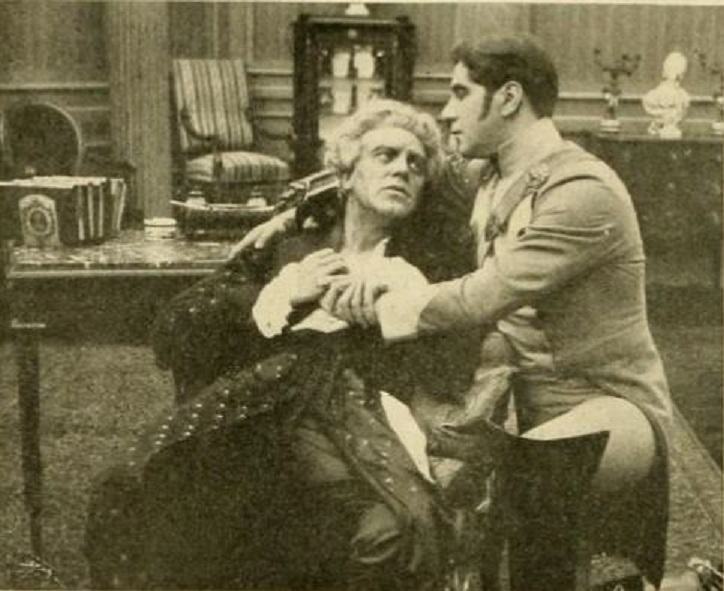
Montagu Love plays both roles with such nuanced disparity that you forget the frame line. His Victor holds shoulders back as if permanently braced for a portrait, whereas Rabat’s collarbones jut forward, a predator sniffing the next scam. The difference lies not in prosthetics but in respiratory rhythm: Victor exhales through the nose, Rabat through the mouth—an animal tell.
Dorothy Fairchild’s Lucille is no swooning pawn; she is the film’s mnemonic device. Once she witnesses the murder, her eyes become the camera—every subsequent glance measures the gap between appearance and truth. Stella Archer’s Alice, the legitimized wife, haunts the periphery like a wraith of property law, her lament conveyed through hand-creamed close-ups where powdered skin cracks under guilt. The film whispers that women inherit the ledger of men’s choices and must pay the overdraft.
Osborne’s cut rhythm accelerates like a tumbrel rolling toward Place de la Révolution. Intertitles shrink from full sentences to staccato fragments: “Tomorrow.” “Both.” “Dawn.” The parallel-edited execution sequence cross-cleaves between two scaffold platforms—one for the regicide blade, one for the firing squad—until the frame itself seems to taste steel. Compare this to The Eternal City where montage serves spectacle; here it serves existential panic.
Napoleon’s return is rendered not with trumpets but with a title-card decree slipped under a barracks door—history reduced to bureaucratic stationery. Victor’s re-arrest on political grounds exposes the arbitrary hinge between hero and traitor; yesterday’s captain becomes tomorrow’s insurrectionist. The film slyly notes that regimes swap masks, faces stay the same.
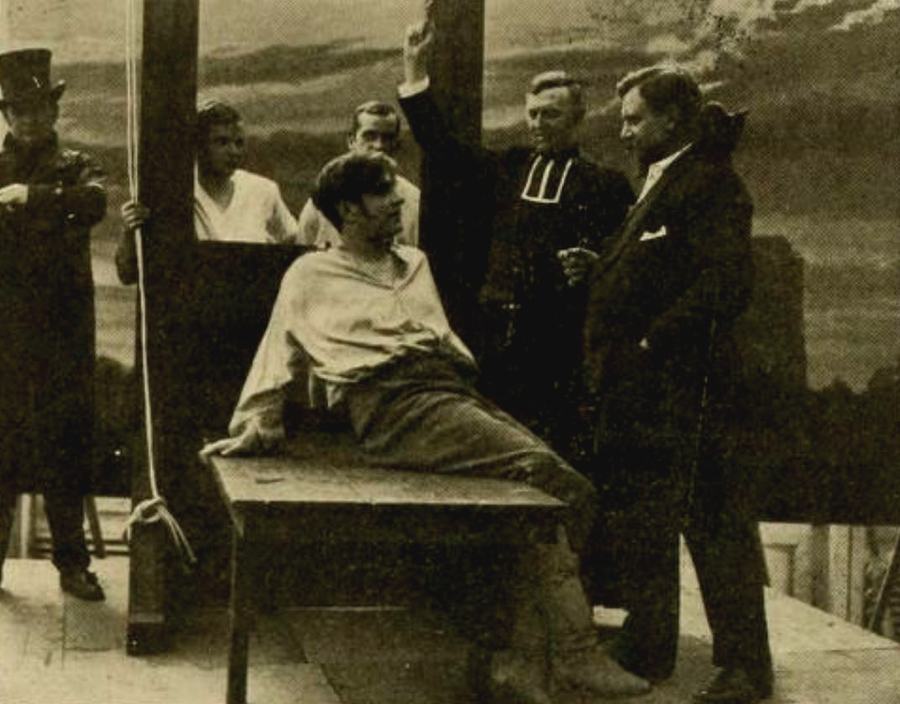
Some scholars read the final pardon as sentiment; I read it as class survivalism. Lucille’s blackmail of Munier—threatening to expose his embezzlement—forces the uncle to petition Bonaparte. The price of Victor’s life is Rabat’s head, a transaction that re-inscribes aristocratic immunity while sacrificing the proletarian body. The brothers’ farewell handshake, drenched in torchlight, plays like a gentleman’s agreement on the futility of fraternity across class fault lines.
Yet Osborne refuses nihilism. In the final shot, moonlight no longer accuses; it baptizes the reunited lovers as they exit a chapel. The camera tilts up to a cruciform weathervane, suggesting that perhaps identity—unlike estate—can be reborn.
Pair with a live trio: viola da gamba tracing Bourbon corridors, prepared piano rattling like carriage wheels, and a single snare that enters only during execution sequences, mimicking the heartbeat that refuses to die.
Place The Face in the Moonlight beside The Criminal Path for doppelgänger fatalism, or beside Nell Gwynne for stories where love must negotiate the scaffold. Its DNA reverberates in later twin thrillers, yet none match the moral vertigo achieved here by the simple act of letting the same face commit both sin and sacrifice.
Seek out the 4K restoration by Cinémathèque de Toulouse; the nitrate shimmer restores the moonlight to its original spectral indictment. Watch it twice—first for plot, second for the micro-shifts in Love’s shoulders. The second time, bring a hand mirror; hold it when Rabat appears and notice how your own face, reflected over his, completes the century-old interrogation.
IMDb —
1923
Community
Log in to comment.