DbcultAccessing Vault...
7.8/10
Senior Film Conservator
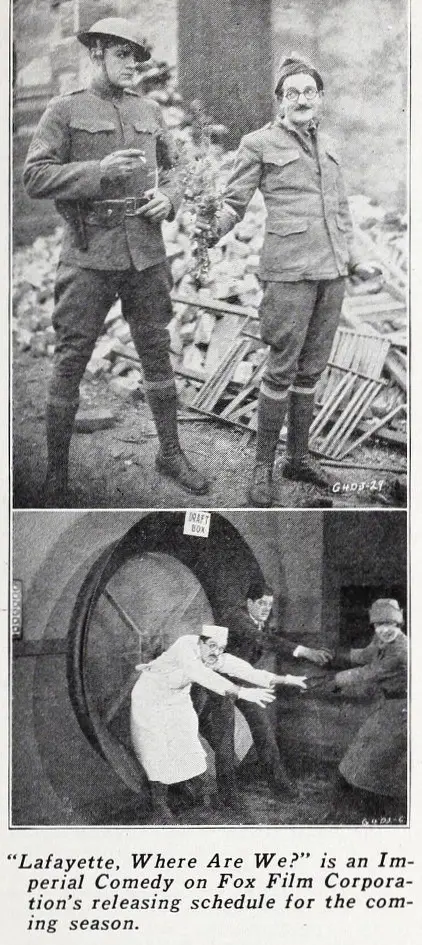
A definitive 7.8/10 rating for a film that redefined the boundaries of cult cinema. Hello Lafayette remains a cornerstone of transgressive art.
Short answer: yes, but only if you view it as a historical curiosity rather than a coherent narrative. This film is for silent comedy completists and fans of Jean Arthur's early career, but it is definitely not for those who require their war movies to have a shred of realism or logical progression.
Hello Lafayette is a fever dream of 1920s slapstick that defies modern expectations of storytelling. It exists in a space where the logic of the stage and the chaos of the battlefield collide with zero explanation. It is short, punchy, and utterly bizarre.
1) This film works because it leans entirely into the absurdity of its premise without trying to ground the action in reality.
2) This film fails because the editing is often frantic to the point of confusion, and the tonal shifts between 'war' and 'musical comedy' are jarringly unearned.
3) You should watch it if you want to see how early Hollywood treated the Great War as a backdrop for surrealist gags and chorus line choreography.
The film opens with a premise that feels like a rejected Monty Python sketch: a man whose sole skill is tasting salmon. In the context of 1924, this was likely a play on the 'expert' tropes common in shorts like The Rat's Knuckles. Our protagonist, played with a wide-eyed sincerity by Ernest Shields, treats the quality of fish with the gravity of a surgeon.
When he enlists, the army does what the army does best—it ignores his skill and puts him in the mess hall. The early scenes are standard slapstick fare, involving oversized pots and the general clumsiness of a civilian in uniform. However, the specificity of the 'salmon' motif remains a weirdly consistent thread. It isn't just food; it's his identity. This sets up the central conflict when he moves to the trenches.
The most famous sequence in Hello Lafayette involves the protagonist passing out food in the lines. Due to a bout of 'absent-mindedness'—a common silent film trope used to justify absolute carnage—he begins reaching into a crate of grenades instead of a crate of salmon. The visual gag of soldiers opening 'tins' only to find live explosives is executed with a brisk, dark humor.
One specific moment stands out: a soldier catches a grenade, looks at it with the disappointment of a man who wanted lunch, and tosses it back. The lack of fear is the joke. It is a cynical, yet lighthearted take on the horrors of the front. Compared to more serious fare like The Scarlet Oath, this film treats the battlefield as a playground for errors. It works. But it’s flawed.
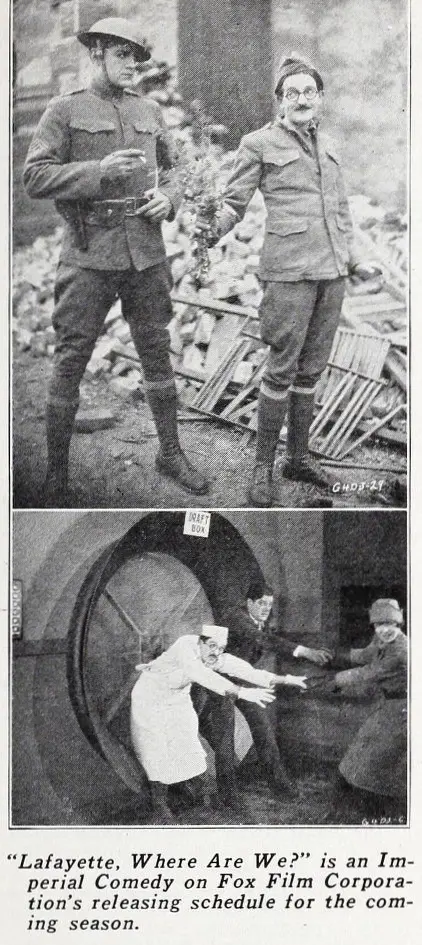
Then there is Jean Arthur. Before she became the husky-voiced icon of Frank Capra films, she was a versatile player in these silent shorts. Here, she is part of a battalion of chorus girls dressed as Anzacs. They appear for no reason at all. There is no narrative bridge, no dream sequence explanation. They simply exist on the battlefield to facilitate the plot.
The sight of a line of women in military tunics performing synchronized movements in the mud is the peak of the film’s surrealism. It feels like a precursor to the Busby Berkeley spectacles, but with more dirt and fewer resources. Their presence allows the protagonist to capture a German company, a feat achieved more through visual confusion than tactical brilliance. It’s a debatable choice—some might find it creative, others will find it lazy. I find it delightfully unhinged.
The camera work is functional, typical of the mid-20s short subject. There are few close-ups, with the director preferring wide shots to capture the physical comedy of the 'salmon delivery.' The pacing is relentless. Unlike the more methodical build-up seen in Go Easy, Hello Lafayette moves from one gag to the next with almost no breathing room. This prevents the audience from questioning the internal logic of the chorus girls' appearance.
The lighting in the trench scenes is surprisingly effective, using shadows to hide the budget constraints of the set. However, the film suffers from the 'flatness' common in early comedy. Every scene is lit for the joke, not for the atmosphere. When compared to a contemporary drama like Painted People, the lack of visual depth is apparent, but it serves the slapstick purpose.
Yes, if you value the history of the medium. Hello Lafayette is a perfect example of how 1920s cinema didn't feel the need to explain itself. It was an era of pure visual experimentation. If you are looking for a cohesive war story, look elsewhere. If you want to see a future star like Jean Arthur in a bizarre military-musical hybrid, this is a must-see. It is a relic of a time when the rules of cinema were still being written and, in this case, happily ignored.
Pros:
Cons:
I will take a stand here: the chorus girls are the best part of the movie. Most critics would call them a distraction or a sign of a weak script. I argue they are a bold, avant-garde choice. In an era where every other short was trying to be Hit-the-Trail Holliday, Hello Lafayette chose to be weird. It chose to break the fourth wall of reality. That is commendable, even if the execution is messy.
There is a brutal simplicity to the film's humor. It doesn't ask you to care about the characters. It asks you to laugh at the situation. It’s cold, mechanical, and effective. The salmon-tasting subplot is never resolved, and that is perhaps the film's greatest insult and its greatest joke. It simply doesn't care about your expectations.
Hello Lafayette is a chaotic slice of 1920s absurdity. While it lacks the polish of the era's major features, its commitment to nonsensical plot points makes it a fascinating watch. It is a film where salmon and soldiers, grenades and girls, all mix into a strange, short-lived soup of entertainment. Watch it for the history; stay for the madness.
Final Score: 6/10 - A mess, but a memorable one.
IMDb 5.4
1933
Community
Log in to comment.