DbcultAccessing Vault...
7/10
Senior Film Conservator
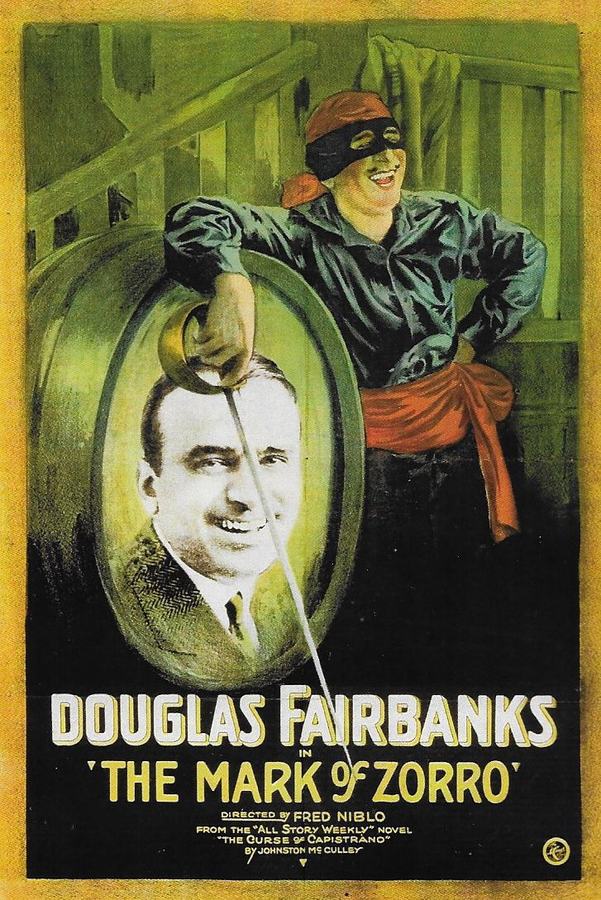
A definitive 7/10 rating for a film that redefined the boundaries of cult cinema. The Mark of Zorro remains a cornerstone of transgressive art.
Stepping into the flickering glow of a 1920s cinema, one might not immediately grasp the seismic shift that Douglas Fairbanks’ *The Mark of Zorro* represented. Yet, this cinematic marvel, a vibrant tapestry of athleticism, romance, and social justice, didn't just entertain; it redefined the very essence of the action hero. It’s a film that pulsates with an almost audacious vitality, a testament to the boundless energy of its star and the nascent power of the moving image. From its very inception, adapted from Johnston McCulley’s serialized novel 'The Curse of Capistrano,' the film promised a spectacle, and it delivered, not merely with grand gestures but with an underlying intelligence that elevated it far beyond simple escapism.
At the heart of *The Mark of Zorro* lies the incomparable Douglas Fairbanks, a performer whose magnetic charisma and acrobatic prowess were practically custom-made for the role of Don Diego Vega and his masked alter ego. Fairbanks, already a colossal star known for his comedic romps, pivoted dramatically with this film, ushering in the swashbuckling genre as we know it. His portrayal of Don Diego is a masterclass in comedic timing and physical acting. He crafts a character so utterly fey, so deliberately effeminate and disinterested in the plight of his fellow Californians, that the contrast with Zorro's fierce, righteous fury becomes even more striking. The fluttering handkerchiefs, the languid poses, the feigned disinterest – every mannerism is meticulously calibrated to create the perfect smokescreen. This isn't merely acting; it's a performance art piece, a deliberate construction of a persona designed to deceive not just the characters within the film, but perhaps even the audience for a fleeting moment.
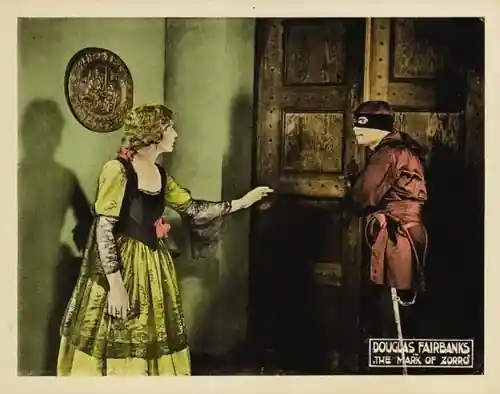
When Fairbanks sheds the guise of the foppish Don Diego and dons the black cape and mask of Zorro, the transformation is electrifying. He becomes a whirlwind of motion, leaping across rooftops, scaling walls, and engaging in thrilling sword duels with an agility that remains breathtaking even a century later. His stunts, often performed without a double, imbue Zorro with an authentic, almost superhuman quality. The sheer physical commitment to the role is evident in every frame, a stark contrast to the more static or purely dramatic performances seen in many contemporary films. While other films of the era, such as The Straight Road or Hidden Fires, might have explored dramatic narratives, they rarely boasted the kinetic energy and physical dynamism that Fairbanks brought to the screen. His Zorro isn't just a hero; he's an ideal, a symbol of resistance brought to life through sheer, unadulterated physical poetry.
The narrative brilliance of *The Mark of Zorro* lies in its masterful exploration of dual identity, a trope that would later become foundational for countless superhero stories. Don Diego's feigned idiocy is not merely a plot device; it’s a profound commentary on the power of perception and the masks people wear in society. By presenting himself as harmless and ineffectual, he disarms his enemies, allowing Zorro to operate with an element of surprise that is crucial to his success. This duality also serves as a sharp social critique. The ruling class, represented by the tyrannical Governor Alvarado (George Periolat) and the cruel Captain Juan Ramon (Noah Beery), is so blinded by its own arrogance and disdain for the common people that it cannot conceive of a nobleman acting against its interests, much less as a champion of the oppressed.
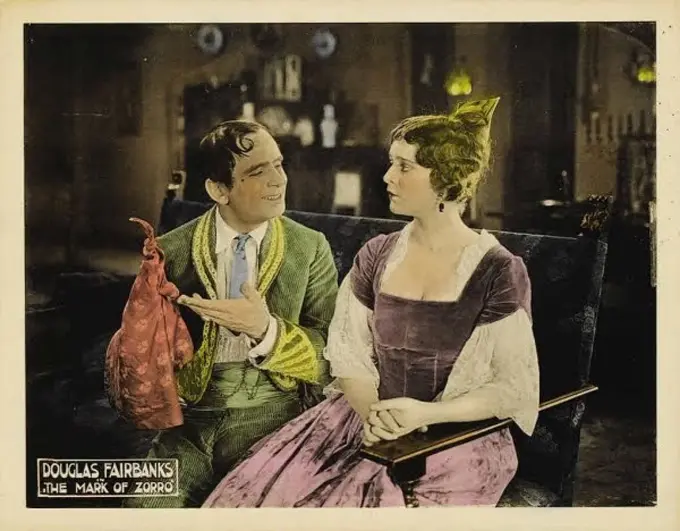
The film cleverly juxtaposes the frivolous world of the Dons and Doñas with the brutal reality faced by the peons. Zorro emerges from this stark contrast, a dark shadow bringing light to the downtrodden. His actions are not driven by personal gain or vengeance alone, but by a deep-seated desire for justice and equality. This moral compass makes Zorro an enduring figure, resonating with audiences who yearn for a hero to challenge systemic injustice. The 'Z' he carves, a simple yet powerful symbol, becomes a mark of defiance, a promise of retribution, and a beacon of hope. It’s a narrative sophistication that transcends its silent film origins, offering layers of interpretation beyond the thrilling chases and sword fights.
While Fairbanks undoubtedly commands the screen, the film's success is also bolstered by a robust supporting cast and capable direction. Noah Beery, as Captain Juan Ramon, delivers a deliciously villainous performance, portraying a man utterly devoid of empathy, whose cruelty provides a perfect foil for Zorro's righteousness. Beery's imposing physical presence and menacing sneer make him a truly formidable antagonist, ensuring that Zorro's triumphs feel hard-won. Marguerite De La Motte, as the spirited Lolita Pulido, brings a delicate balance of vulnerability and defiance to her role, making her a compelling love interest for both the seemingly spineless Don Diego and the dashing Zorro. Her eventual realization of Don Diego's true character is a beautifully played moment of silent cinema acting.
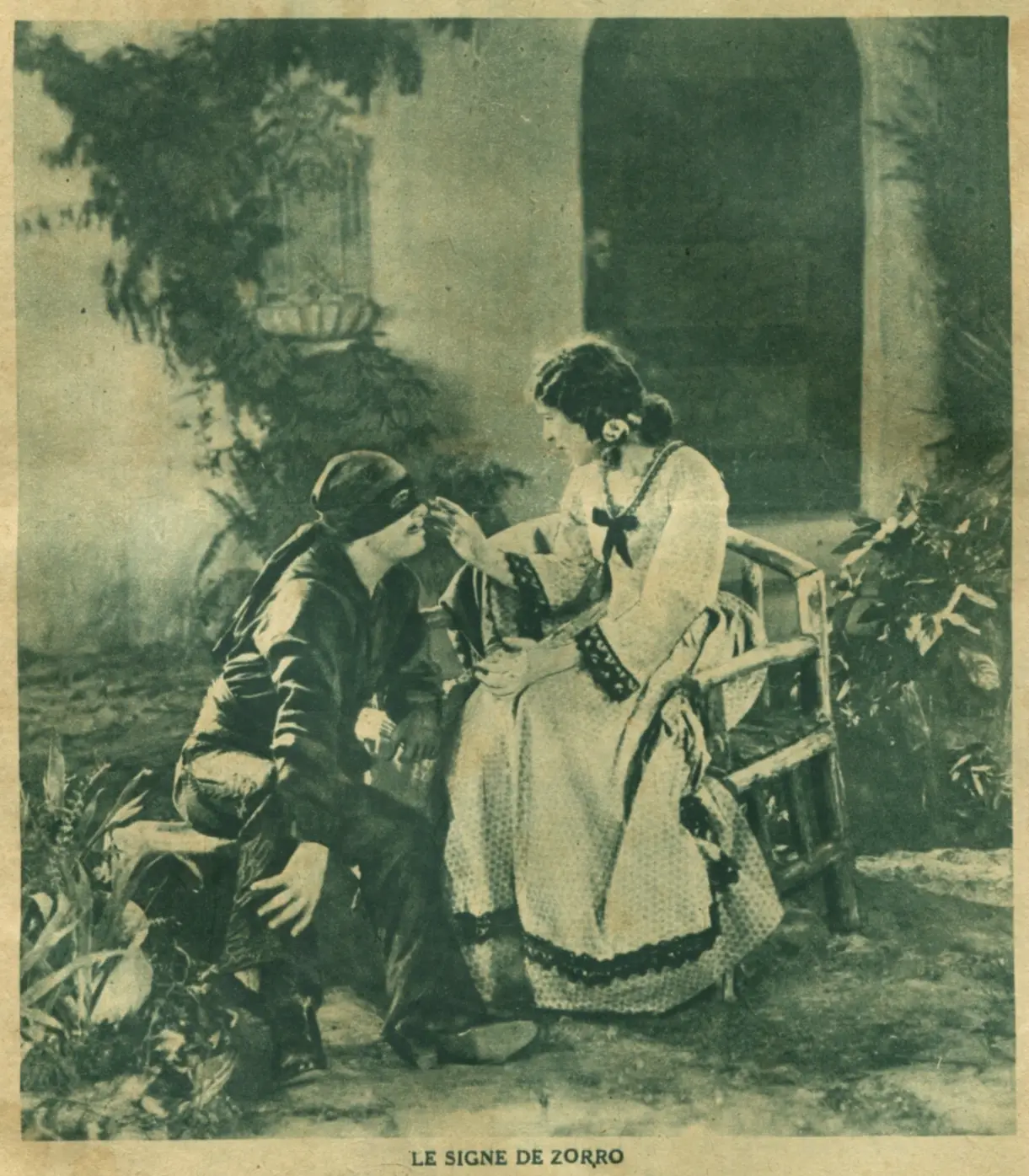
The direction, credited to Fred Niblo (though Fairbanks himself had significant creative input, even serving as co-writer with Eugene Miller and Johnston McCulley), is remarkably dynamic for its time. The action sequences are choreographed with precision, utilizing the full depth of the frame and demonstrating an understanding of cinematic rhythm that was ahead of its curve. The camera moves with Zorro, following his leaps and bounds, creating an immersive experience that pulls the audience directly into the heart of the adventure. The use of elaborate sets and authentic period costumes further grounds the fantastical elements in a believable world, allowing the audience to fully invest in the unfolding drama. This attention to detail and commitment to visual storytelling distinguishes it from simpler narratives, like perhaps The Capture of a Sea Elephant and Hunting Wild Game in the South Pacific Islands, which focused more on documentary-style capture, highlighting Zorro's sophisticated narrative construction.
*The Mark of Zorro* was not just a commercial success; it was a groundbreaking work that significantly impacted the trajectory of cinema. It cemented Douglas Fairbanks' status as the ultimate action star, paving the way for his subsequent blockbusters like *Robin Hood* and *The Thief of Bagdad*. More broadly, it established the swashbuckler genre, a cinematic tradition that continues to enthrall audiences with tales of daring heroes, thrilling swordplay, and romantic adventure. The film's influence extends far beyond its immediate genre, however. The concept of the masked vigilante, the hero with a secret identity who fights for justice outside the confines of the law, became a blueprint for countless characters across various media, from Batman to Superman.
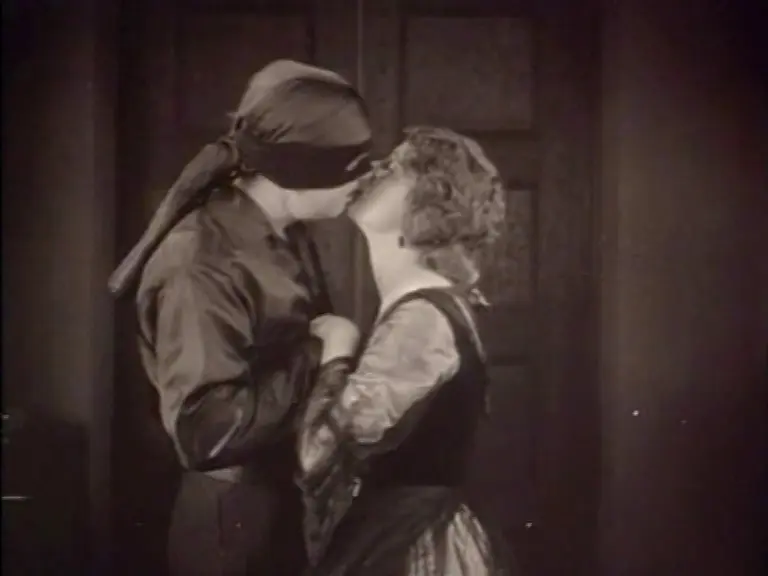
The film's technical achievements, particularly in its stunt work and action choreography, set new standards for what was possible on screen. Fairbanks’ innovative use of practical effects and his willingness to push the boundaries of physical performance inspired generations of filmmakers and actors. It demonstrated that spectacle could be achieved without sacrificing character depth or narrative coherence. This blending of high-octane action with compelling storytelling was a revelation, especially when compared to films that might have relied more heavily on dramatic tension or character introspection without the same physical dynamism, such as Luck in Pawn or The Greater Woman. *The Mark of Zorro* proved that cinematic heroism could be both grand and intimately human.
Beyond its historical significance and technical prowess, *The Mark of Zorro* endures because its core themes remain universally resonant. The struggle against oppression, the fight for justice, and the triumph of good over evil are timeless narratives that speak to the human condition. Zorro is not merely a hero for his time; he is an archetype, embodying the hope that even in the face of overwhelming tyranny, a single individual, armed with courage and conviction, can make a difference. The film also weaves in a charming romantic subplot, with Don Diego's seemingly hopeless pursuit of Lolita Pulido adding another layer of intrigue and emotional investment. The humor derived from Don Diego's exaggerated effeminacy, especially in his interactions with Lolita, provides moments of levity that perfectly balance the film's more serious themes of injustice and rebellion.
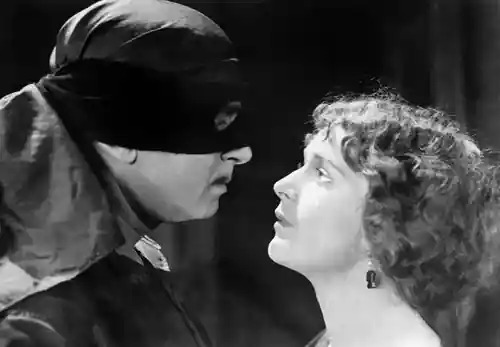
The chemistry between Fairbanks and De La Motte is palpable, communicated through the nuanced language of silent film acting – expressive glances, subtle gestures, and heartfelt gazes. Their romance is not merely a decorative element; it is integral to the plot, as Lolita's initial disdain for Don Diego and her admiration for Zorro create a fascinating tension that propels much of the dramatic arc. This blend of thrilling action, poignant romance, and compelling social commentary ensures that *The Mark of Zorro* remains a rich and rewarding viewing experience, far more complex than many might expect from a century-old silent film. It doesn't just tell a story; it performs it with an infectious zeal that transcends the limitations of its era, proving that true cinematic magic is indeed timeless.
In retrospect, *The Mark of Zorro* stands as a monumental achievement in silent cinema, a film that not only entertained millions but also laid crucial groundwork for future generations of filmmakers and storytellers. It’s a vibrant testament to the power of physical performance, the allure of a compelling dual identity, and the enduring appeal of a hero who fights for the underdog. The film's impact is not just historical; it is felt in every subsequent action-adventure film, every masked vigilante, and every tale of a seemingly ordinary person rising to extraordinary challenges. It’s a narrative blueprint that has been endlessly reinterpreted, yet the original retains a unique charm and vigor that few imitations have matched.
The collective genius of its writers, Eugene Miller, Douglas Fairbanks, and Johnston McCulley, in adapting the source material into such a dynamic cinematic experience, cannot be overstated. They understood the visual language of film and how to translate a pulpy serialized story into a grand, sweeping epic. The meticulous casting, including the likes of Charles Belcher, Milton Berle, Walt Whitman (not the poet, but an actor of the era), Claire McDowell, Betty Vent, and George Periolat, alongside the formidable Noah Beery and the radiant Marguerite De La Motte, created a cohesive and believable world. Each actor, from the smallest role to the largest, contributed to the film's immersive quality, using expression and gesture to convey emotions and intentions without spoken dialogue.
Even when considering other films of its period, such as Pauline or Polly of the Circus, which might have featured strong female leads or dramatic narratives, *The Mark of Zorro* stands apart in its sheer scale of adventure and its profound influence on popular culture. It is a film that demands to be seen, not just as a historical artifact, but as a living, breathing piece of cinematic art that continues to inspire and thrill. It reminds us that even in an era before sound, color, or CGI, the fundamental elements of storytelling – compelling characters, thrilling action, and a resonant message – were more than enough to create an unforgettable experience. The mark of Zorro, indeed, is indelible, etched not just on the screen, but in the very soul of cinematic heroism.
IMDb —
1920
Community
Log in to comment.