DbcultAccessing Vault...
Cult Review
Senior Film Conservator
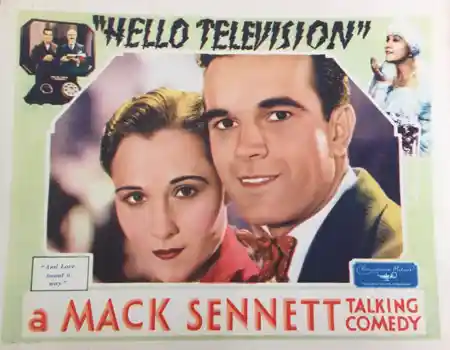
"Hello, Television" is a tricky one. Is it worth watching today? Depends. If you’re a real old-movie nut, the kind who digs into the archives, maybe. Folks who find early tech history fascinating might get a kick out of it. Anyone expecting a tight plot or polished acting will likely bail pretty quick. It's more of a time capsule than a masterpiece. 📺
Right from the start, you get this sense of genuine excitement, but also a bit of confusion. The characters, especially Tom Dempsey, seem utterly bewildered by the whole television thing. His wide-eyed stares at the screen are honestly pretty funny.
The story, such as it is, centers on a group of pioneers trying to get a TV station off the ground. It’s all very earnest. You can almost feel the movie trying to convince you this moment matters.
Ann Christy plays the leading lady, a singer trying to make it big on this newfangled medium. She has this great, weary eye-roll she deploys whenever Dempsey’s character gets too carried away. It’s a subtle thing, but it really sells her frustration.
Then there’s Andy Clyde as the perpetually flustered inventor. He spends most of his screen time tripping over cables or accidentally blowing fuses. One scene, where he tries to explain 'radio waves' using only his hands, goes on about 20 seconds too long. The silence starts to feel awkward rather than emotional.
The humor is very much of its time. Some of the slapstick bits feel a bit forced now. But there's a charm to it, like watching a really enthusiastic school play.
The prop televisions themselves are a highlight. They look like giant wooden boxes with tiny, flickering screens. You half expect smoke to start curling out of them at any moment.
There’s a strange little musical number about halfway through. Christy’s character sings a song about the 'magic of the airwaves.' It comes out of nowhere and then vanishes just as quickly. Felt a bit like padding.
The movie gets noticeably better whenever it stops trying to explain the science and just lets the characters react. Junior Fuller, who plays the eager young assistant, has a few moments where his sheer enthusiasm is infectious.
One reaction shot of Julia Griffith's character, after a broadcast goes wrong, lingers so long it becomes funny. You can see her trying not to laugh. Or maybe she just forgot her line. Who knows.
Honestly, the biggest takeaway is how much people *didn't* understand about television back then. It's a reminder of how revolutionary it all was. They were literally inventing the rules as they went along.
The pacing is a bit all over the place. Some scenes drag, while others rush by. It feels less like a polished film and more like a collection of ideas stitched together. But that's part of its odd appeal, I guess.
It's an interesting watch if you're into film history, or just want to see something truly different. Just don't go in expecting a modern blockbuster. This is slow, deliberate, and a little bit silly.
IMDb 6.2
1920
Community
Log in to comment.