DbcultAccessing Vault...
Cult Review
Senior Film Conservator
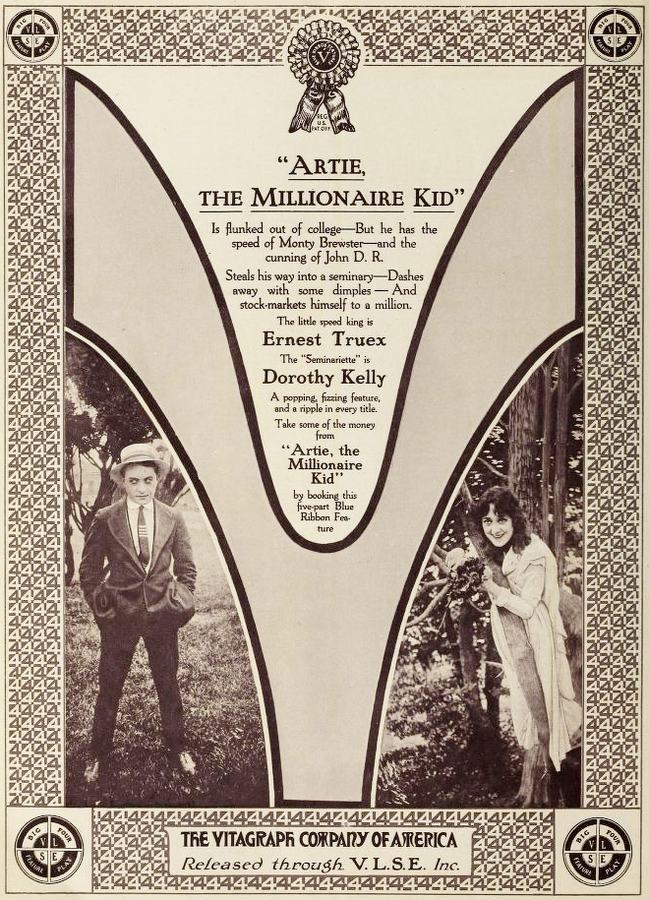
Stepping back into the nascent years of cinema, one encounters a fascinating tapestry of storytelling, often reflecting the societal mores and burgeoning aspirations of its time. Artie, the Millionaire Kid, a 1915 production penned by George Ade and William B. Courtney, emerges as a spirited relic from this era, a narrative steeped in the classic American archetype of the self-made (or, in this case, self-remade) man. It’s a film that, despite its century-plus vintage, offers a surprisingly agile exploration of themes that remain perennially relevant: youthful impetuousness, paternal expectation, the intoxicating allure of wealth, and the convoluted dance of romance and ambition. This isn't just a simple boy-meets-girl tale; it’s a strategic game of chess played with hearts and railroad tracks, a captivating blend of social comedy and shrewd business acumen.
At its core, Artie, the Millionaire Kid introduces us to Artie Hamilton, portrayed with a vibrant, if sometimes naive, energy by Ernest Truex. Artie is initially presented as a quintessential dilettante, the privileged offspring of a formidable railroad baron. His ignominious expulsion from college—a familiar trope even then—serves as the seismic catalyst, shattering his carefree existence and igniting his father's righteous wrath. The subsequent disinheritance and banishment from the lavish family home are not merely punitive measures; they are the crucible in which Artie’s character is unexpectedly forged. His defiant declaration to his father—a bold, almost preposterous promise to acquire enough wealth within a single twelvemonth to purchase the family’s entire railroad empire—sets the stage for an extraordinary narrative of redemption and cunning. It’s a narrative arc that echoes the spirit of similar tales of ambition and social climbing, though perhaps with less overtly grim moral gravity than, say, The Firm of Girdlestone, where the stakes often felt more existentially dire, and the consequences of failure far more severe.
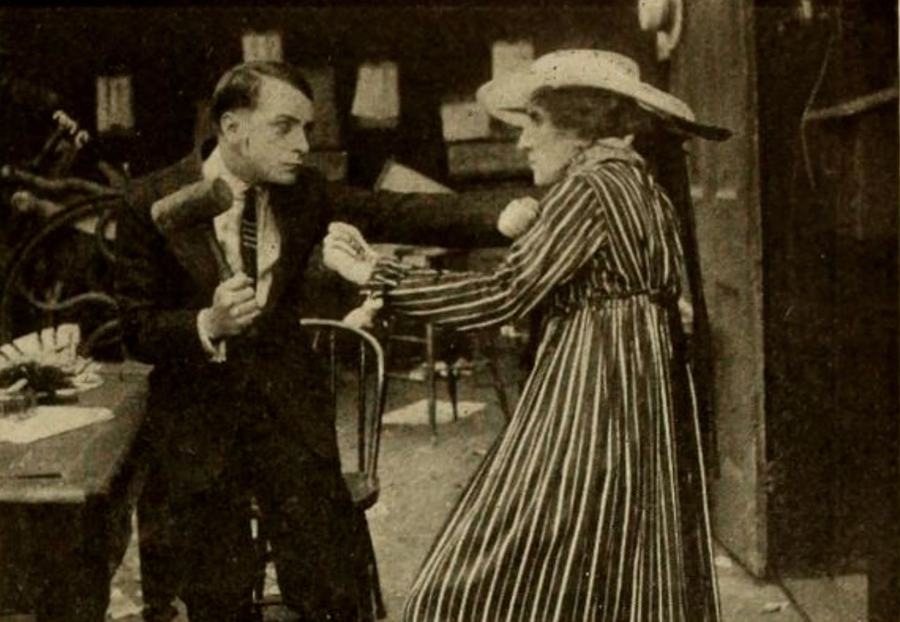
The plot swiftly pivots from this initial conflict to introduce the romantic element, an indispensable ingredient in early 20th-century storytelling. Artie’s chance encounter with Annabelle Willowboy, brought to life with understated charm by Dorothy Kelly, at a local girls' school, injects a new, compelling dynamic into his quest. Annabelle isn't merely a passive object of affection; she becomes an unwitting, yet crucial, piece in Artie’s grand design. His discovery that Annabelle is being courted by the affluent Uriah Updike, and, more importantly, that Updike's father owns a strategically vital parcel of land—land that Artie’s own father desperately needs for a critical railroad expansion—transforms a personal vendetta into a complex financial and romantic entanglement. This convergence of nascent love and lucrative land deals is precisely where the film truly finds its stride, transitioning from a simple story of youthful defiance to a sophisticated exploration of strategic manipulation.
The genius of Artie's scheme lies in its multi-layered approach. He doesn’t simply aim to win Annabelle’s heart or outbid Updike; he intends to leverage both situations to achieve his almost impossible boast. This requires a significant degree of cunning and a willingness to engage in what the plot synopsis delicately terms "scheming and trickery." It’s a testament to the character's resourcefulness, but also a reflection of an era where sharp business practices, even those bordering on the ethically ambiguous, were often romanticized as part of the American entrepreneurial spirit. The early 20th century was a period of immense industrial growth and burgeoning capitalism, where railroad empires were synonymous with power and influence. Artie's challenge is not just personal; it's a microcosm of the larger economic battles being fought across the nation. One might draw parallels to the intricate deceptions found in narratives like The Broken Law, though Artie's motivations are arguably less sinister, driven more by pride and a desire for filial vindication than outright malice or criminal intent.
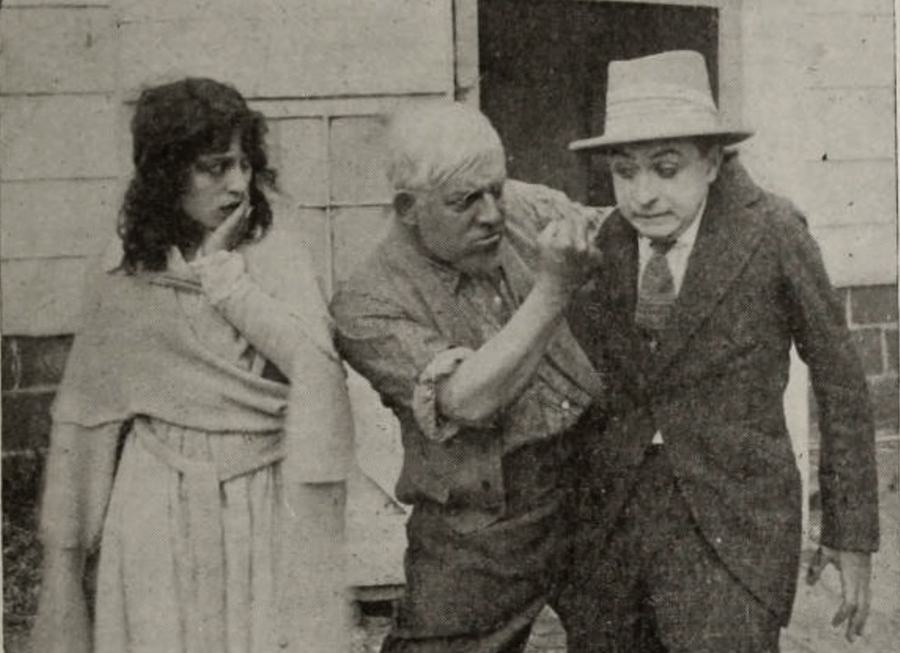
Ernest Truex, as Artie, carries the film with an infectious blend of boyish charm and burgeoning shrewdness. His portrayal manages to make Artie’s audacious plans seem less like outright villainy and more like the desperate, yet ingenious, machinations of a young man striving to prove his worth in a world dominated by his father's shadow. Truex’s ability to convey complex emotional shifts through facial expressions and physical comedy, without the aid of spoken dialogue, is a masterclass in silent film acting. He transitions Artie from a pampered, somewhat clueless youth to a determined, calculating strategist with remarkable believability. Dorothy Kelly's Annabelle, while perhaps constrained by the era's conventions for female characters, still imbues her role with a certain grace and quiet strength, making her a believable object of Artie’s affection and a pivotal, if sometimes unwitting, player in his grand design. The chemistry between the two leads, though understated by modern standards, provides the essential emotional anchor necessary to ground Artie’s more outlandish schemes, preventing the film from devolving into pure farce.
To appreciate Artie, the Millionaire Kid fully, one must view it through the lens of early cinematic development. In 1915, the grammar of filmmaking was still being written, evolving rapidly from its nickelodeon origins. Directors and cinematographers were actively experimenting with narrative techniques, editing rhythms, and the burgeoning power of visual storytelling. While specific directorial credits for such early features are sometimes elusive or overshadowed by the writers and stars, the film likely showcases the emerging sophistication of continuity editing, the use of carefully composed shots to guide the viewer's eye, and the indispensable role of intertitles to convey dialogue, internal monologues, and crucial plot information. The visual style would have relied heavily on theatrical blocking and expressive, often exaggerated, performances—a common characteristic of films from this period, such as Trilby (1915) or The Dawn of a Tomorrow, which similarly navigated complex emotional landscapes with the limited yet potent tools available.
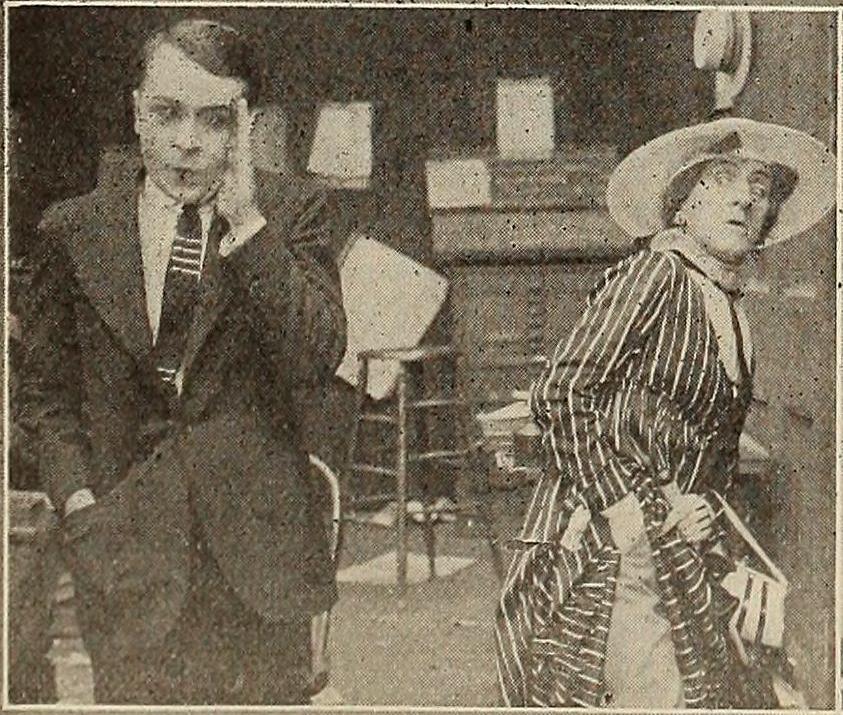
The film’s setting, presumably in a vibrant, turn-of-the-century American landscape, would have been conveyed through meticulously designed sets and perhaps carefully chosen location shots that captured the burgeoning industrial might symbolized by the railroad. The stark contrast between Artie's initial privileged surroundings and his subsequent struggle to establish himself would have been visually articulated, creating a strong sense of his journey and transformation. The silent era’s reliance on gesture, mime, and nuanced facial expression meant that actors like Truex had to convey a vast spectrum of emotion—from despair to cunning, from infatuation to triumph—without uttering a single word. This demanding skill truly set early stars apart, and Truex’s ability to project Artie's evolving confidence and Machiavellian aptitude is undeniably central to the film's success and enduring appeal.
Beyond the immediate plot, Artie, the Millionaire Kid delves into fascinating thematic territory that resonated deeply with its contemporary audience and continues to offer insights today. It’s a commentary on the fluid nature of wealth and social standing in America, a nation perpetually fascinated by stories of rags-to-riches, or in Artie’s unique case, riches-to-temporary-disgrace-to-even-greater-riches. The railroad itself is a powerful, multifaceted symbol, representing not just industrial progress and the inexorable march of modernity, but also the immense power and influence wielded by those who controlled these vital arteries of commerce. Artie's ambition to "buy his father's railroad" is not just about financial gain; it's a symbolic act of usurping patriarchal authority and establishing his own independent dominion, a declaration of self-worth that transcends mere monetary value. This struggle for autonomy against familial giants is a recurring motif in cinema, seen in various guises from the earnest challenges faced in The Children in the House to more complex, multi-generational dramas.
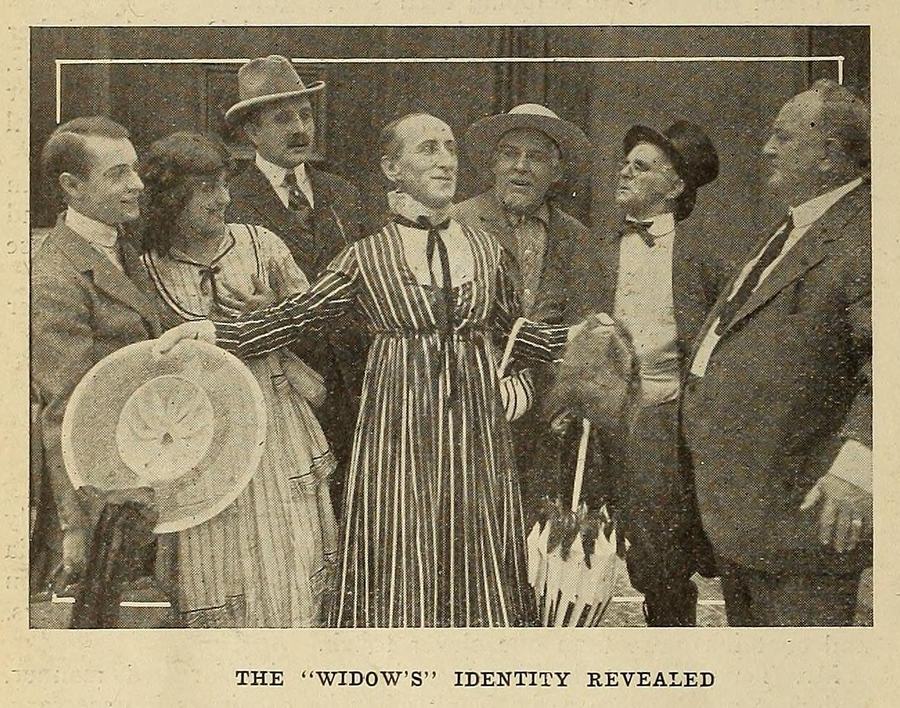
The film also subtly critiques the superficiality of wealth in courtship. Annabelle is initially pursued by Uriah Updike, whose primary attribute seems to be his family's established affluence and social standing. Artie, stripped of his own inherited wealth, must rely entirely on his wit and charm, and ultimately his strategic brilliance, to win her affection. This sets up a classic dichotomy between inherited status and earned merit, suggesting that true worth lies not in one's birthright but in one's ingenuity and character. It's a romantic ideal that resonates with the notion of genuine connection triumphing over purely material considerations, a sentiment often explored in films like Angel of His Dreams, albeit with different narrative frameworks and emotional stakes. The film’s stance on this issue, favoring Artie's earned success over Updike's inherited privilege, reflects a deeply ingrained American belief in meritocracy, even when achieved through unconventional means.
The "scheming and trickery" Artie employs, while presented as a necessary evil for his ultimate goal, also raises pertinent questions about ethics in both business and love. Is Artie a hero for his sheer resourcefulness, or is there a darker, more morally ambiguous undertone to his manipulations? The film, typical of its era's more optimistic and less cynical outlook, likely frames his actions as justifiable means to a noble end – proving himself to his father and securing his beloved. This contrasts sharply with films where such machinations lead to more tragic or morally compromised outcomes, such as those found in the darker narratives of The Unknown, which often explored the more sinister side of human nature and deceit. Artie’s world, while challenging, still operates under a relatively clear moral compass where ingenuity, even when mischievous, is ultimately rewarded.
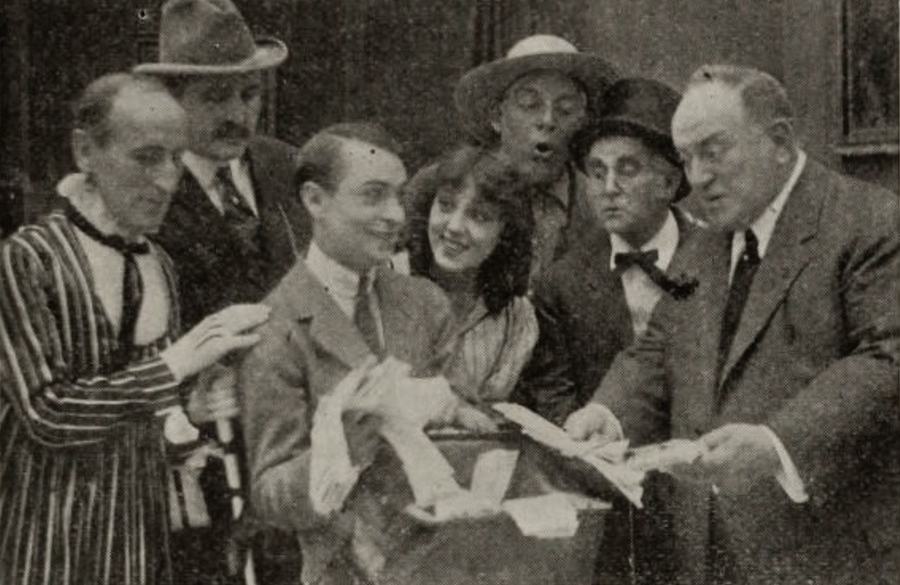
While Artie, the Millionaire Kid may not possess the widespread recognition of some of its more canonical contemporaries, it remains a valuable artifact for film historians and enthusiasts alike. It offers an invaluable window into the narrative conventions, performance styles, and societal preoccupations of early American cinema. The film's reliance on clear character motivations, a well-defined conflict, and a satisfying resolution speaks to a fundamental understanding of storytelling that transcends technological limitations. It’s a powerful reminder that even in its infancy, cinema was capable of crafting engaging, multi-faceted narratives that explored complex human emotions and societal dynamics with surprising depth and wit.
The enduring charm of the film lies in its unpretentious ambition. It doesn't aim for the epic scale of historical spectacles like When Rome Ruled or the profound psychological depth of a film like The Isle of the Dead, but rather focuses on a more intimate, yet equally compelling, battle of wits and wills. The character of Artie, with his blend of youthful arrogance and underlying ingenuity, is surprisingly relatable, embodying a universal desire for independence and validation. His journey, from privileged outcast to strategic mastermind, is a compelling testament to the transformative power of adversity and the human capacity for innovation.
In an age where cinematic storytelling often leans into hyper-realism or fantastical escapism, there's a refreshing simplicity to Artie, the Millionaire Kid. It’s a film that trusts its audience to engage with its narrative through visual cues and the expressive power of its performers. The writers, George Ade and William B. Courtney, crafted a script that, even in its summarized form, showcases a keen understanding of dramatic tension and character development, building towards a satisfying climax. The film, therefore, stands as a testament to the foundational principles of cinematic narrative that continue to influence storytelling today. It’s a delightful, if often overlooked, piece of film history that reminds us of the enduring appeal of a clever scheme, a grand ambition, and the timeless pursuit of both love and fortune.
Ultimately, Artie, the Millionaire Kid is more than just a historical curiosity; it’s a vibrant snapshot of early 20th-century American ingenuity and romance, presented with a charming directness that is both a product of its time and surprisingly timeless. It encourages us to reflect on the nature of ambition, the complexities of family dynamics, and the often-intertwined paths of love and commerce. For those interested in the evolution of cinema and the enduring power of a well-told story, this film offers a rich and rewarding experience, demonstrating that even in its nascent form, the moving picture was already capable of profound entertainment and insightful social commentary. Its blend of comedic elements with a serious underlying quest for self-validation makes it a compelling watch, reaffirming the belief that cleverness and determination can indeed carve one's own destiny, even against formidable odds.
IMDb —
1928
Community
Log in to comment.