DbcultAccessing Vault...
7.1/10
Senior Film Conservator
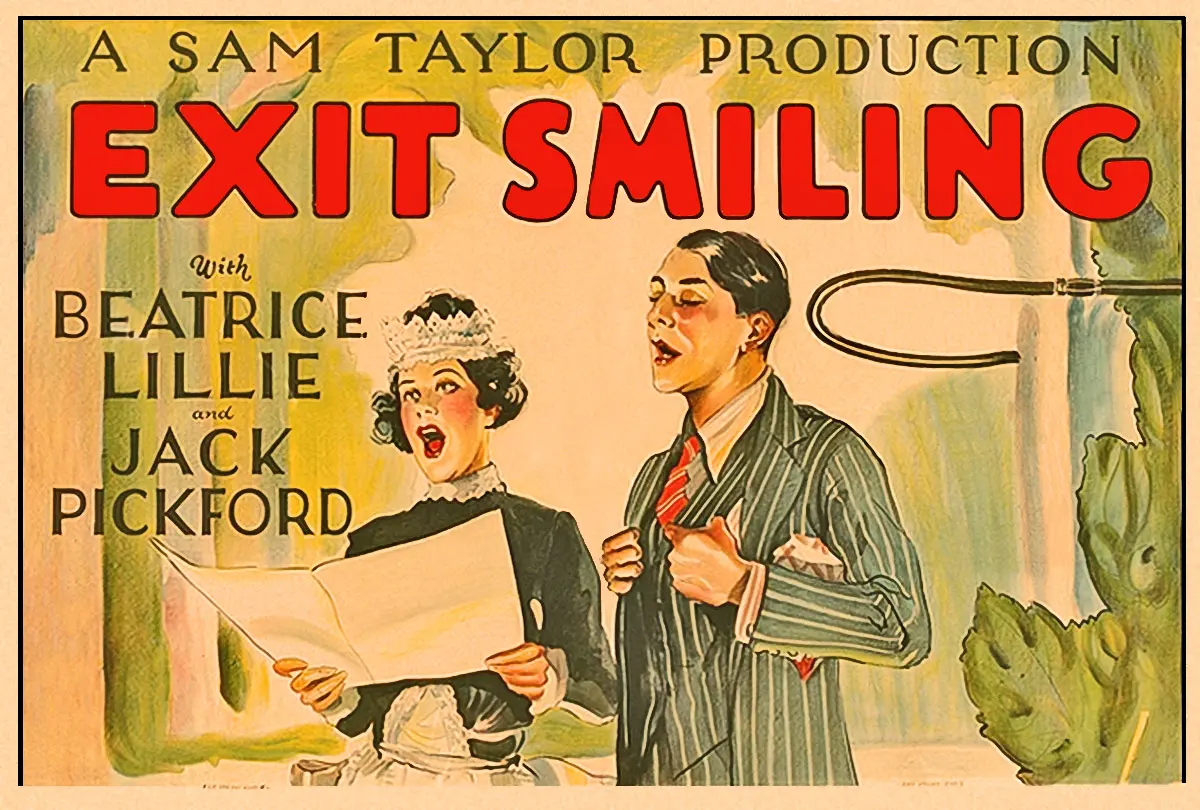
A definitive 7.1/10 rating for a film that redefined the boundaries of cult cinema. Exit Smiling remains a cornerstone of transgressive art.
Is Exit Smiling worth your time in an era of high-octane blockbusters? Short answer: Yes, but only if you appreciate the surgical precision of physical comedy and a protagonist who doesn't need a makeover to be captivating.
This film is for the cinephile who finds beauty in the margins and the viewer who prefers the dry wit of Buster Keaton over the sentimentality of Charlie Chaplin. It is definitively not for those who require fast-paced editing or a traditional 'happily ever after' romantic resolution.
1) This film works because Beatrice Lillie’s performance is a masterclass in restraint, using microscopic facial shifts to convey more than most actors do with a monologue.

2) This film fails because the secondary plot involving the bank embezzlement feels like a mandatory studio inclusion that distracts from the rich theatrical atmosphere.
3) You should watch it if you want to see the literal blueprint for modern deadpan comedy and cringe-humor pioneers like Lucille Ball or Catherine O'Hara.
Beatrice Lillie was already a stage legend when she made her film debut in Exit Smiling, and it shows. Most silent actors of the mid-1920s were still leaning into the melodramatic gestures inherited from the Victorian stage, but Lillie operates on a different frequency. She plays Violet, a 'skivvy' for the Waites-Fawcett Players, with a weary dignity that is constantly undermined by her own clumsiness.
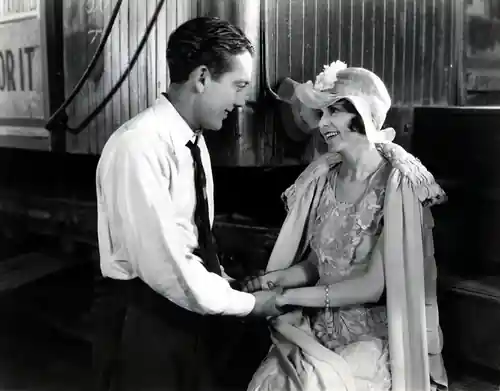
Take, for instance, the scene where she attempts to play a 'vamp' role. She doesn't just fail; she fails with a specific, rhythmic incompetence. She handles a feather boa as if it were a predatory animal. It is a performance that reminds me of the structured chaos found in Going Up, yet it feels more grounded in character than in mere gags. Lillie understands that the funniest thing about Violet isn't that she’s a maid; it’s that she’s a maid who genuinely believes she is a tragic heroine in waiting.
Her chemistry with Jack Pickford is intentionally lopsided. Pickford, playing the earnest Jimmy, is the traditional leading man, but Lillie constantly upstages him by doing absolutely nothing. While Pickford is busy 'acting,' Lillie is simply existing, and her existence is infinitely more interesting. It’s a bold choice for a debut. Most actors would try to dominate the frame. Lillie lets the frame come to her. It works. But it’s flawed by the era's need for a tidy ending.
Sam Taylor, known for his work with Harold Lloyd, brings a crispness to the production that prevents it from becoming a mere stage play on film. The backstage sequences are particularly evocative, capturing the cramped, chaotic energy of a traveling troupe. The lighting in these scenes is surprisingly sophisticated, using shadows to delineate the world of the stage from the world of the dressing room.
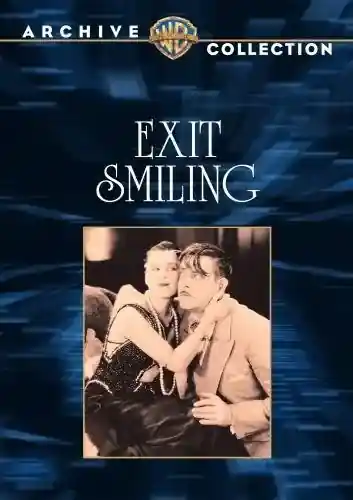
When compared to the broader, more slapstick-heavy comedies like The Tenderfoot, Exit Smiling feels almost avant-garde in its subtlety. Taylor allows the camera to linger on Lillie’s face during moments of quiet disappointment. There is a specific shot where Violet watches the leading lady receive flowers; the camera doesn't zoom or move. It stays wide, showing her smallness in the wings. This visual storytelling is far more effective than any intertitle could be.
However, the pacing stumbles when the film leaves the theater. The subplot regarding the stolen money and the villainous Jesse Marsh (DeWitt Jennings) feels like it belongs in a different movie—perhaps something more akin to the heavy-handed drama of The Unbeliever. Every time the film cuts back to the bank mystery, the air goes out of the balloon. We don't care about the money; we care about whether Violet will get to say her one line on stage.
One of the most unconventional aspects of Exit Smiling is its treatment of the social hierarchy within the troupe. Usually, in these types of stories, the other actors are either cruel bullies or secret supporters. Here, they are mostly indifferent. Violet is a tool to them. This indifference makes her struggle more poignant and her small victories more earned.
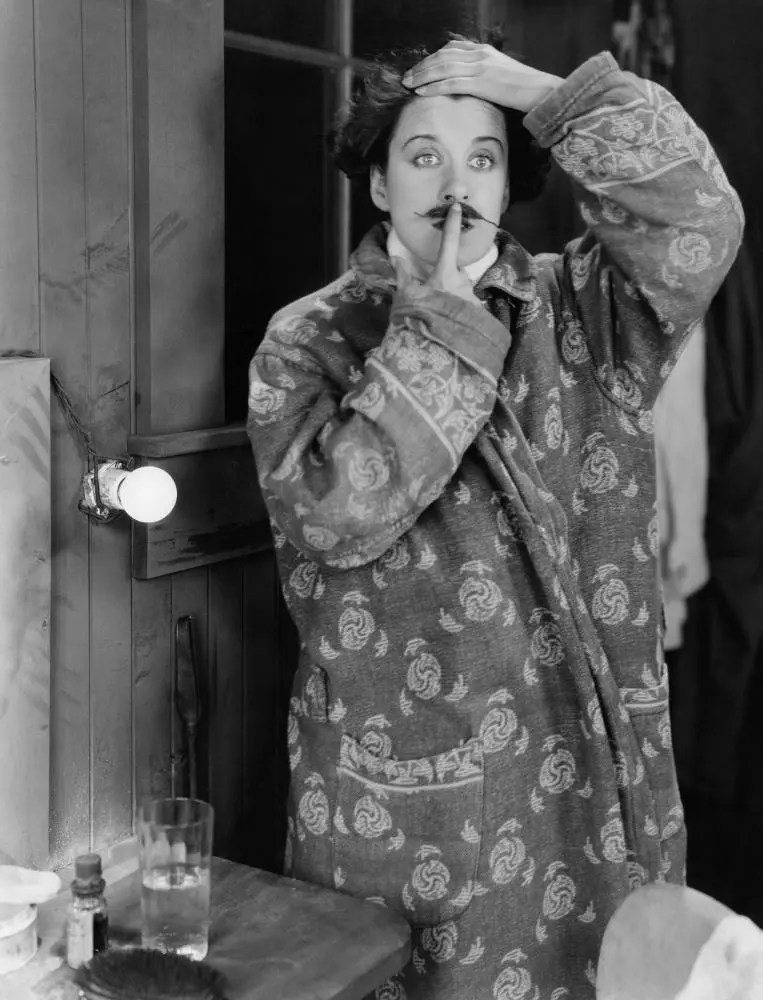
It’s a sharp critique of the 'family' dynamic often found in theater, echoing the themes of social isolation seen in much later works like Family Life. Violet is part of the group, yet she is entirely alone. This is best exemplified in the scene where she meticulously prepares the costumes for the show. She handles the garments with a reverence that the actors themselves lack. To her, the theater is a cathedral; to them, it’s a paycheck. This ideological gap is where the film’s true heart lies.
Yes, Exit Smiling is a mandatory watch for anyone interested in the evolution of screen comedy. It represents the bridge between the chaotic slapstick of the early 1910s and the sophisticated screwball comedies of the 1930s. Beatrice Lillie’s performance is a revelation that feels remarkably modern even 100 years later.
The film succeeds because it treats its protagonist's dreams with respect, even while laughing at her execution of them. It avoids the easy path of making her a victim. Violet is a striver, and there is something deeply relatable in her refusal to accept her 'place' in the world. Even when the plot leans into tired tropes, Lillie’s presence keeps the film grounded in a recognizable human truth.
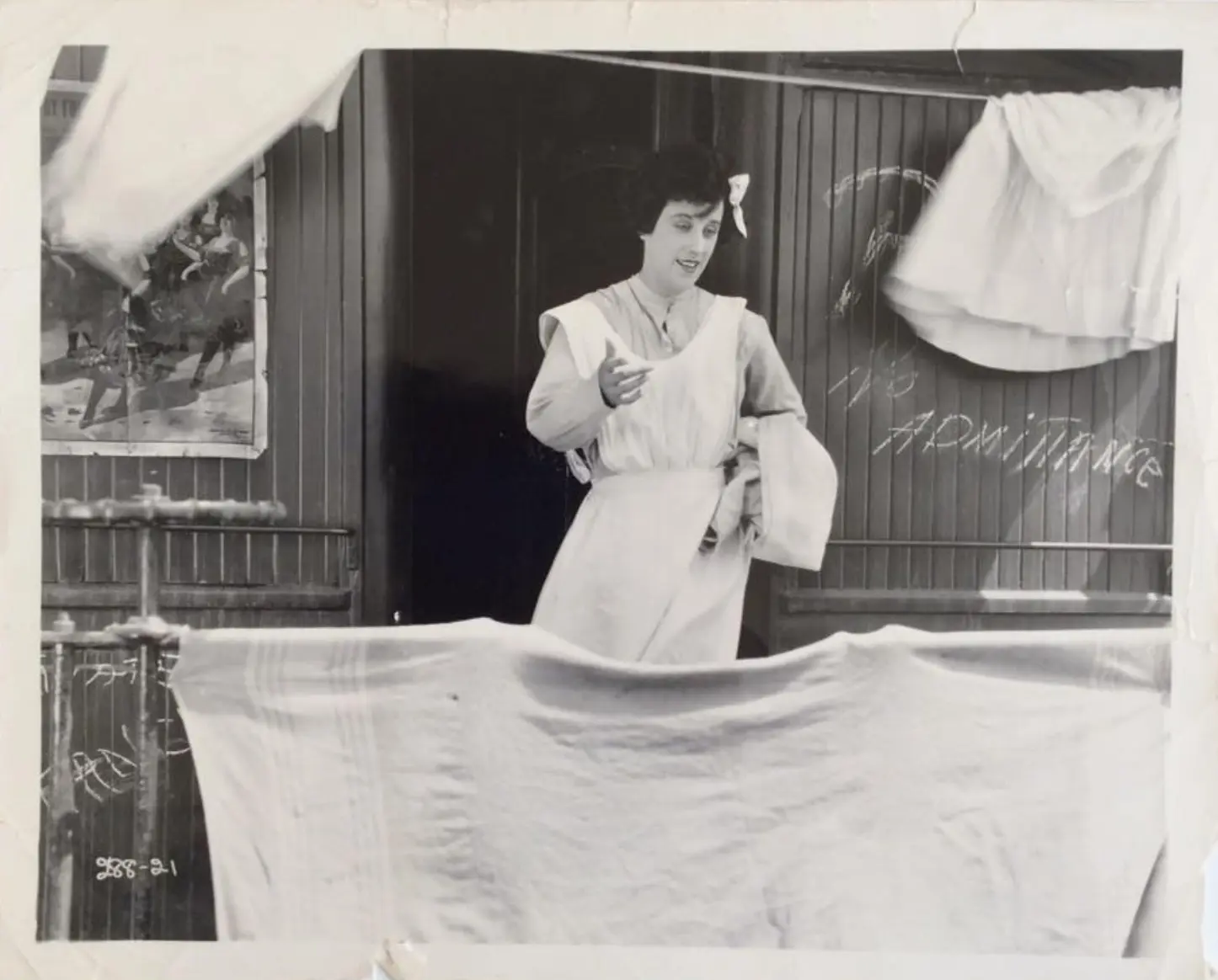
The cinematography by Glen MacWilliams is functional but occasionally hits heights of brilliance during the 'play-within-a-play' segments. The contrast between the flickering stage lights and the dark, cavernous wings of the theater creates a sense of depth that was often missing in 1920s comedies. It lacks the expressionistic flair of a film like Weltbrand, but its realism serves the story better.
There is a specific sequence where Violet is cleaning the stage after a performance. The way the dust motes catch the light while she mimes a grand bow to an empty house is hauntingly beautiful. It’s a moment of pure cinema that requires no dialogue. It’s simple. It’s effective. It’s heartbreaking.
Pros:
- A revolutionary comedic performance by Beatrice Lillie.
- Authentic and gritty portrayal of 1920s traveling theater.
- Excellent use of physical props for humor.
- A bittersweet ending that feels honest rather than forced.
Cons:
- The Jack Pickford storyline is significantly less interesting than the theater scenes.
- Some of the intertitles are a bit wordy and slow the momentum.
- The villain is a one-dimensional caricature.
Exit Smiling is not just a 'funny old movie.' It is a sophisticated piece of character work that happens to be hilarious. While it suffers from some of the narrative bloat common in the transition from short films to features, Beatrice Lillie’s performance is so strong that it carries the film through its weaker moments. She doesn't just 'exit smiling'; she exits having redefined what a comedic lead could be. It is a quiet triumph of a film that deserves a place in the pantheon of great silent comedies. If you haven't seen it, you are missing a vital piece of cinematic history. It’s a riot. It’s a tragedy. It’s life.
IMDb 6.7
1932
Community
Log in to comment.