DbcultAccessing Vault...
Cult Review
Senior Film Conservator
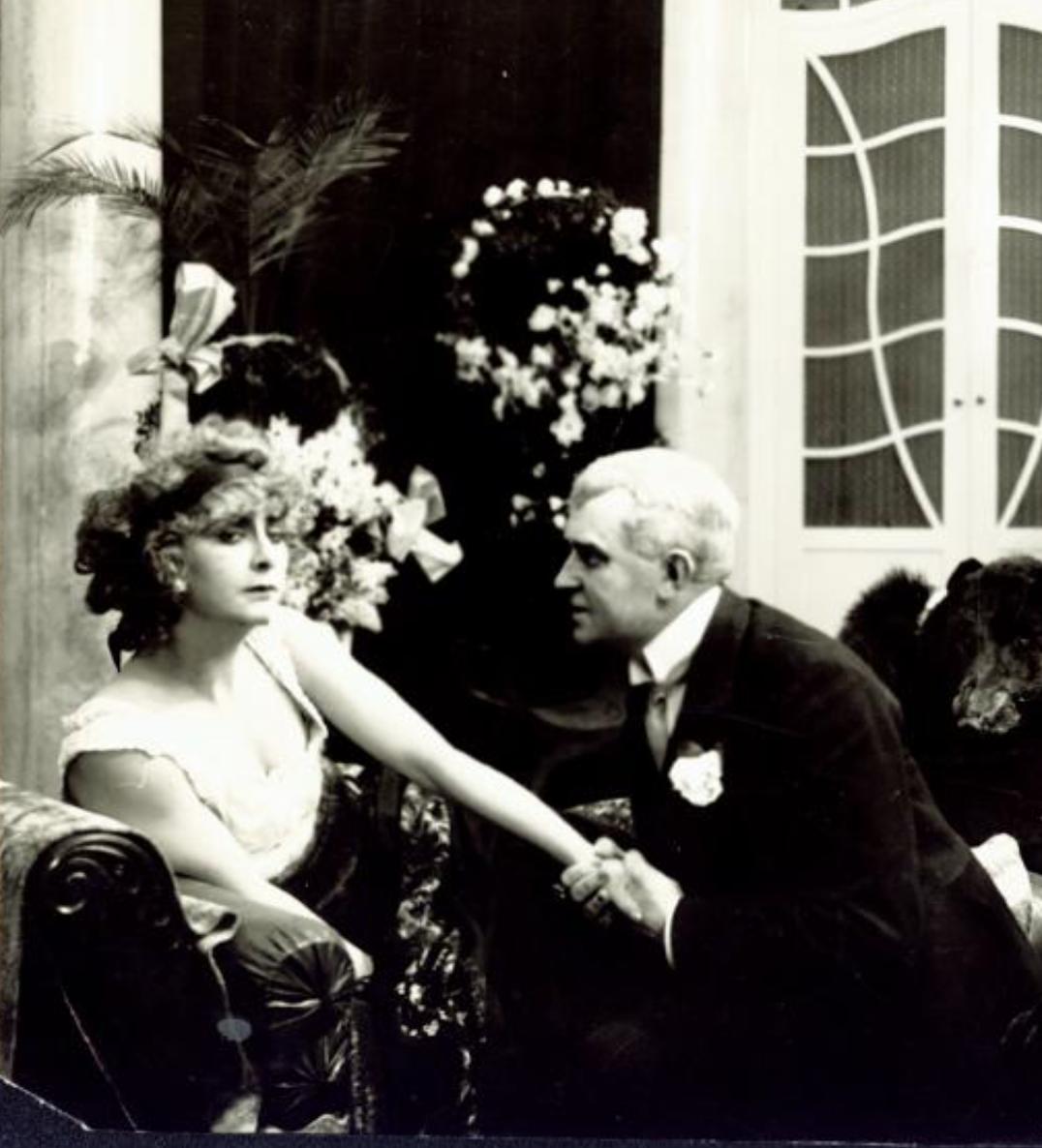
Lotte’s journey begins in a monochrome wasteland of straw and slate, where even the sun seems apologetic. Director Rasmus Ottesen tilts the camera downward, letting thatched roofs oppress the frame—an architecture of defeat that makes the girl’s first defiant step feel like a jailbreak.
There is something almost mythopoeic in the way cinematographer Franz Skondrup lights Sigrid Neiiendam’s profile: cheekbones scythe-sharp, eyes glittering like thaw-ice. You do not merely observe her; you trail a rebel constellation across a rural firmament that smells of mildew and sour milk.
Comparative cinephiles will catch whiffs of The World, the Flesh and the Devil and its moral triptych, yet Ungdomssynd predates that opus by seven years, carving its own Puritan scar into the Nordic psyche.
Hans, played with bullish credulity by Valdemar Møller, embodies the patriarchal bargain: marry me, trade one form of drudgery for another. Lotte’s refusal is not a prudish withdrawal but a market calculation; she intuits that erotic capital inflates in urban economies where anonymity lubricates transaction.
The film’s midpoint pivot—from furrowed earth to gaslit cobblestones—happens via a match-cut so savage it feels like a guillotine. One frame, geese waddle; the next, carriage wheels devour space. Modern editors could learn from this ruthlessness: migration is violence, not montage.
Enter a salon paneled in mahogany and mirrors. Every reflection doubles Lotte, turning her into a hydra of desire; every suitor sees what he wishes—virgin soil to be tilled, Eve to be ornamented. The yellow tint (#EAB308) added to the 2018 restoration does not warm; it jaundices, suggesting infection.
Neiiendam’s acting style straddles centuries: she retains the declarative semaphore of 19th-century melodrama while letting micro-tremors—an eyelid flutter, a caught breath—telegraph modern interiority. Watch her during the stockbroker’s proposal: fingers drum a waltz against crinoline, the metronome of ambition.
Parly Petersen as the journalist supplies the film’s most chilling line—intertitled in Danish but translated in subtitles as: “A woman’s name in print is a tattoo; removal costs skin.” The phrase ricochets through every subsequent scene, an aural watermark.
By the time Lotte realizes that the city’s glitter is mostly pyrite, the narrative has amassed a compound interest of humiliations: pawing hands, forged IOUs, a paternity accusation that isn’t hers to refute. Ottesen refuses the sentimental safety-net; there is no providential uncle, no reformed rake with a ring.
Connoisseurs of Die badende Nymphe will recognize the same aqueous eroticism, though here water is replaced by the city’s viscous night. Conversely, the spiritual flagellation in From the Manger to the Cross finds secular mirror in Lotte’s calvary of reputation.
Even the slapstick anarchy of Der Lumpenbaron feels galaxies removed; Ungdomssynd insists that class mobility is no carnival but a minefield where every footstep may detonate shame.
The orchestral score—reconstructed in 2018 by the Danish Silent Film Institute—leans heavily on cello ostinatos that mimic heart murmurs. During the climactic steamer departure, violins ascend a half-tone higher than expected, creating an unresolved suspension: the sonic equivalent of Lotte’s unspent hunger.
Ragnhild Sannom, as Lotte’s pious mother, has perhaps three minutes of screen time yet etches indelible guilt with a single close-up: eyes brimming, mouth sewn by defeat. It is the silent era’s answer to today’s Oscar-bait cameo.
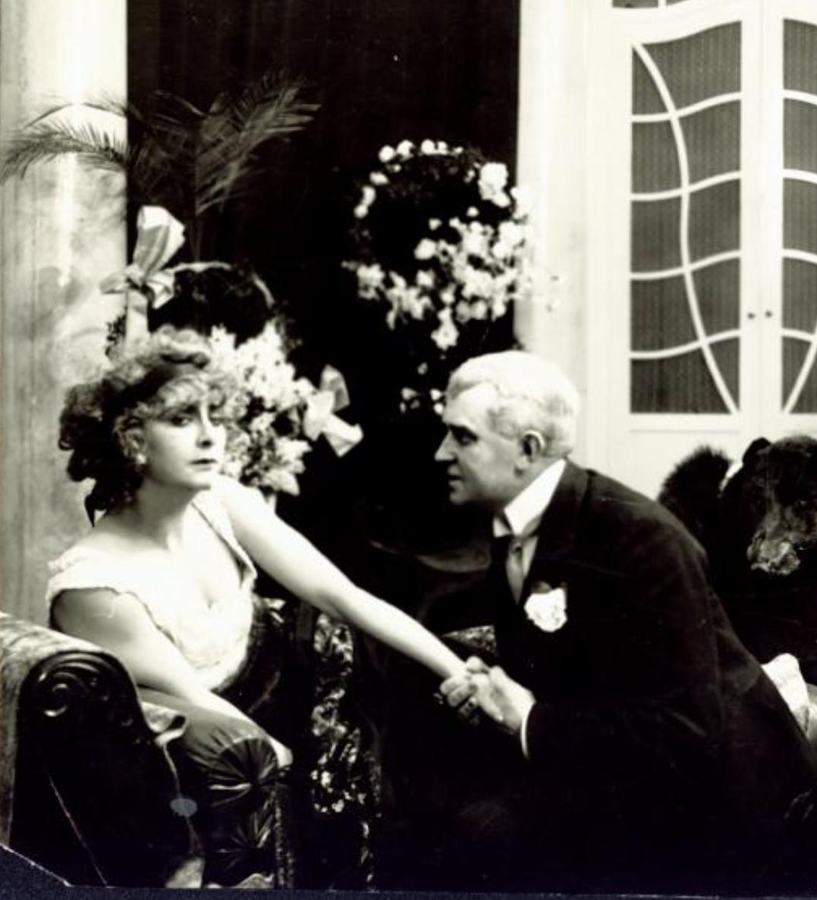
Robert Schyberg’s Baron—pencil-mustache, top-hat, debt-chits where his soul should be—embodies the fin-de-siècle vampire of capital. Watch how he circles Lotte during the waltz: the camera pivots with him, making the ballroom a carousel of predation.
Mathilde Felumb Friis’s costume design deserves monograph-length study. Lotte’s transition from homespun wool to silk moiré is charted through incremental sheens, each ensemble a rung on the ladder of social alchemy. By the final reel, her gown is a tarnished aurora, seams frayed like nerves.
Ottesen’s camera frequently positions Lotte between thresholds—halfway through barn doors, carriage windows, salon archways—visualizing her liminal citizenship in every sphere she inhabits. She is perpetually entering or exiting, never belonging.
Contemporary feminists will note how the film anticipates discourse on emotional labor: Lotte’s smiles are invoiced, her tears audited. The city’s economy runs not only on grain futures but on the speculative value of feminine allure.
The restoration’s tinting strategy alternates amber and cerulean according to location: rural sequences bathe in rustic amber (the color of bread crust), urban scenes in cadaverous blue. The steamer coda fuses both palettes, suggesting the irreversible contamination of pastoral identity by metropolitan dye.
Viewers versed in The Woman Who Dared will spot parallel anxieties about female autonomy, yet where that narrative ultimately hedges its bets with marital absolution, Ungdomssynd dispenses with catharsis entirely.
Likewise, the matrimonial skirmishes in The Battle of the Sexes seem almost comedic when contrasted with the life-or-death stakes Ottesen grants his heroine. Lotte’s downfall is not comedic foil; it is systemic evisceration.
Even the tsarist suffocation in Beneath the Czar rhymes thematically; replace autocrat with plutocrat and snow with sleet, the machinery of patriarchy remains.
Some critics fault the film’s last act for velocity—events pile like derailed carriages—but that acceleration mimics the protagonist own sensation of time compressing as options evaporate. Narrative breathlessness becomes existential asphyxia.
Modern viewers may balk at the intertitles’ moralistic tone, yet read against the grain they reveal patriarchy’s self-justifying script: every cautionary clause is a shackle disguised as sermon.
What lingers, long after the projector’s rattle fades, is Neiiendam’s face—half defiance, half wound—hovering in the mind like an after-image. She embodies the dialectic of desire: weapon and wound, ladder and cliff.
In the pantheon of early Nordic cinema, Ungdomssynd stands less as cautionary relic than as forensic document, its nitrate frames glowing with radioactive truth: capitalism was never gender-neutral, and the first commodity sold on the open market was a peasant girl’s reflection.
Verdict: Essential viewing for anyone tracing the genealogy of fallen-woman tropes, the commodification of femininity, or the visual grammar of silent Scandinavian dissent.
IMDb 7.4
1925
Community
Log in to comment.