DbcultAccessing Vault...
Cult Review
Senior Film Conservator
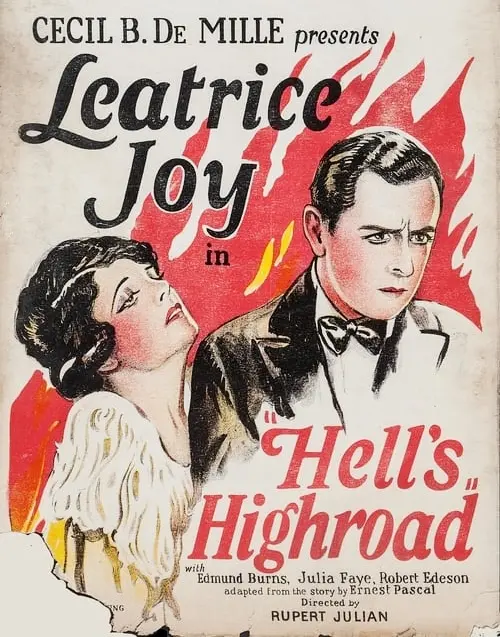
Cinema in the mid-1920s frequently oscillated between escapist fantasy and the sobering reality of the post-war industrial boom. In 1925, Hell's Highroad arrived not as a gentle cautionary tale, but as a jagged, uncompromising mirror held up to the face of American ambition. Directed with a keen eye for the claustrophobia of high-society interiors, the film dissects the corrosive nature of wealth with a precision that feels almost surgical. While many contemporary films like Pick Out Your Husband dealt with the lighter side of domestic choices, Hell's Highroad plunges headlong into the abyss of transactional romance.
Leatrice Joy’s portrayal of Judy Nichols is a masterclass in suppressed vitality. Unlike the wide-eyed ingenues prevalent in the era, Joy imbues Judy with a weary intelligence. She isn't a villain, but a realist who understands that in the urban jungle of Chicago, love is a luxury the poor cannot afford. Her decision to move to New York and manipulate Sanford Gillespie is played not as a seduction, but as a business transaction. This nuance is vital; it elevates the film from a standard melodrama to a sociopolitical critique. The way Joy carries herself—shoulders squared against the world—reminds one of the stoic protagonists in Erlebnisse einer Sekretärin, where the secretary’s desk is a battlefield for survival.
The transition from the drab offices of Chicago to the gilded cages of Manhattan is rendered through sharp contrasts in lighting and set design. The cinematography captures the looming skyscrapers as monolithic deities, demanding human sacrifices in exchange for prosperity. Ronald McKane, played by Edmund Burns, starts as a sympathetic figure—a man of science and construction—but he is quickly hollowed out by the siren song of the ticker-tape machine. His transformation from a builder of bridges to a destroyer of lives is the film’s most tragic arc. It mirrors the psychological descent seen in works like The Unholy Three, where human morality is discarded in favor of a singular, obsessive goal.
Robert Edeson’s Sanford Gillespie is a chillingly accurate representation of the 1920s banker—a man who views people as assets to be traded or liquidated. There is a predatory stillness in Edeson’s performance that makes the scenes between him and Joy vibrate with tension. He doesn't need to shout; his power is systemic. When Judy eventually offers herself to him to ruin Ronald, the moment is stripped of any eroticism. It is a cold, hard exchange of capital. This sequence is perhaps the most daring in the film, challenging the audience to sympathize with a woman who uses her own agency to commit a moral suicide for the sake of revenge.
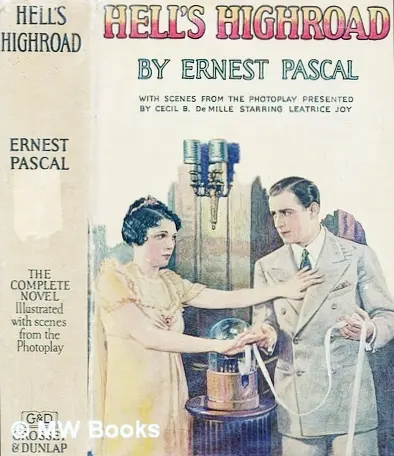
The narrative structure, penned by the formidable Lenore J. Coffee, Ernest Pascal, and Eve Unsell, avoids the simplistic moralizing common to the period. There is a complexity to the dialogue cards that suggests a deep understanding of the gendered nature of power. Judy realizes that while Ronald can gain wealth through his labor, her only currency is her body and her proximity to men of influence. This theme of restricted agency resonates with the struggles depicted in The Girl and the Judge, though Hell's Highroad takes a significantly darker path.
The film’s climax is a visceral explosion of the resentment that has been simmering for ninety minutes. When Ronald finds Judy in Gillespie’s apartment, his reaction is not one of a betrayed husband, but of a man who has lost his grip on his most prized possession. The attempted strangulation is a horrifyingly intimate act of violence. It serves as a physical manifestation of how his avarice has choked the life out of their relationship. The lighting in this scene shifts toward the expressionistic, with long shadows that recall the tortured aesthetics of Gefangene Seele.
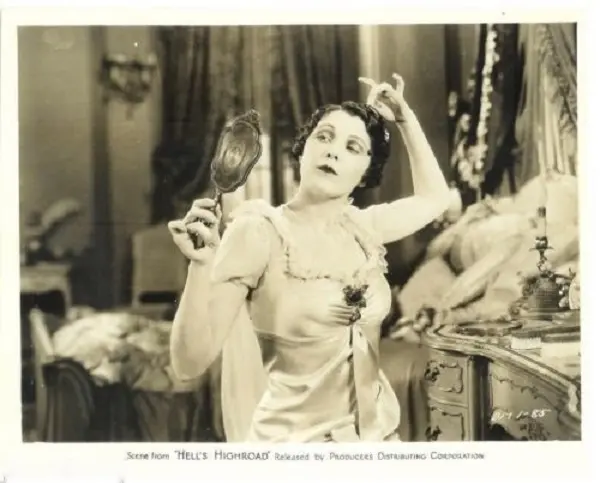
What makes this confrontation particularly haunting is Ronald’s accusation that Judy is the cause of his greed. It is the ultimate gaslighting—blaming the woman who sacrificed her integrity to give him a career for the monstrous person he became. The reconciliation that follows is often criticized as being too abrupt, but in the context of the film’s cynical worldview, it feels more like two broken people huddling together in the ruins of their lives. They haven't found happiness; they've simply run out of ways to hurt each other. This lack of a truly happy ending distinguishes it from the more sentimental Always in the Way.
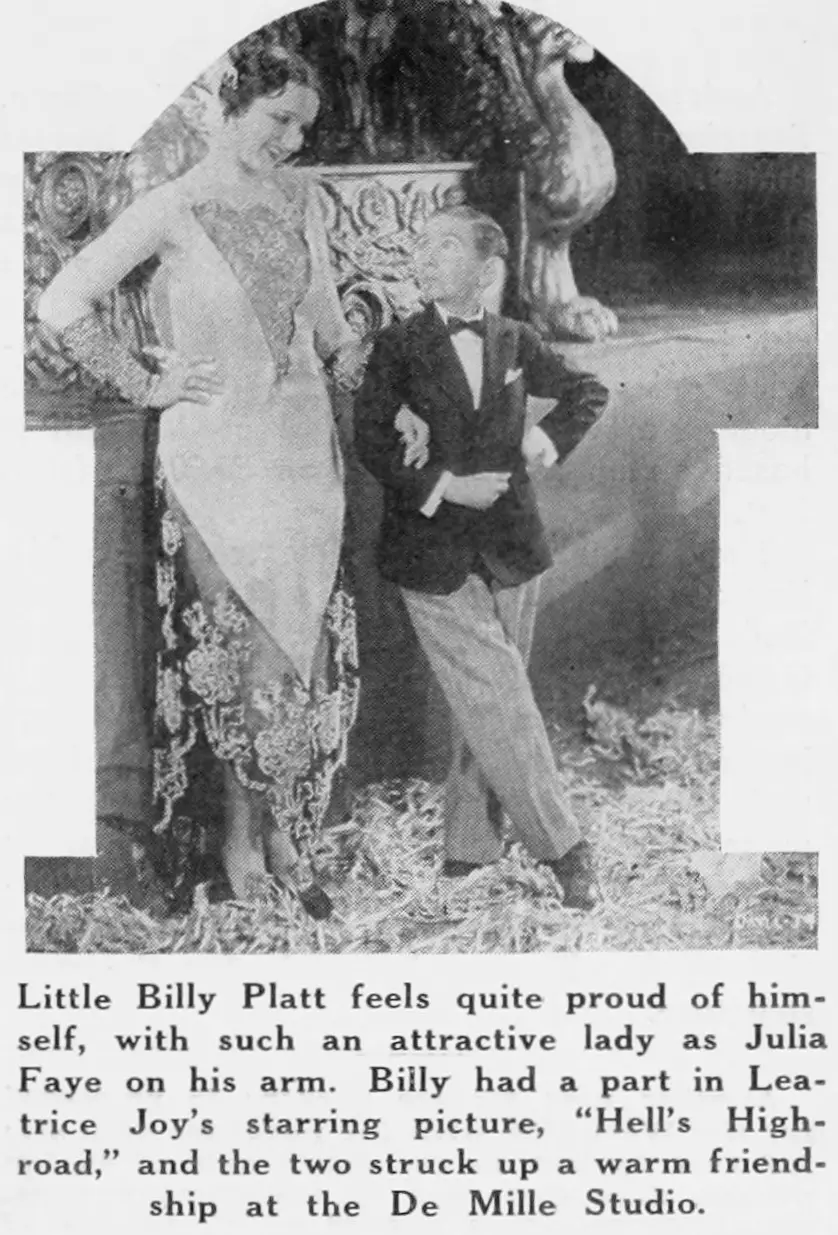
The writers utilize the concept of 'Hell's Highroad' not just as a catchy title, but as a thematic anchor. Every step toward wealth is a step further into a spiritual inferno. The film suggests that the American obsession with upward mobility is a form of collective madness. While Black Oxen examined the vanity of the elite through the lens of rejuvenation, Hell's Highroad looks at the raw, bleeding edge of the climb itself. The inclusion of child actors like Lassie Lou Ahern and Billy Platt provides a brief, flickering glimpse of innocence that only serves to highlight the corruption of the adult world.
Technically, the film is a marvel of its time. The editing maintains a propulsive rhythm, mirroring the frantic pace of the stock market and the 'frenzied pursuit of money' mentioned in the original plot. The use of close-ups during the boardroom scenes emphasizes the isolation of the individuals; despite being surrounded by wealth, they are utterly alone. This visual isolation is a technique also mastered in The Italian, though applied here to the upper echelons of society rather than the immigrant experience.
Looking back at Hell's Highroad from a modern perspective, its relevance is startling. The transactional nature of relationships in the digital age, the pressure to maintain a facade of prosperity, and the moral compromises made for career advancement are all present here in their nascent form. It is a film that refuses to offer easy answers. Is Judy a martyr or a manipulator? Is Ronald a victim of his environment or a man of weak character? The film allows these questions to hang in the air, much like the smoke in Gillespie’s private study.
In comparison to other films of the mid-20s, such as Dorothy Vernon of Haddon Hall, which sought refuge in historical romance, Hell's Highroad is aggressively contemporary. It deals with the 'now' of 1925 with a ferocity that few silent films dared. Even when compared to the suspense-driven Time Lock No. 776 or the crime-focused Caught in the Act, the stakes in Hell's Highroad feel more personal and, consequently, more devastating.
The film also touches upon the biological and social anxieties of the era, albeit subtly. While not as overt as the controversial The Black Stork, there is a sense that the characters are part of a failing social experiment, where the 'survival of the fittest' has been replaced by the 'survival of the wealthiest.' The rich widow who lures Ronald away represents the stagnant, inherited wealth that threatens the industrious spirit of the young engineer, much like the societal pressures in The Courageous Coward.
In the final analysis, Hell's Highroad stands as a monument to the narrative complexity achievable in the silent medium. It is a film that demands much from its audience—not just their attention, but their moral judgment. Leatrice Joy’s performance remains one of the era's most underrated turns, providing a grounded, empathetic center to a story that could easily have devolved into caricature. The direction is confident, the writing is sharp, and the thematic resonance is enduring. It is a harrowing journey down a gilded path, reminding us that the cost of the highroad is often everything we hold dear.
Whether one views it as a cautionary tale or a cynical observation of human nature, the film’s power is undeniable. It occupies a space similar to The Wildcat in its subversion of expectations, though it trades that film's expressionistic whimsy for a cold, hard-edged realism. For those interested in the evolution of the social drama, Hell's Highroad is an essential, if uncomfortable, watch. It doesn't just tell a story; it indicts a culture.
A searing indictment of 1920s materialism, Hell's Highroad is a masterclass in silent drama. With a powerhouse performance by Leatrice Joy and a script that refuses to pull its punches, it remains a vital piece of cinematic history that explores the dark intersection of love, money, and revenge.
IMDb 4.5
1932
Community
Log in to comment.