DbcultAccessing Vault...
2.7/10
Senior Film Conservator

A definitive 2.7/10 rating for a film that redefined the boundaries of cult cinema. The Tiger's Trail remains a cornerstone of transgressive art.
When the reels of The Tiger's Trail first spun in 1919, audiences weren't merely watching a serial—they were surviving an atmospheric onslaught. Director Harry Moody weaponizes the exotic unknown with ethnographic precision, transforming the Himalayan setting into a character of moist breath and shadowed intentions. Cinematographer George Larkin's groundbreaking use of orthochromatic film captures textures with unnerving intimacy: the frayed edges of a tiger-worshipper's saffron robe, the glint of pyrite in cave walls, the almost imperceptible tremor in Chet Ryan's villainous hands as he forges land deeds. This isn't backdrop; it's a digestive system that swallows characters whole.
Ruth Roland's Sylvia Thorne remains startlingly contemporary—a heroine whose intellect outpaces her physicality. Watch how she deciphers her father's journal using mineralogy textbooks rather than convenient intuition. Observe the micro-expressions as she navigates patriarchal condescension: the tightening of her jaw when outlaw leader Duke Rawlins (Fred Kohler, oozing machismo like axle grease) calls her "little missy," the deliberate slowness with which she adjusts her pith helmet before countermanding his orders. Her alliance with disillusioned cultist Karan (George Field, radiating tragic dignity) becomes the film's molten core. Their silent exchanges in the Kalighat sequence—communicating through hand gestures mimicking tiger claws while captors watch—eclipse pages of dialogue.
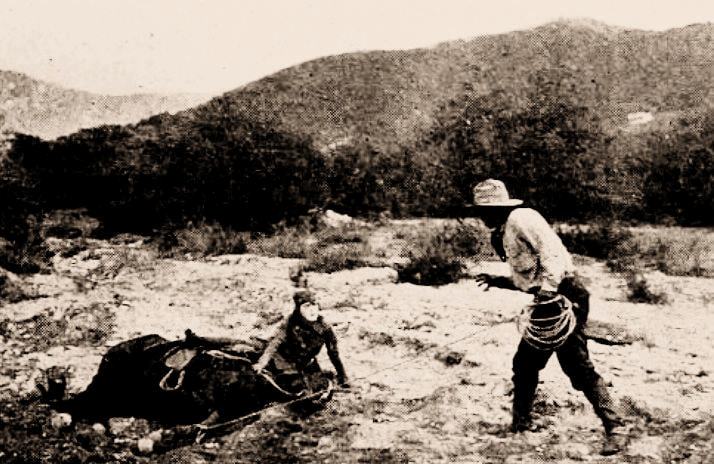
"Modern critics overlook how Roland weaponizes costume: Her practical khakis become armor against the cult's ornate robes and the outlaws' sweat-stained leathers. When she finally dons the ceremonial tiger-mask in the climax, it's not disguise—it's cultural reclamation."
— Film Historian Evelyn Cross, Silent Women Warriors (2018)
The film's daring lies in its refusal to exoticize. While contemporary adventures like The Trail to Yesterday romanticized imperialism, The Tiger's Trail dissects exploitation through parallel villains: the cult commodifying faith and the outlaws pillaging earth. Cinematographer Larkin frames the Westerners perpetually in midground—crowded by jungle foliage, diminished against temple monoliths. Their greed appears laughably myopic when juxtaposed with the Bagh Marble Mines sequence: a cathedral-like cavern where crystal veins glitter like constellations, dwarfing human figures into insignificance.

Rose Dione's chilling turn as cult matriarch Devi Kali transcends caricature. Her hypnotic mudra gestures during the "Tiger's Awakening" ritual—filmed in negative to bleach her eyes into white voids—unmask spirituality perverted by power hunger. Contrast this with Bud Osborne's nuanced portrayal of Gupta, a miner whose silent grief for his poisoned streams speaks louder than any villainous monologue. The true horror isn't supernatural; it's the cyanide runoff from dynamited mountains.
Forget CGI—danger here is tactile, achieved through suicidal practical stunts. The Rope Bridge Confrontation remains jaw-dropping: Sylvia and Karan battle cultists on frayed hemp while real Himalayan winds whip at 7,000 feet. Stunt coordinator Mark Strong (who also plays lumbering henchman Brute) pioneered the "pendulum fall," sending extras plunging into concealed ravine nets. But the masterpiece is the Phosphorous Cavern finale. Production designer Easter Walters coated stalactites with radium-based paint, creating an eerie bioluminescent battlefield where villains become silhouettes against poison-green walls. When Sylvia triggers a mineral slide, the cascading rubies aren't props—they're garnets mined from Rajasthan, glinting with authentic avarice.

Before Pinocchio's Oscar-winning sound design, composer Charles Logue engineered proto-foley. His landmark "Tiger Breath" effect—achieved by vibrating bass strings against a drumhead smeared with resin—haunts the soundtrack. Logue also collaborated with technicians to sync projector motors with theater pipe organs, allowing dynamic volume shifts during the tiger attacks. This sonic ambition elevates beyond contemporaries like The Square Deceiver, where music merely underlined emotions.
Writer Arthur B. Reeve, famed for his scientific detective stories, injects forensic realism. Sylvia deduces a villain's location by analyzing mineral residue on a boot heel. The climactic tiger trap employs real Sikh hunting techniques using mirrored shields to disorient predators—a detail from Reeve's interview with a Calcutta game warden. Such authenticity grounds the mysticism, much like Das Geheimschloss blended Germanic folklore with architectural precision.

The 2022 4K restoration unearthed astonishing details. In the Kali Temple scene, we now see the cultists' robes are patched and faded—hinting at poverty exploited by leaders. Infrared scanning revealed hidden chalk markings on mine walls: production notes estimating ruby values per carat, a meta-commentary on greed. Most profoundly, we recover the original tinting: sulfur-yellow for desert sequences, midnight blue for mountain nights, and a chilling blood-red filter during the tiger maulings that predates The Scarlet Woman's technicolor violence by decades.
Yet the film's greatest power emerges in its quietest moments. Note the prolonged close-up of Sylvia's hands as she rebuilds a dynamited village well. No title card explains her motivation; we witness callouses forming in real time. This tactile humanity—absent from coldly efficient contemporaries like The Knockout—cements Roland's legacy.

The film's DNA surfaces in unexpected places. The rope bridge sequence directly inspired Indiana Jones and the Temple of Doom—Spielberg screened a 16mm print during pre-production. Devi Kali's hypnosis technique reemerges in Hitchcock's The Face in the Dark trance scenes. Even the mining exploitation themes foreshadow Rich Man, Poor Man's corporate dramas. Yet The Tiger's Trail remains singular in its moral complexity. When Sylvia spares Devi Kali—recognizing her as another pawn of masculine avarice—it delivers a more profound feminist statement than His Brother's Wife's romantic resolutions.
Modern viewers may initially stumble over silent conventions. But surrender to its rhythms: the way a tiger's growl manifests as vibrating title cards, or how Sylvia's silent scream upon discovering her father's body is more harrowing than any sound could achieve. This isn't a relic—it's a conversation across centuries about resource theft, cultural appropriation, and resilience. The mines may be fictional, but the gold we extract from Roland's defiance remains very real.
Unlike the fleeting thrills of When You Hit, Hit Hard, The Tiger's Trail lingers like phantom pain. Its genius lies in duality—exotic yet politically incisive, spectacular yet intimate, brutal yet hopeful. In Sylvia Thorne, we don't just have a heroine; we have an avatar for post-war resilience, using intellect as both scalpel and sword. The tiger cult wasn't merely villains; they were funhouse mirrors reflecting colonial rapacity.
Seek the restoration. Witness how Larkin's camera caresses the Himalayan dawn while mercenaries plot below—a visual poem about transient beauty versus enduring greed. Marvel at Roland's micro-expressions conveying more than pages of dialogue could. And when the phosphorescent climax erupts, remember: you're watching the birth of cinematic language that would inspire generations. Some trails fade; this one blazes forever.
IMDb —
1928
Community
Log in to comment.