DbcultAccessing Vault...
Cult Review
Senior Film Conservator
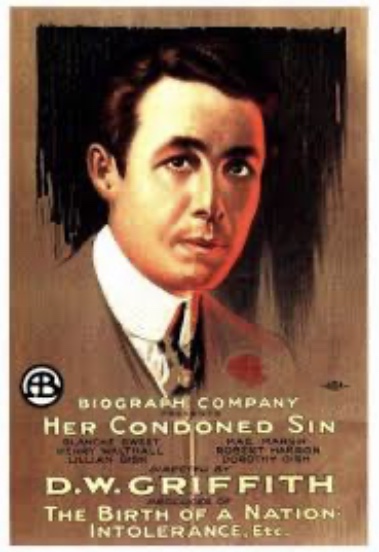
In the annals of early cinema, few names resonate with the controversial weight and pioneering spirit of D.W. Griffith. His oeuvre, a vast landscape of innovation and often problematic ideology, continues to be a fertile ground for critical re-evaluation. Among these monumental works, the re-titling and expansion of his 1914 biblical epic, Judith of Bethulia, as Her Condoned Sin, offers a fascinating lens through which to examine both the film's artistic merits and the shifting tides of cinematic distribution and reception. This isn't merely a re-release; it's a re-presentation, an attempt to breathe new commercial life into a sprawling narrative originally deemed too ambitious, too lengthy, or perhaps, too morally complex for its initial audience.
The very act of re-titling the film speaks volumes about the marketing strategies of the era. Judith of Bethulia, a direct and unambiguous reference to its biblical source material, was perhaps seen as too austere, too scholarly. Her Condoned Sin, on the other hand, drips with tantalizing ambiguity, hinting at forbidden passions, moral compromises, and the ever-present allure of transgression. This rebranding effectively reframes the narrative, drawing attention away from its purely religious origins and towards the more sensational aspects of Judith's audacious mission. It's a testament to the timeless appeal of human drama, even when cloaked in ancient scriptures.
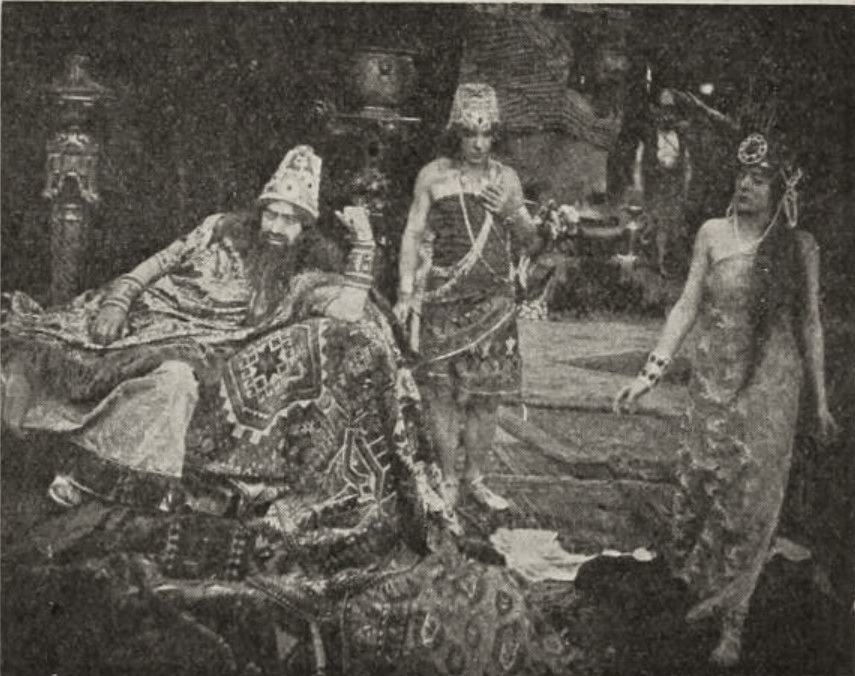
At its core, Her Condoned Sin remains an extraordinary cinematic achievement for its time. Griffith, ever the visionary, sought to translate the grandeur and dramatic intensity of the Old Testament tale to the silver screen with an unprecedented scale. The story, adapted from Thomas Bailey Aldrich's dramatic poem, recounts the siege of Bethulia by the Assyrian army led by the fearsome general Holofernes. The city's inhabitants, facing starvation and utter defeat, are on the verge of capitulation. It is then that Judith, a devout and courageous widow, conceives a desperate plan: to infiltrate Holofernes' camp, seduce him, and ultimately, behead him, thus saving her people. It is a narrative steeped in the gravitas of faith, sacrifice, and the ultimate test of human resolve.
What truly distinguishes this film, even in its re-edited form, is Griffith's masterful command of cinematic language. Long before the epic sweep of The Martyrdom of Philip Strong or the romantic grandeur of Hearts in Exile, Griffith was already pushing the boundaries of what film could achieve. The battle sequences, though obviously constrained by the technology of the early 20th century, are staged with remarkable dynamism. Masses of extras surge across the screen, catapults hurl projectiles, and the desperation of the besieged city is palpable. Griffith's pioneering use of parallel editing, cross-cutting between the starving citizens within Bethulia and the opulent, revelrous camp of Holofernes, heightens the dramatic tension and underscores the stark contrast between the two worlds.
The previously deleted footage, now reincorporated, adds layers of depth and nuance that were regrettably absent in the original release. It allows for a more comprehensive understanding of the characters' motivations, particularly Judith's internal struggle and Holofernes' complex, albeit brutal, personality. These restored moments flesh out the psychological landscape of the narrative, moving it beyond a simple biblical retelling to a more profound exploration of faith, duty, and the human cost of war. The additional scenes likely reinforce the ethical dilemma at the heart of Judith's mission, making her 'condoned sin' a more poignant and weighty decision.
The performances, characteristic of the silent era, are often broad yet surprisingly effective. While specific cast members beyond Griffith himself (who was primarily the director) aren't detailed in the prompt, the impact of his direction on the actors is undeniable. The actress portraying Judith embodies a formidable blend of piety and steely resolve. Her transformation from a demure widow to a cunning seductress, driven by divine purpose, is conveyed through nuanced gestures and expressions that transcend the limitations of silent acting. This portrayal is crucial, as Judith's journey is one of immense moral complexity; her act, while heroic, is also an act of profound betrayal and violence.
Holofernes, on the other hand, is depicted as a figure of imposing power and hedonistic abandon. His camp is a study in contrasts – a place of excess and revelry, oblivious to the suffering of those they besiege. The general's eventual downfall, facilitated by his own hubris and Judith's calculated charm, serves as a potent commentary on the vulnerability of even the mightiest when confronted by a determined will. This dynamic interplay between the two central figures forms the dramatic backbone of the film, making their interactions charged with suspense and psychological tension.
Her Condoned Sin delves into themes that remain eternally relevant. The most prominent is the nature of faith in the face of insurmountable odds. Judith's unwavering belief in divine intervention, even when it demands an act of profound sin, forces the audience to confront uncomfortable questions about the justifications for violence in the name of a greater good. Is her act truly a 'sin' if it saves an entire people? The very title of the re-issue prompts this ethical inquiry, inviting a deeper engagement with the moral complexities of the story.
Furthermore, the film explores the concept of sacrifice – not just the ultimate sacrifice of life, but the sacrifice of one's innocence, one's moral purity, for the collective good. Judith's decision is not made lightly; it is a burden she carries with immense gravity, making her a tragic yet triumphant figure. This theme resonates with other grand narratives of the era, where individuals often bore the weight of societal expectations or divine mandates, much like the challenging moral landscapes explored in films such as Pieces of Silver: A Story of Hearts and Souls, which also grappled with the profound impact of personal choices on a broader community.
Griffith also subtly touches upon gender roles and power dynamics. Judith, a woman in a patriarchal society, defies expectations by taking charge of her people's destiny. She uses her perceived weakness (her gender, her beauty) as a weapon, subverting the traditional roles assigned to women. This proactive, assertive female protagonist was a relatively progressive portrayal for its time, especially within the context of a biblical epic, setting it apart from more conventional melodramas like The Eternal Temptress, which often confined female characters to more archetypal roles of seduction or victimhood.
The significance of Her Condoned Sin cannot be overstated in the context of D.W. Griffith's directorial evolution. It serves as a crucial precursor to his later, more ambitious works like The Birth of a Nation and Intolerance, showcasing his burgeoning mastery of large-scale production, intricate narrative structures, and emotionally resonant storytelling. The film demonstrates his early experiments with epic scope, character development across multiple reels, and the use of cinematic techniques to evoke profound emotional responses from the audience. Its initial commercial failure was perhaps a symptom of its ahead-of-its-time ambition rather than a reflection of its inherent quality.
The re-release with expanded footage offers contemporary audiences and film historians a more complete picture of Griffith's original intent. It allows for a deeper appreciation of his craft, revealing moments of subtle character interplay and grand visual poetry that were previously lost. This restoration process is vital for preserving the integrity of early cinema, reminding us that even foundational works can be subject to the vagaries of commercial pressures and editorial decisions. It's a powerful argument for the continuous re-evaluation and re-contextualization of historical films.
Comparing its monumental scope to other films of the era, such as the more focused romantic narratives like Love's Lariat or the adventure serials that were gaining popularity, highlights Griffith's unique ambition. While those films carved out niches for genre entertainment, Her Condoned Sin aimed for something far grander: a moral and historical epic that challenged both technical limitations and audience expectations. It was an early foray into the kind of 'event cinema' that would dominate later decades.
From an artistic standpoint, the film's visual composition is often breathtaking. Griffith's eye for framing, his use of natural light, and his ability to orchestrate massive crowd scenes are all on full display. The detailed sets, though perhaps rudimentary by modern standards, convey a convincing sense of ancient grandeur and squalor. The film’s emotional impact is further amplified by its reliance on visual storytelling, a testament to the power of the silent medium when wielded by a master. The absence of spoken dialogue forces the audience to engage more deeply with the visual cues, the actors' expressions, and the evocative intertitles, creating a uniquely immersive experience.
However, like much of Griffith's work, Her Condoned Sin is not without its complexities. While the story itself is a biblical narrative, the directorial choices and thematic emphasis undeniably reflect the societal values and prejudices of the early 20th century. One must approach such historical artifacts with a critical eye, acknowledging their groundbreaking artistry while simultaneously scrutinizing their broader cultural implications. This dual perspective is essential for a comprehensive understanding of early cinema and its enduring, albeit sometimes uncomfortable, legacy.
The film's exploration of good versus evil, divine will versus human agency, and the justifications for extreme measures in times of war, continues to provoke thought. It's a narrative that transcends its historical setting, speaking to universal human experiences of desperation, courage, and moral compromise. In a world grappling with its own complex conflicts, the story of Judith's 'condoned sin' offers a mirror to our own ethical quandaries, prompting us to consider the fine line between heroism and infamy, salvation and transgression. Its re-emergence allows us to engage with these profound questions anew, through the lens of early cinematic art.
Ultimately, Her Condoned Sin, in its expanded form, stands as a pivotal work in the development of narrative cinema. It is a testament to D.W. Griffith's audacious ambition and his profound impact on the nascent art form. While its re-titling might have been a commercial maneuver, it inadvertently highlights the film's central thematic tension. It's a film that demands to be seen not just as a historical curiosity, but as a vibrant, emotionally charged epic that continues to challenge and enthrall. For enthusiasts of silent cinema, for students of film history, and for anyone interested in the foundational narratives that shaped the medium, this re-issue is an indispensable viewing experience. It reminds us that even a century later, the power of a well-told story, especially one rendered with such pioneering vision, can still captivate and provoke profound reflection. It's a crucial piece of the cinematic puzzle, now made more complete, allowing us to better understand the grand tapestry of film's early evolution.

IMDb 6.7
1928
Community
Log in to comment.