DbcultAccessing Vault...
Cult Review
Senior Film Conservator
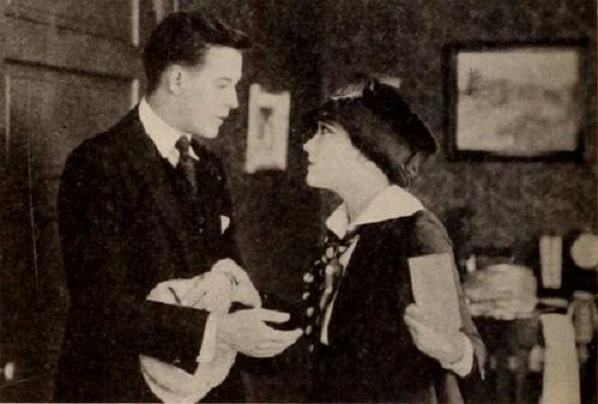
Step into the flickering shadows of 1918, a tumultuous year caught between the Great War's final throes and the dawn of a new, uncertain age. It is within this societal crucible that we find Her Decision, a film that, despite its age, resonates with a timeless exploration of moral compromise, familial devotion, and the unexpected blossoming of love. Directed with a keen eye for human drama, this silent picture, penned by the collaborative talents of Charles Jurlson and Laura Gannet, offers far more than a simple narrative; it presents a poignant commentary on the pressures faced by women in an era of burgeoning independence yet enduring societal constraints. At its heart lies a performance by the inimitable Gloria Swanson, an actress whose captivating presence and nuanced emotional range were already commanding screens, even in her earlier career.
Gloria Swanson, as Inez Fearing, delivers a performance that transcends the limitations of the silent medium, imbuing her character with a complexity that feels remarkably modern. Inez is not merely a damsel in distress or a one-dimensional villainess; she is a woman driven to desperate measures by an unyielding love for her ailing sister, Ann Kroman. Swanson masterfully conveys Inez's internal struggle through subtle gestures, expressive eyes, and a posture that shifts from rigid determination to softening vulnerability. We witness the calculated charm she employs to ensnare her employer, Mr. Steele (J. Barney Sherry), a performance that walks a tightrope between genuine affection and cunning manipulation. Her initial cold resolve, born of necessity, slowly erodes as the true nature of Steele’s kindness begins to penetrate her defenses. It's a testament to Swanson's acting prowess that she makes Inez's transformation feel earned, rather than abrupt. The audience is invited not to judge Inez, but to empathize with her impossible situation, to understand the ethical tightrope she walks for the sake of another. This depth of characterization sets Her Decision apart from many of its contemporaries, elevating it beyond mere melodrama to a compelling character study.
The narrative pivot of Her Decision revolves around Inez's unwavering commitment to her sister, Ann Kroman (portrayed by Ann Forrest, whose nuanced portrayal of vulnerability grounds Inez's desperation). Ann's illness is not merely a plot device; it is the catalyst for Inez's moral descent and subsequent re-evaluation. The film deftly paints a picture of the limited options available to women of the era, particularly those without significant means. Inez's choice to exploit her boss is not made lightly; it is a desperate gambit born of love and a society that offered few avenues for independent financial security or access to healthcare. This thematic exploration of sacrifice echoes similar dilemmas found in films like In the Hollow of Her Hand, where female protagonists often faced dire choices to protect loved ones or their own fragile reputations. However, Her Decision adds a layer of complexity by introducing the romantic entanglement, making Inez's path one of compounding ethical challenges. Her initial cold calculation gives way to genuine affection, creating a powerful internal conflict between her original intent and her burgeoning feelings for Mr. Steele.
J. Barney Sherry, as Mr. Steele, plays the unsuspecting employer with a gentle gravitas that makes his character genuinely sympathetic. He is not a predatory figure, but rather a kind, albeit somewhat naive, man who genuinely falls for Inez. Sherry's performance is crucial, as it underpins the moral weight of Inez's actions. Had Steele been portrayed as a less honorable man, Inez's deception might have been easier to justify. Instead, his sincerity makes her manipulation all the more agonizing, both for her and for the audience. The evolution of their relationship, from professional courtesy to a budding romance built on a foundation of deceit, forms the emotional core of the film. Darrell Foss, in a supporting role, adds another dimension to the ensemble, contributing to the social fabric and potential complications of Inez's world. The interplay between these characters creates a dynamic tension that keeps viewers invested in the outcome, hoping for a resolution that can somehow reconcile Inez's past actions with her future happiness.
At its core, Her Decision is a meditation on the intricate dance between love and deception. It asks profound questions about the nature of morality when faced with overwhelming personal stakes. Is a noble end justified by ignoble means? Can love blossom from a seed of deceit? The film navigates these ethical ambiguities with a sensitivity that belies its era. Inez's journey is one of gradual self-discovery and the painful realization that true happiness cannot be built on a lie. This theme resonates powerfully with other films of the period that explored moral quandaries, such as Der Eid des Stephan Huller - II, which delves into the consequences of a solemn oath and its impact on personal integrity. Similarly, the complexities of identity and moral rectitude are central to John Needham's Double, where characters grapple with the implications of their choices and hidden truths.
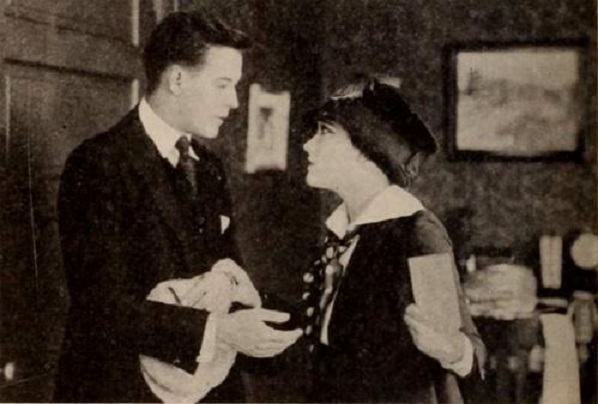
Beyond the personal drama, Her Decision also serves as a subtle yet effective piece of social commentary. It highlights the precarious position of women in early 20th-century society, where economic independence was often elusive, and social mobility limited. Inez's profession as a secretary, a relatively new and increasingly common role for women, placed her in close proximity to power and wealth, yet without true agency of her own. Her desperate scheme is a direct consequence of these systemic limitations, forcing her to rely on her wits and perceived feminine wiles rather than institutional support. This aspect of the film aligns with the burgeoning feminist sentiments of the era, subtly questioning the societal structures that compelled women to such extreme measures. The film provides a window into the prevailing attitudes towards love, marriage, and female autonomy, making it a valuable historical document as well as a compelling narrative. It speaks to the broader societal anxieties and shifts that were taking place, much like Within the Law, which also features a female protagonist navigating and challenging the legal and social systems of her time.
The direction of Her Decision, while perhaps not as revolutionary as some of its contemporaries, is nonetheless effective in its storytelling. The use of intertitles is judicious, enhancing rather than interrupting the visual narrative. Cinematography, though constrained by the technology of the time, effectively utilizes lighting to emphasize mood and character emotion. Close-ups on Swanson's expressive face are particularly impactful, allowing the audience to delve into her complex inner world without the need for dialogue. The staging of scenes, particularly those between Inez and Steele, carefully builds tension and intimacy, reflecting the delicate balance of their relationship. The visual language of the film is articulate, relying on symbolism and visual cues to convey layers of meaning. For instance, the contrast between the opulence of Steele's world and the stark reality of Ann's illness is visually underscored, highlighting the vast chasm Inez attempts to bridge.
While Her Decision might not be as widely celebrated as some of Gloria Swanson's later, more iconic works, it remains a significant piece in her filmography and an important artifact of early cinema. It showcases her remarkable talent for dramatic performance and her ability to imbue even morally ambiguous characters with profound humanity. The film's exploration of ethical dilemmas, the complexities of love born from deception, and the societal pressures faced by women are themes that continue to resonate with audiences today. It reminds us that even in the silent era, filmmakers were grappling with sophisticated narratives and challenging societal norms, paving the way for the rich tapestry of cinematic storytelling we enjoy now.
The collaboration between Charles Jurlson and Laura Gannet on the screenplay is particularly noteworthy. Their ability to craft a story that balances melodrama with genuine psychological insight is commendable. They avoid simplistic resolutions, instead opting for a narrative that acknowledges the messiness of human emotions and the difficult choices people make under duress. This commitment to portraying a nuanced reality, even within the confines of a silent film's dramatic conventions, elevates Her Decision beyond mere entertainment. It becomes a reflection of the human condition, a testament to the enduring power of love, and a sober reminder of the sacrifices we sometimes make for those we hold dear.
In conclusion, Her Decision stands as a compelling example of early 20th-century cinema's capacity for emotional depth and social commentary. It is a film that invites introspection, challenging viewers to consider the moral ambiguities inherent in desperate situations and the redemptive power of genuine affection. Gloria Swanson's performance is a masterclass in silent acting, anchoring a narrative that continues to provoke thought and stir the heart, proving that some stories, and some decisions, are truly timeless. Its understated brilliance, when viewed through a contemporary lens, reveals a work that is both historically significant and remarkably relevant, offering insights into the human spirit that transcend the passage of a century.
IMDb —
1936
Community
Log in to comment.