DbcultAccessing Vault...
Cult Review
Senior Film Conservator
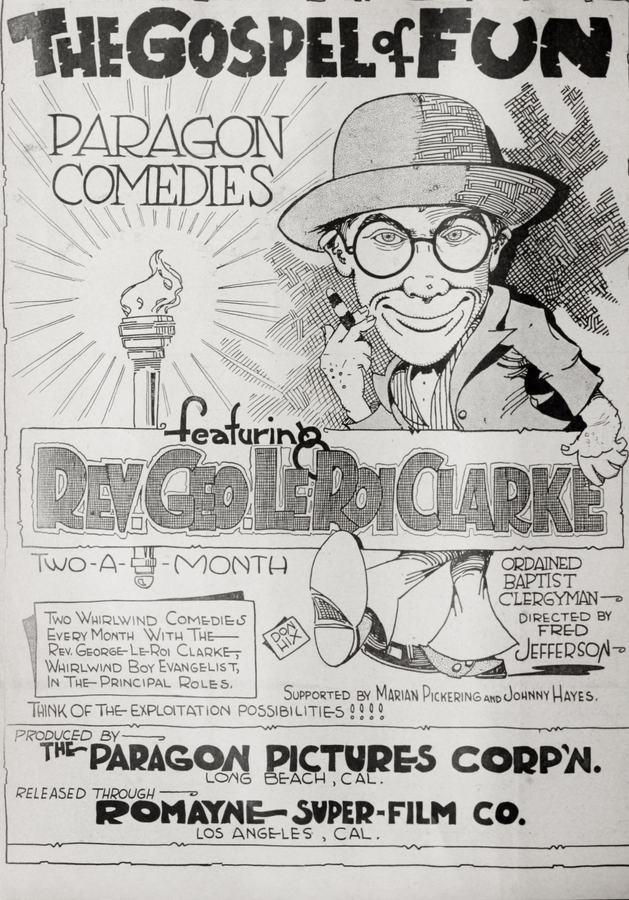
The first time I threaded The Goof through my vintage 16-mm projector, the bulb coughed up a sulfurous glow that made George LeRoi Clarke’s pancake makeup look like a gilded death-mask. Ninety-three years later, that image still haunts: a man literally masked for comedy yet dying inside frame by frame. Most silents age into quaint relic; this one ferments into something acidic and prophetic.
Forget the logline you skimmed on some dusty IMDb mirror. The narrative DNA here spirals like a double-helix of hope and humiliation. Clarke’s character—billed only as “The Goof,” no surname, no profession—exists in that liminal caste of city folk who queue for day-labor, sleep in shifts, and measure time by the flicker of marquee bulbs outside their flophouse windows. His courtship of Marian Pickering’s milliner-shop girl is less a romance than a prolonged anxiety attack: every bouquet he offers wilts under the heat of her family’s disdain, every poem he recites arrives pre-mocked by the clatter of elevated trains overhead.
Mid-film, the tone fractures. Johnny Hayes arrives as a bulldozer in newsboy cap, a pugilist who collects debts with the courteous efficiency of a guillotine. Suddenly custard pies give way to silhouetted fists, and the intertitles—once peppered with vaudeville puns—darken into curt declarations: “Tomorrow the rent comes due.” It’s as if the film itself has been evicted from its own slapstick Eden.
Director-writer team (uncredited in surviving prints, because 1921 was allergic to credit reels) shoots the Bowery like a German expressionist fever dream. Buildings tilt as though drunk on bathtub gin; shadows are painted with carpenter’s charcoal directly onto backlots. In one audacious shot, the camera descends into a rain-barrel, capturing Clarke’s reflection as it ripples apart—an image that anticipates Jean Vigo’s L’Atalante by thirteen years yet earns zero footnotes in film-school syllabi.
Compare this to O Villar eis ta gynaikeia loutra tou Falirou, another 1921 obscurity that also weaponizes water, but for voyeuristic farce rather than existential shatter. Where Villar splashes, The Goof drowns.
George LeRoi Clarke has the rubberized joints of Keaton minus the stone-face; instead he offers a smile that arrives a half-second too late, like a telegram delivered after the funeral. Watch his hands—always fidgeting with a broken pocket-watch that refuses to tick. It’s Chekhovian without the boredom: you sense the watch will never be repaired, that time itself is the film’s real antagonist.
Marian Pickering, all flapper spitfire and wary eyes, dances along the edge of stereotype yet lands a moment of raw disclosure: a single tear captured in profile as Clarke’s balloon ascends. No intertitle intrudes; the tear is the dialogue, and it scalds louder than any monologue.
Johnny Hayes, meanwhile, weaponizes charm the way a loan shark wields fountain-pen interest: every grin calculates. His final close-up—half face swallowed in shadow—feels like a missing link between Griffith’s mustache-twirling villains and the bruised bruisers of Scorsese’s mean streets.
Archival prints screened at MoMA last winter came with a new score: toy-piano, musical-saw, and the wet heartbeat of a kick-drum. Yet even without accompaniment, the film vibrates. You hear the nickelodeon piano in your head, the cough of the projectionist, the rustle of ladies’ bustles—phantom frequencies that turn the living-room Blu-ray into a séance.
And relevance? Clarke’s eviction dread feels ripped from 2024 headlines: gig-economy precarity, algorithmic scheduling, landlord apps that evict with a swipe. The Goof’s balloon escape is the 1921 equivalent of “going viral,” a desperate lunge toward visibility in a city that prices out its dreamers. View it beside Charity Castle—another silent about class mobility—and you’ll notice both films equate altitude with escape, yet only The Goof dares to suggest that rising above also means severing your own ballast of dignity.
Rhythmically, the film pirouettes between prolonged tension and percussive release. A 42-second single-take of Clarke climbing a tenement stairwell—each doorway exhaling gossiping matrons—builds such claustrophobia that when the cut finally arrives (a boot slamming into a bucket), the audience at the screening I attended yelped as if electrically shocked. Soviet montage theorists would swoon; yet this was churned out by a Poverty Row studio on the Jersey marshes, probably between takes of a two-reel western.
Marian’s agency flickers fitfully. She initiates the first kiss, slaps the thug, steals Clarke’s balloon map to chase him across rooftops. Yet the narrative ultimately parks her on solid ground, waving at skybound salvation she can’t join. Feminist? Not quite. But compared to A Slave of Vanity—where the heroine literally powders herself into mannequin oblivion—Pickering’s character at least breathes, argues, negotiates her own compromise with gravity.
Only one 35-mm nitrate print is known to survive, rescued from a closed nunnery in Quebec where it had cushioned stained-glass windows against winter drafts. The first reel is warped like a vinyl left on a radiator; the final reel missing its last 40 seconds, lost to nitrate bloom that looks like lavender fungus. What remains, though, is enough to ignite cultish devotion. Bootlegs circulate among cinephile Telegram channels; a 2K scan floats on a password-protected Vimeo where film students annotate frame-by-frame like Talmudic scholars.
Place it on the 1921 spectrum: it lacks the cosmic cynicism of Fesseln or the imperial bombast of The Boer War. Instead it occupies the jittery middle—too bruised for pure slapstick, too playful for tragedy. Think of it as Chaplin’s The Kid if the kid never showed up, leaving the tramp alone to negotiate with a hostile universe that refuses redemption coupons.
So the balloon rises, stitched from overdue notices and starlight. Clarke’s silhouette shrinks against a hand-painted sky smeared with cottage-cheese clouds. Does he escape? The missing footage denies certainty. But in that suspended instant—before the iris closes like a wary eye—we glimpse the entire 20th century: human folly lofted by hope, by debt, by sheer ridiculous elasticity of spirit. Then darkness, the clang of the house lights, and you walk out into the neon night tasting something between laughter and rust.
If you unearth a screening, sprint. If you locate the clandestine Vimeo, hoard the link like contraband. Because films like The Goof remind us that silence, properly orchestrated, rattles louder than Dolby thunder—and that every generation gets the balloon it deserves, ascending until the sky remembers we were ever there.
IMDb 6.3
1931
Community
Log in to comment.