DbcultAccessing Vault...
Cult Review
Senior Film Conservator
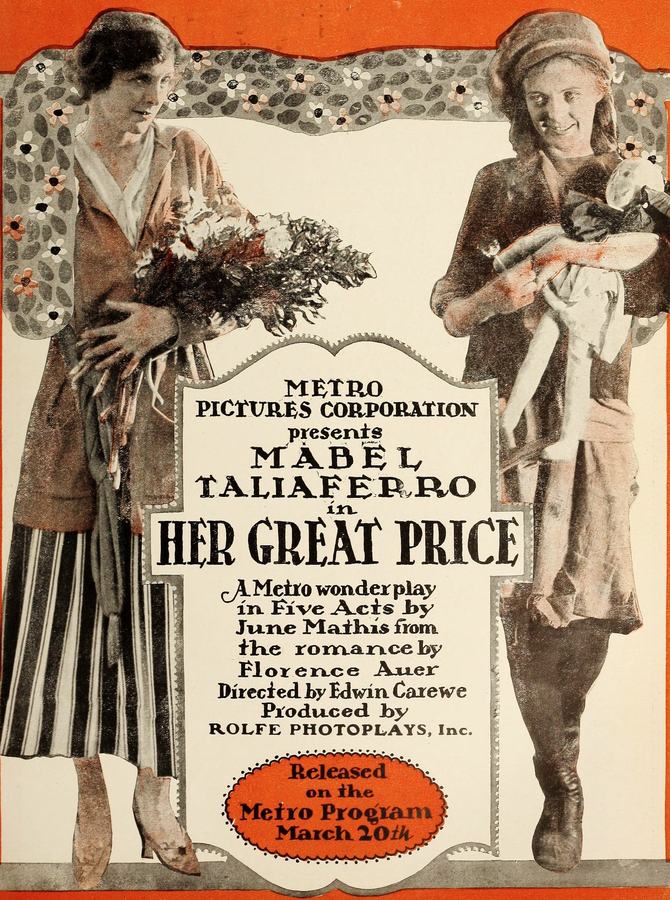
In the annals of silent cinema, where grand gestures and melodramatic arcs often held sway, certain films distinguish themselves not merely through their emotional potency but through their sheer narrative ingenuity. Such is the case with Her Great Price (slug: her-great-price), a production that transcends the conventional tragic romance by weaving a meta-narrative fabric so intricate, so unsettling, that it compels a re-evaluation of the very nature of storytelling and destiny. Directed with a keen eye for psychological depth, this film, penned by the talented Florence Auer and June Mathis, offers a profoundly unique exploration of a writer's life bleeding into her art, and vice versa, in a manner that feels remarkably prescient for its era.
At the heart of this compelling drama is Agnes Lambert, portrayed with remarkable nuance by Jeanette Horton. Agnes is not merely a character; she is an artist, burdened by the weight of her own unsalable fiction. Her apartment, on the cusp of hosting a lively party, becomes a crucible for her creative anxieties. Before the arrival of her guests, Agnes finds herself consumed by the revision of a story, a narrative she perceives as lacking the essential ingredients of drama and genuine emotion. This opening scene is pivotal, immediately establishing a dichotomy that will define the entire film: the tangible world of social engagement versus the introspective, often turbulent, realm of artistic creation. Horton’s performance here is masterful, conveying a writer’s frustration and a nascent self-awareness that her work, much like her life, feels incomplete.
The genius of Auer and Mathis's screenplay lies in its daring structure. It presents us with a protagonist who is, in effect, writing her own fate, or at least a powerful premonition of it. Agnes's revisions are not just about improving a plot; they are about imbuing it with the very stakes and emotional resonance she feels lacking in her own existence. This self-reflexivity elevates Her Great Price beyond a mere melodrama, positioning it as a contemplative piece on the artist's struggle and the porous boundary between imagination and reality. It’s a bold artistic statement, especially for a silent film, demanding a sophisticated engagement from its audience.
The narrative quickly spirals into a poignant romance between Agnes and Tom Leighton, played by Henry Mortimer. Their connection is immediate, palpable, and deeply felt, yet from its very inception, it is shadowed by an insurmountable obstacle. Tom is already betrothed to Ruth Beresford, a character brought to life by Mabel Taliaferro, who has recently suffered the tragic misfortune of blindness in a devastating explosion. This entanglement creates a classic love triangle, but one imbued with a particularly cruel twist of fate. Tom's affection for Agnes is genuine, a true meeting of souls, but his sense of duty and compassion for Ruth prevent him from breaking his commitment. This moral quandary is the very kind of 'drama and emotion' Agnes sought to inject into her own fiction, and now it plays out in her life with devastating authenticity.
Mortimer skillfully portrays Tom's internal conflict, the visible struggle between his newfound love and his profound sense of obligation. His performance adds a layer of tragic realism to the burgeoning affair, making his dilemma deeply sympathetic. The film does not cast him as a villain but as a man caught in an impossible bind, a common trope in silent-era dramas but handled here with a sensitivity that prevents it from feeling trite. The emotional weight of this impossible liaison presses down on Agnes, mirroring the dramatic tension she was attempting to craft in her story. The parallels are not subtle; they are the very engine of the film's unique narrative conceit.
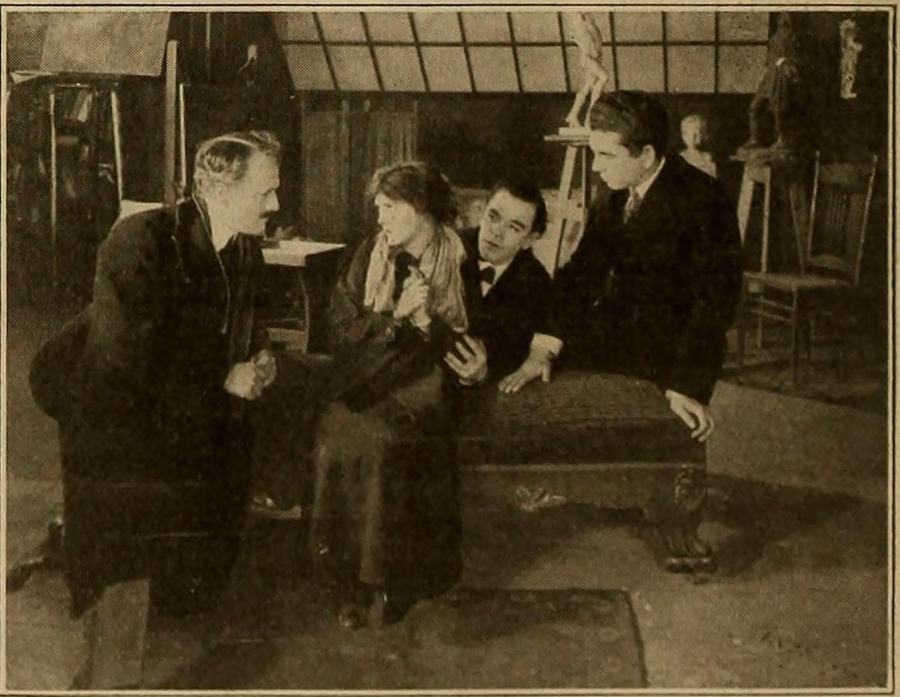
The resolution of the love triangle arrives with a dramatic, almost theatrical flourish that feels entirely in keeping with the heightened reality of Agnes's narrative. Ruth Beresford, whose blindness initially served as an unshakeable tether to Tom, undergoes an operation that miraculously restores her vision. Mabel Taliaferro's portrayal of Ruth is particularly poignant, embodying both vulnerability and a quiet strength. Upon regaining her sight, Ruth perceives not just the world around her, but the truth within Tom's heart. She recognizes the shift in his affections, the undeniable pull towards Agnes. In a profound act of selfless love, Ruth releases Tom from their engagement, freeing him to pursue his true happiness. This moment, while seemingly a joyous turning point, is imbued with a bittersweet sorrow, a testament to Ruth's nobility and the complex sacrifices inherent in love.
However, the film's true genius, and its most devastating blow, lies in the timing of this liberation. Agnes, despairing over the perceived impossibility of their affair, had already resolved to commit suicide. Tom, rushing to her with the news of his freedom, arrives too late, finding her dead. This tragic culmination is the very 'drama and emotion' Agnes had sought to infuse into her fiction, now manifesting as a cruel, irreversible reality. The irony is excruciating, a masterful stroke of storytelling that underscores the film's central theme: the potent, often perilous, interplay between what we imagine and what we experience.
The denouement of Her Great Price is where the film truly cements its place as a unique cinematic achievement. As Tom grapples with the heartbreaking reality of Agnes's death, guests begin to arrive at her apartment, knocking at the door, ready for a party. And then, in a stroke of narrative daring, the film pulls back. Agnes, the writer, rises from her typewriter, having just completed the revision of her story—a story in which she, the protagonist, commits suicide because she mistakenly believes her love affair has failed. The entire tragic romance, culminating in her death, was merely the dramatic flourish she had infused into her fictional world. She then turns to greet her guests, alive and well, leaving the audience to disentangle the layers of reality and fiction.
This meta-narrative twist is nothing short of brilliant. It forces viewers to question everything they have just witnessed. Was the preceding tragedy a premonition? A cathartic exercise in fiction? Or a chilling reflection of the writer's subconscious fears and desires? The film doesn't offer easy answers, instead inviting contemplation on the power of narrative, the artist's relationship with their creations, and the thin veil between imagination and reality. It's a precursor to later, more overtly postmodern narratives, demonstrating a sophistication rarely seen in early cinema. The film's title, Her Great Price, takes on a dual meaning here: the 'price' of her love in the story, and the 'price' of her creative anguish as an author.
The success of such a complex narrative hinges heavily on the performances, and the cast of Her Great Price delivers. Jeanette Horton, as Agnes, carries the film's emotional and intellectual weight with grace and intensity. Her expressive eyes and subtle gestures convey the internal turmoil of a woman grappling with both her art and her heart. Henry Mortimer, as Tom, embodies the conflicted lover with a convincing blend of passion and moral struggle. Mabel Taliaferro’s Ruth, though initially a catalyst for tragedy, emerges as a figure of remarkable dignity and selflessness. Supporting roles from Richard Barbee, George Pauncefort, Ruth Chester, and William Cahill add texture to the social milieu, grounding the more fantastical elements of the plot in a believable world.
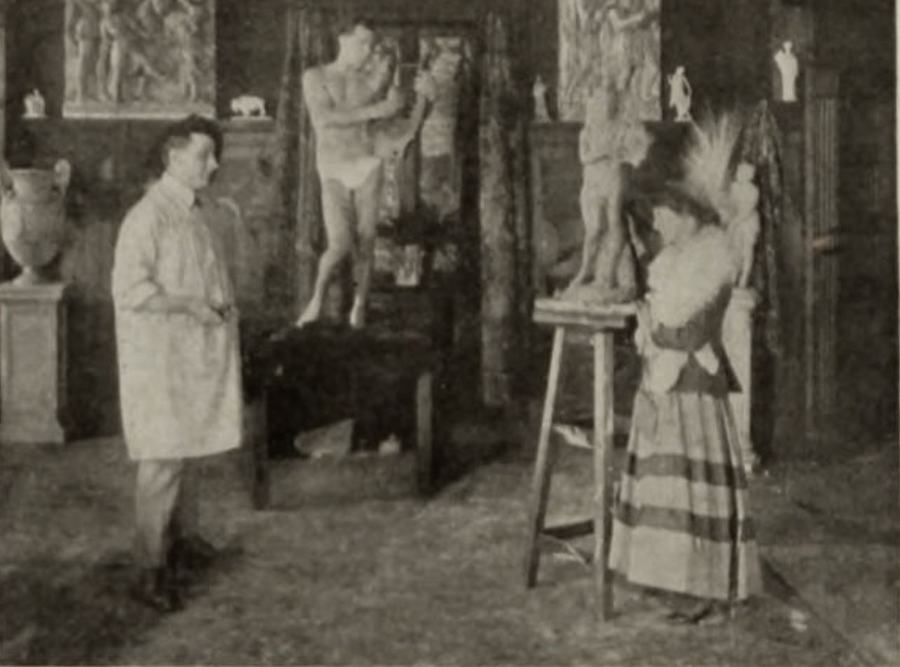
Writers Florence Auer and June Mathis deserve immense credit for crafting such an innovative and emotionally resonant screenplay. Their ability to construct a story-within-a-story, and to execute its reveal with such precision, showcases a profound understanding of narrative mechanics. The direction, while uncredited in the provided synopsis, effectively navigates the shifts between narrative layers, maintaining clarity while building suspense. The visual language of silent film, relying heavily on mise-en-scène and intertitles, is utilized to its full potential here, allowing the audience to infer the deeper psychological currents at play. The film doesn't just tell a story; it makes us question the act of storytelling itself.
In the landscape of early cinema, where narratives often leaned towards clear-cut morality and external conflict, Her Great Price stands out. While films like The Cheat (1915) explored the devastating consequences of societal pressures and moral compromise through direct, unyielding melodrama, Her Great Price delves into an internal, almost self-engineered catastrophe. The tragedy here is not solely imposed by external forces but emerges from the protagonist's own creative crucible, blurring the lines between authorial intent and lived experience in a profoundly unsettling manner. This introspection sets it apart from more straightforward romantic dramas such as Gretna Green or even the more direct emotional turmoil found in Her Reckoning.
The film's unique structure also invites comparison with narratives where characters confront their own destinies or the weight of their past. While not a direct parallel, the thematic resonance with films like Bespridannitsa (A Dowryless Girl), which often explores the tragic fate of women in impossible social situations, lies in the inescapable feeling of doom. However, Her Great Price subverts this by revealing the 'doom' to be a product of Agnes's own artistic creation, rather than solely a social construct. It's a fascinating dialogue between internal and external forces that elevate its dramatic impact. The self-sacrifice element from Ruth, while noble, still fits into the grand tradition of cinematic sacrifice, but the meta-narrative twist then re-contextualizes all such 'great prices' paid within the film's fictional layers.
Ultimately, Her Great Price is more than just a silent film; it is a profound philosophical statement disguised as a melodrama. It asks us to consider the extent to which our own narratives—the stories we tell ourselves, the fictions we consume—shape our realities. It explores the artist's unique burden and privilege: to create worlds, to explore emotions, and sometimes, to find those worlds and emotions bleeding back into their own existence. The final image of Agnes rising from her typewriter, her tragic story complete, to greet her oblivious guests, is one that lingers long after the credits (or in this case, the final intertitle) fade. It's a testament to the enduring power of cinema to provoke thought, challenge perceptions, and illuminate the complex relationship between art and life. For anyone interested in the foundational ingenuity of early filmmaking and the timeless questions it posed, Her Great Price is an indispensable watch, a silent masterpiece that speaks volumes about the human condition and the boundless canvas of imagination.
The film's daring structure and thematic depth make it a compelling subject for study, demonstrating that even in the nascent years of the medium, filmmakers were exploring complex ideas that would resonate for decades to come. It challenges the viewer to engage actively, to discern the layers of meaning, and to appreciate the intricate dance between creation and experience. The narrative's cyclical nature, beginning and ending with Agnes at her typewriter, reinforces the idea that her creative process is not just a profession, but a fundamental aspect of her being, a lens through which she processes and perhaps even pre-determines her own emotional landscape. This self-referential quality is what truly sets Her Great Price apart, cementing its legacy as a remarkably forward-thinking piece of cinematic art.
IMDb 6.2
1929
Community
Log in to comment.