DbcultAccessing Vault...
6.9/10
Senior Film Conservator
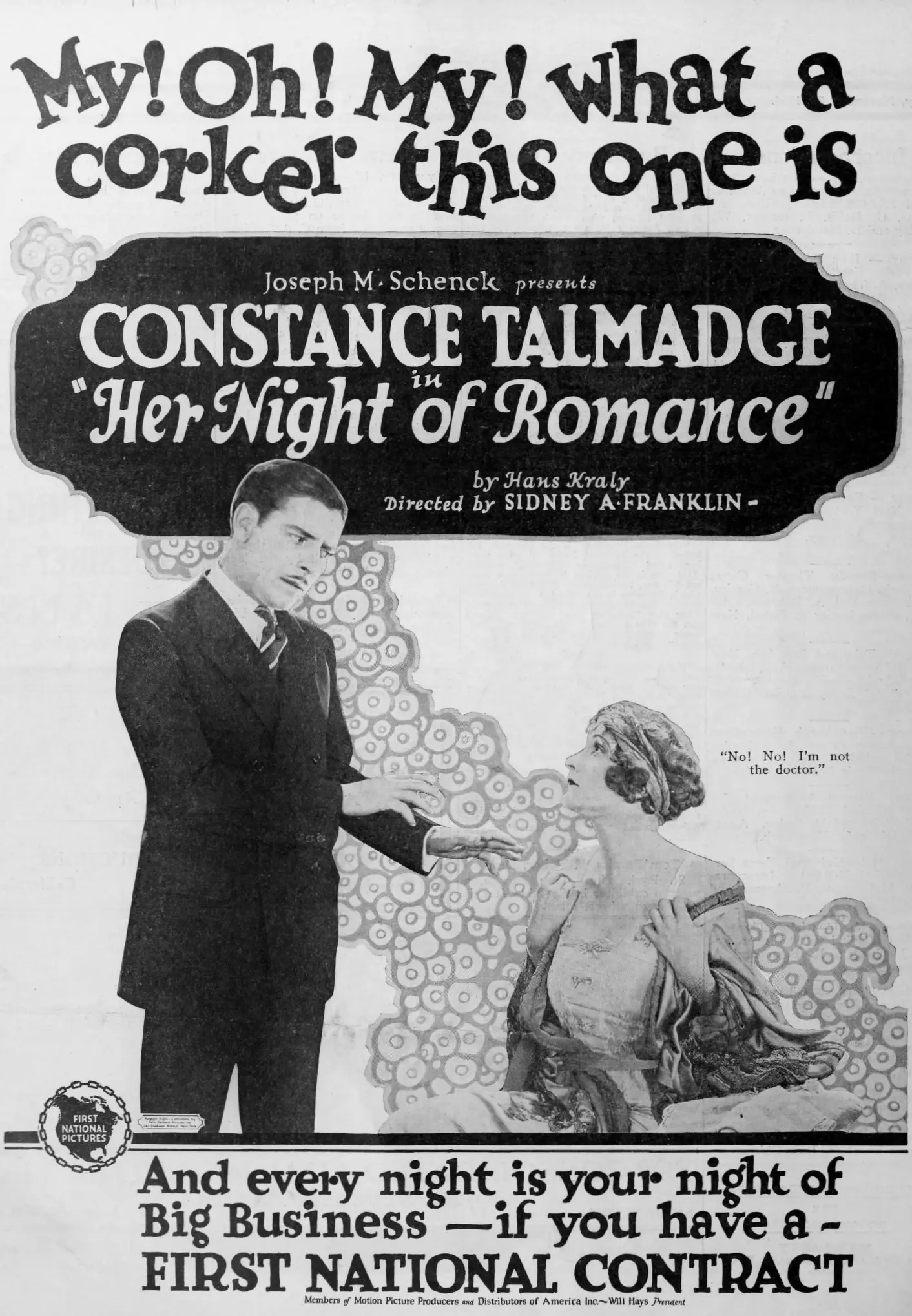
A definitive 6.9/10 rating for a film that redefined the boundaries of cult cinema. Her Night of Romance remains a cornerstone of transgressive art.
Ah, the silent era! A time when emotions were writ large on the screen, expressed through grand gestures, eloquent intertitles, and the undeniable charisma of its stars. Among the dazzling constellations of that epoch, a particular gem shines with enduring allure: 1924's Her Night of Romance. This film, directed by Sidney Franklin and penned by the prolific Hanns Kräly, is more than just a quaint relic; it’s a vibrant testament to the timeless appeal of romantic deception, class struggle, and the often-hilarious lengths to which people will go for love, or indeed, for money. Stepping into this world, we find ourselves immersed in a narrative that, while firmly rooted in its period, resonates with universal themes that continue to captivate audiences today. It’s a delightful confection, a sophisticated farce that manages to be both genuinely touching and uproariously funny, an intricate dance between sincerity and subterfuge.
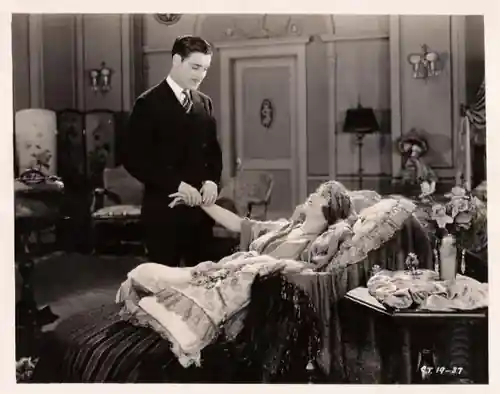
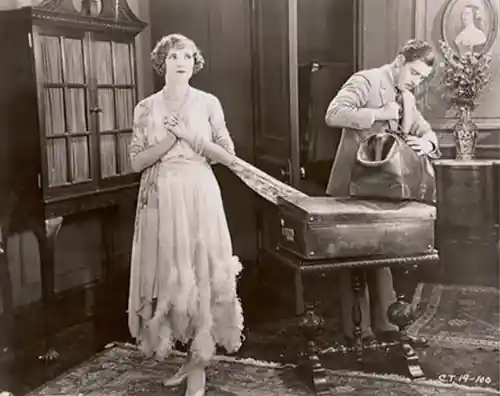
At its core, Her Night of Romance is a masterclass in the romantic comedy of mistaken identity, a trope that, when handled with the finesse Kräly demonstrates, never truly grows old. Our protagonist is the dashing, if somewhat down-on-his-luck, British Lord Paul Menford, played with an exquisite blend of charm and desperation by the incomparable Ronald Colman. Menford, a nobleman whose ancestral estates are crumbling faster than his dwindling finances, finds himself in a predicament familiar to many fictional aristocrats: he needs money, and he needs it fast. But unlike some of his more mercenary counterparts, Menford's true desire isn't just solvency; it’s love. Specifically, the love of Dorothy Adams, an American heiress whose fortune is as immense as her health is delicate. Dorothy, portrayed with a beguiling mix of vulnerability and spirited independence by the luminous Constance Talmadge, is confined to her estate, a prisoner of her own frail constitution. Menford’s audacious plan? To infiltrate her isolated world by impersonating a doctor, believing that proximity and a shared intimacy will allow him to win her affections. It's a high-stakes gamble, fraught with moral ambiguities, yet presented with such lighthearted grace that we, the audience, are immediately rooting for his improbable success.
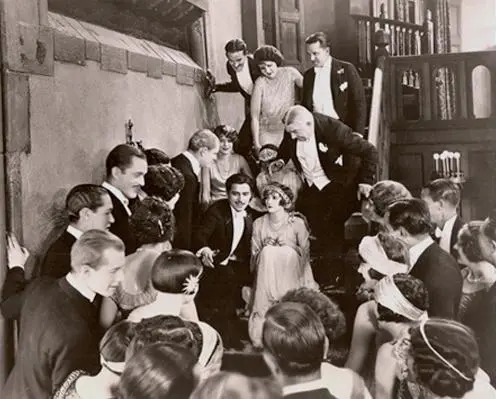
However, no good romantic caper is complete without a complicating factor, and in this instance, it arrives in the form of Joe Diamond. Diamond, Menford's business associate, is a man whose sensibilities are far less romantic and considerably more pragmatic. Where Menford sees a chance for true love, Diamond sees a golden opportunity to restore their fortunes, viewing Dorothy's wealth as the primary prize. This fundamental divergence in motivation creates a delicious tension, underpinning the entire narrative. Diamond's presence constantly threatens to expose Menford's carefully constructed deception, injecting moments of genuine suspense and comedic chaos into the burgeoning romance. The film expertly balances these two desires – Menford’s heartfelt pursuit of Dorothy and Diamond’s opportunistic greed – ensuring that the audience remains engaged on multiple levels. It’s a classic setup that allows for both tender moments of connection and laugh-out-loud instances of near-discovery.
To speak of Her Night of Romance without dedicating considerable attention to Constance Talmadge would be an oversight of critical proportions. Talmadge, one of the great comedic actresses of the silent screen, imbues Dorothy Adams with a captivating blend of fragility and underlying strength. Her performance is a masterclass in subtlety and expression, a testament to her profound understanding of the medium. Dorothy is not merely a damsel in distress; she is a woman yearning for connection, constrained by her circumstances but not defined by them. Talmadge’s eyes, even in the absence of spoken dialogue, convey a rich tapestry of emotions – hope, suspicion, growing affection, and a playful intelligence that suggests she might not be as easily fooled as Menford presumes. Her comedic timing, often delivered through a slight tilt of the head or a mischievous glance, is impeccable, turning moments of potential melodrama into delightful instances of human quirkiness.
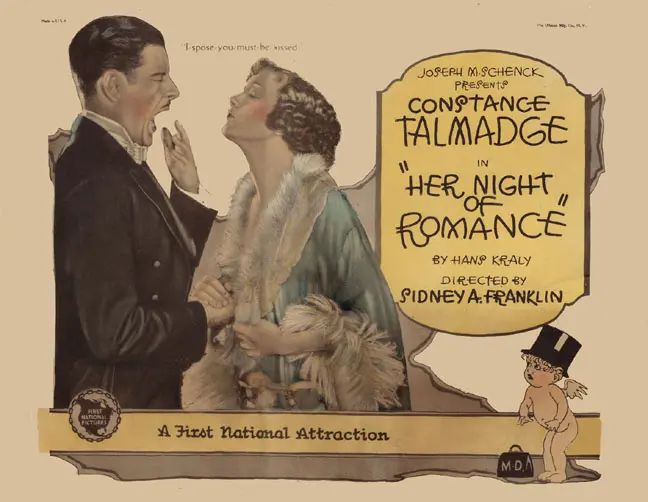
Consider the scenes where Dorothy, initially skeptical of her new 'doctor,' begins to warm to his unorthodox methods and charming demeanor. Talmadge conveys this shift with such believable grace, allowing the audience to witness the blossoming of genuine feeling. She doesn't just react; she actively engages, challenging Menford in subtle ways, testing his sincerity. This active portrayal elevates Dorothy beyond a mere object of affection, making her a fully realized character whose emotional journey is just as compelling as Menford's. Her ability to convey both sophisticated wit and genuine vulnerability made her a beloved figure of her time, and watching her here, it's easy to see why. There's a certain effervescence to her presence that lifts every scene she inhabits, making even the most precarious moments of the plot feel light and enjoyable.
And then there is Ronald Colman, whose portrayal of Lord Paul Menford is nothing short of iconic. Colman, with his striking good looks, elegant bearing, and an innate ability to project both earnestness and roguish charm, was perfectly cast. His Menford is not a villain, despite the deceptive nature of his initial approach. Instead, he’s a man caught between the crushing weight of expectation and the genuine stirrings of his heart. Colman excels at conveying this internal conflict, allowing us to see the struggle beneath the suave exterior. His expressions, particularly in moments of near-discovery or when he’s genuinely moved by Dorothy, are profoundly affecting, showcasing a depth that transcends mere silent film acting. He makes Menford’s transition from a calculating imposter to a man truly in love utterly believable.
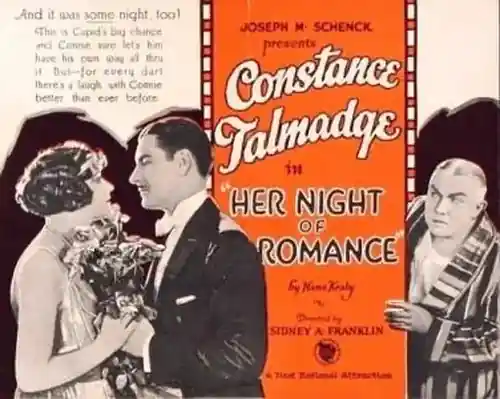
Colman’s chemistry with Talmadge is palpable, a vital ingredient in the film’s success. Their interactions sparkle with a playful flirtation, a burgeoning understanding that develops organically despite the layers of deceit. He manages to convey the awkwardness of his predicament while maintaining an undeniable allure, a difficult balance to strike. His performance here solidifies his reputation as one of Hollywood's most enduring romantic leads, a status he would maintain well into the sound era. The way he uses his eyes, his posture, and even the subtle movements of his hands to communicate Menford's complex emotional landscape is a masterclass in silent screen acting. He embodies the ideal of the 'gentleman adventurer,' albeit one whose adventures are often of his own making and fraught with romantic peril. For those familiar with his later work, his presence here is a fascinating early glimpse into the gravitas and charm that would define his career.
The brilliance of Her Night of Romance owes a tremendous debt to its writer, Hanns Kräly. Kräly was a master storyteller, known for his sophisticated screenplays that blended humor, romance, and often a touch of social commentary. His script for this film is a meticulously constructed piece of work, full of clever setups, witty reversals, and genuinely heartfelt moments. He understands the mechanics of comedic timing, allowing situations to unfold naturally and build to satisfying payoffs. The dialogue, conveyed through intertitles, is sharp and economical, driving the plot forward while revealing character. Kräly's ability to imbue even the most farcical situations with an underlying humanity is what truly sets his work apart. He doesn't just create caricatures; he crafts believable people caught in extraordinary circumstances.
Kräly's skill in navigating the delicate balance between humor and pathos is evident throughout. He uses the mistaken identity trope not merely for cheap laughs, but as a vehicle for exploring deeper themes of authenticity and the masks people wear. His work here is reminiscent of the kind of intricate plotting seen in other clever comedies of the era, where a simple premise spirals into delightful complications. One might even draw a thematic parallel to films like Officer 666, where the chaos of impersonation drives much of the narrative, albeit with a more overtly farcical bent. Kräly's touch, however, consistently maintains a romantic core, ensuring that the audience remains invested in the emotional outcome as much as the comedic one. His screenplay for Her Night of Romance is a testament to the fact that even in an era without spoken dialogue, a well-crafted story could convey immense depth and entertainment.
While Talmadge and Colman rightfully command the spotlight, the supporting cast plays crucial roles in enriching the film's tapestry. Albert Gran as Joe Diamond embodies the pragmatic, almost cynical counterpoint to Menford's romanticism, providing a grounding element that prevents the story from becoming too saccharine. His constant worry over the financial implications and his exasperation with Menford's romantic detours are a source of consistent amusement. Clara T. Bracy and Emily Fitzroy, among others, contribute to the film’s vibrant atmosphere, populating Dorothy’s secluded world with characters that add texture and occasional comic relief. The ensemble, under Sidney Franklin's direction, works seamlessly to create a believable, albeit heightened, reality.
Beyond the individual performances, Her Night of Romance delves into themes that remain remarkably pertinent. It explores the enduring conflict between love and money, a dilemma that has fueled countless narratives throughout history. Is love truly blind to social status and financial standing, or is wealth an inescapable factor in the pursuit of happiness? The film also subtly interrogates the nature of identity and authenticity. Menford’s disguise raises questions about who we truly are when stripped of our titles and societal roles. Does his genuine affection for Dorothy legitimize his initial deception? These are not heavy-handed explorations but rather woven organically into the fabric of the story, allowing the audience to ponder them while enjoying the unfolding romance. This thematic depth elevates Her Night of Romance beyond a simple romantic comedy, making it a film that offers more than just fleeting entertainment.
Moreover, the film touches upon the societal expectations placed upon women of wealth, particularly in an era when heiresses were often seen as prime targets for fortune hunters. Dorothy’s initial confinement and her longing for a life beyond her gilded cage speak to a broader commentary on female agency and the desire for genuine connection over transactional relationships. In this regard, it shares a spirit with films like Her Great Match, which similarly explores the intricate dance between social standing, wealth, and the pursuit of love. Both films, in their own ways, navigate the complexities of finding a suitable partner when one's fortune is as much a burden as a blessing.
Sidney Franklin's direction is a masterclass in silent film storytelling. He understands the power of visual narrative, employing expressive camera angles, thoughtful set design, and fluid pacing to guide the audience through the story. The film’s aesthetic is rich and inviting, from Dorothy's opulent yet somewhat isolated estate to the more mundane, yet equally characterful, settings that Menford inhabits. The cinematography captures the glamour of the era, with beautiful lighting that highlights the stars' features and creates a romantic ambiance. The use of close-ups is particularly effective in conveying the nuanced emotions of Talmadge and Colman, allowing their subtle expressions to speak volumes. Franklin ensures that even without spoken words, the visual language of the film is articulate and engaging, preventing any moments of narrative lag.
The silent film format, with its reliance on intertitles, might seem archaic to modern viewers, but in Her Night of Romance, they are used with precision and wit, enhancing rather than interrupting the flow. They provide necessary exposition, deliver comedic punchlines, and offer glimpses into the characters' inner thoughts, all without overstaying their welcome. The costumes are exquisite, reflecting the fashion of the Roaring Twenties and further defining the characters' social standing and personal style. Dorothy’s elegant gowns underscore her wealth and delicate nature, while Menford’s attire, though sometimes frayed, still retains an air of aristocratic charm. Every element, from the art direction to the editing, contributes to a cohesive and immersive cinematic experience. It truly showcases the artistry that defined this golden age of filmmaking, where visual storytelling was paramount.
Nearly a century after its release, Her Night of Romance remains a captivating watch. It stands as a testament to the enduring power of classic Hollywood storytelling, showcasing the talents of a bygone era with a narrative that continues to charm and entertain. It’s a film that reminds us of the universal nature of human desires – for love, for security, for connection – and the often-circuitous paths we take to achieve them. For silent film aficionados, it's an essential viewing, offering a glimpse into the comedic genius of Constance Talmadge and the burgeoning star power of Ronald Colman. For those new to the silent era, it serves as an accessible and utterly delightful entry point, demonstrating that these films are anything but dusty relics.
The film’s gentle humor, heartfelt romance, and underlying social commentary ensure its place as more than just a historical curiosity. It’s a vibrant piece of cinematic art that speaks volumes about its time while simultaneously transcending it. Her Night of Romance, with its blend of wit, warmth, and a touch of daring, proves that a good story, well told, never truly loses its sparkle. It’s a film that invites you to lose yourself in its charms, to laugh at its predicaments, and to believe, if only for a night, in the magic of a love that blossoms despite the most elaborate of deceptions. This is silent film at its most engaging, a perfect encapsulation of why these early narratives continue to enthrall and delight audiences across generations.
IMDb —
1916
Community
Log in to comment.