DbcultAccessing Vault...
Cult Review
Senior Film Conservator
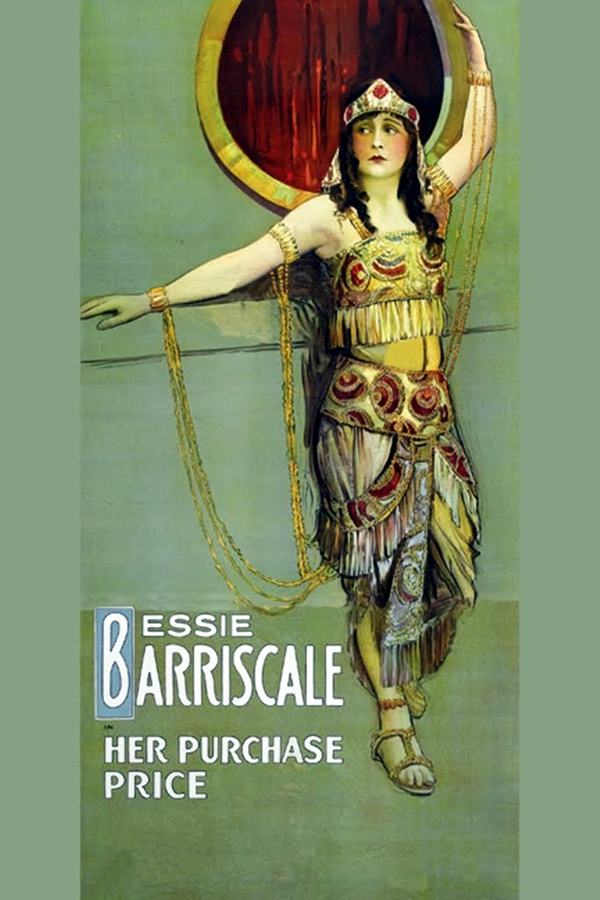
Stepping back into the flickering golden age of silent cinema often feels like unearthing a forgotten treasure map, each frame a clue to the storytelling sensibilities of a bygone era. Such is the experience with 1917’s Her Purchase Price, a film that, even a century later, continues to resonate with themes of identity, cultural collision, and the enduring power of love. It's a narrative tapestry woven with threads of exotic adventure, drawing-room drama, and a surprising twist of fate, offering a compelling glimpse into the melodramatic yet deeply human narratives that captivated audiences during the nascent years of motion pictures. This isn't just a film; it's a historical artifact, a window into the societal anxieties and romantic ideals of its time, presented with a visual flair that, even without spoken dialogue, communicates volumes. The film’s ambitious scope, transitioning from desert raids to aristocratic English estates, underscores a prevalent fascination with the 'other' and the dramatic potential of cultural transplantation.
The narrative audaciousness of Her Purchase Price begins in a visceral, almost shocking manner: a brutal desert raid, orchestrated by the formidable Arab chieftain and bandit, Hamid-Ali. In the chaos and devastation, an English infant is seized, a tender life ripped from its ancestral moorings. This act of violence, a stark reminder of the lawlessness prevalent in certain cinematic portrayals of the 'Orient' during this period, sets the stage for a life irrevocably altered. The child, rechristened Sheka, is not merely captured; she is assimilated, placed within the cloistered, often misunderstood world of a harem. Here, she is groomed, not for freedom or self-determination, but for the cold, transactional reality of a slave auction. This initial premise, while steeped in the exoticism and sensationalism typical of early 20th-century Western narratives about the Middle East, serves as a powerful catalyst for Sheka's journey. It immediately establishes her as an outsider, a displaced soul whose very existence is defined by an arbitrary 'purchase price' even before she understands its meaning. The film, through its visual storytelling, attempts to convey the profound sense of loss and the forced adaptation that such a fate would entail, positioning Sheka as a symbol of innocence caught in a harsh, unforgiving world.
As Sheka matures into a young woman, her beauty and spirit, even within the confines of her enforced destiny, capture the attention of Sir Derek Anstruther. His burgeoning affection transcends the societal boundaries and moral quandaries of her situation, propelling him towards an act of profound courage and romantic recklessness. The scene of the slave auction itself is a masterclass in silent film tension. Sir Derek, abandoning his aristocratic identity, dons an Arab disguise, immersing himself in the very culture that holds Sheka captive. This transformation is not merely a plot device; it symbolizes a willingness to bridge cultural divides, however superficially, for the woman he loves. The bidding, a silent dance of desperation and desire, culminates in a fierce struggle, a physical manifestation of the clash between freedom and bondage. Derek's triumph, though hard-won, is immediate and decisive. He not only rescues Sheka but, in a move that underscores the era's romantic ideals, swiftly marries her at the English consulate. This whirlwind union, while providing a dramatic resolution to her immediate peril, simultaneously ushers in a new set of challenges, hinting that the 'purchase price' might be more complex than mere gold or silver. The film, in this segment, skillfully employs the classic 'damsel in distress' trope, yet imbues Sir Derek with enough agency and conviction to elevate the rescue beyond simple chivalry, portraying it as a genuine act of love and defiance.
The narrative's shift from the exotic desert to the staid drawing-rooms of Edwardian England is abrupt and impactful. Here, Her Purchase Price delves into the poignant and often humorous struggles of cultural assimilation. Sheka, a creature of the desert, finds herself utterly bewildered by the labyrinthine customs of British society. Her 'embarrassing moments' with dress, mannerisms, and social etiquette, while played for comedic effect, also highlight a deeper psychological truth: the profound disorientation of being uprooted and replanted in an alien environment. This struggle is not merely internal; it is intensified by the insidious machinations of Derek's former sweetheart. This jilted woman, a classic antagonist, embodies the snobbery and xenophobia prevalent in certain segments of society, actively plotting to undermine Sheka's position and happiness. The film effectively uses this character to externalize Sheka's internal conflict, demonstrating how societal prejudices can exacerbate personal insecurities. The stark contrast between Sheka's natural grace in her original environment and her awkwardness in her new one provides a rich vein of emotional and dramatic material. It forces the audience to consider the superficiality of societal norms and the inherent value of an individual beyond their cultural veneer. This segment could draw parallels with films like The School for Scandal, where societal gossip and appearances dictate much of the drama, or even Sunday, which also explores a woman's journey through different social strata.
Just as Sheka begins to navigate the treacherous waters of English society, a new storm gathers on the horizon: financial ruin. Sir Derek, burdened by undisclosed monetary worries, becomes increasingly distant and neglectful. This shift in his character, from valiant rescuer to preoccupied husband, introduces a layer of realism and vulnerability to the romance, testing the very foundations of their hastily formed union. Sheka, observing her husband's distress and feeling increasingly isolated, conceives a plan born of both desperation and profound self-sacrifice. In a dramatic echo of her past, she decides to 'sell herself' – not to a slave trader, but to the notoriously libertine Duke of Wryden – to secure the funds necessary to save Derek from financial ruin. This audacious decision is the emotional core of the film, transforming Sheka from a passive object of rescue into an active agent of her own destiny, however misguided her actions may seem. It speaks volumes about her unconventional understanding of love and loyalty, forged in a world far removed from English drawing-rooms. The sheer audacity of her scheme underscores the film's exploration of what constitutes true value and agency, particularly for women, in an era where their economic power was often limited. This subplot could be compared to films like Just Out of College or You're Fired, which often dealt with the anxieties and pressures of financial stability and social standing in a rapidly changing world.
News of Sheka's radical plan reaches Derek, shattering his complacency and igniting a frantic race against time. He rushes to the Duke of Wryden's home, presumably to prevent what he perceives as a catastrophic error. However, the ensuing confrontation unveils one of silent cinema's most satisfying and unexpected twists. The Duke, far from being the predatory figure Sheka imagined, reveals himself to be a man of integrity and investigative prowess. He had, in fact, undertaken his own inquiries into Sheka's past, uncovering a truth that transcends her immediate circumstances: she is his long-lost niece, and, moreover, the rightful heiress to a vast estate. This revelation is a narrative triumph, transforming the 'purchase price' from a symbol of bondage or sacrifice into a testament of inherent worth and legitimate inheritance. It neatly resolves the film's central conflicts – financial distress, cultural displacement, and questions of identity – by revealing Sheka's true, noble lineage. The reunion of Derek and Sheka, now free from both financial burden and the shadow of her past, is imbued with a deeper resonance, celebrating not just their love but also Sheka's rediscovered heritage. This dramatic turn, typical of the era's fondness for deus ex machina resolutions, nonetheless provides a powerful sense of closure and justice, echoing themes of destiny and rightful belonging.
The success of a silent film hinges dramatically on the expressiveness and conviction of its cast, and Her Purchase Price appears to have benefited from a capable ensemble. While detailed performance critiques from this era are scarce, we can infer much from the narrative demands placed upon actors like Joseph J. Dowling, Una Trevelyn, and Alan Roscoe. Una Trevelyn, presumably in the pivotal role of Sheka, would have faced the challenge of portraying a character who undergoes immense cultural and emotional upheaval. Her performance would have required a delicate balance of vulnerability and resilience, conveying the innocence of a desert child, the confusion of an English newcomer, and the fierce determination of a woman willing to sacrifice all for love. Alan Roscoe, as Sir Derek Anstruther, would have needed to embody the quintessential dashing hero – brave, romantic, and ultimately devoted, despite his temporary lapse into financial preoccupation. Joseph J. Dowling, likely playing the Duke of Wryden, would have had the difficult task of initially appearing as a libertine before revealing his true, benevolent nature, requiring a nuanced performance that could shift audience perception. The supporting cast, including Kathlyn Williams, Stanhope Wheatcroft, Wedgwood Nowell, Bessie Barriscale, Irene Rich, and Henry Kolker, would have been crucial in fleshing out the societal backdrop and providing the necessary dramatic foils. Their collective ability to convey emotion and plot through gesture, facial expression, and physical presence is the hallmark of effective silent film acting. The film's ability to engage audiences across such diverse settings, from the wild desert to the refined aristocracy, speaks volumes about the actors' capacity to inhabit and sell these disparate worlds. One might compare the ensemble's dramatic range to other contemporary films like Fifty-Fifty, which also relied on strong character portrayals to drive its narrative.
Beyond the captivating plot, Her Purchase Price explores a rich tapestry of thematic concerns that remain relevant today. At its core, it’s a profound meditation on identity – what defines us: our origins, our circumstances, or our inherent character? Sheka's journey forces a re-evaluation of these questions, challenging the audience to look beyond superficial labels. The theme of cultural assimilation is handled with surprising depth for its time, illustrating the difficulties and prejudices faced by those navigating new societal landscapes. Furthermore, the film subtly critiques the societal structures that placed women in vulnerable positions, whether through literal enslavement or through economic dependency. Sheka's desperate act of self-sacrifice, while ultimately averted, highlights the limited options available to women seeking to exert agency in a patriarchal world. However, the ultimate resolution, where her true worth is revealed through lineage and inheritance, offers a complex message about female empowerment – one tied to traditional structures rather than outright rebellion. The writers, Harvey F. Thew and Maie B. Havey, deserve commendation for crafting a narrative that, despite its melodramatic flourishes, manages to intertwine adventure, romance, and social commentary with such dexterity. Their ability to conceive such a multifaceted plot, incorporating dramatic reversals and character development, speaks to a keen understanding of narrative propulsion. The intricate plotting, with its layers of deception, rescue, and revelation, suggests a sophisticated approach to screenwriting for the era, perhaps more akin to the intricate suspense of The Hand of Peril than simpler romantic fare.
In an age before synchronized sound, the visual language of cinema was paramount. Her Purchase Price, like many films of its time, would have relied heavily on striking cinematography, evocative set designs, and meticulously choreographed action sequences to convey its story. The contrast between the sun-baked, rugged landscapes of the desert and the ornate, perhaps stifling, interiors of English estates would have been visually impactful, underscoring Sheka's journey. The use of intertitles would have provided crucial dialogue and exposition, guiding the audience through the complex plot developments. The film's enduring appeal lies not just in its dramatic narrative but also in its ability to transport viewers to a different time and place, to engage with universal human emotions through the silent poetry of moving images. It stands as a testament to the ingenuity of early filmmakers who, with limited technology, managed to craft compelling stories that resonated deeply with audiences. While not as widely known as some of its contemporaries, films like Her Purchase Price collectively form the bedrock of cinematic history, offering invaluable insights into the evolution of storytelling and the enduring power of film. Its blend of exotic adventure, societal drama, and romantic intrigue makes it a fascinating case study in the silent era's diverse offerings, comparable in its ambition to epic productions like 20,000 Leagues Under the Sea, albeit on a more personal scale.
Her Purchase Price is more than just a historical curiosity; it is a vibrant piece of cinematic heritage that continues to illuminate the foundations upon which modern filmmaking was built. Its intricate plot, compelling characters, and exploration of timeless themes ensure its place as a significant, albeit often overlooked, entry in the silent film canon. For enthusiasts of early cinema, it offers a rich tapestry of adventure, romance, and social commentary, demonstrating the sophistication that silent films could achieve. It reminds us that the fundamental elements of compelling storytelling – conflict, character, and resolution – transcend technological advancements, remaining the true 'purchase price' of any great narrative. Discovering such a film is akin to finding a hidden gem, sparkling with the artistry and ambition of its creators, and continuing to entertain and provoke thought even a century after its initial release.
IMDb 5.9
1935
Community
Log in to comment.