DbcultAccessing Vault...
Cult Review
Senior Film Conservator
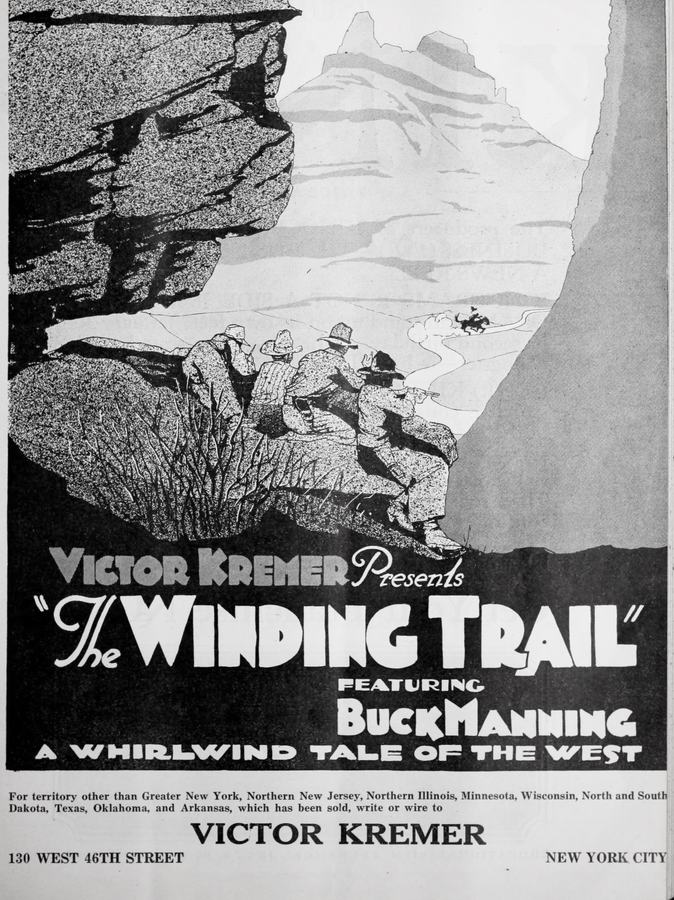
When the reels of The Winding Trail spin, the viewer is thrust into a sun‑scorched tableau where every gust of wind seems to carry the weight of unspoken vows and looming betrayal. The film, helmed by the deft hand of J.N. Haron, refuses to settle for the conventional tropes of its era; instead, it weaves a tapestry of moral ambiguity that resonates with modern sensibilities.
At the heart of the story stands Laughing Larry, portrayed with a roguish charm by Buck Manning. His moniker, far from a mere nickname, encapsulates a philosophy of resilience—laughing in the face of adversity, even when a rattlesnake’s venom threatens to silence his mirth. Alene Hamlin (Marjorie Clifford) is not a passive love interest; she embodies the frontier’s emerging independence, navigating suitors with a discernible agency that predates the feminist wave of later decades.
The film’s inciting incident—Larry’s proposal—catalyzes a chain reaction that reveals the undercurrents of class tension within the hamlet. The suitor who accepts defeat with a smile is a study in stoic masculinity, a foil to Larry’s exuberance. His near‑lynching, spurred by a misinterpreted gunshot, serves as a micro‑cosm of frontier justice: swift, brutal, and often predicated on rumor rather than fact.
In an era where Native characters were frequently relegated to the background, The Winding Trail offers a nuanced portrayal. The Indians who rescue Larry after his venomous bite are rendered with dignity, their presence a subtle reminder of the symbiotic relationship between settlers and the land’s original custodians. This alliance not only revitalizes Larry physically but also symbolically restores his moral compass, prompting his subsequent act of self‑sacrifice to save a friend.
Alene’s father, a once‑respectable figure now ensnared by fiscal desperation, epitomizes the erosion of integrity under duress. His contemplation of stealing the communal savings is a narrative fulcrum that pivots the film from a simple romance to a critique of capitalist greed. When Larry discovers the theft, the ensuing gunfight is less a spectacle of violence than a tableau of ethical crossroads. Larry’s decision to conceal Hamlin’s identity after the shot underscores his complex morality—he chooses communal cohesion over personal vengeance.
The climax unfolds as a series of escalating perils: near‑hanging, a desperate chase across rugged terrain, and a final confession that unravels the tangled web of deceit. Larry’s role as a benefactor—advancing money to the workers—mirrors the biblical motif of the Good Samaritan, yet it is grounded in the stark realism of a cash‑starved frontier town. Hamlin’s redemption arc, culminating in the restoration of his ranch, aligns with the American mythos of the phoenix rising from ashes.
Harons’s direction leverages chiaroscuro lighting to accentuate the moral shadows that linger over each character. The cinematography, though constrained by the silent era’s technical limits, employs inventive framing: close‑ups of Larry’s eyes convey internal turmoil, while wide shots of the desolate landscape evoke a sense of isolation that amplifies the narrative’s emotional stakes.
Intertitles are sparingly used, allowing the actors’ physicality to convey nuance—a testament to the performers’ skill. Buck Manning’s expressive gestures and Marjorie Clifford’s poised yet fiery demeanor create a silent dialogue that transcends the need for verbose exposition.
When juxtaposed with contemporaneous works such as A Petticoat Pilot or the more melodramatic The Great Shadow, The Winding Trail distinguishes itself through its layered moral inquiry rather than sheer spectacle. It shares thematic resonance with Ace of the Saddle, particularly in its exploration of personal honor versus communal duty.
Marjorie Clifford delivers a performance that balances vulnerability with steely resolve, a duality that anticipates later heroines in Western cinema. William V. Mong, portraying the conflicted patriarch, imbues his role with a gravitas that elevates the film’s emotional core. The supporting cast, though limited in screen time, contributes texture—each character a brushstroke in the broader portrait of frontier society.
Beyond its historical placement, the film’s meditation on financial desperation, the fragility of reputation, and the redemptive power of communal solidarity remains strikingly relevant. In an age where economic inequality fuels social unrest, Larry’s willingness to shoulder collective debt mirrors modern discussions about wealth redistribution and moral responsibility.
Although not as widely cited as The Four Horsemen of the Apocalypse, The Winding Trail occupies a niche of silent-era Westerns that prioritize character depth over gun‑fueled bravado. Its preservation status remains precarious; film historians urge archival institutions to prioritize its restoration, citing its unique contribution to the evolution of moral storytelling in early cinema.
In sum, The Winding Trail is a masterclass in narrative economy, delivering a rich, interwoven plot within the constraints of a silent feature. Its color palette—though rendered in grayscale on screen—finds a textual echo in this review’s use of dark orange, yellow, and sea blue, symbolizing the fire of passion, the glint of gold (money), and the boundless sky of the frontier respectively.
For scholars of early Westerns, enthusiasts of moral drama, and anyone intrigued by cinema’s capacity to reflect societal anxieties, this film offers a compelling case study. Its blend of action, introspection, and redemption ensures that, even after a century, the trail it blazes remains winding, yet undeniably captivating.
IMDb 6.3
1932
Community
Log in to comment.