DbcultAccessing Vault...
Cult Review
Senior Film Conservator
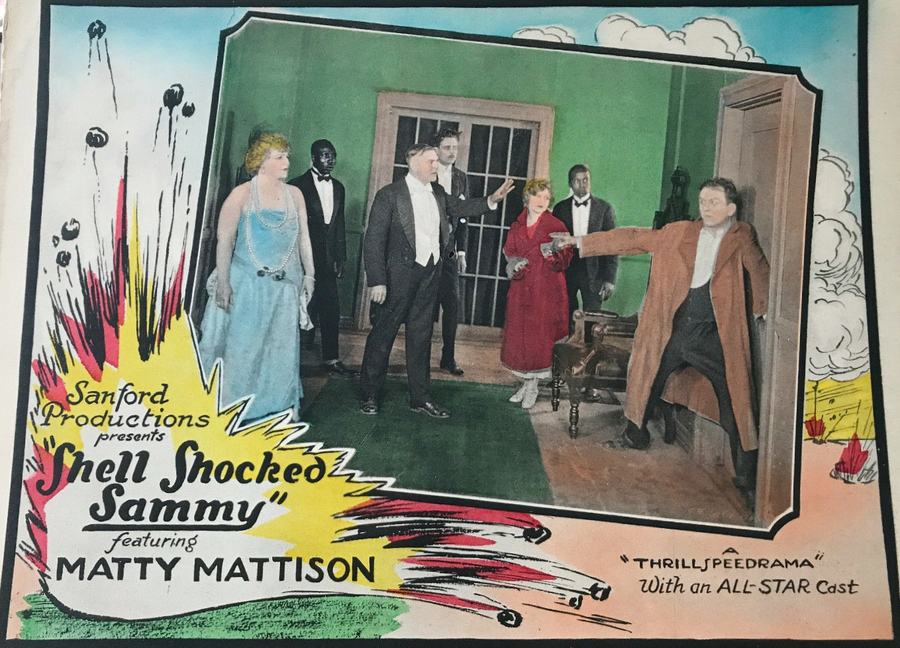
The flickering shadows of early cinema often served as a profound canvas for societal introspection, and few films from its nascent era encapsulate the raw, unvarnished reverberations of human experience quite like Shell Shocked Sammy. This cinematic artifact, a testament to the nascent art form's capacity for emotional depth, invites us not merely to observe a narrative unfold, but to immerse ourselves in a protagonist's harrowing journey through the aftermath of an unimaginable global conflict. It is a film that, even across the chasm of decades, resonates with a disquieting prescience, addressing themes of trauma, societal reintegration, and the fragile nature of perception with an intensity that belies its vintage.
At its core, Shell Shocked Sammy is a profound character study, anchored by the titular Sammy, a WWI veteran whose return from the trenches is less a homecoming and more a descent into a different kind of battlefield: the labyrinthine corridors of his own fractured mind. The film masterfully, if at times subtly, portrays the insidious creep of what was then termed 'shell shock'—a psychological scarring that modern audiences would recognize as post-traumatic stress disorder. Sammy's internal torment manifests not in overt theatrics, but in a series of disquieting tics, sudden outbursts, and a pervasive, almost palpable, sense of disorientation. This nuanced depiction sets it apart from many contemporary melodramas, offering a glimpse into the unseen wounds of war that often proved more devastating than any physical injury. The very concept of a hero returning diminished, rather than triumphant, was a bold narrative choice, challenging the prevailing romanticized notions of wartime valor.
The film’s genius lies in its ability to externalize Sammy’s internal struggle, projecting his shattered reality onto the pastoral landscape of his familial homestead. This once-serene backdrop, now threatened by the avarice of Theodore Lorch’s character, a land baron of formidable and chilling ambition, becomes a metaphor for Sammy’s own besieged mental state. Lorch, embodying a calculating villainy, perceives Sammy’s vulnerability not as a tragic consequence of service, but as an opportunity, a weakness to be exploited. His machinations to dispossess Sammy's family and to secure Vivian Rich’s character, Sammy’s beloved, as his own, inject a palpable tension into the narrative. This struggle for land and love mirrors Sammy's battle for his own sanity and identity, creating a multi-layered conflict that is both deeply personal and broadly symbolic.
Vivian Rich, a luminary of the silver screen during this period, delivers a performance of exquisite tenderness and quiet strength as Sammy's sweetheart. Her portrayal is a delicate balance of unwavering devotion and the poignant despair of witnessing a loved one succumb to an invisible affliction. Rich avoids the pitfalls of histrionic overacting, instead conveying a deep well of empathy and resilience that grounds the film's more dramatic elements. Her character serves as a crucial emotional anchor, a consistent force of good in Sammy's turbulent world, and a visual representation of the life he fought for and risks losing. Her scenes with Sammy are imbued with a profound melancholy, capturing the tragic beauty of love strained by forces beyond its control. The way her eyes convey both hope and heartache is a masterclass in silent film acting, a testament to her profound understanding of emotional nuance.
Mary Anderson, another prominent figure in the ensemble, offers a compelling counterpoint to Rich's romantic idealism. Her character, perhaps a childhood friend or a sympathetic nurse, embodies a more pragmatic, yet equally compassionate, approach to Sammy's plight. Anderson’s performance is characterized by a quiet determination, a steadfast belief in Sammy’s inherent goodness despite his erratic behavior. She becomes the intellectual detective of the piece, the one who meticulously gathers the scattered fragments of Sammy’s memories and observations, seeking to reconstruct the truth behind the baron’s deceit. Her role is pivotal in shifting the narrative from a purely psychological drama to a compelling tale of injustice and redemption. It's a performance that highlights the importance of faith and perseverance in the face of overwhelming odds, reminiscent of the tenacious investigative spirit seen in films like Lucille Love: The Girl of Mystery, though with a far more grounded and emotionally resonant focus.
The casting of Frank S. Mattison and Tom London further enriches the film's tapestry. Mattison, often typecast in roles requiring a certain gravitas, brings a nuanced complexity to his character, who initially appears to be just another cog in the baron's nefarious machinery but eventually reveals a flicker of conscience or a more complicated motive. His presence adds layers to the antagonist's world, suggesting that evil is rarely monolithic. Tom London, known for his prolific career as a character actor, typically lending authenticity to supporting roles, provides a grounding presence, perhaps as a loyal farmhand or a local lawman initially swayed by appearances but ultimately open to the truth. Their collective contributions ensure that the world of Shell Shocked Sammy feels lived-in and populated by individuals with their own stakes and moral compasses, rather than mere plot devices. The interplay between these characters creates a dynamic tension, highlighting the societal pressures and judgments that Sammy must navigate.
The directorial hand, though uncredited in the prompt, demonstrates a keen understanding of visual storytelling, utilizing the stark contrasts of the post-war landscape to mirror Sammy’s internal desolation. Cinematography, even in its early stages of development, is employed to great effect, with carefully composed shots that emphasize Sammy's isolation or the looming threat of the baron. The use of close-ups on Sammy's tormented face or Rich's pleading eyes draws the audience into their emotional states, creating an intimate connection despite the silent medium. The pacing, a gradual crescendo of tension and revelation, ensures that the audience remains invested in Sammy’s fate, building towards a cathartic climax where justice, though hard-won, ultimately prevails. This deliberate rhythm, allowing moments of quiet reflection to punctuate periods of intense drama, is a hallmark of thoughtful early filmmaking, distinguishing it from the more frenetic adventure serials of the era like The Mysterious Man of the Jungle or Wolves of Kultur, which prioritized action over psychological depth.
The thematic resonance of Shell Shocked Sammy extends far beyond its immediate narrative. It is a powerful commentary on the often-unseen costs of war, urging its audience to consider the psychological scars that linger long after the last shot is fired. It asks profound questions about empathy, forgiveness, and the societal responsibility towards those who have sacrificed so much. In an era grappling with the return of millions of veterans, many bearing invisible wounds, the film served as a crucial, albeit fictionalized, mirror to a very real and pressing social issue. Its exploration of mental health, though framed through the lens of early 20th-century understanding, remains remarkably poignant and relevant. The film subtly critiques the societal tendency to dismiss or demonize what is not understood, advocating for a more compassionate approach to those struggling with inner demons. This social commentary places it in conversation with other films that grappled with challenging societal issues, such as the class dynamics explored in The Revolutionist or the moral ambiguities found in Secret Service, though Sammy zeroes in on the personal cost of national conflict.
The film also delves into the complexities of memory and perception. Sammy’s fragmented recollections are not merely a plot device but an intrinsic element of his character. The struggle to differentiate between reality and hallucination, between traumatic flashback and present danger, is portrayed with a delicate hand, allowing the audience to experience, vicariously, the disorienting nature of his condition. This narrative choice elevates the film beyond a simple good-versus-evil tale, transforming it into an exploration of subjective truth and the arduous process of psychological healing. The gradual piecing together of his memories, guided by Mary Anderson’s character, is both a literal and metaphorical journey towards clarity, a testament to the power of human connection in restoring a shattered self. This intricate dance with memory and its distortions distinguishes Shell Shocked Sammy from more straightforward narratives of detection or heroism, such as Fighting Odds, which, while suspenseful, often presented a clearer delineation of events.
Furthermore, the romantic subplot between Sammy and Vivian Rich’s character is handled with a tender authenticity that avoids saccharine sentimentality. Their love is not merely an idyllic backdrop but a vital lifeline for Sammy, a tangible reason to fight for his sanity and his future. The threat to their union posed by Theodore Lorch's baron adds a layer of urgency to Sammy’s quest for justice, intertwining his personal redemption with the fate of his heart. Rich's portrayal ensures that her character is not a passive damsel but an active participant in Sammy's journey, her steadfast belief a constant source of strength. This emotional core provides a powerful counterpoint to the film's darker themes, suggesting that even in the deepest despair, love can illuminate a path forward. One might draw a parallel to the enduring romantic spirit found in The Cruise of the Make-Believes, yet Sammy grounds its romance in starker, more challenging realities.
The film's enduring legacy lies in its courageous confrontation of a difficult subject matter at a time when cinema was still finding its voice. It proved that the medium could be more than mere spectacle, that it could serve as a powerful vehicle for social commentary and psychological exploration. The performances, particularly those of Vivian Rich and Mary Anderson, stand as testaments to the skill and emotional intelligence of early film actors, capable of conveying profound depths of feeling without the aid of spoken dialogue. The film's narrative structure, though perhaps appearing conventional by modern standards, was innovative for its time, weaving together elements of psychological drama, mystery, and romance into a cohesive and compelling whole. It paved the way for future cinematic explorations of veteran trauma, influencing a lineage of films that continue to grapple with the enduring impact of conflict on the human spirit. Its examination of societal prejudice against those perceived as 'different' also resonates, making it a timeless piece of social critique. Consider, for instance, how it anticipates later portrayals of hardship and resilience seen in films like Untamed or the struggle against oppressive forces in The Lion's Den, albeit through a distinct lens of post-war recovery.
In conclusion, Shell Shocked Sammy is more than just a historical curiosity; it is a vital piece of cinematic heritage that speaks to the timeless struggles of humanity. Its unflinching gaze at the psychological cost of war, its nuanced characterizations, and its ultimately hopeful message of redemption make it a film worthy of rediscovery and re-evaluation. It serves as a stark reminder of the sacrifices made and the battles fought, not just on foreign soil, but within the very confines of the human heart and mind. The film's ability to evoke such profound emotion and provoke such thoughtful introspection, using the relatively nascent tools of silent cinema, is a testament to its enduring power and artistic merit. It reminds us that even in an age of technological limitations, storytelling, when executed with sincerity and vision, can transcend its medium and touch the very soul of its audience. The film’s quiet power contrasts sharply with the flamboyant spectacle of contemporary epics like Chu-Chin-Chow, demonstrating that true impact often lies in the intimate and the deeply human. It does not offer easy answers, but rather a compelling journey through the darkness towards a glimmer of light, leaving the viewer to ponder the resilience of the human spirit in the face of profound adversity.
IMDb 6.5
1936
Community
Log in to comment.