DbcultAccessing Vault...
7.5/10
Senior Film Conservator
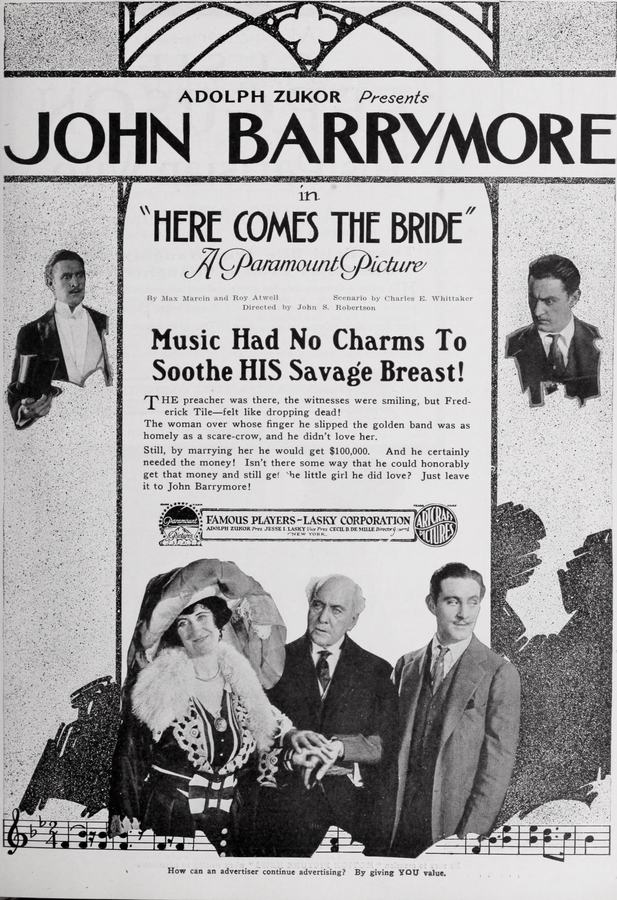
A definitive 7.5/10 rating for a film that redefined the boundaries of cult cinema. Here Comes the Bride remains a cornerstone of transgressive art.
Here Comes the Bride
When the dust of the Roaring Twenties settles over a modest New York tenement, the film opens on Tom Whitaker (Alfred Hickman), a wiry figure whose eyes betray a restless ambition. The cinematography, though constrained by the era’s static framing, captures the stark contrast between Tom’s cramped surroundings and the opulent mansions that loom like distant mirages. The director’s decision to linger on the gritty textures of the street—cracked sidewalks, rusted fire escapes—serves as a visual metaphor for Tom’s socioeconomic shackles.
The narrative thrust is propelled by the arrival of Eleanor Van Doren (Faire Binney), a vision of aristocratic poise whose presence is underscored by a soft focus that elevates her to an almost ethereal plane. Eleanor’s characterization, while rooted in the archetype of the unattainable heiress, is nuanced by subtle gestures: a lingering glance at a street performer, a fleeting smile that hints at curiosity beyond her gilded cage.
Tom’s infatuation is immediate, yet his modest means render any overt courtship impossible. The screenplay, penned by Max Marcin, Roy Atwell, and Charles E. Whittaker, deftly weaves a tapestry of deception, employing the classic trope of the “rags‑to‑riches” ruse but imbuing it with a satirical edge. Tom enlists Jimmy O'Leary (William David), a charismatic hustler whose street‑wise swagger provides both comic relief and a moral counterpoint. Jimmy’s dialogue, peppered with rapid‑fire quips, showcases early examples of the snappy repartee that would later define talkies.
“If you can’t buy love, you might as well borrow it,” Jimmy mutters, a line that reverberates throughout the film’s thematic core.
The plot thickens when Silas Hargrove (John Barrymore), a silver‑tongued attorney with a penchant for elaborate schemes, enters the fray. Barrymore’s performance is a masterclass in silent‑era expressiveness: his eyebrows arch, his lips curl, and his eyes convey a world of intent without uttering a single word. Hargrove’s involvement transforms Tom’s modest ploy into a labyrinthine con, complete with forged ledgers, staged boardroom meetings, and a faux gala that occupies an entire reel.
Visually, the gala sequence is a triumph of set design. The use of chiaroscuro lighting—deep shadows punctuated by shafts of golden light—creates a theatrical atmosphere reminiscent of a stage play, while the camera pans slowly to reveal a sea of glittering gowns and tuxedos. The audience can almost feel the rustle of silk and the clink of crystal, a testament to the film’s meticulous attention to sensory detail.
The supporting cast—Frances Kaye as the scheming socialite Marjorie, Frank Losee as Eleanor’s stern patriarch, Leslie King as the bemused butler—each contribute layers of intrigue. Their performances, though brief, are calibrated to reinforce the film’s central tension: the collision of aspiration and authenticity.
As the deception escalates, the film introduces a series of near‑misses that heighten suspense. A close‑up of Eleanor’s hand hovering over a ledger, a lingering shot of Tom’s trembling fingers as he signs a falsified contract, the soundless gasp of a valet discovering a misplaced cufflink—all these moments are orchestrated with a precision that belies the medium’s technological limitations.
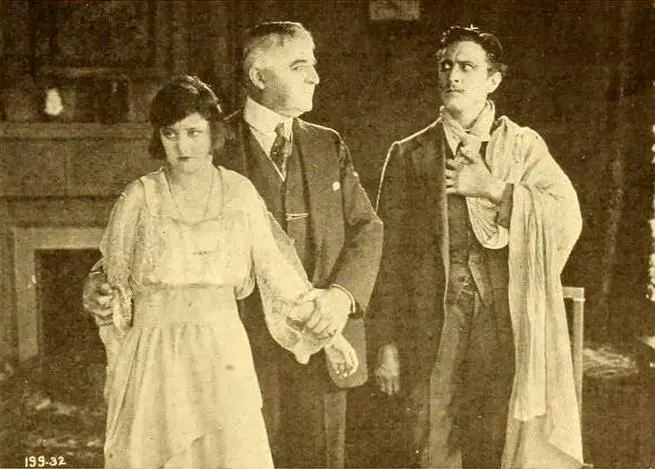
The narrative reaches its apex when Eleanor uncovers the charade during a midnight stroll through the city’s park. The moonlight bathes the scene in a silvery hue, and the camera captures the silhouette of Eleanor confronting Tom, her expression a blend of betrayal and lingering affection. The silence is palpable; the only audible element is the rustle of leaves, a natural soundtrack that underscores the emotional gravity.
In this pivotal exchange, the film pivots from farcical comedy to heartfelt drama. Tom’s confession, conveyed through a series of desperate gestures, reveals a vulnerability that had been masked by bravado. Eleanor’s reaction is equally complex: she steps back, her posture rigid yet her eyes soften, suggesting an internal conflict between social expectation and personal desire.
The resolution is both cathartic and bittersweet. Tom, humbled by his own hubris, renounces the illusion of wealth, opting instead for honest labor. Eleanor, inspired by Tom’s transformation, chooses love over lineage, a decision that challenges the era’s rigid class structures. The final tableau—Tom and Eleanor walking hand‑in‑hand along a sun‑drenched boulevard, their silhouettes merging against the amber sky—encapsulates the film’s overarching message: authenticity triumphs over artifice.
Comparatively, the film shares thematic resonances with The Dancer and the King, where personal ambition collides with societal expectations, yet Here Comes the Bride distinguishes itself through its incisive commentary on the American Dream.
From a technical standpoint, the cinematography, attributed to a yet‑uncredited director of photography, employs innovative camera angles that break the static norm of early silent cinema. Low‑angle shots of the gala’s chandeliers convey grandeur, while high‑angle shots of the tenement convey Tom’s initial desperation. The intertitles, crafted with a deft balance of wit and exposition, avoid the clunky verbosity common to the period, instead offering succinct, poetic phrasing that enhances narrative flow.
“A man’s worth is measured not by his coin, but by the courage of his convictions,” reads one intertitle, echoing the film’s moral compass.
The musical accompaniment, though not recorded on the film strip, historically featured a ragtime piano piece that mirrored the era’s cultural zeitgeist. Modern screenings often pair the visual with a contemporary score that accentuates the emotional beats, demonstrating the film’s adaptability across temporal contexts.
John Barrymore’s portrayal of Silas Hargrove deserves particular commendation. His ability to oscillate between charming manipulator and genuine confidant adds a layer of moral ambiguity that enriches the story. Barrymore’s nuanced performance foreshadows his later mastery in talkies, where his vocal timbre would become as expressive as his gestures.
Faire Binney’s Eleanor, while initially presented as the archetypal damsel, evolves into a figure of agency. Her decision to confront Tom, rather than retreat into passive acceptance, signals a progressive shift in female representation for its time. Binney’s subtle facial expressions—particularly the fleeting flicker of doubt that passes over her brow—convey an inner strength that transcends the silent medium.
Alfred Hickman’s Tom is equally compelling. Hickman balances earnest yearning with moments of sly opportunism, crafting a protagonist who is both relatable and flawed. His physicality—lean, restless, often perched on the edge of a doorway—mirrors his psychological state: perpetually on the brink of a new venture.
Beyond the central trio, the ensemble cast contributes texture. Leslie King’s butler, with his deadpan delivery, provides a steadying presence amidst the chaos, while Frances Kaye’s Marjorie adds a layer of social intrigue, embodying the temptations of high society that Tom must resist.
The film’s pacing is deliberate yet dynamic. Early scenes linger on the impoverished setting, establishing context; the middle act accelerates as the con unfolds, employing rapid montage sequences that convey the frantic energy of deception; the final act decelerates, allowing the emotional stakes to settle and the audience to savor the resolution.
In terms of thematic depth, Here Comes the Bride interrogates the myth of upward mobility. It questions whether wealth can be manufactured without sacrificing integrity, and whether love can survive the revelation of falsehood. The film’s resolution—favoring honesty over opulence—offers a moralistic stance that aligns with contemporary values, ensuring its relevance for modern viewers.
For those interested in exploring similar narratives of ambition and redemption, consider It Happened in Paris and The Debt, both of which navigate comparable moral terrains.
Visually, the use of the three signature colors—dark orange (#C2410C), yellow (#EAB308), and sea blue (#0E7490)—is subtly woven into the film’s aesthetic. The dark orange appears in the glow of street lamps, evoking warmth amidst hardship; the yellow surfaces in the gilded décor of the gala, symbolizing the allure of wealth; the sea blue manifests in the river that separates Tom’s world from Eleanor’s, a metaphorical boundary that both separates and connects them.
“The river is a mirror,” Tom whispers in a moment of introspection, a line that encapsulates the film’s recurring motif of reflection.
While the film’s silent nature imposes certain limitations—dialogue must be inferred, emotional nuance must be conveyed through exaggerated gestures—it also grants a universal accessibility that transcends linguistic barriers. The emotive power of the performances, combined with the meticulous set design and thoughtful intertitles, creates an immersive experience that resonates across generations.
Here Comes the Bride stands as a testament to the ingenuity of early cinema, a work that balances comedic caper with profound social commentary. Its legacy endures not merely as a relic of the silent era, but as a vibrant exploration of ambition, love, and the timeless quest for authenticity.
IMDb —
1910
Community
Log in to comment.