DbcultAccessing Vault...
Cult Review
Senior Film Conservator
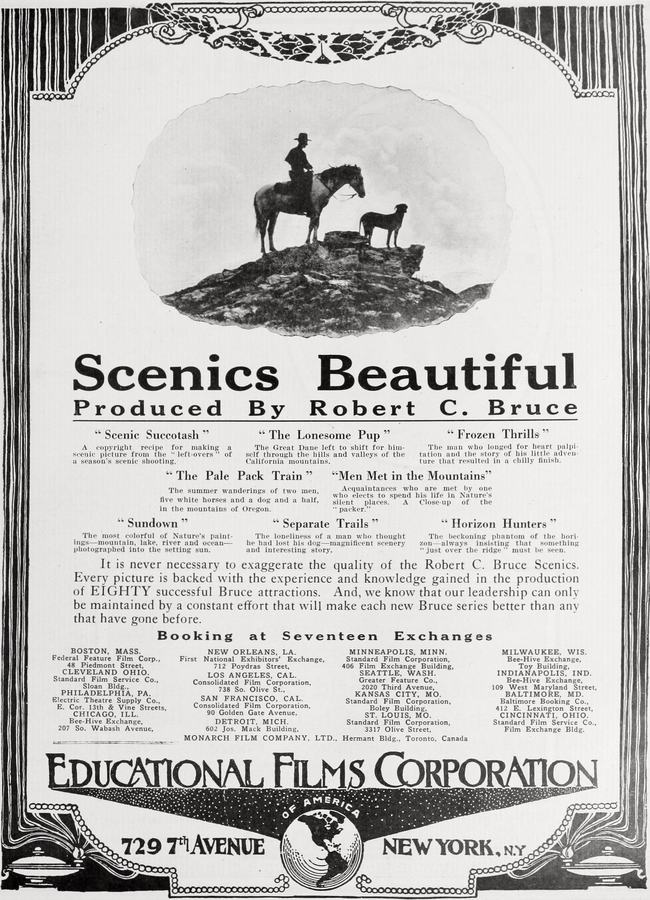
There are films that merely tell a story, and then there are those that burrow into your very being, leaving an indelible mark long after the credits roll. Robert C. Bruce’s The Pale Pack Train unequivocally belongs to the latter category, a chilling, almost primal scream against the vast indifference of nature and the terrifying fragility of the human mind. Bruce, in a stunning display of creative prowess, not only pens the narrative but also delivers a performance so raw and unvarnished that it feels less like acting and more like a visceral confession. This isn't just a film; it's an experience, a plunge into the icy depths of isolation where sanity itself becomes the most elusive treasure.
From its opening frames, The Pale Pack Train establishes an atmosphere of profound desolation. We are introduced to Elias Thorne, a solitary prospector, his face etched with the lines of countless winters, his eyes holding the haunted gaze of one intimately acquainted with hardship. His mission: to transport a mysterious, yet clearly invaluable, cargo across a snow-choked mountain pass with only a handful of mules for company. The setting itself, a character as potent as Thorne, is a landscape of stark, brutal beauty—endless white punctuated by jagged peaks and skeletal trees, a world utterly devoid of human warmth. Bruce, the writer, uses this canvas not just for visual spectacle but as a psychological pressure cooker, slowly tightening its lid on Thorne’s already frayed nerves.
The genius of Bruce’s screenplay lies in its meticulous, almost agonizingly slow build of tension. There are no jump scares here, no cheap tricks. Instead, the horror is existential, creeping in from the edges of the frame, whispered on the frigid wind. Thorne’s journey is not merely physical; it is a descent into a psychological maelstrom. The initial challenges are tangible: dwindling supplies, the treacherous terrain, the ever-present threat of a sudden blizzard. But as the days bleed into weeks, and the silence becomes an almost physical presence, the external threats recede, replaced by the far more insidious enemy within. Thorne begins to see things, hear things. Are they phantoms of the mind, manifestations of profound loneliness, or something more sinister lurking just beyond the periphery of his vision? The film masterfully keeps us guessing, mirroring Thorne's own deteriorating grip on reality. This ambiguity is a strength, forcing the audience to confront their own anxieties about isolation and the limits of human endurance.
Bruce’s performance as Elias Thorne is nothing short of a tour-de-force. With minimal dialogue, he communicates volumes through his physicality, his expressions, and the haunted depths of his eyes. Every shiver, every furtive glance, every moment of desperate self-talk feels profoundly authentic. We witness the gradual erosion of a man's resilience, from stoic determination to frantic paranoia, and finally, to a chilling, almost serene madness. It's a performance that demands immense physical and emotional commitment, and Bruce delivers, holding the screen completely captive. In an era where ensemble casts often dilute individual impact, Bruce's solo turn is a stark reminder of the power of a single actor’s command, echoing the singular, internal struggles seen in films like The Primal Lure or even the psychological intensity of a character study like The Fixer, albeit in vastly different settings. His portrayal of Thorne is a masterclass in conveying a character's internal landscape without the crutch of exposition.
The cinematography of The Pale Pack Train is breathtakingly stark, utilizing the natural, unforgiving beauty of the mountain setting to maximum effect. Wide shots emphasize Thorne's insignificance against the monumental landscape, while tight close-ups capture every tremor of his deteriorating psyche. The use of natural light, often muted and diffused by snow and cloud, contributes to the film's pervasive sense of dread and hopelessness. The 'paleness' hinted at in the title is not just metaphorical; it’s visually rendered in the bleached whites and grays of the environment, making the few instances of color (perhaps a faded scarf or a glint of metal) stand out with poignant intensity. The mules themselves, often seen as spectral figures against the snow, become extensions of Thorne's burden, their silent suffering mirroring his own internal torment. This visual language is as articulate as any dialogue, communicating the film's core themes with evocative power. One could even draw parallels to the visual storytelling of silent era classics like Der Barbier von Flimersdorf, which relied heavily on imagery and performance to convey complex narratives, though The Pale Pack Train elevates this to a new level of psychological realism.
Sound design, too, plays a crucial role in building the film’s suffocating atmosphere. The absence of sound is often more terrifying than its presence. The biting wind, the crunch of snow underfoot, the distant, mournful cries of unseen animals, and the heavy breathing of Thorne himself—these are the elements that construct the soundscape of his unraveling. When a sudden, sharp noise pierces the silence, it's not just a sound; it’s a jolt to Thorne’s already frayed nerves, and by extension, to ours. The deliberate lack of a conventional musical score for much of the film further amplifies the sense of isolation, making the rare moments of subtle, unsettling music all the more impactful. It's a masterclass in using sonic minimalism to achieve maximal psychological effect, much like the subtle, yet potent, atmospheric tension found in films such as Home Wanted, which also uses its environment to reflect internal states.
Bruce, as the writer, delves deep into the existential questions that arise when humanity is stripped bare of all its comforts and societal constructs. What defines us when we are alone, facing an indifferent universe? Is our sanity merely a social construct, easily fractured when the mirrors of interaction are removed? The 'pale pack train' itself becomes a powerful metaphor. Is the cargo merely gold, or is it the weight of Thorne’s past, his regrets, his very soul? The film leaves this tantalizingly open, allowing the audience to project their own fears and interpretations onto the narrative. This thematic richness elevates The Pale Pack Train beyond a mere survival story into a profound meditation on the human condition. It’s a work that challenges viewers to confront their own internal wilderness, much like the more introspective narratives of A Woman's Power or La Gioconda, which also explored deep psychological landscapes, albeit through different narrative lenses.
The pacing, while deliberately slow, is never tedious. Each prolonged shot, each drawn-out moment of silence, serves a purpose, allowing the audience to fully immerse themselves in Thorne’s deteriorating state. This unhurried approach allows the psychological dread to fester, to grow organically from the environment and Thorne’s internal struggle. Some might find its deliberate tempo challenging, yet it’s precisely this commitment to its own rhythm that makes the film so effective. It demands patience, but rewards it with an experience that feels deeply earned and profoundly unsettling. This commitment to slow-burn tension differentiates it from faster-paced thrillers like The Blue Streak, instead aligning it with films that prioritize atmosphere and character development over rapid plot progression.
One of the film's most striking aspects is its refusal to offer easy answers or a neat resolution. Thorne’s ultimate fate, and the true nature of his final confrontation, remains shrouded in ambiguity, a testament to Bruce’s courage as a storyteller. This open-endedness is not a weakness but a powerful artistic choice, forcing the audience to grapple with the implications long after the screen fades to black. It's a haunting conclusion that lingers, inviting contemplation rather than providing catharsis. This daring approach to narrative closure aligns with the more experimental, thought-provoking cinema of its time, refusing to cater to conventional expectations. It’s a stark contrast to films that aim for clear-cut heroic arcs, like Around the Clock with the Marines, which offers a more direct, triumphant narrative.
The Pale Pack Train is a masterful work of psychological realism, a testament to the power of minimalist storytelling and a singular artistic vision. Robert C. Bruce has crafted a film that is both brutal and beautiful, terrifying and deeply moving. It’s a film that demands to be seen by anyone who appreciates cinema that dares to explore the darker, more unsettling corners of the human psyche. It stands as a significant achievement, a stark, unforgiving portrait of a man pushed to the very brink by isolation and the relentless, crushing weight of his own mind. The film solidifies Bruce's reputation not just as an actor of immense depth but as a writer with a profound understanding of human vulnerability and resilience, or the lack thereof. It's a film that, like the icy winds of the mountain pass it depicts, will chill you to the bone and stay with you, a spectral presence in your cinematic memory, much like the enduring, sometimes unsettling, impact of classics such as Fabiola or Bal gospoden, which also explored profound human struggles.
In an era of increasingly complex special effects and sprawling narratives, The Pale Pack Train reminds us that the most potent cinema often comes from focusing on the internal landscape, on the quiet terror of a single human being facing the void. It is a film that doesn't just ask us to watch; it asks us to feel, to contemplate, and perhaps, to fear what lies dormant within ourselves when all external distractions are stripped away. Bruce has created a timeless work that transcends its genre, cementing its place as an essential entry in the canon of psychological survival dramas. Its stark beauty and harrowing narrative make it an unforgettable journey into the heart of darkness, where the only true monsters are the ones we carry within. The profound emotional weight and artistic integrity of this film position it amongst other deeply resonant character studies, such as María or A Modern Cinderella, which, despite their different themes, similarly explore the depths of human experience with remarkable clarity and empathy. Bruce’s vision is unflinching, and the result is a cinematic triumph that resonates with an almost spiritual intensity.

IMDb 4.9
1930
Community
Log in to comment.