DbcultAccessing Vault...
7.3/10
Senior Film Conservator
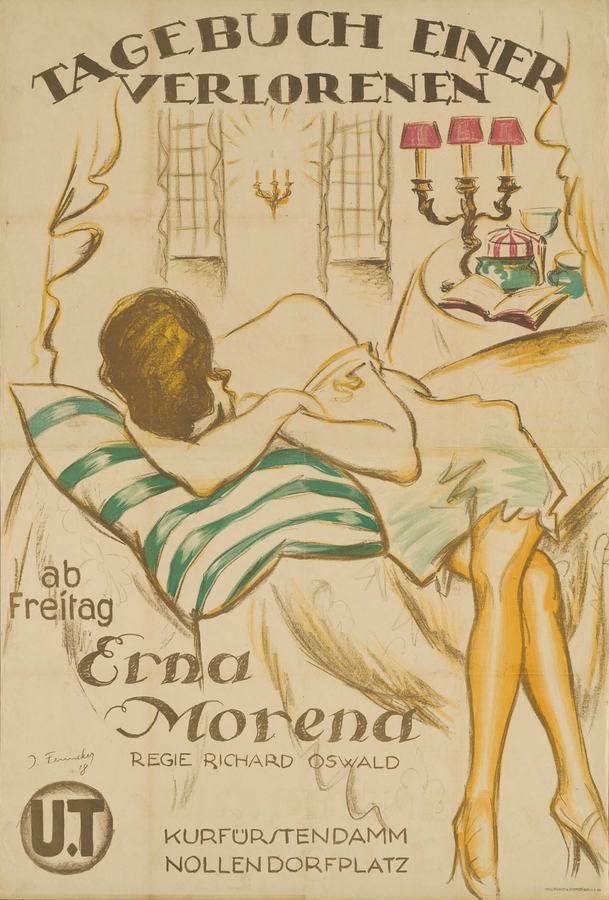
A definitive 7.3/10 rating for a film that redefined the boundaries of cult cinema. Das Tagebuch einer Verlorenen remains a cornerstone of transgressive art.
The Architecture of Social Hypocrisy
In the fertile, often turbulent ground of early Weimar cinema, few figures loom as large or as controversially as Richard Oswald. His 1919 iteration of Das Tagebuch einer Verlorenen (Diary of a Lost Girl) serves as a monumental precursor to the better-known Pabst/Brooks collaboration, yet it possesses a raw, socio-political urgency that is uniquely its own. This is not merely a film; it is a cinematic manifesto belonging to the 'Aufklärungsfilme'—the enlightenment films—designed to strip away the suffocating curtains of German bourgeois morality. Where a film like Barriers of Society might examine the rigid stratification of class through a lens of melodrama, Oswald approaches the subject with the precision of a surgeon operating on a gangrenous limb.
The narrative centers on Thymian, portrayed with a haunting vulnerability that captures the zeitgeist of a generation lost between the collapse of an empire and the birth of a republic. The film’s opening movements are a masterclass in domestic claustrophobia. The pharmacy, a place of healing, becomes the site of Thymian’s violation—both physical and social. Werner Krauss, as the assistant Meinert, delivers a performance of chilling, oily opportunism. His presence is a harbinger of the moral decay that Oswald seeks to expose. Unlike the more fantastical villains of the era, Meinert is frighteningly mundane, a predator thriving within the very structures meant to provide security.
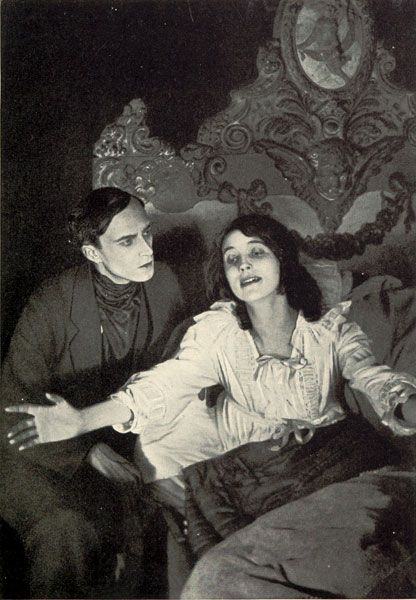
To witness Conrad Veidt and Werner Krauss sharing the screen is to see the two pillars of German Expressionist acting in their formative brilliance. Veidt, as Dr. Vitalis, brings an ethereal, almost otherworldly quality to the role. His movements are fluid, his gaze piercing, embodying a sense of enlightened empathy that stands in stark contrast to the rigid, judgmental figures surrounding Thymian. If The Man Who Found Himself deals with the internal reclamation of identity, Veidt’s Vitalis acts as the external catalyst for such a transformation in others. He is the moral compass in a world that has lost its magnetic north.
Krauss, conversely, is the embodiment of the grotesque. Every gesture is calculated to repel, yet it is grounded in a terrifyingly recognizable human greed. The interplay between these two icons creates a tension that elevates the film beyond its melodramatic roots. They represent the duality of the human condition that Oswald frequently explored: the potential for transcendent wisdom and the capacity for bottomless depravity. This duality is echoed in the film's visual language, which oscillates between the bright, deceptive clarity of the middle-class home and the shadowy, expressionistic depths of the reformatory and the brothel.
"The reformatory scenes are perhaps the most harrowing sequences in early silent cinema, anticipating the institutional critiques of the later 20th century."
When Thymian is sent to the reform school, the film shifts into a mode of institutional horror. Here, the cinematography becomes more angular, the lighting more oppressive. The headmistress and the priest are not figures of guidance but of incarceration. They utilize the rhetoric of salvation to justify the practice of subjugation. This segment of the film resonates with the themes found in Thou Shalt Not Steal, where the legal and religious codes are shown to be weaponized against the vulnerable. Oswald’s camera lingers on the repetitive, soul-crushing labor of the girls, creating a rhythmic sense of despair that is palpable even a century later.
The escape from this institution is not a flight to freedom but a descent into another layer of the social underworld. The brothel, however, is presented with a surprising lack of judgment. In Oswald’s worldview, the prostitutes are more honest in their transactions than the 'respectable' citizens who frequent them. This subversion of expectation is a hallmark of the director's provocative style. He forces the audience to confront their own complicity in the marginalization of these women, much like the challenging narrative structures of The Dagger Woman.
The aesthetics of Das Tagebuch einer Verlorenen are deeply rooted in the transition from the pictorialism of the 1910s to the sharp-edged Expressionism of the 1920s. While it lacks the overt distortion of Caligari, it utilizes space to convey psychological states. The pharmacy's narrow aisles and towering shelves create a sense of entrapment, while the open, yet desolate landscapes Thymian traverses during her exile mirror her internal void. This use of environment as an extension of the character's psyche is a technique Oswald perfected, often contrasting the urban decay with the supposed purity of nature—a theme also explored in the pastoral yet omminous settings of The English Lake District.
The editing, too, is remarkably modern for 1919. Oswald employs cross-cutting to emphasize the disparity between the lives of the wealthy and the struggles of the 'lost' girls. This creates a dialectical montage that serves the film’s reformist agenda. By juxtaposing a lavish dinner party with the meager rations of the reformatory, Oswald makes a political argument without the need for intertitles. It is a visual polemic that demands the viewer's engagement, similar to the advocacy found in Your Girl and Mine: A Woman Suffrage Play, though Oswald’s focus is more broadly socio-economic than specifically electoral.
One cannot discuss this film without acknowledging its literary pedigree. Margarete Böhme’s novel was a sensation, and Oswald’s adaptation captures the epistolary intimacy of the source material while expanding its scope to include a wider critique of the German state. The script, co-written by Oswald and Böhme, retains the diary's subjective emotional core while layering it with the director's characteristic interest in sexology and social hygiene. This fusion results in a film that is both deeply personal and broadly systemic. It echoes the thematic weight of The Eternal Strife, where the individual is caught in the gears of historical and social forces beyond their control.
The supporting cast, including Erna Morena and Reinhold Schünzel, provides a rich tapestry of Weimar archetypes. Schünzel, in particular, excels at playing the kind of decadent, morally bankrupt aristocrat that would become a staple of the era’s cinema. His presence adds a layer of cynical humor to the proceedings, a necessary counterpoint to the film's otherwise unrelenting bleakness. This ensemble approach ensures that the film feels like a complete world, a microcosm of a society on the brink of a nervous breakdown.
Why does the 1919 version of Das Tagebuch einer Verlorenen remain essential viewing, even in the shadow of Pabst’s later masterpiece? The answer lies in its courage. Oswald was making these films at a time when censorship was in flux, and he pushed the boundaries of what could be shown and discussed on screen. He wasn't just telling a story; he was attempting to change the world. The film’s insistence on the dignity of the 'fallen' woman was a radical act of empathy. It shares a spiritual DNA with Indiscreet Corinne, though Oswald’s treatment is far more somber and analytical.
Furthermore, the film serves as a crucial link in the evolution of the crime and mystery genres. The 'Spider Gang' elements in contemporary films like On the Trail of the Spider Gang or the suspense of La spirale della morte find their social equivalent in Oswald’s exploration of the criminalization of poverty. In his eyes, the real 'gang' is the respectable elite who conspire to keep the lower classes in a state of perpetual moral and economic servitude.
The film’s resolution, while offering a glimmer of hope, is not a traditional happy ending. It is a quiet, weary acceptance of the truth. Thymian’s redemption is not a return to her previous life—that life was a lie—but an awakening to a new, albeit difficult, reality. It is a conclusion that mirrors the hard-won wisdom of Damon and Pythias or the sacrificial weight of The Wrath of the Gods. Oswald reminds us that survival is itself a form of victory in a world designed to crush the spirit.
In the final analysis, Das Tagebuch einer Verlorenen is a towering achievement of silent cinema that demands rediscovered appreciation. It is a film that refuses to look away from the darkness, yet it is never nihilistic. Instead, it is fueled by a fierce, humanistic fire. Oswald’s direction, combined with the legendary performances of Veidt and Krauss, creates a cinematic experience that is as intellectually stimulating as it is emotionally resonant. It challenges the viewer to look beyond the surface, to question the 'truths' they have been told, and to find the humanity in the most unlikely of places. It is a diary not of a girl who is lost, but of a woman who finds the strength to be seen.
Whether compared to the adventurous spirit of The Beckoning Trail or the moral complexities of Their Compact, Oswald’s work stands apart for its uncompromising social realism. It is a vital piece of film history that continues to speak to the contemporary struggle for justice and transparency. To watch it today is to witness the birth of social consciousness in cinema, a legacy that continues to influence filmmakers around the globe. In the silence of the screen, Oswald found a voice for the voiceless, and in doing so, he ensured that the 'lost girl' would never be forgotten.
As we navigate our own era of 'fake news' and carefully curated social facades, the lessons of 1919 feel more relevant than ever. You Can't Believe Everything you see on the surface; the truth often lies in the diaries we keep hidden, in the shadows we try to ignore, and in the courageous films that dare to bring those shadows into the light.

IMDb 6.2
1914
Community
Log in to comment.