DbcultAccessing Vault...
Cult Review
Senior Film Conservator
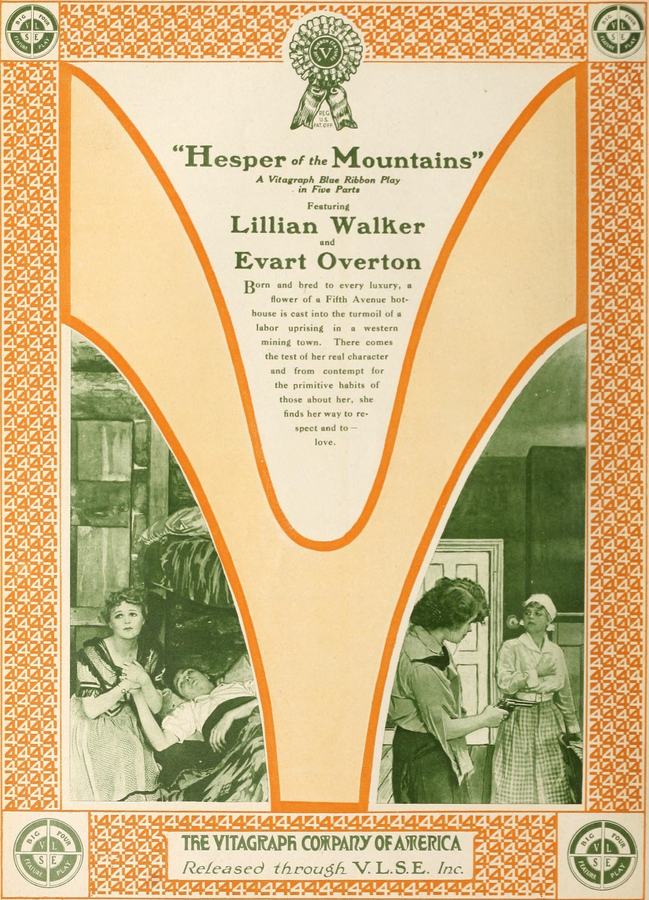
The first image Joseph F. Poland gifts us is a diagonal slash of elevated track against a nickelodeon-night sky: New York as electric as nerve endings. Cut to a sanatorium window where Ann—Josephine Earle’s porcelain face quivering with metropolitan arrogance—accepts exile to the frontier. One senses the film itself inhaling coal smoke, then exhaling dust. The tonal whiplash is deliberate; the celluloid seems to sweat soot, then bleed ochre. In 1925, when most westerns were still Saturday-matinée folklore, Hesper of the Mountains dared to treat the West as psychoanalytic space, a mirroring desert where neuroses leave damp footprints.
Evart Overton’s consumptive brother shivers like a tuning fork, his sickness filmed in soft vignette—an oneiric device that makes every cough feel close enough to fog the lens. Against him, Earle’s Ann is all vectors: gloved hands slicing air, eyes that tally exit signs. When the train pierces the prairie, Poland superimposes her silhouette over speeding sagebrush, turning each frame into a contest of velocities. The effect is uncanny; you feel the actress fighting the medium itself, as though the West were a centrifuge intent on flinging her back to Broadway.
Enter Robert Gaillard’s Bob Raymond: not the grinning buckaroo of The Indian Wars nor the monocled dandy of In the Diplomatic Service, but a stoic whose very stillness feels violent. Gaillard moves like someone who has memorised gravity. Watch how he removes his hat: two fingers sliding under the brim, a pause so microscopic it feels geological. It is erotic geometry, and Earle registers it with a microscopic clench of her jaw. Silent cinema at its best is the semaphore of micro-gestures; here, the quiver of an eyebrow weighs more than wagon wheels.
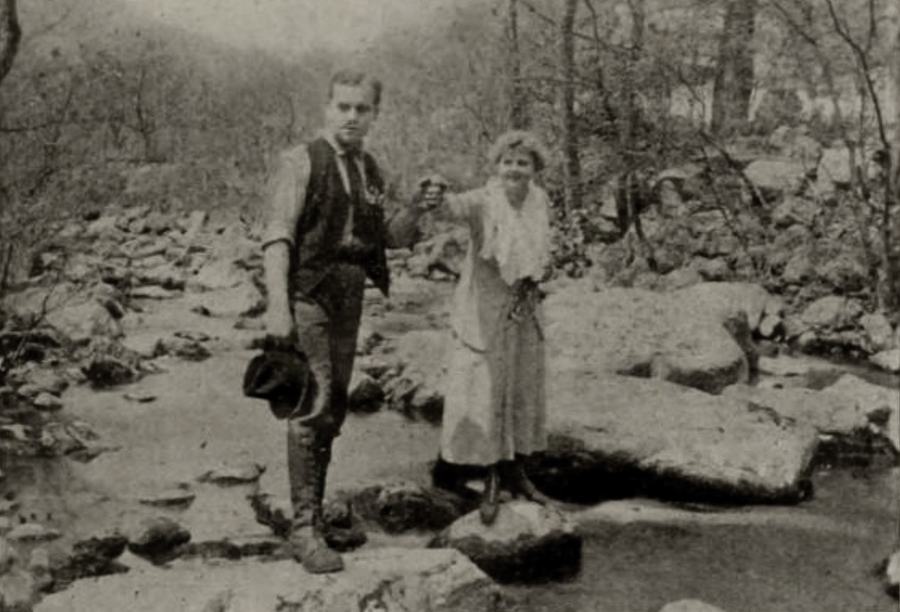
Intertitles in most silents behave like anxious ushers, hustling plot along. Poland’s intertitles—sparse, sardonic—prefer to loiter. “The city is a promise. The desert is a reckoning.” That single card lingers over a shot of cracked earth, letting the fissures stand in for hearts. Compare it to the verbose moralising of The Vital Question or the dime-novel bombast of Die Jagd nach der Hundertpfundnote; Poland trusts negative space, trusts us. The silence becomes a third character, humming between Earle’s hauteur and Gaillard’s flint.
Cinematographer Denton Vane shoots Monument Valley two years before John Ford “discovered” it. But where Ford would frame buttes as cathedral spires, Vane turns them into Freudian furniture: looming fathers, supine mothers. In one astonishing iris shot, Ann’s face is haloed by a sandstone arch, so that rock and flesh share a single epidermis. The chromatic tinting—amber for day, aquamarine for dusk—was restored by EYE Filmmuseum and glows now like bruised topaz. When digital restorations bleach so many silvers into anaemic grey, this amber pulse feels carnal.
Ann’s arc is less “city mouse meets country mouse” than tectonic plates grinding. Earle, a former Ziegfeld girl, carries the brittle glamour of someone who has never walked a street without hearing catcalls. She arrives expecting caricature—laconic men, simpering women—only to meet Lillian Walker’s Ruth, a ranch owner whose competence is so serene it borders on condescension. Their scenes together crackle with subtext: two women negotiating territory without a male referee. When Ruth teaches Ann to cinch a saddle, the camera watches hands, not faces. The erotic charge is diffused, redirected into leather and muscle, a masterclass in indirect desire.
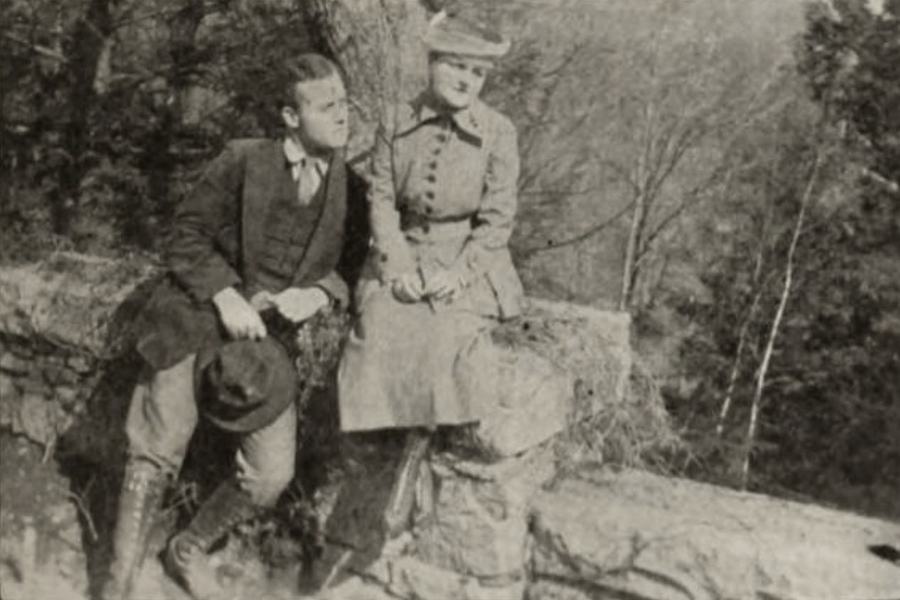
Yet the film refuses sisterhood clichés. Ann’s eventual capitulation to the landscape is not submission but negotiation; she will not become “western woman” any more than Bob will become “urban dandy.” Their final embrace occurs astride a train platform—one foot on soil, one on steel—symbolising a truce rather than conquest. It is a proto-feminist moment smuggled inside a studio oater, as radical in its quiet way as the divorce-court polemic of The Perils of Divorce.
No film set on 1920s frontier can evade the blood-soaked substrata; Hesper of the Mountains sidesteps rather than confronts. Native Americans appear only as decorative shadows in a campfire tale, a lacuna that feels doubly egregious given the Navajo land on which it shoots. Yet the omission itself becomes spectral—the West as palimpsest, haunted by what it refuses to name. Compare this to the blunt imperial fantasy of The Rajah’s Diamond Rose or the jingoistic spectacle of The Indian Wars; Poland’s silence is cowardice, yes, but also an unconscious admission that the myth needs gaps to survive.
Most modern screenings slap on generic honky-tonk piano, flattening nuance. At Bologna’s Il Cinema Ritrovato, composer Dagmar van Wersch unveiled a new score: bowed cymbals, breathy flute, a lone cello tuned to viola range. The result is a drone that feels like wind scraping memory. During the pivotal sandstorm sequence—where Ann, lost, hallucinates skyscrapers made of dust—van Wersch introduces a whispered motif on musical saw. The timbre wobbles between human and mechanical, mirroring Ann’s disintegrating sense of self. If you ever get to hear this version, surrender your ribs; they will vibrate.
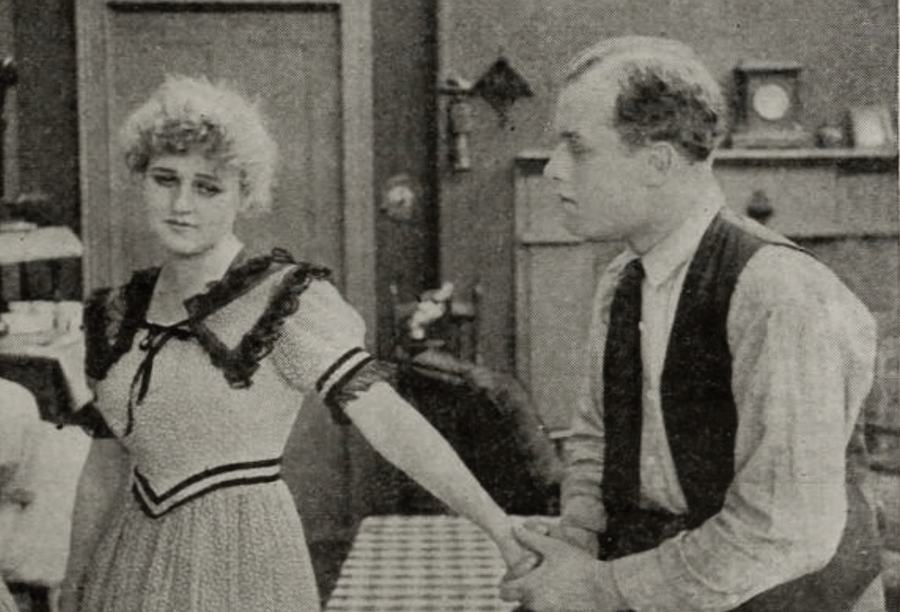
Josephine Earle’s mouth performs micro-symphonies: the left corner lifts in sarcasm, the right trembles in panic, creating a diagonal tension that silent lenses devour. Watch her in the cantina scene where cowboys sing “Sweet Adeline.” The camera holds in medium-close as she realises the tune is one she used to mock with flappers back home. Earle doesn’t “act” nostalgia; her pupils dilate like a startled cat, and for eight seconds you witness memory flooding capillaries. It is bio-cinematic alchemy.
Robert Gaillard, by contrast, weaponises stillness. He is the antithesis of the manic mugging seen in Cohen’s Luck. His stillness is not wooden but magnetised; the less he does, the more the frame tilts toward him, as if gravity were directorial. When he finally confesses love—not via intertitle but through a single tear that hesitates on the cheekbone like a reluctant diamond—the auditorium inhales as one organism. It is a moment of pure Valentino-defying pathos, achieved without kohl or melodrama.
Joseph F. Poland, later shackled to Poverty Row westerns, here writes with modernist ellipsis. Plot points occur off-screen: the brother’s relapse is relayed via a broken thermometer glimpsed under a wagon wheel. The strategy anticipates Antonioni’s later refusal to dramatise the obvious. Dialogue cards arrive out of order, creating temporal stutters. “I leave at dawn” appears after we have already seen Ann linger past sunrise. The disjunction queers our temporal compass, mirroring the characters’ own unmooring from civilised chronology.
For decades Hesper of the Mountains survived only in Belgian print fragments—nine minutes, no finale. When a 35 mm nitrate with Dutch intertitles surfaced in a Haarlem attic in 2017, archivists feared vinegar syndrome. Instead, under X-ray fluorescence, the emulsion bled indigo and rust, colours no tinting guide predicted. The discovery reshaped scholarship: suddenly the film’s chromatic fever dream was intentional, not lab decay. It is now taught alongside Die badende Nymphe as an example of how colour can be narrative prosthesis.
Critics who relegate silent westerns to dusty prelude of Stagecoach miss the radical experiments in identity, geography, and montage bubbling in the pre-code era. Hesper of the Mountains is no quaint curio; it is a disquieting mirror held up to Manifest Destiny, reflecting back a woman whose ultimate conquest is the refusal to be conquered. In an age when every streaming western reboot mistakes grit for depth, Poland’s meditation on space-as-psyche feels almost illicitly sophisticated.
To watch this film is to occupy the fault line between steel rail and sagebrush, between flapper ennui and frontier stoicism. It will not soothe you with horse-operatics; it will leave you vibrating at the frequency of wind that has nowhere to echo. Seek it out in any form—mutilated YouTube rip, half-silent bootleg, or the new 4 K restoration with van Wersch’s score—and let it bruise your coordinates. The greatest journeys, after all, do not transport us across land but excavate the unmapped continents inside. Ann’s suitcase, finally unpacked, contains only desert light. And that, mes cinéphiles, is luggage enough.
IMDb 6
1920
Community
Log in to comment.