DbcultAccessing Vault...
Cult Review
Senior Film Conservator
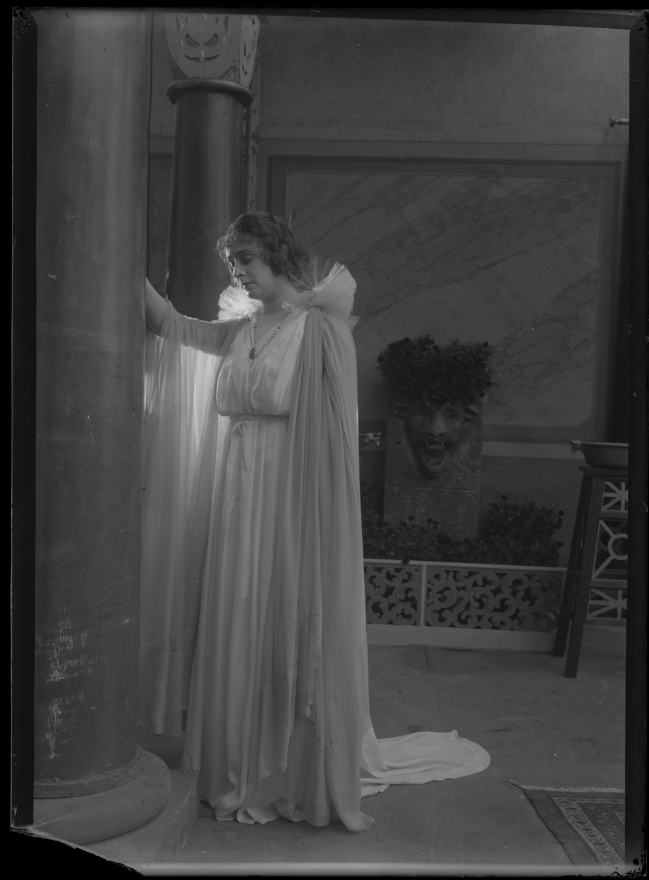
Stockholm, winter of 1920: the city is a snow-globe shaken by a sadistic child. Into this paper-weight of frozen spit and diamond dust glides Ayo Vindico, nicknamed Paradisfågeln by gossip columnists who mistake plumage for essence. The sobriquet sticks like a burr to cashmere, and before long the capital itself begins to believe that a human being can be reduced to an exotic ornament.
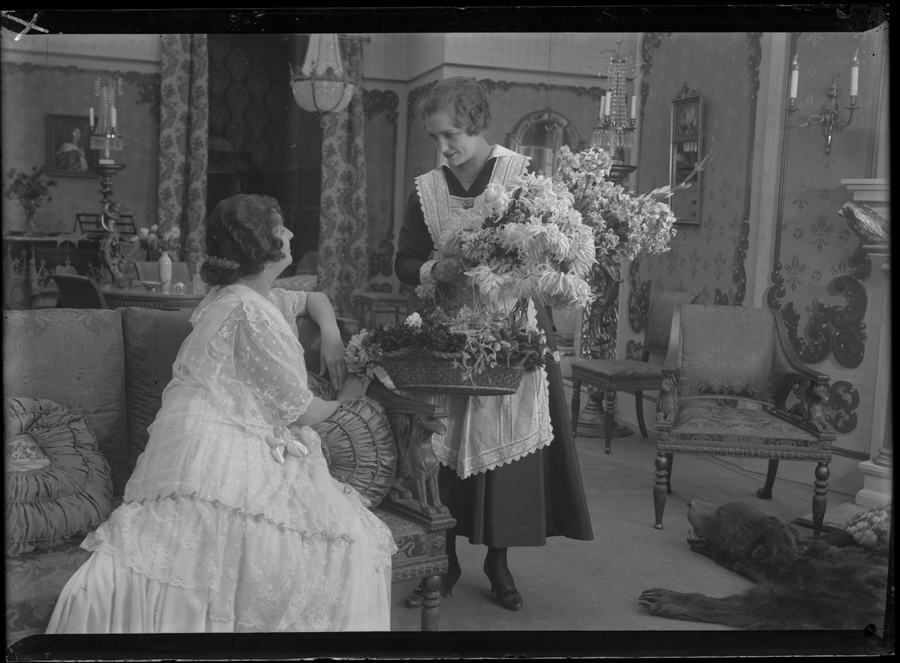
Director-screenwriter Marius Wulff shoots every reel as though he were embalming a dream. The opening iris-in reveals Ayo’s gloved hand lifting a flute of champagne; the liquid inside is tinted arsenic-green, a hue that will recur in silk wallpaper, in the oxidized copper of church spires, in the iris of a corpse half-submerged beneath ice. Silent cinema rarely risked such chromatic insistence, yet Wulff, working with cinematographer Hugo Edlund, hand-tinted select frames so that gold leaf shudders while the rest of the world stays monochrome, an ethical chiaroscuro: wealth blazes, morality rots.
The narrative ostensibly hinges on a stolen ruby, yet the gem is merely the MacGuffin de Stockholm. Every character fondles it in close-up, but Wulff denies us the catharsis of possession; we glimpse facets, never the whole stone. Instead, the film’s true engine is indebtedness: parental, sexual, societal. Ayo’s mother once danced at the Royal Opera until her tendons snapped like over-tuned violin strings; her medical bills shackled the family to usurers whose grandchildren now wear top-hats in the Riksdag. Thus Ayo’s dandyism is not frivolity but arithmetic: each sequin repays a copper coin of ancestral shame.
Compare this to The Americano where the protagonist flees north to escape debt, or A Soul Enslaved that moralizes debt as sin. Wulff refuses either geographic or metaphysical exit; his Stockholm is a flypaper chandelier—glittering, sticky, circular.
Lili Beck moves like someone remembering a waltz taught in utero; her shoulders anticipate the music two beats before the orchestra strikes. When Ayo is publicly accused of theft, Beck lets the smile drain sideways—a slow avalanche—until only the rictus remains. The moment is silent yet deafening, the inverse of a scream.
John Westin plays Baroness Lindskog as a woman who has weaponized her own fragility. She enters each scene trailing a lap-dog stitched from her deceased husband’s hunting jackets; the animal is taxidermy, its glass eyes reflecting whoever coos at it, a living mirror of flattery. Watch how Westin’s fingers flutter when she lies: pinky raised as though holding an invisible teacup, a gesture that betrays centuries of finishing-school rot.
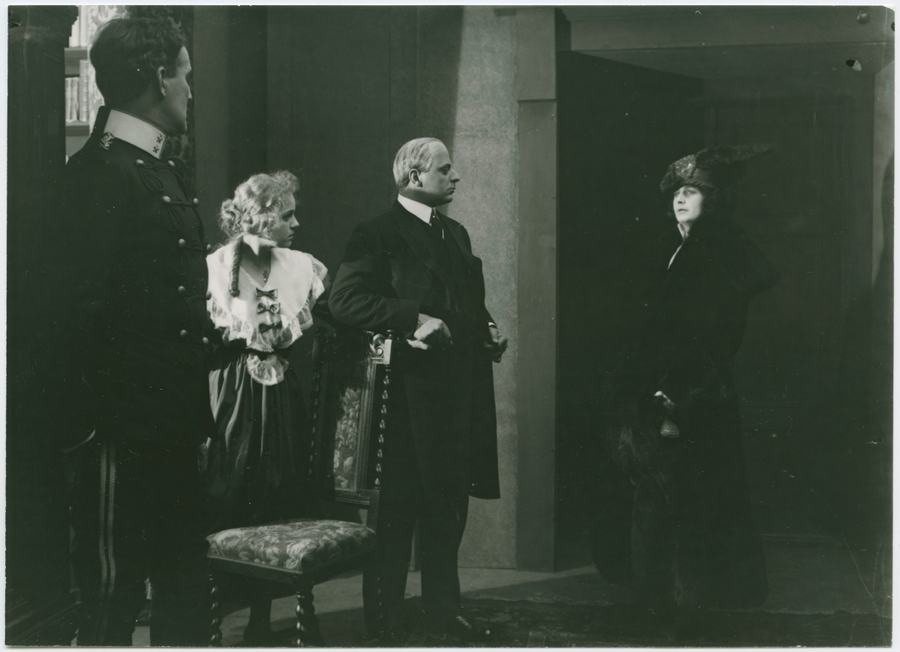
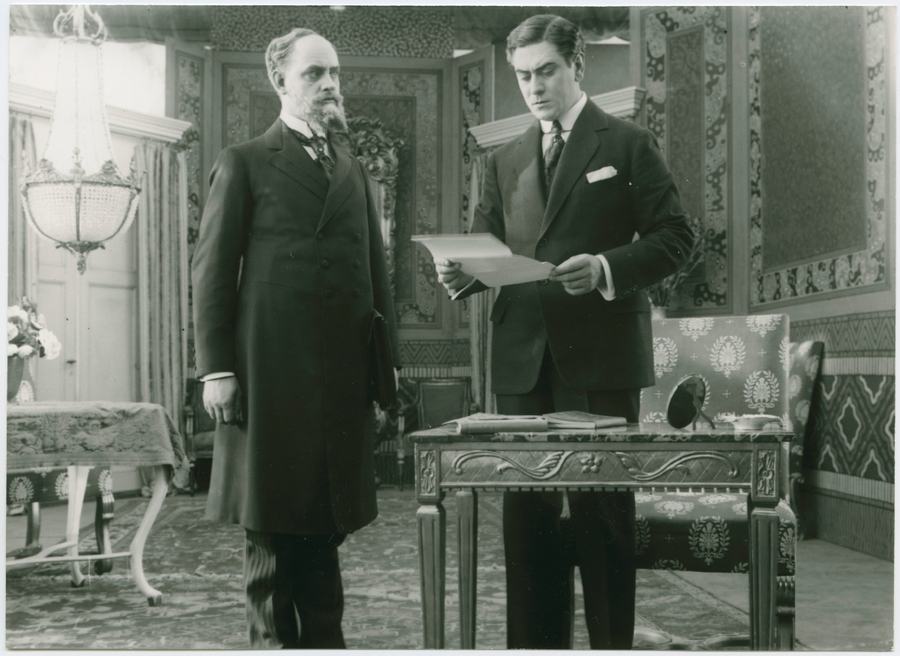
In counterpoint, John Ekman’s newspaper editor Stenborg speaks only in intertitles, yet his body articulates subtext. He types with the heel of his palm, not fingertips, crushing truth into paper the way vintners crush grapes underfoot. The ink that spatters his cuffs is baptismal, a sacrament for the damned.
Wulff composes interiors like Jan van Eyck trapped in a mortuary. Persian rugs swallow candlelight; chandeliers drip wax onto bald scalps, forming halos that slip, harden, scar. Note the recurring doorway motif: characters are framed within frames within frames—door within mirror within proscenium—until perspective itself feels complicit. The finale stages a duel on the frozen river; pistols are discarded for a single white plume torn from Ayo’s hat. As blades clash, the camera tilts ninety degrees, turning the horizon vertical. Stockholm becomes a crucifix, the duelists its nailed hands.
Compare this spatial disorientation to The Great Leap: Until Death Do Us Part, where the camera somersaults during a steeplechase, or Revolución Orozquista that uses canted angles to evoke revolutionary vertigo. Wulff’s gambit is subtler: he tilts the world so that morality itself slides off the table.
The original score, reconstructed by the Swedish Film Institute from a fire-damaged piano reduction, alternates between polonaises (courtly, indebted) and atonal sighs that anticipate Bergman’s Mahler adagios. Cellos mimic the creak of galleon timber, evoking the East India Company profits that built many a Stockholm palace. Thus every waltz is haunted by the chains of colonized rubber plantations; every crescendo is a creditor pounding the door.
Ayo’s gender fluidity—she cross-dresses as a man to escape arrest—was hotly debated by 1921 censors who feared it would “unglue the social mortar.” Yet Wulff frames the disguise not as titillation but as economic necessity. In trousers, Ayo can enter the Stock Exchange, sign IOUs, buy back her mother’s pawned tiara. The corset she removes is embroidered with the names of creditors, each whalebone stay stitched with a loan shark’s initials. When she unlaces it, the garment exhales like a dying lung.
This anticipates A Daughter of Australia, where the heroine swaps skirts for jodhpurs to claim her inheritance, yet that film sanitizes the swap with marital closure. Wulff denies us such comfort; Ayo’s return to petticoats is followed by arrest, trial, and exile—a reminder that patriarchy allows costume changes, not power transfers.
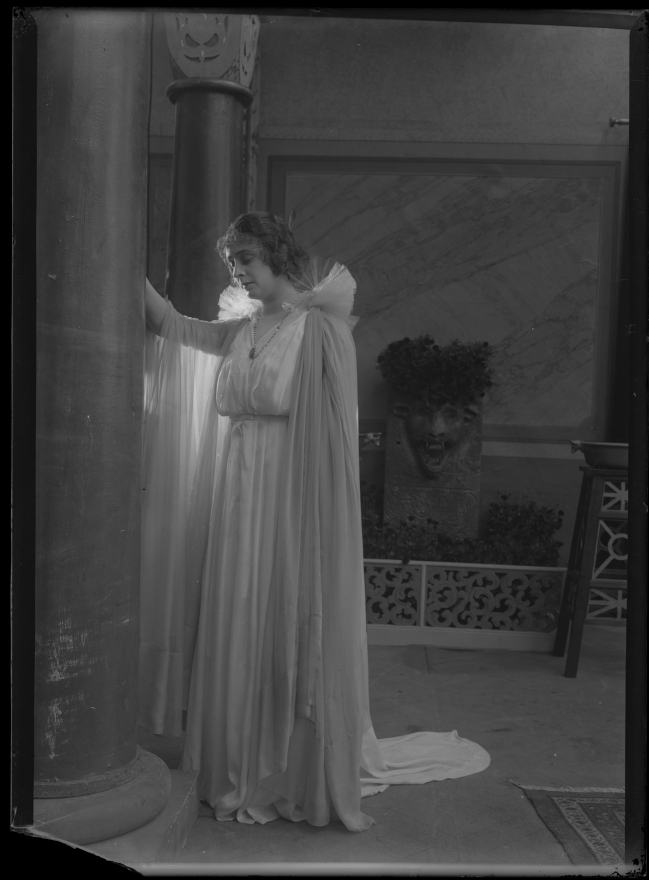
The cursed ruby originates in Ratnapura, Ceylon. Its journey from temple idol to Swedish vault is relayed via a shadow-play prologue silhouetted against a map where continents bleed into one another. Wulff cuts between the gem’s extraction—bare feet in mud, whip cracks echoing like rifle shots—and its display in a baronial salon where guests nibble canapés of foie gras. The montage indicts every sparkle in the room; the Baroness’s necklace is a noose woven across oceans.
This post-colonial undertow aligns Paradisfågeln more with The Americano’s critique of banana-republic imperialism than with Nordic silents obsessed solely with Lutheran guilt. The ruby’s final resting place—a frozen river crackling beneath duelists’ boots—suggests Europe’s riches will one day sink under the weight of their own violence.
Wulff employs elliptical cuts that feel like skipped heartbeats. A dissolve from Ayo’s laughter to her bruised mug-shot collapses weeks of incarceration into a heartbeat. The technique forecasts Resnais’s temporal lacerations yet remains rooted in melodrama: the missing footage is not existential but economic—film stock was rationed post-WWI, so Wulff turns scarcity into aesthetic, making absence haunt the image.
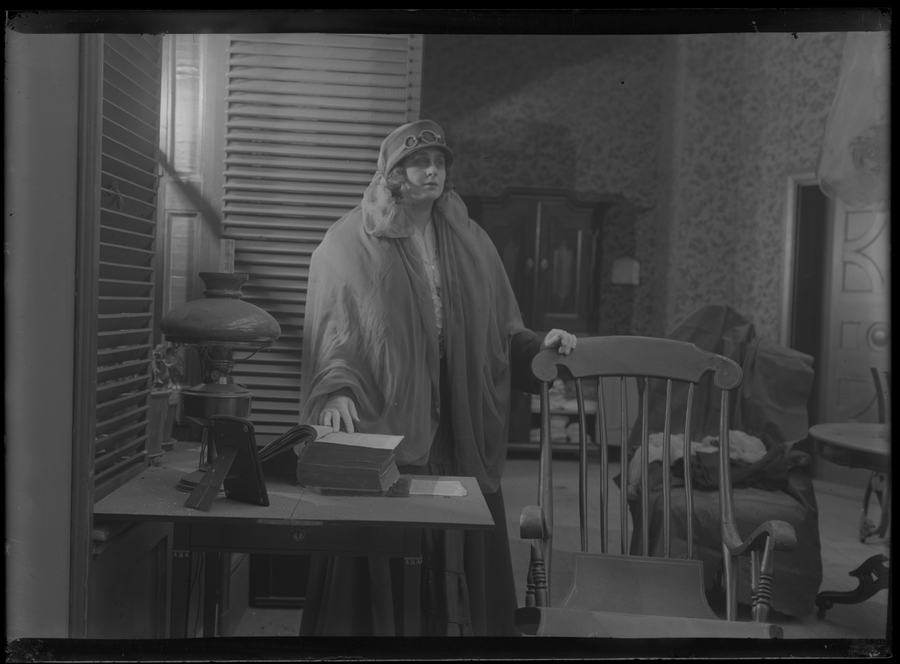
Premiered on 14 March 1921 at the Skandia cinema, the film sparked Dagens Nyheter to fume: “Ayo’s sins are Sweden’s sins—yet must we pay to watch them?” Ticket sales soared, out-grossing even The Patriot that year. Abroad, the New York Herald praised its “Nordic chill that could freeze the champagne in a flapper’s glass.”
Tragedy struck in 1941 when the nitrate negative perished in a vault fire, leaving only a 9-minute fragment. For decades scholars pieced together stills, scripts, censorship cards. Then, in 2018, a 93-minute print surfaced at a Buenos Aires flea market, mislabeled as Revolución Orozquista. The restoration—4K scan, bilingual intertitles—reveals textures previously smothered: frost on eyelashes, lice crawling under wigs, the ruby’s scarlet pupil dilating with each sin it witnesses.
The restored edition streams on MUBI (rotating monthly) and plays repertory circuits via Sweden’s Cinematek. Blu-ray from Kino Lorber includes a commentary by Dr. Cecilia Stolpe who traces the gem’s real-world analogue: the Black Prince Ruby looted from Granada and reset in the British crown. Extras feature a 20-min essay on colonial extraction that should be mandatory viewing for every museum curator still trumpeting “global collections.”
Watch it for Beck’s laugh that decays into a hiccup, for Westin’s veil that doubles as a noose, for Wulff’s camera that tilts until conscience spills. Watch it because silent cinema is not a relic but a diagnostic: the same debts that shackled Ayo now metastasize into student loans, medical bills, carbon credits. The Bird of Paradise may have molted in 1921, yet every feather that drifts from the screen lands in our 21st-century pockets, IOUs folded into its barbules.
Verdict: a masterpiece whose restoration rescues not just a film but a mirror—cracked, gilt, merciless. Hold it up and you will see no past, only the future wearing yesterday’s mask.
IMDb 5.8
1932
Community
Log in to comment.