DbcultAccessing Vault...
6.2/10
Senior Film Conservator
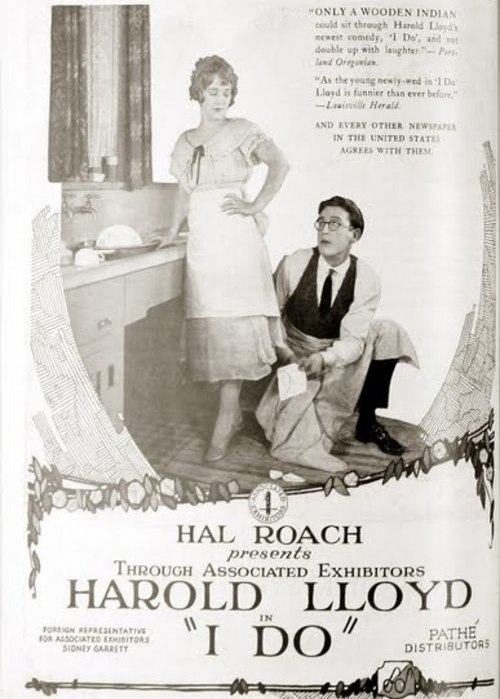
A definitive 6.2/10 rating for a film that redefined the boundaries of cult cinema. I Do remains a cornerstone of transgressive art.
In the pantheon of silent cinema, few figures command the same level of kinetic respect as Harold Lloyd. While his contemporaries often leaned into the ethereal or the grotesque, Lloyd found his muse in the mundane anxieties of the everyman. In the 1921 short I Do, we witness a profound distillation of this ethos. The film is not merely a collection of gags; it is a rhythmic, almost percussive examination of the transition from the romanticism of the 'I Do' to the reality of the 'What now?'. Unlike the sentimental tropes found in Nina, the Flower Girl, Lloyd’s work here is sharp, unsentimental, and relentlessly paced.
The screenplay, a collaborative effort between the legendary Hal Roach and Sam Taylor, functions with the precision of a Swiss watch. It begins with the symbolic union of Harold and Mildred Davis, a pairing that off-screen would mirror their cinematic chemistry. However, the film quickly pivots away from the saccharine. The introduction of the children—portrayed with a terrifyingly naturalistic penchant for destruction by Jack Morgan and his cohorts—transforms the domestic sphere into a labyrinth of peril. This shift from the romantic to the logistical is handled with a lexical diversity of movement that few modern directors could hope to emulate.
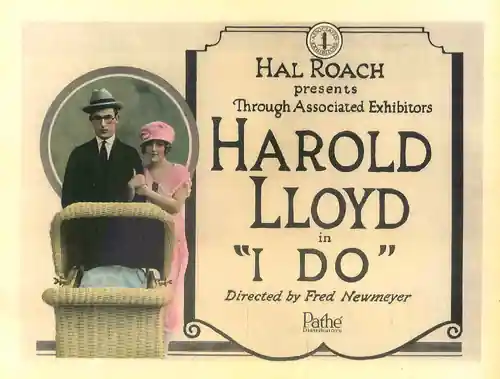
The cast list for I Do reads like a roll call of the Hal Roach stock company’s finest. Beyond the central duo, we see the likes of Noah Young and James T. Kelley providing the necessary friction to Harold’s momentum. Even the smaller roles, filled by stalwarts like Dorothea Wolbert, William Gillespie, and Charles King, contribute to a sense of a lived-in, albeit frantic, world. This ensemble approach differs significantly from the more singular character studies of the era, such as The Shine Girl or the more dramatic leanings of Fedora. Here, the comedy is communal; it is a shared experience of the absurdity of social norms.
Mildred Davis serves as more than just a decorative foil. Her performance captures the shared exhaustion of the era’s new middle class. When compared to the more overtly flirtatious roles seen in Her Naughty Wink or the poise of The Venus Model, Davis in I Do is grounded. She represents the anchor to Lloyd’s balloon-like buoyancy. Their interactions are characterized by a shorthand that suggests a deep understanding of the comedic beat, ensuring that even the most outrageous physical stunts remain rooted in a recognizable human emotion.
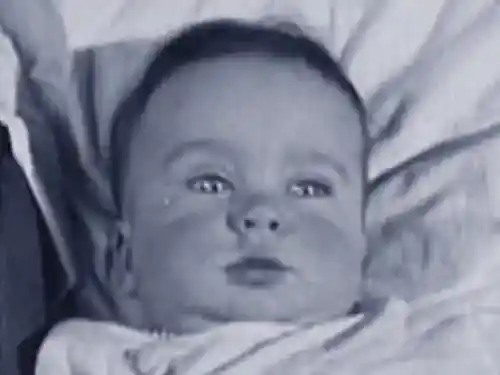
The technical execution of the gags in I Do is nothing short of miraculous. Consider the sequence involving the baby carriage—a masterclass in spatial awareness and timing. It echoes the frantic urban energy found in Go and Get It, yet it is localized to the sidewalk and the nursery. The camera work, though limited by the technology of 1921, manages to capture the escalating panic of Harold as he attempts to soothe a crying infant while navigating a world that seems designed to frustrate his every move. This is not the broad, slapstick violence of the Keystone Cops; this is situational comedy refined to its purest element.
The use of props—the milk bottle, the diapers, the various toys—serves as a commentary on the burgeoning consumerism of the 1920s. Every object is a potential weapon or a source of embarrassment. This thematic depth elevates the film above contemporary efforts like The Garter Girl or Blue Grass. Lloyd and Roach were not just looking for laughs; they were documenting the friction of modern life. The mechanical nature of the gags—Harold’s body becoming a cog in the machine of the household—is a precursor to the more explicit industrial satires of the later silent period.
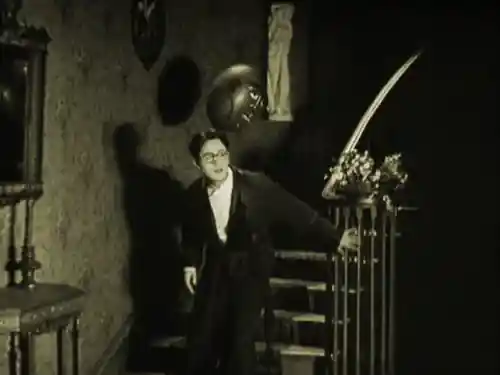
When placing I Do within the broader context of 1920s cinema, its uniqueness becomes even more apparent. While The Beloved Vagabond pursued a more picaresque and romanticized view of the outsider, Lloyd’s film is obsessed with the insider—the man trying desperately to fit into the box of respectability. There is an 'incognito' quality to his struggle, much like the themes in My Lady Incog., where the protagonist must hide their true nature (in Harold’s case, his utter bewilderment) to maintain a social facade.
Furthermore, the film’s treatment of children as agents of chaos provides a stark contrast to the often overly-sentimentalized 'waifs' of the period, seen in works like Children of Destiny. In Lloyd’s world, children are not symbols of hope; they are delightful, high-energy catalysts for disaster. This perspective is closer in spirit to the rough-and-tumble storytelling of The Hiding of Black Bill, where the comedy arises from the subversion of expectations. Even the title, I Do, is a subversive nod to the ultimate commitment, which the film suggests is as much about surviving the mundane as it is about romantic love.
Hal Roach and Sam Taylor’s direction ensures that the film never lingers too long on a single note. The pacing is breathless, a trait that would become the hallmark of the Lloyd brand. This kineticism is what separates it from the more plodding dramas of the time, such as Der Dolch des Malayen. In I Do, every frame is utilized. The background action is often as important as the foreground, creating a sense of a world that is constantly in motion, whether Harold is ready for it or not.
The film also benefits from the presence of J.A. Kennedy and Wally Howe, whose supporting roles add layers of bureaucratic and social pressure to Harold’s plight. It is this layering—the mixture of physical comedy, social satire, and ensemble chemistry—that makes I Do a superior example of the short-form comedy. It doesn't need the spectacle of The Biggest Show on Earth because the 'show' is the life of the average man, and the 'earth' is the four walls of a chaotic nursery. It is a film that understands that the greatest drama is often found in the smallest moments, provided those moments are punctuated by a well-timed fall or a misplaced baby bottle.
A century later, I Do remains a startlingly relevant piece of media. The anxieties it portrays—the fear of parental failure, the struggle to maintain a relationship under pressure, the sheer exhaustion of domesticity—are universal. Lloyd’s 'Glasses' character remains the perfect vessel for these fears because he is us. He is not a clown; he is a man trying his best in a world that is slightly too fast for him. This relatability is what gives the film its enduring power, far outlasting more topical or genre-specific works like Hearts and Let Us.
In conclusion, the brilliance of I Do lies in its ability to find the sublime in the ridiculous. It is a testament to the skill of the Roach studio and the unparalleled physical talent of Harold Lloyd. By stripping away the artifice of the romantic comedy and replacing it with the frantic energy of the domestic farce, they created a work that is as intellectually stimulating as it is hilariously entertaining. It is a cornerstone of silent comedy that demands to be seen, analyzed, and celebrated by any true aficionado of the silver screen.
IMDb 5.7
1915
Community
Log in to comment.