DbcultAccessing Vault...
Cult Review
Senior Film Conservator
Gilt-edged damnation in the Low Countries
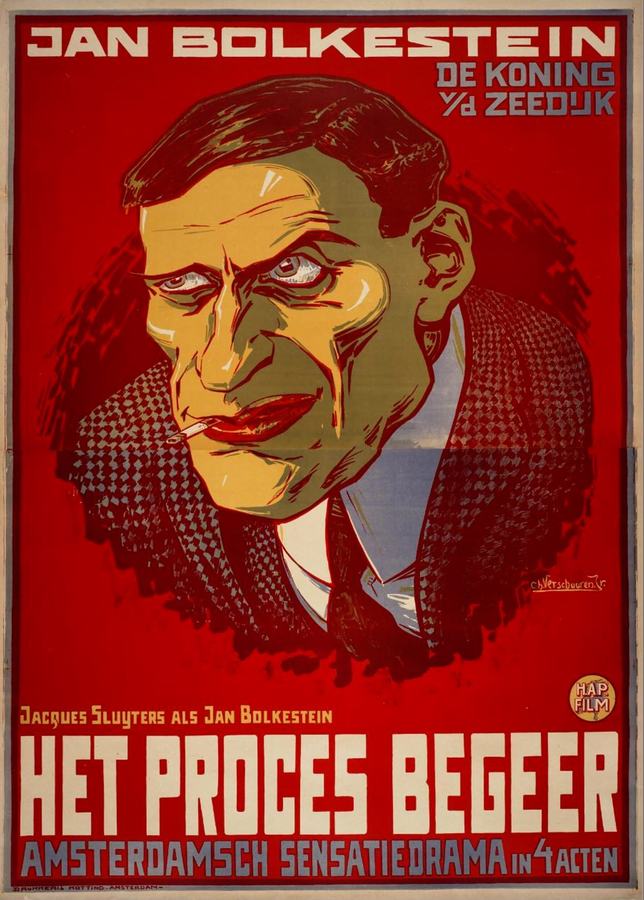
Amsterdam, 1920: cobblestones still echo with the clatter of Great-War bread riots, yet inside the Beurs van Berlage the elite fondle bearer bonds as if stroking a lover’s thigh. Into this incense of affluence wanders Frits Engels’ titular banker—eyes like frozen canals, smile as thin as the guilder’s gold leaf—his morning coat flawless, his soul already foreclosed. Theo Frenkel, a director who once turned a pea-shooter budget into the cosmos of John Needham’s Double, now trains his single irised lens on the moment credit becomes credo, and credo becomes cage.
Expressionism in wooden shoes
Forget Caligari’s jagged backlots; Frenkel carves unease out of bourgeois respectability itself. Parlour wallpaper sports tulip motifs that, under flickering gaslight, resemble blood clots. The courtroom’s oak panelling looms like a ship’s hull, creaking under invisible ballast. When the judge raps his gavel, the sound ricochets through silhouettes of windmills, turning them into guillotines against the frosted glass. Dutch angles? The entire nation tilts on mercantile hubris.
A cast that exhales peat and perfume
Annie Wesling, as Begeer’s spouse, wears pearls so tight they seem to garrote her collarbones; watch the tremor in her left eyelid each time the prosecution mentions overseas accounts. Coen Hissink’s clerk is a marionette of arithmetic, knuckles ink-smudged, spectacles fogging as if ashamed to see clearly. Johan Valk’s cigar-puffing newspaper editor recalls the rotund cynicism of The Grandee’s Ring publisher, yet here the press is both chorus and carnivore, typeset letters clacking like beetle mandibles around fresh carrion.
Ledger lines as ley lines
Intertitles—hand-lettered, jittering—appear over ledgers whose columns bleed off-screen into the audience’s subconscious. Every debit finds its moral creditor: a war widow clutching worthless shares, a sailor promised an empire of spices who receives only bankruptcy’s brine. Frenkel edits like a man possessed by double-entry bookkeeping; jump-cuts splice testimony with street organ melodies, collapsing chronology until past promissory notes become present prison bars.
Silence that clangs louder than any talkie
Shot in the final blush of the silent era, Het Proces Begeer weaponizes hush. When the verdict is read, Frenkel withholds even the organ score; we hear only the squeak of a defendant’s shoe, the rustle of twenty necks craning, the soft plop of a woman’s tear onto velvet. Compare that to the melodramatic bombast of The Captive or the sentimental lullabies of For sin Dreng; here absence is orchestra enough.
A nation’s guilty conscience
Post-war Netherlands fancied itself neutrally pristine, yet colonial rubber fortunes oozed from Indonesian blood. Frenkel, ever the gadfly, folds that imperial ink into Begeer’s ledgers. When the prosecutor whispers of "plantation futures," the camera cuts to Javanese shadow-puppets projected on the courtroom wall—an oneiric indictment that predates Iwami Jûtarô’s ethnographic gaze by several years.
Cinematography that smells of linseed and damp wool
Shot mostly on orthochromatic stock, whites flare into magnesium, blacks sink into peat. Yet within that limited palette, Frenkel discovers nuance: sea-fog grey for the hollows of Begeer’s cheeks, sickly chartreuse where gaslight kisses absinthe glasses. Mirrors fragment faces into cubist shards, predicting the urban kaleidoscope of The Shadows of a Great City but with a Calvinist sobriety that refuses the decadence cake.
The women who count the real coin
While men bluster about liquidity, female characters traffic a more intimate currency. Anna Langenaken-Kemper’s housekeeper hides unpaid grocery tallies inside her hymnbook, hinting that domestic debt can damn as surely as offshore fraud. Anna’s glance at the jury—equal parts contempt and complicity—speaks pages of suppressed ledgers. Their collective silence forms an alternative tribunal, matriarchal and merciless, foreshadowing Kitty’s marital accounting in The Marriage of Kitty.
Sound and fury in absentia
Some historians label the film’s final reel expressionist excess: Begeer’s hallucination of guilders raining like autumn leaves onto a nameless grave. Yet that image feels prophetic after the 1929 crash—currency as foliage, prosperity as compost. Frenkel’s nightmare predates similar tableaux in The Gates of Doom by nearly a decade, proving that Dutch restraint could be as apocalyptic as any Weimar fever dream.
Rediscovery, restoration, revelation
For decades the negative mouldered in an Antwerp basement, nibbled by cellar rats who perhaps recognized kindred parasites. The 2018 restoration by Eye Filmmuseum returned missing intertitles, salvaged tinting sheets, and unearthed a souvenir program where Frenkel scribbled: "Guilt is interest that compounds eternally." Projected at 18 fps with live accordion accompaniment, the film now radiates a chill that no 4K Disney flick can replicate.
Final accounting
Het Proces Begeer is not a relic but a razor. It slices through the myth that silent cinema was naïve, that Dutch art stopped at tulip still-lifes, that morality can be amortized. In the age of algorithmic trading and crypto cathedrals, Frenkel’s monochrome ledger feels eerily prescient, asking who among us is willing to audit the soul. Verdict: essential viewing for anyone who suspects that the real crime scene is the mirror.

IMDb 5.9
1926
Community
Log in to comment.