DbcultAccessing Vault...
6.7/10
Senior Film Conservator
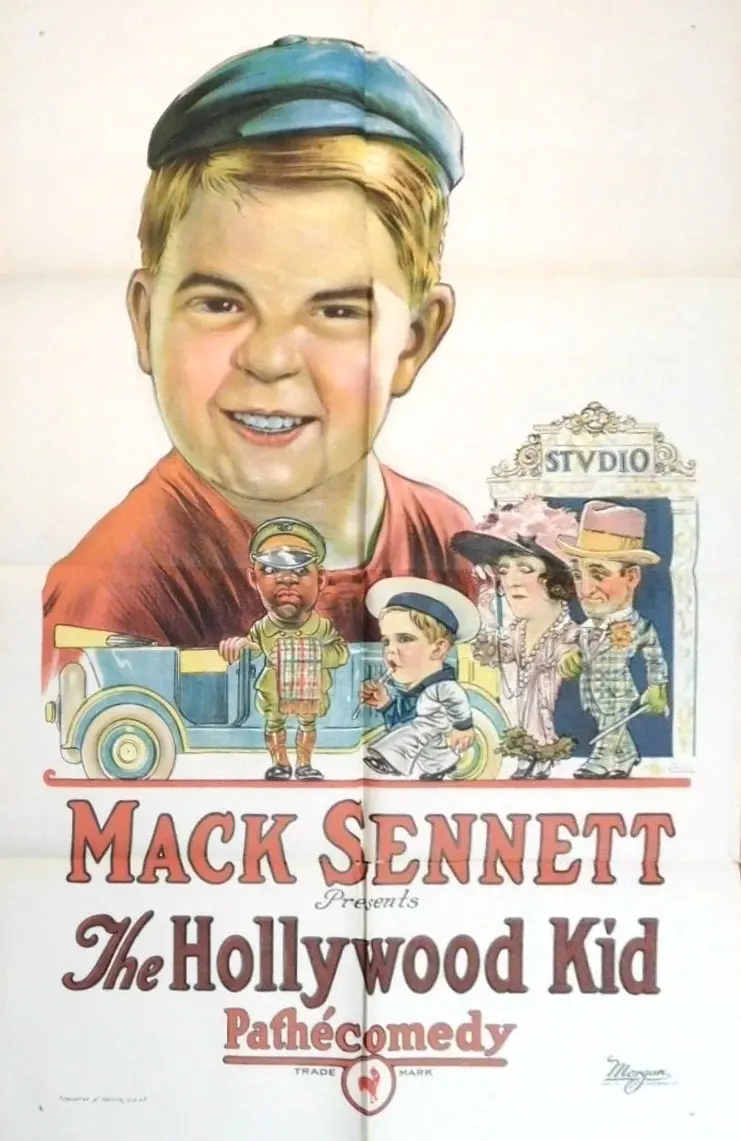
A definitive 6.7/10 rating for a film that redefined the boundaries of cult cinema. The Hollywood Kid remains a cornerstone of transgressive art.
Stepping into the effervescent world of The Hollywood Kid is akin to unearthing a vibrant time capsule, a delightful glimpse into the very crucible of early cinematic stardom. This particular gem from the prolific Mack Sennett offers far more than a simple plot; it presents a meta-narrative, a whimsical, yet insightful, peek behind the velvet curtain of silent film production, showcasing the often-chaotic, always-entertaining process of manufacturing a screen idol. It’s a testament to Sennett’s singular vision, his uncanny ability to blend broad physical comedy with a surprising undercurrent of industry self-awareness. The film, in its essence, is a charming, often uproarious, exploration of the star-making machinery, particularly when it came to finding and cultivating juvenile talent, a niche that held immense appeal for audiences of the era.
The narrative commences within the hallowed, albeit hilariously chaotic, confines of Mack Sennett's private office. This isn't just a setting; it's a character in itself, a vibrant tableau where the absurd is the norm and ambition clashes with utter pandemonium. Sennett himself, a towering figure in early cinema, is depicted in the midst of a bewildering array of interviews. We witness a parade of hopefuls: earnest, perhaps slightly bewildered, directors; a motley crew of aspiring actors, their faces a mixture of desperation and theatricality; would-be comedians, each convinced of their unique brand of mirth; and, in a stroke of classic Sennettian genius, actual lions. Yes, lions. This immediate plunge into the surreal underscores the inimitable energy of Sennett’s Keystone Studios, a place where animal wranglers, ingenues, and slapstick artists coexisted in glorious, unpredictable harmony. It's a marvelous opening, instantly establishing the film's tone and its playful deconstruction of the creative process.

Amidst this delightful bedlam, a director, perhaps weary from the endless parade of the unremarkable, recounts an encounter that sparks Sennett's interest. He speaks of a child, an unknown quantity, yet possessing that intangible spark, that nascent charisma that separates a mere performer from a potential star. This moment is pivotal, shifting the film's focus from general industry satire to the specific pursuit of a juvenile talent. Sennett, with his characteristic blend of astute business acumen and an instinct for the theatrical, gives the directive: 'Sign him up.' Easier said than done, of course, especially in a world where contracts were often handshake deals and talent scouting was more akin to treasure hunting in a bustling marketplace. The very premise echoes the real-life scramble for fresh faces that defined the burgeoning film industry, a relentless churn of discovery and discard, where a single child could become a studio's golden goose. One might even draw a parallel to the relentless pursuit of talent seen in later films like The Dreamer, albeit with a distinctly more comedic and less dramatic approach.
The path to stardom, as depicted in The Hollywood Kid, is anything but smooth. The film revels in the 'much trouble' encountered in securing this promising youngster. This segment, while brief, is rich with the potential for classic Sennett gags and physical comedy, illustrating the myriad obstacles that could arise in the pre-studio system era. Perhaps the child is elusive, perhaps their guardians are skeptical, or perhaps the sheer administrative chaos of the studio itself creates unforeseen hurdles. Whatever the specific challenges, the audience is invited to revel in the humorous struggle, knowing full well that eventual triumph is inevitable. It’s a narrative arc that speaks to the romanticized notion of talent being ‘discovered’ against all odds, a foundational myth of Hollywood that persists to this day.

And triumph it does. After surmounting these comedic difficulties, the kid is brought into the fold, and the transformation begins. The film culminates in the juvenile's metamorphosis into a bona fide star. This isn't merely a plot point; it's the very essence of the Hollywood dream, distilled into a silent-era short. The journey from obscurity to adoration, from an anonymous child to a recognized face, is portrayed with an infectious enthusiasm that captures the zeitgeist of a rapidly expanding industry hungry for new icons. The film's conclusion, while succinct, leaves a lasting impression of the magical, almost alchemical process of star-making, a process Mack Sennett understood and exploited better than almost anyone.
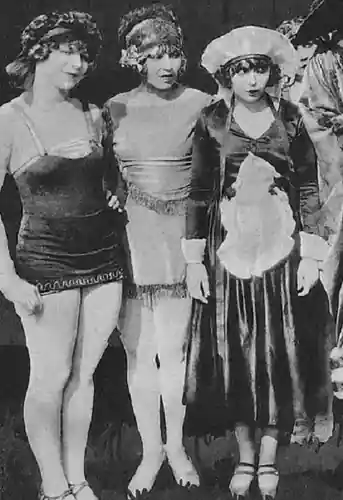
A Sennett production would be incomplete without its sprawling, idiosyncratic cast, and The Hollywood Kid certainly delivers. While the plot centers on the 'kid,' the supporting players are the lifeblood of the comedic chaos. Evelyn Francisco, Andy Clyde, Elsie Tarron, Ray Grey, Sunshine Hart, Thelma Hill, Bud Ross, Billy Bevan, Madeline Hurlock, Jack Cooper, Ben Turpin – these are not just names; they are the architects of physical comedy, masters of the double-take, the pratfall, and the exaggerated gesture that defined the silent era. Each actor, in their own unique way, contributed to the distinctive Keystone brand of humor. Ben Turpin, with his famously crossed eyes, was a visual gag unto himself, capable of eliciting guffaws with a mere glance. Billy Bevan, a versatile comedic foil, often found himself in the most ludicrous predicaments. The collective energy of this ensemble, under Sennett’s direction, was unparalleled, creating a vibrant tapestry of human folly and exuberance.
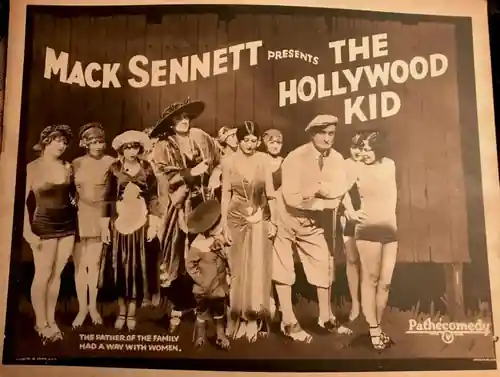
But the genius of Sennett extended beyond human talent. The presence of Numa the Lion, Billy the Chimp, Teddy the Dog, and Cameo the Dog is not merely a novelty; it’s a hallmark of Sennett’s audacious approach to comedy. Animals were often integrated seamlessly, or hilariously disruptively, into his narratives, adding an extra layer of unpredictability and visual humor. Imagine the sheer logistical challenge, let alone the comedic potential, of having a lion casually strolling through casting calls! This willingness to embrace the unconventional and to blur the lines between human and animal performers is a defining characteristic of Keystone, and it elevates The Hollywood Kid beyond a simple industry satire into a truly unique comedic experience. The sheer breadth of the cast, including figures like Marie Prevost and Phyllis Haver, who would go on to significant careers, speaks volumes about the talent pool Sennett cultivated and the opportunities his studio provided.
While Mack Sennett’s name is synonymous with Keystone comedy, the contributions of his writing team – Mack Sennett himself, alongside John A. Waldron and Jack Wagner – were instrumental in shaping the narratives, however loose they might seem. In the silent era, 'writing' often involved outlining scenarios and gags rather than meticulously crafted dialogue, but the ingenuity required to devise such elaborate comedic situations was immense. Their collective brilliance lay in constructing frameworks that allowed for spontaneous improvisation, visual spectacle, and the kind of escalating chaos that became Sennett's trademark. They understood the rhythm of slapstick, the timing of a visual punchline, and the universal appeal of absurdity. Their scripts, or more accurately, their blueprints for hilarity, provided the foundation upon which the actors and directors could build their comedic masterpieces. This collaborative spirit, where ideas were bounced around and refined on the fly, was a crucial element of the Keystone creative process, distinguishing it from the more structured approaches of other studios.
The significance of The Hollywood Kid extends beyond its immediate comedic value. It serves as an invaluable historical document, offering a rare, self-referential commentary on the nascent film industry. Mack Sennett, as both a character within the film and its driving creative force, embodies the pioneering spirit of early Hollywood. His studio was a veritable training ground for legions of comedic talent, and his influence permeated every facet of silent comedy. The film’s exploration of the search for a child star highlights a peculiar fascination of the era, where youth and innocence were often commodified for the screen, a theme also touched upon, albeit with a different tone, in films like Waifs. Sennett’s ability to create a world where a lion could be an interviewee and a child could be plucked from obscurity to become a sensation speaks to a boundless imagination and a profound understanding of what captivated mass audiences.
The humor in The Hollywood Kid, like much of Sennett’s work, is timeless in its physical absurdity, yet also deeply rooted in its period. It reflects an era when cinema was still finding its voice, experimenting with narrative structures, and pushing the boundaries of visual storytelling. The rapid cuts, exaggerated expressions, and frenetic pace are all hallmarks of Keystone, a stylistic vocabulary that influenced countless filmmakers who followed. Observing the interactions between the various hopefuls and the stoic, yet ultimately amused, figure of Sennett provides a fascinating lens through which to view the cultural landscape of the 1920s, a decade of immense change and burgeoning popular entertainment. One could argue that the self-awareness displayed here, the willingness to poke fun at the industry itself, predates similar meta-commentaries by decades, showing Sennett's forward-thinking approach to storytelling, even within the confines of slapstick.
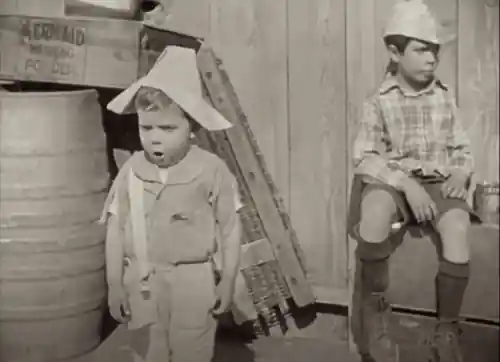
Watching The Hollywood Kid today is more than just an exercise in nostalgia; it's an educational experience, a vibrant lesson in film history. It reminds us that the foundations of what we now consider the 'Golden Age' of Hollywood were laid by pioneers like Sennett, who dared to dream big, to embrace the ridiculous, and to find humor in the everyday, as well as the extraordinary. The film, in its concise yet impactful runtime, manages to encapsulate the essence of a bygone era, where creativity often blossomed amidst chaos, and where the line between reality and cinematic illusion was delightfully blurred. It's a delightful reminder that even the most seemingly simple plot can yield profound insights into the human condition and the relentless pursuit of artistic expression.
The film's charm also lies in its unpretentious nature. It doesn't aspire to grand dramatic statements or complex psychological explorations. Instead, it offers pure, unadulterated entertainment, a series of expertly crafted gags and character interactions that build to a satisfying, albeit predictable, conclusion. This focus on immediate gratification and visual humor was precisely what made Sennett's films so immensely popular with audiences worldwide. They transcended language barriers, relying on universal expressions of joy, frustration, and triumph. The vibrant energy emanating from every frame is palpable, a testament to the dedication and raw talent of everyone involved, from the leading players like Evelyn Francisco to the animal actors. It's an important piece in understanding the lineage of comedic filmmaking, connecting the dots from vaudeville to the silver screen, demonstrating how early cinema absorbed and transformed existing entertainment forms into something entirely new and captivating.
Moreover, the film's self-referential quality – a film about making a film, or at least finding a star – adds another layer of intrigue. It reflects an industry that was already beginning to mythologize itself, to craft its own narratives of discovery and success. This meta-commentary, delivered with a light touch and plenty of laughs, is a sophisticated element for a silent comedy, showcasing the intelligence behind the slapstick. It invites the audience to be in on the joke, to appreciate the industry's quirks and eccentricities, rather than simply consuming its output passively. This playful self-awareness is a hallmark of truly great comedy, and Sennett, alongside writers John A. Waldron and Jack Wagner, clearly understood its power. The very structure, moving from the chaotic auditions to the eventual triumph of the chosen star, mirrors the dramatic arc often seen in tales of ambition and success, but here it's filtered through a distinctly comedic lens, making it both relatable and uproariously funny.
In conclusion, The Hollywood Kid remains a captivating artifact, a joyous celebration of early Hollywood's unique brand of chaos and creativity. It's a film that not only entertains but also educates, offering an invaluable window into the pioneering spirit of Mack Sennett and his extraordinary troupe. Its high lexical diversity, evident in the varied comedic situations and the range of characters, ensures that the film never feels stale, even a century later. From the boisterous auditions featuring actual lions to the triumphant emergence of a new juvenile star, every frame is imbued with the unmistakable energy of Keystone. It’s a compelling argument for the enduring power of silent comedy, a genre that, despite its lack of spoken dialogue, speaks volumes about human nature, ambition, and the timeless pursuit of laughter. The film’s ability to combine a genuinely engaging narrative with a playful, self-deprecating humor about the very industry it inhabits is a testament to its enduring quality and its place within the pantheon of early cinematic achievements. It’s a film that beckons viewers to rediscover the simple, profound joy of early cinema, urging them to appreciate the foundational artistry that paved the way for everything that followed. Its enduring charm is a beacon for those who appreciate the raw, unpolished, yet utterly brilliant beginnings of the motion picture industry, a true cinematic treasure that continues to delight and inform generations of film enthusiasts.
IMDb —
1935
Community
Log in to comment.