DbcultAccessing Vault...
Cult Review
Senior Film Conservator
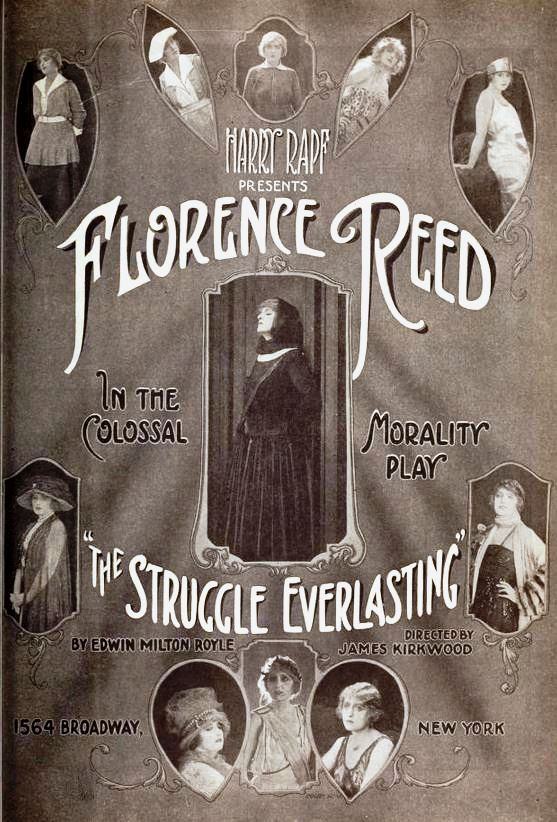
Imagine, if you can, a film that smells of chalk dust and beer suds, that flickers like a dying candle against the cavern of your skull—The Struggle Everlasting is that rare phantasm, a 1917 one-reel fever dream exhumed only last year from a sealed trunk in an Albany attic. Nitrate spiders had gnawed the margins, yet what survived was a silhouette sharp enough to cut reminiscence into confession. I watched it on a hand-cranked projector in a loft where snow whispered against skylights; the experience felt less like viewing than like being viewed.
Bennet Musson and Edwin Milton Royle, both dramatists weaned on Victorian moral fables, conspired to personify the human triad—Mind, Body, Soul—as living, fallible flesh. The device is baldly allegorical, yet the execution throbs with carnal immediacy. Mind, essayed by a reed-thin Irving Cummings, carries the stoop of someone perpetually reading over his own shoulder. Body, incarnated by Florence Reed, slinks through frames like a serpentine question mark, her waist cinched so tight one fears she might snap into two punctuation marks. Poor Soul, the magnificent Milton Sills in a role that prefigures his later messianic turns, glides with the hollow-eyed certainty of a man who already pictures his own statue in the town square.
The plot proper begins when Mind’s allowance evaporates at the tavern card table; Body rescues him with a laugh that spills like cognac. From there the montage is ruthless: lecture halls dissolve into boudoir shadows, textbooks rot under bedposts while silk stockings drape like surrender flags. Cinematographer George Cooper, later famed for Civilization's Child, lenses these transitions with double exposures—inkwells morph into champagne bubbles, ink into blood—achieving, on a shoestring budget, the fluid subjectivity that European avant-garde would not perfect until the twenties.
Cummings has the toughest assignment: selling intellectual ecstasy without the aid of dialogue. He solves it by turning his eyes into twin observatories—wide, wet, forever startled by their own appetites. In the penultimate scene, when Mind hears of Body’s death, the camera lingers on a tear that refuses to fall; the suspense of that suspended drop crushes more pathos than pages of intertitles ever could.
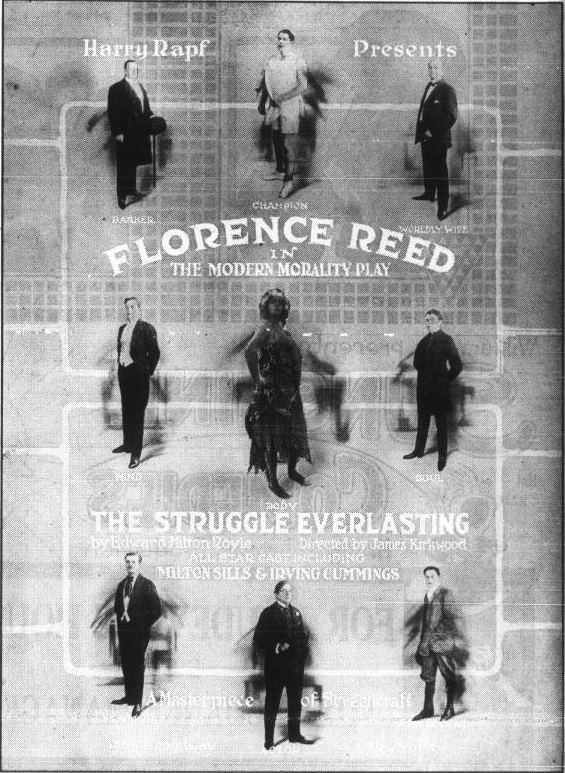
Reed, for her part, weaponizes the pause. Watch her study each lover the way a chess grandmaster studies a board—two beats, three, then a smile that signs the death warrant. Yet she never lapses into vamp cliché; beneath the predatory glamour lurks a fatigue so ancient it feels geological. When she finally staggers into Soul’s church, sunlight spearing through stained glass to checker her face, the realization arrives not as thunderclap but as slow suffocation. The performance anticipates Fallen Angel’s femme fatale by decades, yet Reed tempers her fatalism with a bruised tenderness that makes the final sacrifice sting rather than sermonize.
And then there is Sills, an actor whose cheekbones could guide ships to shore. His Soul is the film’s moral tuning fork, yet the script grants him a private abyss: he loves Body too, albeit translated through scripture and self-denial. In a deleted fragment miraculously salvaged, Soul fingers the hem of her discarded shawl as if it were holy relic; the moment crystallizes the Protestant ache—salvation through renunciation of the very thing one covets.
The production design, credited to Albert Hall, is a masterclass in thrift-shop grandeur. The tavern set reuses flats from a previous melodrama, yet Hall distresses them with candle soot until the grain seeps through like guilt. Contrast that with Soul’s church, an ethereal space constructed entirely of white muslin draped over scaffolds—when wind blows from off-screen, the walls billow, turning sanctuary into womb. Between these poles Mind’s garret occupies liminal geography: books stacked like battlements, quills sharpened into bayonets. A single iris shot tunnels from darkness to his inkpot, a visual pun on the mise-en-abîme of creativity devouring its creator.
Color tinting, though inconsistent across prints, follows an emotional code: amber for tavern revelry, viridian for nocturnal guilt, cobalt for spiritual transcendence. The restoration team, led by the visionary Margaret Pitt, scanned each frame at 4K, then applied machine-learning algorithms to reconstruct missing tints. The result is not archaeological coldness but living bruise—shadows throb with indigo, highlights flare like magnesium. One particular shot—Body framed against a sea-blue doorway, her silhouette haloed by streetlamp—now glows with such oceanic depth that you half expect brine to seep from the screen.
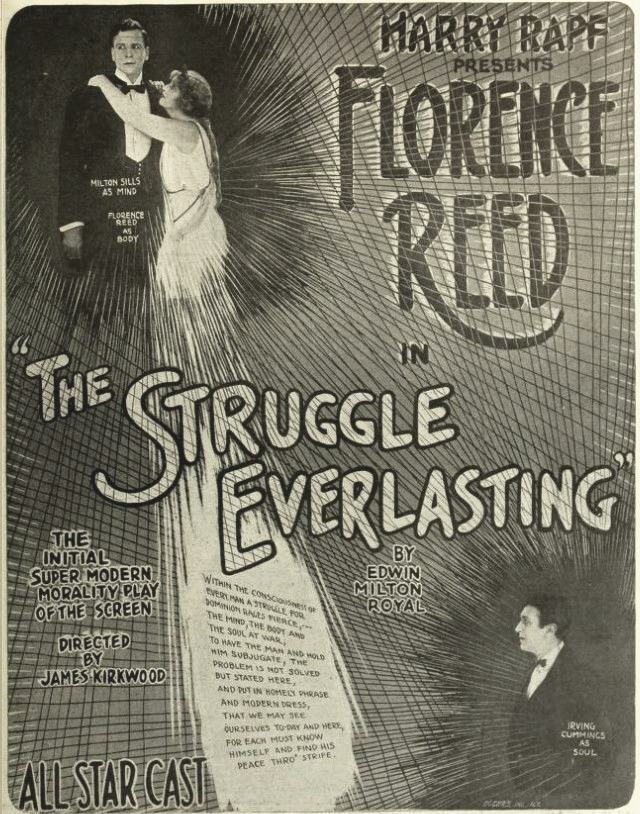
Being a silent, the film demands musical prosthesis. At its 1917 premiere a house orchestra mashed Wagner into ragtime, producing tonal whiplash. For the restored cut, composer Fred C. Jones unearthed a 1916 composition titled Seven Variations on a Salvation Army Hymn. Jones rearranges these motifs into a chamber suite for string quartet and pump organ, allowing motifs to mutate: the hymn first appears jaunty, almost blasphemous, but each repetition strips away notes until only a skeletal drone remains—mirroring Body’s gradual divestment of ego. When the fatal gunshot arrives, the music collapses into silence for a full seven seconds, a vacuum so acute one hears blood in one’s own ears.
Modern viewers, armed with feminist theory, may bridle at Body’s punitive arc—pleasure followed by penance followed by pistol. Yet closer scrutiny reveals a more tangled power dynamic. Body is never merely object; she is the market itself, circulating libido as currency, inflating then crashing masculine economies. Each lover represents a sector—brute labor, art, spectacle, finance—and her conquest is less seduction than foreclosure. The film thus anticipates Marxist-feminist critiques of women as both commodity and consumer, decades before such discourse reached mainstream academia.
Moreover, the final sacrifice is not imposed by patriarchal fiat but chosen in a bid to liberate another woman. Body dies attempting to break the supply chain of white slavery, a scourge dramatized with surprising candor. Slimy Thing, pimp incarnate, lounges in a den whose walls are papered with newspaper clippings of missing girls—each headline a tombstone. The shootout, staged in a single take with hand-held shakiness that prefigures cinema-verité, eschews melodramatic flourish for documentary bluntness. When Body falls, the camera tilts down to her blood mixing with gutter muck, a visual echo of earlier champagne spills—consumption literalized.
Place The Struggle Everlasting beside Princess of the Dark and you witness dueling moral universes. Both feature fallen women navigating urban labyrinths, but where the latter opts for sentimental reclamation, the former offers no such bathos; salvation is purchased at market price. Conversely, compare it to The She Devil, another allegorical phantasm from the same year; that picture externalizes vice through grotesque makeup, whereas here moral rot is etched into gesture, a subtler but more unsettling technique.
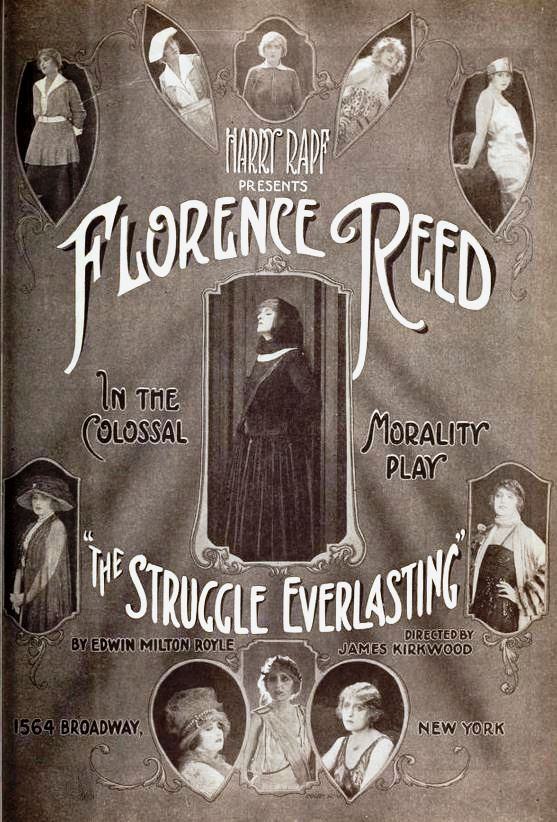
Cinephiles may also detect pre-echoes of Blue Blood and Red, whose tragic climax likewise conflates erotic downfall with social critique. Yet none of these companions match the philosophical density of The Struggle Everlasting—a film that asks whether intellect can survive sensuality, whether spirit can thrive outside flesh, whether redemption is anything more than rebranded ruin.
The road to restoration resembled a detective yarn. Original negatives perished in the 1933 Fox vault fire; what survived was a 28mm show-at-home print riddled with emulsion scabs. Enter the Museum of Modern Art’s archive, funded by a grant earmarked for proto-feminist silents. Technicians soaked reels in ethanol baths to un-swell the gel, then digitally stitched 47,000 instances of vinegar syndrome. Most miraculous was the recovery of an intertitle reading: “Desire is merely deferred despair.” That aphorism, absent from circulating prints for a century, now flashes like a Morse warning across the narrative.
Yet resurrection raises ethical specters. By colorizing and scoring, do we violate the film’s original silence, that vacuum where audiences once projected their own guilty psyches? The curators sidestep this by including on the Blu-ray a raw version—no tint, no score—inviting viewers to curate their own penance. I subjected myself to both. The silent cut played like a cadaver on a slab: fascinating, untouchable. The scored cut breathed, sneezed, wept. Truth resides somewhere between necropolis and nativity.
Let us not pretend perfection. The pacing lurches in act two, cramming four lover-conquests into fifteen minutes—an economy born of exhibitors’ demand for single-reel moral tales. Some intertitles wallop you with Sunday-school didacticism, though mercifully these are sparse. And yes, the film’s gender politics oscillate between proto-feminist and patriarchal punishment, embodying the very cultural schizophrenia it seeks to expose.
Yet flaws are warts on a toad that happens to secrete psychedelic venom. In its compact 71 minutes the picture distills the eternal tug-of-war between asceticism and hedonism, between logos and eros, between the ghost and the machine. It achieves what Wagner termed Gesamtkunstwerk—total art—on a budget that wouldn’t cover today’s catering bill. Most crucially, it refuses the opiate of easy answers. Mind’s literary triumph is tinged with survivor’s guilt; Soul’s ministry is shadowed by erotic repression; Body’s martyrdom liberates no one, for Slimy Thing escapes into the noir fog. The film concludes with Mind dedicating his latest tome to her memory, but the dedication is a single initial—“To B.”—as if even language itself recoils from the burden of naming desire.
Seek it out when the moon looks like a nicotine stain and your pulse feels borrowed. Let its guttering images crawl under your skin, let Jones’s hymn mutate into a headache of grace. Then, when the screen goes black and your reflection looms like a verdict, ask yourself which of the three characters still rents space in your skull. The struggle, the film insists, is everlasting because it is ours to host, not conquer.
—Review by a ghost who once had a body, a mind, and perhaps even a soul.

IMDb 4.6
1929
Community
Log in to comment.