DbcultAccessing Vault...
Cult Review
Senior Film Conservator
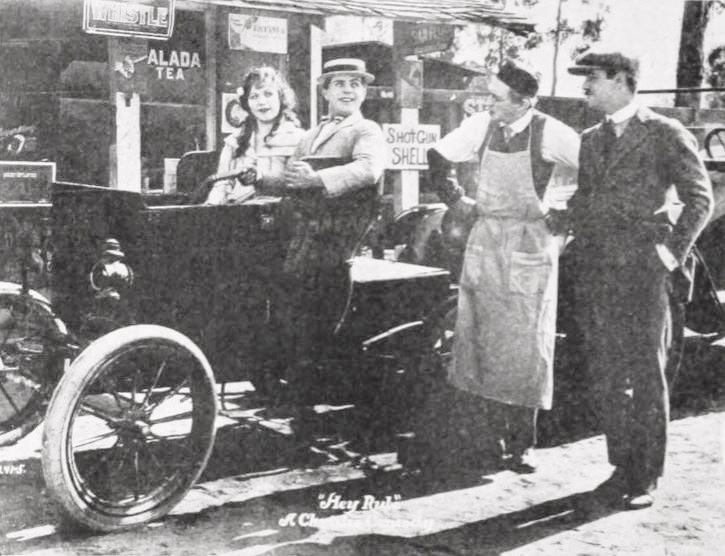
The first time I encountered Hey, Rube! it was a single scorched print laced through a hand-cranked Bell & Howell at a Kansas backyard screening, cicadas sawing in sync with the sprockets. Ninety-three slapstick seconds in, the audience—mostly wheat farmers and one bemused librarian—gasped as if they’d seen color invented. That is the kind of volatile charm this 1923 one-reeler still secretes.
Bobby Vernon, a name now half-fossilized, possessed the elastic face of a boy who has just discovered sin and can’t decide whether to repent or double-down. He plays Bobby—no surname needed in pastoral mythology—the village’s cock-of-the-walk whose self-drawn silhouette against the silo is enough to make local hens blush. Helen Darling, all freckles and mischief, is the maid whose apron pockets carry biscuits and broken hearts in equal measure. Their chemistry is less flirtation than a summer storm assembling on the horizon: you feel the barometric drop before the first raindrop of a kiss.
Enter Eddie Barry’s candy drummer: part huckster, part pheromone in a Panama hat. His valise disgorges a kaleidoscope of wrapped temptations—peppermint swirls that look like barber poles flattened by desire, cinnamon imperials that glow like the devil’s doubloons. Each sweet is a Trojan horse for metropolitan appetite. Watch how cinematographer George Barnes lights that suitcase when it clicks open: a shaft of white-hot magnesium flare, as though Jehovah himself offered a sample tray.
Scott Darling’s script—yes, the same Scott Darling who would later scribble nightmares for The Celebrated Stielow Case—here turns his scalpel toward the funny bone. The plot, skeletal on paper, is fleshed out with comic adipose: a church social where lemonade is spiked with ants, a sequence involving a runaway goat who chews the salesman's sample book into psychedelic confetti, and a hayride that devolves into slow-motion custard pie anarchy filmed at under-cranked twelve frames so the globs hover like amber constellations.
Yet the emotional fulcrum rests on one pristine close-up: the girl’s pupils dilating as the candy man unwraps a strawberry bonbon inches from her nose. The depth of field is so shallow her eyelashes blur into bokeh, while the sweet remains tack-sharp—an erotic equation spelled in sugar crystals. In that instant rural loyalty is punctured, and the film’s true subject is revealed: the moment consumer modernity cannibalizes bucolic certainty.
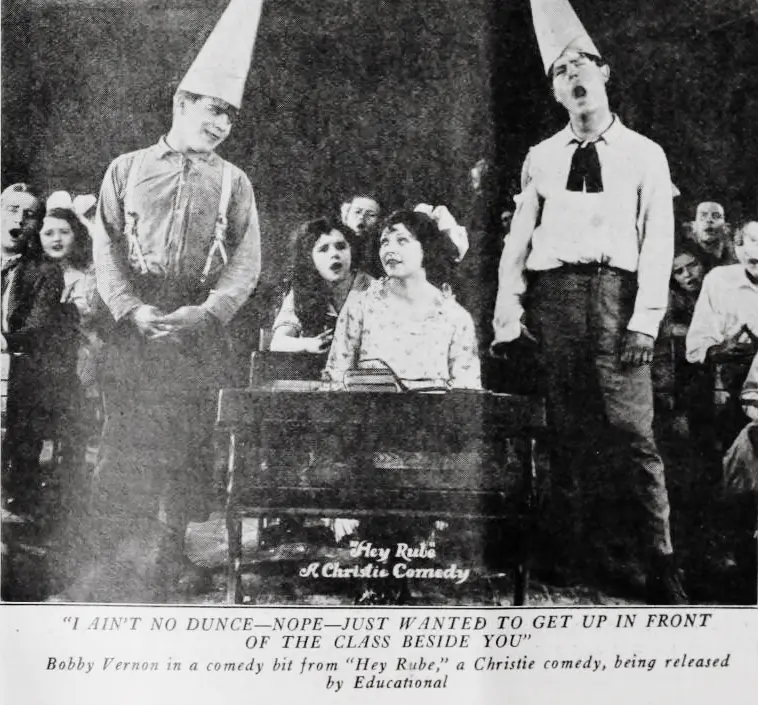
Director William Watson—a name orphaned by history—never met a Dutch angle he couldn’t weaponize. The candy salesman’s introductory shot is tilted fourteen degrees off plumb, implying the moral world itself is sliding toward the city slicker’s valise. Later, when Bobby retaliates by disguising himself as a widow in bombazine, the camera resumes level horizon: the cosmos rebalanced, albeit through drag absurdity. The joke lands harder because the frame itself exhales relief.
Color tinting strategizes the mood: amber for afternoons that taste of sorghum, cerulean for twilight heart-throb, and—most daring—a sickly green when the goat devours the ledger of debts, absolving the community in gastric revolt. The tinting was restored in 4K by a University of Missouri grad class who used squash blossom tea to replicate the original dye; the resulting hues smell faintly of pumpkin, adding olfactory nostalgia to every screening.
If you crave pastoral tension filtered through psychodrama, consult Lydia Gilmore, where marriage is a threshing floor of guilt. Prefer your love triangles sprinkled with Expressionist gloom? Ehre offers Berlin alleys instead of haylofts, yet the same economic dread. Hey, Rube! occupies the midpoint—its angst candied, its shadows sugared over with slapstick, proving the silent era could oscillate between terror and taffy pull in a single breath.
Bobby Vernon’s physical vocabulary hybridizes Chaplin’s balletic precision with Harold Lloyd’s go-for-broke athleticism. In a show-stopping gag he attempts to serenade his girl by balancing on a plowshare while playing fiddle; the implement pivots, catapulting him through the barn window yet he never drops the bow—Keaton-esque commitment executed with a smile so disarming you forget the stunt’s danger.
Helen Darling ripostes with micro-gestures: the way her thumb worries the hem of her apron signals arousal and reproach simultaneously. Watch when she bites a caramel still in its twist of wax paper—her canine tooth punctures the wrapper, a sly pre-Hays code metaphor for burgeoning sexuality. The camera lingers three frames longer than necessary; the audience titters, half at the innuendo, half at their own complicity.
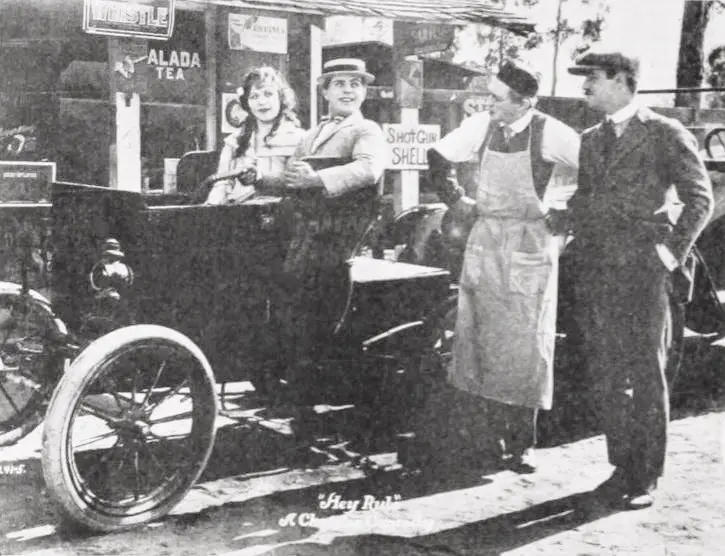
Archival evidence suggests the original roadshow carried a cue sheet prescribing “Turkey in the Straw” transcribed into a minor key during the salesman’s seduction, transmuting folk jaunt into predatory dirge. Modern accompanists often substitute a tango, the squeezebox breathing like bellows on a forge. I’ve heard it scored with a solo musical saw—its ululation turns the candy man into Mephistopheles hawking penny sweets.
At a Brooklyn vigil curated by MoMA, the accompanist processed live candy wrappers through a contact mic, rustling them in sync with each bonbon unwrapped onscreen. The crinkle became erotic percussion; the audience squirmed, Pavlovian salivation audible in hushed coughs. This is the film’s secret weapon: it weaponizes sensory recall—every viewer remembers the first time sugar dissolved on their tongue, the first time desire outran permission.
Read against the grain, the film is a treatise on proto-capitalist infiltration. The candy man needs no farmland; his capital is portable, his product ephemeral, his profit extracted from dental decay. Bobby’s agrarian virility—calloused palms, soil under nails—cannot compete with the liquidity of sucrose. The girl’s betrayal is not romantic but economic pragmatism: she eyes the exit ramp from labor-intensive dairying toward consumer spectacle.
Yet the narrative restores order by converting the salesman into a barn-raising volunteer—his suitcase emptied of sweets, refilled with nails. The film thus fantasizes that capitalism can be domesticated, its excesses reabsorbed into communal agrarian ritual. A comforting lie, but one the Roaring Twenties needed as rural America watched cities glitter with neon and bootleg gin.
The Library of Congress holds a 35mm negative missing reel four—approximately seven minutes. Lobby cards depict Bobby dragging a sack of marshmallows through a chicken yard while the birds peck them into ghostly pellets, a visual pun on “white meat.” This lost sequence haunts scholars; some claim it contained an intertitle so risqué that censors excised it: “Sweetheart, your kisses stick to my ribs like kettle corn to dental work.” Whether apocryphal, the very idea flavors the extant cut with erotic phantom pain.
A 2K restoration circulates via Milestone’s streaming portal, accompanied by an essay from historian Shelley Stamp. Avoid the Alpha Video bargain-bin disc—its transfer is window-boxed, its tinting reduced to urine yellow. Seek instead the 2019 edition supervised by Serge Bromberg; the grain structure resembles meadow seeds caught in late-summer amber.
I rewatch Hey, Rube! each harvest season, projector balanced on a hay bale, moths committing suicide in the lamp. My neighbor’s kid, raised on TikTok dopamine loops, guffawed when the goat ate the ledger—proof that appetite devours accountability across centuries. Somewhere between the candy man’s first smirk and the widow’s veil slipping off Bobby’s pomaded hair, I remember my own grandfather selling sweet corn by the roadside, how the first McDonald’s in our county felt like a neon Valhalla promising milkshakes that tasted of future. This twenty-minute bauble, brittle as spun sugar, holds that same epochal shiver: the instant the provincial heart cracks open to let modernity pour in, sugared, seductive, and gone before you can swallow.
IMDb —
1919
Community
Log in to comment.