DbcultAccessing Vault...
5.4/10
Senior Film Conservator
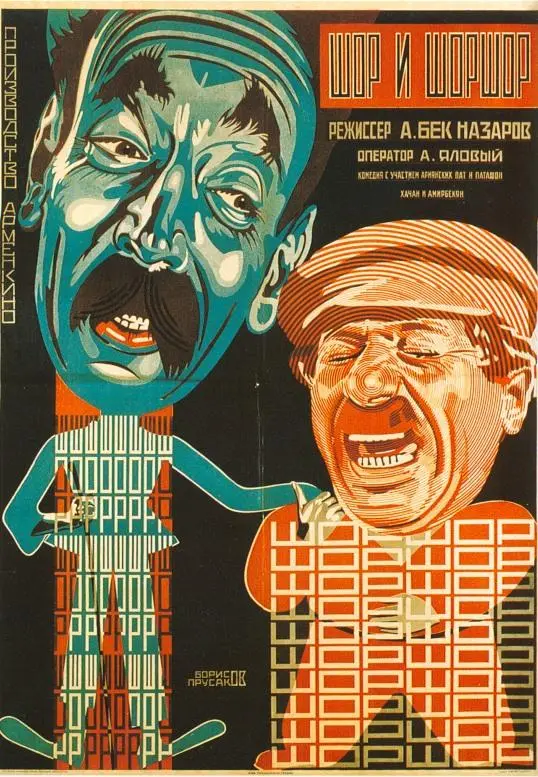
A definitive 5.4/10 rating for a film that redefined the boundaries of cult cinema. Shorn u Shorshore remains a cornerstone of transgressive art.
Is Shorn u Shorshore worth watching today? Short answer: yes, but with significant caveats. This 1926 Armenian comedy offers a fascinating glimpse into early Soviet cinema and an endearing, if sometimes uneven, brand of slapstick humor that still finds moments of genuine delight.
It’s a film for cinephiles, historians of early cinema, and those with a deep appreciation for silent-era physical comedy. However, it is decidedly not for viewers seeking modern pacing, sophisticated narratives, or universally relatable humor without a historical lens.
This film works because… it captures a delightful, almost anarchic spirit through its two central performances, offering a rare window into Armenian comedic sensibilities of the 1920s.
This film fails because… its episodic nature often lacks a cohesive dramatic through-line, and some comedic beats, while historically significant, don't always translate effectively to a contemporary audience.
You should watch it if… you are a student of film history, particularly interested in non-Western silent cinema, or if you simply enjoy the raw, unpolished charm of early slapstick.
At its core, Shorn u Shorshore introduces us to Shor (Ye. Adamyan) and Shorshor (A. Amirbekyan), two men whose primary occupations appear to be avoiding work and consuming alcohol. Their lives are a series of unfortunate events, self-inflicted wounds, and comical misadventures, all stemming from their shared idleness and a knack for finding trouble.
The plot, if one can call it a singular, driving narrative, is less a carefully constructed arc and more a collection of vignettes. We see them navigate various schemes, from attempts to secure food without payment to drunken escapades that invariably land them in hot water with authority figures or exasperated townsfolk.
This episodic structure is both the film's charm and its biggest hurdle. It allows for a rapid succession of gags, but it also prevents any deep character development or a strong sense of narrative progression. The film leans heavily on the inherent humor of its characters' predicaments, rather than on intricate storytelling.
Directed by Amo Bek-Nazaryan, a pivotal figure in Armenian cinema, Shorn u Shorshore is a testament to the nascent film industry of the era. Bek-Nazaryan, who also co-wrote the script with M. Bagratuni, demonstrates an early understanding of visual comedy, even if the execution sometimes feels rudimentary.
His direction here is primarily concerned with staging gags and physical comedy. There's a clear influence of Western slapstick, particularly from American silent comedies, but filtered through a distinctly Armenian cultural lens. The humor often derives from exaggeration, repetition, and the sheer absurdity of the characters' predicaments.
The film lives and dies by its two leads, Ye. Adamyan as Shor and A. Amirbekyan as Shorshor. Their chemistry is palpable, a genuine camaraderie that underpins their shared idiocy. Adamyan brings a wide-eyed, almost innocent mischief to Shor, while Amirbekyan's Shorshor often feels like the slightly more grounded, if equally inept, half of the duo.
Their physical performances are the backbone of the comedy. From exaggerated pratfalls to drunken stumbles, they commit fully to the bit. A standout example is a scene where they attempt to navigate a crowded public space while clearly inebriated, their movements becoming increasingly uncoordinated and their expressions a mixture of confusion and misplaced confidence.
The supporting cast, including Hambartsum Khachanyan and Avet Avetisyan, provides solid foils for our protagonists. Nina Manucharyan, in particular, delivers a memorable, albeit brief, performance as a long-suffering woman who frequently falls victim to the duo's antics, her exasperated expressions speaking volumes without a single intertitle.
As an early silent film, the cinematography of Shorn u Shorshore is functional rather than groundbreaking. The black and white photography, while showing its age, effectively captures the rustic charm of its Armenian settings. We see bustling marketplaces, quaint village houses, and wide-open landscapes, all contributing to a sense of place.
The camera work is mostly static, focusing on capturing the action within the frame. There are occasional tracking shots, but they are used sparingly. The reliance on wider shots allows the physical comedy to play out without excessive cuts, allowing the audience to appreciate the full scope of the actors' movements.
The film's atmosphere is lighthearted and boisterous, perfectly suiting its comedic intentions. Despite the characters' constant troubles, there's an underlying warmth to their interactions and the community they inhabit, even when that community is chasing them with sticks. This prevents the film from ever feeling truly mean-spirited, maintaining its genial, if chaotic, tone.
The pacing of Shorn u Shorshore is characteristic of its era. It's not particularly fast-paced by modern standards, allowing scenes to breathe and gags to unfold without hurried editing. This deliberate speed can be a double-edged sword; it allows for appreciation of the physical comedy, but can also test the patience of viewers accustomed to quicker cuts and more dynamic narratives.
The tone is consistently comedic, bordering on farcical. There are no dramatic subplots or serious character arcs to interrupt the flow of laughs (or attempted laughs). The film commits fully to its identity as a lighthearted romp, never straying into moralizing or heavy themes. It simply presents two lovable scoundrels and lets them loose upon the world.
Absolutely, but with a discerning eye. Shorn u Shorshore is a significant piece of film history, offering a rare window into Armenian cinema during the silent era. It works. But it’s flawed.
Its value lies less in its ability to compete with modern blockbusters and more in its historical and cultural significance. It’s a foundational text for understanding the development of comedic storytelling in a specific region, showcasing early directorial choices and acting styles.
For those who appreciate the raw energy of early cinema, the charm of physical comedy, and the simple joy of watching two miscreants bumble through life, Shorn u Shorshore offers a unique and often delightful experience. It’s a testament to the universal appeal of human folly.
However, if your preference leans towards fast-paced narratives, intricate plots, or humor that doesn't require a historical context to appreciate, then this film might feel like a slow, albeit interesting, journey. Approach it as an archaeological dig into cinematic humor, and you'll find treasures.
What truly struck me about Shorn u Shorshore, beyond its comedic antics, is its surprising commentary on the timelessness of human idleness. In an era often romanticized for its industriousness and community spirit, these two characters stand as defiant symbols of sloth. They are the antithesis of the 'Soviet ideal' even before the full ideological weight of the Soviet Union had settled.
This film, in its simple portrayal of two men trying to get by without working, feels strangely rebellious. It's a gentle satire on societal expectations, suggesting that even in the most structured environments, there will always be those who find ingenious ways to avoid honest labor. This observation elevates the film from mere slapstick to a subtle, almost philosophical, comedy of human nature.
In the grand tapestry of world cinema, Shorn u Shorshore is a minor, yet significant, thread. It’s not a lost masterpiece, nor does it aim to be. Instead, it offers a charming, if rough-around-the-edges, journey into the comedic heart of a nascent film industry. Its humor, while sometimes requiring a generous historical perspective, is delivered with genuine affection by its lead performers.
While it may not hold the universal appeal of a Chaplin or Keaton classic, its cultural importance and the sheer joy derived from Shor and Shorshor’s antics make it a worthwhile watch for the curious and the patient. It’s a film that asks little of its audience beyond an open mind and a willingness to embrace the simple pleasures of early cinema. And for that, it largely succeeds.
It reminds us that laughter, in its most basic form, transcends time and language. Go in with the right expectations, and you'll find a surprising amount to enjoy in this spirited relic.
IMDb 6.6
1929
Community
Log in to comment.