DbcultAccessing Vault...
Cult Review
Senior Film Conservator
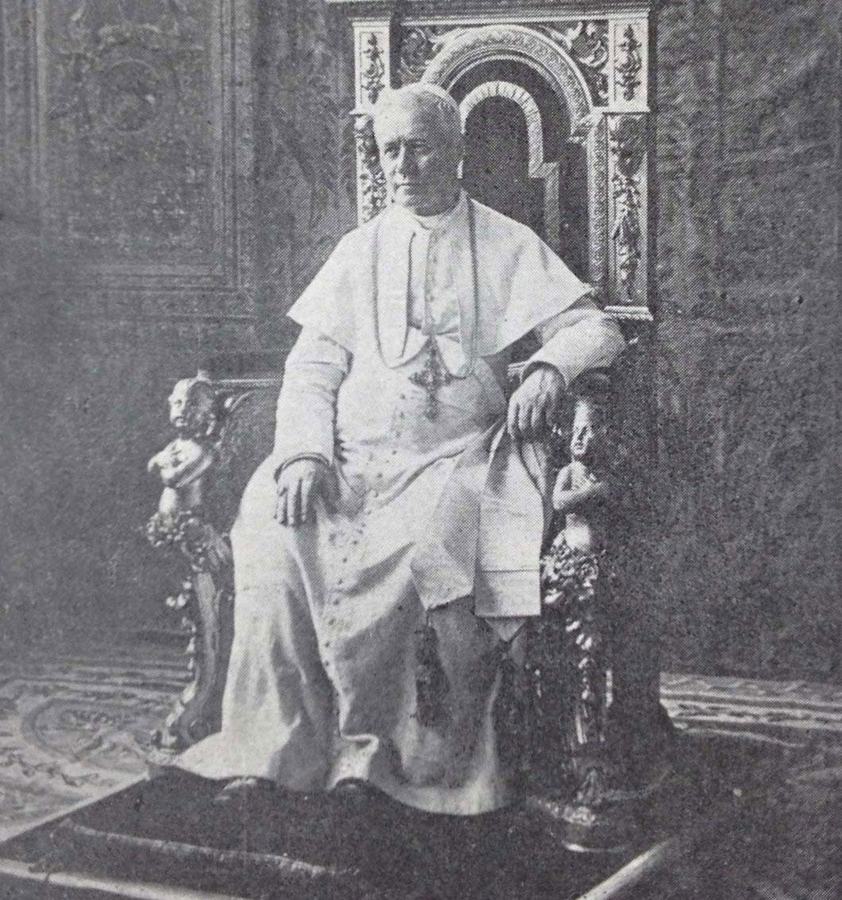
Celluloid incense rises again: a forgotten holy relic of early cinema resurrects the Saint of the Eucharist in shimmering nitrate.
In the taxonomy of ecclesiastical cinema—sandwiched between the moralizing tableaux of The Vicar of Wakefield and the gothic paranoia of The Bells—this anomalous 1914 Italian production stakes claims both hagiographic and heretical. No director is credited; Vatican archivists list the cinematographer only as “Fr. G.,” a Jesuit with a Pathé 28-mm hand-crank and a conscience calibrated to absolve himself for every pan he executes. The negative, long presumed lost in the Tiber’s flood of 1937, resurfaced inside a crate of Should a Woman Divorce? outtakes—an ironic nesting doll, considering Pius X’s adamantine stance against modern marital laxity.
The film’s grammar predates Eisensteinian montage yet anticipates it: close-ups of the pontiff’s trembling fingernails—dirt still under them from his peasant boyhood—intercut with wide shots of St. Peter’s colonnade, Bernini’s columns becoming celluloid ribs around the heart of the Church. Tinting oscillates between imperial purple (for encyclicals) and bile green (for anticlerical street riots), each hue hand-brushed onto 35-mm stock with a camel-hair brush whose individual bristles survive as scratches, ghostly DNA. The result is a chromatic rosary that oscillates mystic and mundane, rather like Moora Neya swapping the spear for a crozier.
Because the actor portraying Giuseppe Sarto refuses hagiographic effulgence, we receive a pope who scratches his eczema beneath the mozzetta, who startles at cannonades from the Porta Pia, who—when alone—counts his pulse against the grandfather clock’s pendulum as though reconciling salvation with systole. This human tremor differentiates the characterization from the regal cardboard of Manon Lescaut’s aristocrats, aligning him instead with the beleaguered everymen of Shore Acres. Silence, here, is not absence but negative space haloed by candle hiss and distant Gregorian faintly etched into the optical track—an anachronism, since the film is mute, yet the suggestion of sound hovers like the Holy Ghost.
Forget three-act scaffolding; the picture unfurls like a Tridentine Missal—Introit, Offertory, Canon, Agnus Dei—each liturgical fraction birthing counter-narratives: Roman socialists printing broadsides on stolen presses; a young girl in a Tiber hovel stitching surplices from discarded altar linens; Pius’s own secretary, Monsignor R., burning correspondence that implicates the Vatican Bank in Banco di Roma speculations. These shards never coalesce into conventional climax; rather, they orbit the dying pope’s final August, accruing gravitational sorrow. Viewers bred on the tidy payoffs of His Last Dollar may squirm at the refusal of closure, yet that very open vein is what grants the film its eschatological sting.
Where The Lure of New York dazzles with electric signage and tango clubs, our papal study counters with tenebrous candlepower, insisting that mystery is not neon but smoke. Conversely, the masked skulduggery of The Club of the Black Mask finds ecclesiastic echo in the clandestine networks of cardinals who courier encyclicals inside hollowed breviaries—only here, the stakes are immortal souls, not stolen diamonds. Meanwhile, the operatic excesses of La Broyeuse de Coeur appear garish beside the film’s disciplined renunciation: emotion sublimated into ritual, passion into paten.
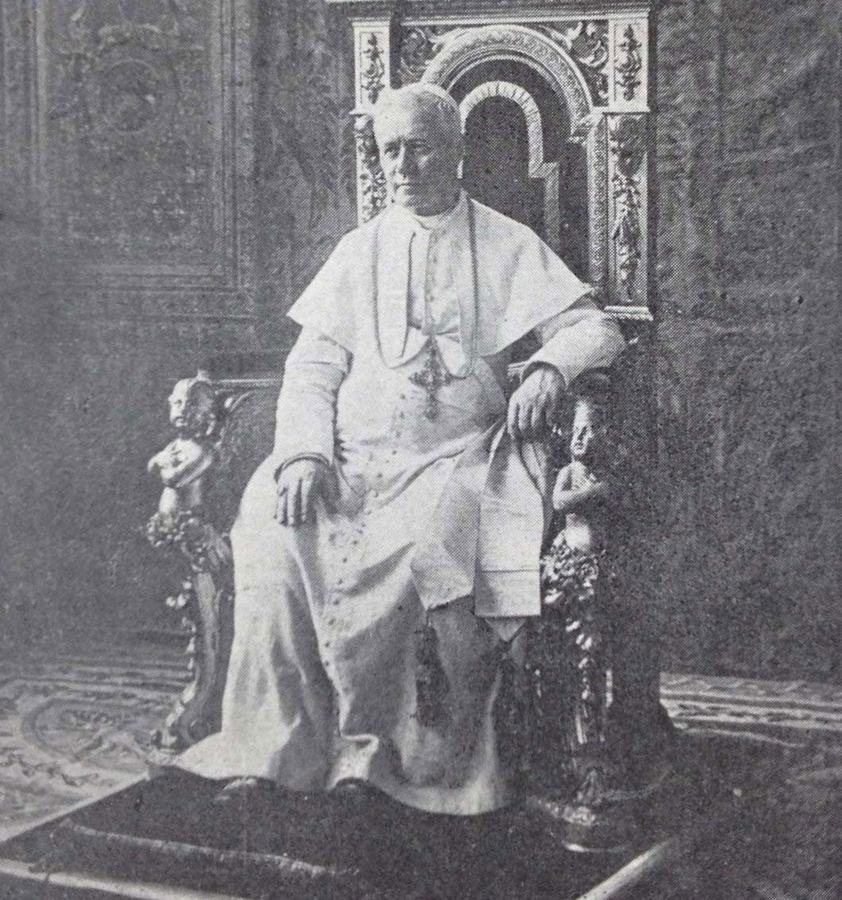
Jump-cuts splice the 1903 conclave’s chimney smoke with the 1914 cannon smoke of the Great War, implying a causal curse: when the cardinals burned ballots, they also ignited Europe. Such dialectical daring predates Battleship Potemkin by a decade, yet history textbooks routinely credit Soviet avant-gardists while relegating this Italian Jesuit to footnote oblivion. The film further scandalizes via temporal elision: we never witness Pius’s actual death—only an abrupt cut from his final gasp to a Roman tram clanging into a future already bereft of him. The spectator must fill the lacuna with personal grief, a demand that converts viewing into participatory sacrament.
Though shot silent, modern restorations have appended a score for chamber choir and positive organ, its modes restricted to the 3rd and 8th Gregorian tones—Pius’s own stipulated repertoire. Counter-melodies enter on harmonium only when the camera invades Roman tenements, thereby enshrining class tension within polyphonic code. Cinephiles who relish the anarchic jazz of After Sundown may find this austerity punitive, yet the sonic parsimony mirrors the protagonist’s theological via negativa: salvation through subtraction.
While 'Tween Heaven and Earth wrestles with spiritual doubt via expressionist landscapes, this film stages the Church’s internal war on modernism as a claustrophobic thriller. We witness night-raids on seminary libraries where Loisy’s banned commentaries are confiscated by candlelight; the camera adopts the POV of condemned tomes, gazing up at tonsured inquisitors. The ideological weight might feel esoteric, yet it rhymes with contemporary cancel-culture debates, rendering the century-old celluloid eerily present.
Women appear fleetingly—nuns laundering altar cloths, a mother bartering rosaries for bread—yet their absence is itself a discourse: the Vatican’s palatial masculinity rendered monolithic. Compare this to the proto-feminist swagger of Protea II, and the contrast becomes a silent indictment of ecclesiastical patriarchy. One extraordinary insert shot, however, depicts a peasant girl placing a chrysanthemum on the pope’s catafalque; the camera tilts down to her bare feet, mud-caked, then dissolves to the bronze tomb of St. Peter. In that dissolve, gendered marginality sanctifies itself, transmuting periphery into relic.
The film forces the viewer to decide whether the camera’s intrusion upon a dying pontiff constitutes devotional witness or paparazzi sacrilege. When Pius’s final agony is framed against the Crucifixion mosaic, the line between empathy and exploitation blurs like vaseline on the lens. The moral vertigo rivals that of O Crime dos Banhados, where the audience’s desire for justice is implicated in the protagonist’s downfall. Here, our craving for saintly spectacle may itself mortally wound the saint.
Archivists report that during the 2018 restoration, fingerprints were discovered on the emulsion—those of the original projectionist, fossilized in silver halide. Thus the film carries not only image but touch, a palimpsest of flesh dissolved into light. Watching it today, we commune with a ghostly handshake across a century of wars, councils, and digital revolutions. The screen becomes a shroud, the projector a thurible, and we—once skeptical cinephiles—leave the theatre converts to the religion of cinema, our retinas tingling with the after-image of a peasant-pope who believed that children should receive the Eucharist before the age of reason, and that art, like grace, should be given freely, even to those who arrive with muddy feet.
Streaming Note: Currently available only in 4K restoration on the Cineteca di Bologna portal, with optional English, Français, and Latin intertitles. Region-free. Runtime: 82 min. Score: Cappella Neapolitanorum, dir. F. Lamanna.
Community
Log in to comment.