DbcultAccessing Vault...
Cult Review
Senior Film Conservator
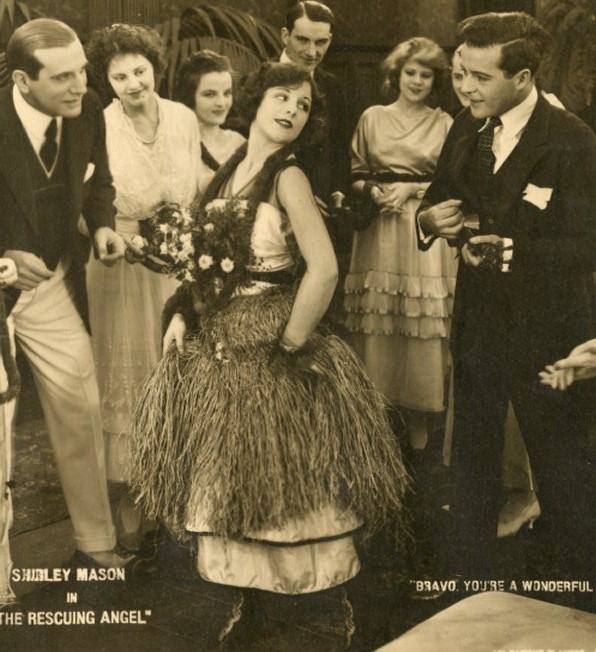
In the annals of early cinema, where narratives often unfolded with a dramatic flourish bordering on the operatic, 'The Rescuing Angel' (1919) emerges as a fascinating artifact, a silent film that, despite its seemingly conventional plot, delves into the complex interplay of societal pressures, personal ambition, and the capricious nature of the human heart. Directed with a keen eye for emotional resonance and featuring a cast that brings a palpable intensity to their roles, this picture, penned by Clare Kummer, is more than just a period piece; it's a window into the evolving social mores and romantic ideals of the nascent 20th century. It invites us to consider how much, or how little, has truly changed in the intricate dance between love and lucre.
The film commences with Angela Deming, portrayed with a delicate blend of vulnerability and nascent strength by Shirley Mason, embarking on a sojourn to the exotic climes of Hawaii. This initial setting, a picturesque escape from the structured formality of mainland society, serves as a poignant backdrop for the unfolding drama. It is here, amidst the verdant landscapes and ocean breezes, that Angela encounters the two pivotal male figures who will irrevocably alter the course of her life. First, there is Joseph Whitely, a self-made millionaire, brought to life by the commanding presence of James Neill. Whitely is introduced as a figure shrouded in a certain misanthropic detachment, his immense wealth seemingly insulating him from the ordinary joys and sorrows of human connection. His character, initially aloof and perhaps even abrasive, hints at a hidden depth, a soul perhaps scarred by past experiences or simply weary of the superficiality that often accompanies great fortune. Then there is Eliot Slade, played by Forrest Stanley, the very antithesis of Whitely – a scion of an established, wealthy family, embodying a more polished, conventionally appealing charm. His presence suggests the allure of social standing and an easier path, a stark contrast to Whitely's rugged individualism.
The immediate attraction of both men to Angela is a testament to her quiet magnetism, setting in motion a classic romantic entanglement that transcends geographical boundaries. Their decision to follow her back to her home, leaving the idyllic Hawaiian setting behind, underscores the intensity of their burgeoning affections and foreshadows the impending complications. This early segment of the film skillfully establishes the romantic tension, presenting Angela with a choice between two vastly different archetypes of masculine desirability and social standing. It's a predicament that, while seemingly simple on the surface, carries significant weight in a society where a woman's future was often inextricably linked to her marital prospects. The film cleverly uses these initial introductions to build a foundation for the moral and emotional dilemmas that will soon engulf Angela.
The narrative takes a sharp turn with the revelation of Angela's father's bankruptcy, a plot device that anchors the romantic drama firmly in the pragmatic realities of the era. This financial catastrophe acts as a catalyst, forcing Angela to make a decision that is less about heartfelt desire and more about familial obligation and survival. Her childhood sweetheart, William Hanley (John Steppling), a figure representing genuine, uncomplicated affection, is summarily rejected. This rejection is not born of a lack of feeling, but rather a tragic concession to circumstance, a sacrifice of personal happiness for the greater good of her family. It's a poignant moment that highlights the societal pressures placed upon women, who were often expected to be the architects of their family's financial stability through strategic marriages.
Angela's subsequent marriage to Joseph Whitely, therefore, is portrayed not as a union of passionate love, but as a calculated decision, a desperate bid to rescue her family from destitution. This narrative arc, while common in silent melodramas, is handled with a certain nuanced restraint here, preventing Angela from appearing purely mercenary. Instead, there's a sense of tragic inevitability to her choice, a quiet resignation to a path dictated by external forces. The casting of James Neill as Whitely is particularly effective in this regard; his portrayal of a man who possesses everything yet seems to lack genuine human connection makes Angela's choice both understandable and heartbreaking. One might draw parallels to films like The Vanity Pool, where characters often navigate the treacherous waters of social standing and material gain, sometimes at the expense of their true affections. The film deftly explores the moral ambiguity of such choices, refusing to paint Angela as a villain, but rather as a product of her time and her unfortunate circumstances.
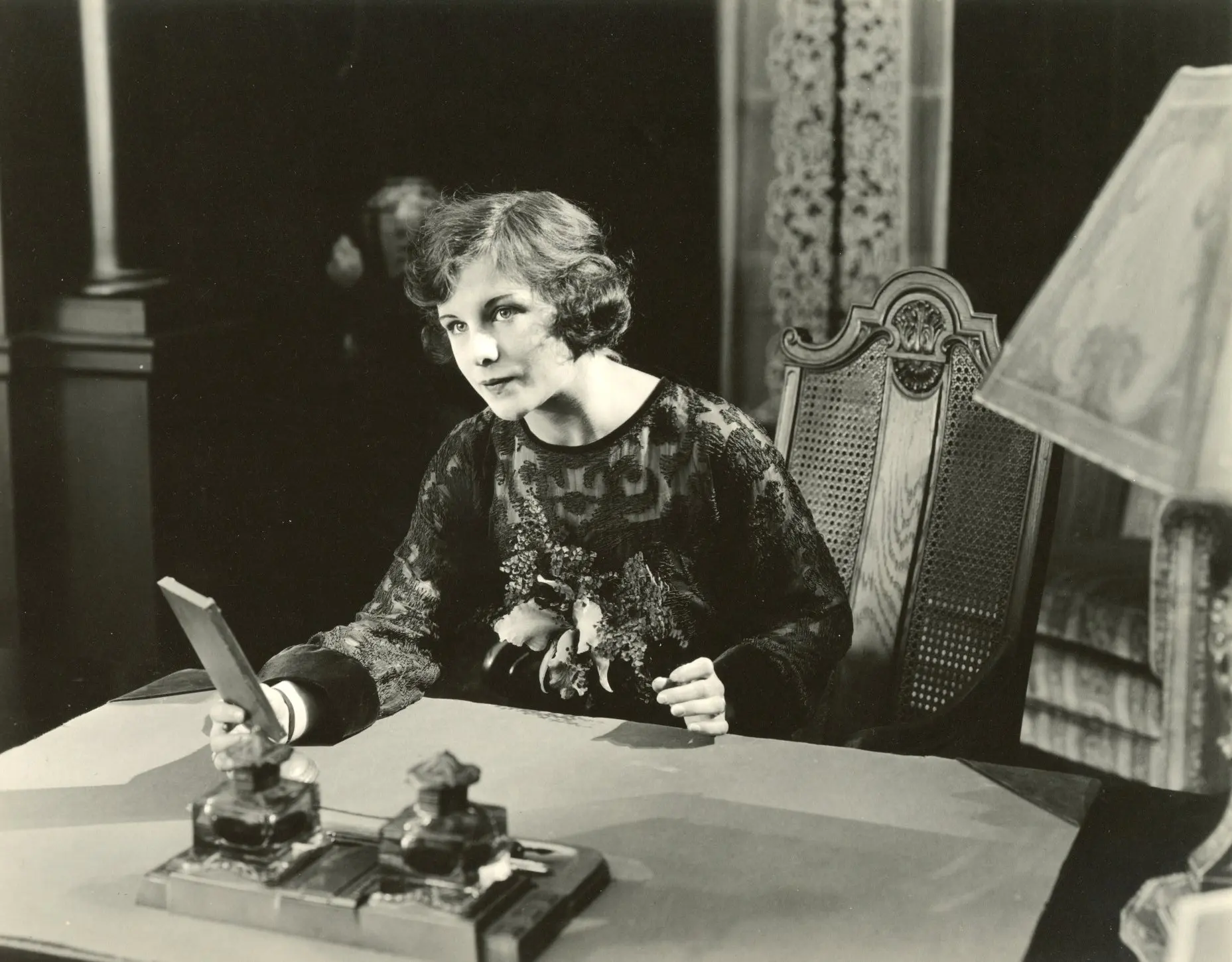
The fragile foundation of Angela and Whitely's marriage is inevitably shattered by the bitter intervention of William Hanley. His jilted pride transforms into a weapon, as he maliciously informs Whitely that Angela married him solely for his considerable wealth. This act of spite, while understandable from Hanley's wounded perspective, serves as the primary catalyst for the escalating conflict. Whitely, already a man prone to distrust and perhaps a degree of cynicism, readily believes Hanley's accusation. This immediate acceptance of the worst possible interpretation of Angela's motives speaks volumes about his character – a man whose wealth has perhaps made him wary of genuine affection, always suspecting ulterior motives.
The subsequent quarrel between Whitely and Angela is depicted with a raw, emotional intensity typical of the silent era, relying heavily on exaggerated gestures and facial expressions to convey profound anguish. The breakdown of communication, exacerbated by Whitely's wounded pride and Angela's inability, or perhaps unwillingness, to fully articulate her complex motivations, pushes her to the brink. Her consultation with a divorce attorney signifies not only the depth of their marital discord but also Angela's desperate search for agency and escape from a union that has brought her more anguish than solace. This period of the film is rich in dramatic tension, as the audience is privy to the internal turmoil of both characters, even as their external actions drive them further apart. The silent film's reliance on visual storytelling here is paramount, with every glance, every tremor of the hand, conveying layers of unspoken emotion.
A pivotal turning point arrives when Whitely, consumed by doubt yet perhaps yearning for a different truth, visits Angela's parents. His discovery that they are entirely unaware of their daughter's marriage to him is a moment of profound revelation. This ignorance shatters his preconceived notions, forcing him to re-evaluate Angela's motivations. If her parents didn't know about the marriage, how could she have married him solely for their financial benefit? This realization acts as a powerful emotional pivot, igniting a flicker of hope and a nascent belief that Angela might, in fact, have genuinely loved him. It’s a beautifully rendered scene of internal conflict, where the misanthropic millionaire begins to shed his hardened exterior, allowing a sliver of vulnerability and hope to emerge.
Driven by this newfound conviction, and a sudden, desperate urge to prevent the irrevocable, Whitely embarks on a frantic, high-speed journey in his automobile to find Angela. This sequence, a classic trope of silent film melodrama, is designed to generate suspense and convey the urgency of Whitely's emotional awakening. The breakneck speed of his car becomes a physical manifestation of his internal race against time, a desperate attempt to reclaim a love he now believes might be real. Simultaneously, Angela, who had agreed to marry Eliot Slade after her divorce, finds herself increasingly gripped by an inexplicable fear for Whitely's safety. This burgeoning anxiety, despite her prior commitment to Slade, is a crucial indicator of her own buried affections for Whitely. Her concern for his well-being transcends the pragmatic considerations of her engagement to Slade, revealing a deeper emotional bond that neither she nor Whitely had fully acknowledged until now. The film thus cleverly sets up a dual pursuit, both physical and emotional, leading to an inevitable, dramatic collision of fates. This kind of last-minute dash for love is a hallmark of the era, seen in other romantic dramas like The Lost Bridegroom, where misunderstandings often lead to frantic attempts at reconciliation.
The dramatic culmination unfolds at Whitely's apartment, where Angela and a cohort of her friends have gathered. This scene is a fascinating portrayal of collective moral judgment, as Angela's friends, unaware of Whitely's recent revelation and change of heart, launch into a vehement denunciation of his character. Their collective outrage serves to underscore the perceived injustice Angela has suffered, providing a vocal, albeit misguided, chorus to her silent anguish. It’s a powerful moment that highlights the social dynamics of the time, where community opinion could heavily sway personal decisions and reputations. The tension in the room is palpable, a powder keg of resentment and misunderstanding, poised to explode.
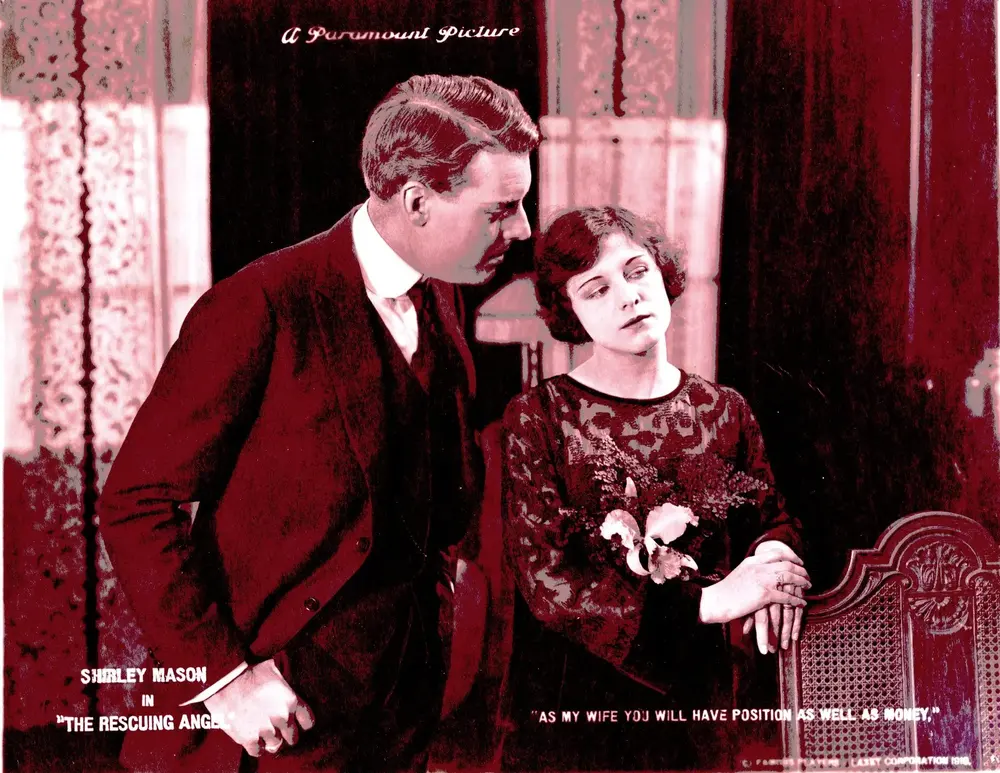
The arrival of Whitely, disheveled and desperate from his perilous journey, transforms the atmosphere. His physical appearance, coupled with the raw emotion etched on his face, speaks volumes, transcending the need for dialogue. In this pivotal moment, Angela, witnessing the depth of his remorse and the genuine fear he must have experienced, undergoes a profound emotional shift. The anger and resentment that had festered within her dissipate, replaced by a surge of empathy and, ultimately, forgiveness. This act of forgiveness is not merely a plot convenience; it represents Angela's recognition of Whitely's transformation and the underlying affection that had been obscured by pride and misunderstanding. It's a moment of pure, unadulterated human connection, rendered all the more powerful by its wordless articulation.
Their reconciliation is not a sudden, unbelievable leap, but rather a carefully constructed emotional arc. It suggests that true happiness, in the context of 'The Rescuing Angel', is found not in material wealth or social standing, but in the arduous journey of understanding, forgiveness, and the acceptance of imperfect love. The film concludes with their embrace, a silent promise of a shared future, suggesting that their trials have forged a stronger, more authentic bond. This resolution, while perhaps fitting the conventions of romantic melodrama, feels earned through the characters' individual journeys of self-discovery and mutual recognition. It's a testament to the power of love to overcome obstacles, even those self-imposed or externally influenced.
The success of 'The Rescuing Angel' rests heavily on the shoulders of its principal cast. Shirley Mason, as Angela Deming, delivers a performance that is both nuanced and compelling. She navigates Angela's emotional landscape with remarkable grace, conveying vulnerability, resolve, and eventual tenderness without uttering a single word. Her expressive eyes and subtle gestures communicate a depth of character that transcends the often-exaggerated acting styles of the era. James Neill, as Joseph Whitely, is equally impressive, transforming his character from a detached, almost villainous figure into a man capable of profound regret and passionate love. His journey is perhaps the most significant in the film, and Neill embodies this transformation with conviction, making Whitely's redemption believable.
The supporting cast, including T.D. Crittenden, John Steppling, Arthur Edmund Carewe, and Edythe Chapman, contribute significantly to the film's rich tapestry. Each actor, in their respective roles, helps to build the world around Angela and Whitely, providing context and emotional weight to the narrative. The direction, while not overtly innovative for its time, is effective in its storytelling. The camera work is functional, focusing on conveying emotion and advancing the plot with clarity. The use of intertitles is judicious, providing necessary exposition without interrupting the flow of the visual narrative. The pacing, a crucial element in silent film, is well-managed, building tension and releasing it at opportune moments, ensuring the audience remains engaged throughout. While perhaps not as flashy as some contemporaries, the film's direction serves the story faithfully, allowing the human drama to take center stage.
'The Rescuing Angel' is, at its core, an exploration of timeless themes. The central conflict between love and money, a perennial cinematic preoccupation, is handled with a particular resonance given the post-WWI economic landscape and the nascent consumerism of the era. Angela's initial choice, driven by financial desperation, reflects a harsh reality for many women of the time, where economic security often dictated marital choices. The film doesn't shy away from depicting the moral compromises forced upon individuals by circumstance, but it ultimately champions the redemptive power of genuine affection. Whitely's journey from a misanthropic, cynical millionaire to a man willing to humble himself for love is a classic narrative of redemption. It suggests that true wealth lies not in material possessions, but in the richness of human connection and the capacity for empathy and forgiveness. This theme of personal transformation through love is a recurring motif in cinema, and 'The Rescuing Angel' executes it with a quiet sincerity.
Furthermore, the film subtly touches upon the evolving role of women in society. Angela, despite her initial vulnerability, demonstrates a quiet strength and agency in her decisions, even when those decisions are fraught with difficulty. Her eventual forgiveness of Whitely is not an act of subservience, but a conscious choice, a testament to her own emotional maturity and capacity for compassion. This portrayal, while still operating within the patriarchal norms of the time, hints at the burgeoning assertiveness of women in the pre-flapper era. The film serves as a valuable historical document, offering insights into the social anxieties and romantic aspirations of its time, filtered through a melodramatic lens. Its enduring appeal lies in its ability to tap into universal human experiences – the pain of misunderstanding, the hope of forgiveness, and the enduring quest for true happiness. It reminds us that even in an age of silent storytelling, the loudest emotions often resonate most profoundly.
'The Rescuing Angel' might not possess the grandiosity of some epic silent films, nor the groundbreaking techniques of experimental cinema, but its strength lies in its sincere portrayal of human emotion and its compelling narrative. It's a film that speaks to the enduring power of love to overcome obstacles, even those rooted in deception and misunderstanding. The performances are heartfelt, the story engaging, and the resolution satisfyingly earned. For those interested in the evolution of romantic drama in early cinema, and for anyone seeking a poignant tale of redemption and forgiveness, 'The Rescuing Angel' remains a captivating and worthwhile watch. It serves as a gentle reminder that sometimes, the greatest treasures are found not in grand gestures, but in the quiet moments of understanding that bind us together. Its exploration of moral dilemmas and the path to genuine connection ensures its place as a significant, if perhaps understated, piece of cinematic history. The film, much like a carefully preserved antique, offers a glimpse into a bygone era, yet its emotional core remains remarkably fresh and relatable, proving that true artistry transcends the passage of time. Indeed, its capacity to evoke empathy and provoke thought is a testament to the timeless nature of its storytelling, inviting contemporary audiences to reflect on the complexities of love and human motivation, even a century after its initial release.

IMDb 5.5
1922
Community
Log in to comment.