DbcultAccessing Vault...
5.3/10
Senior Film Conservator
A definitive 5.3/10 rating for a film that redefined the boundaries of cult cinema. His Hour remains a cornerstone of transgressive art.
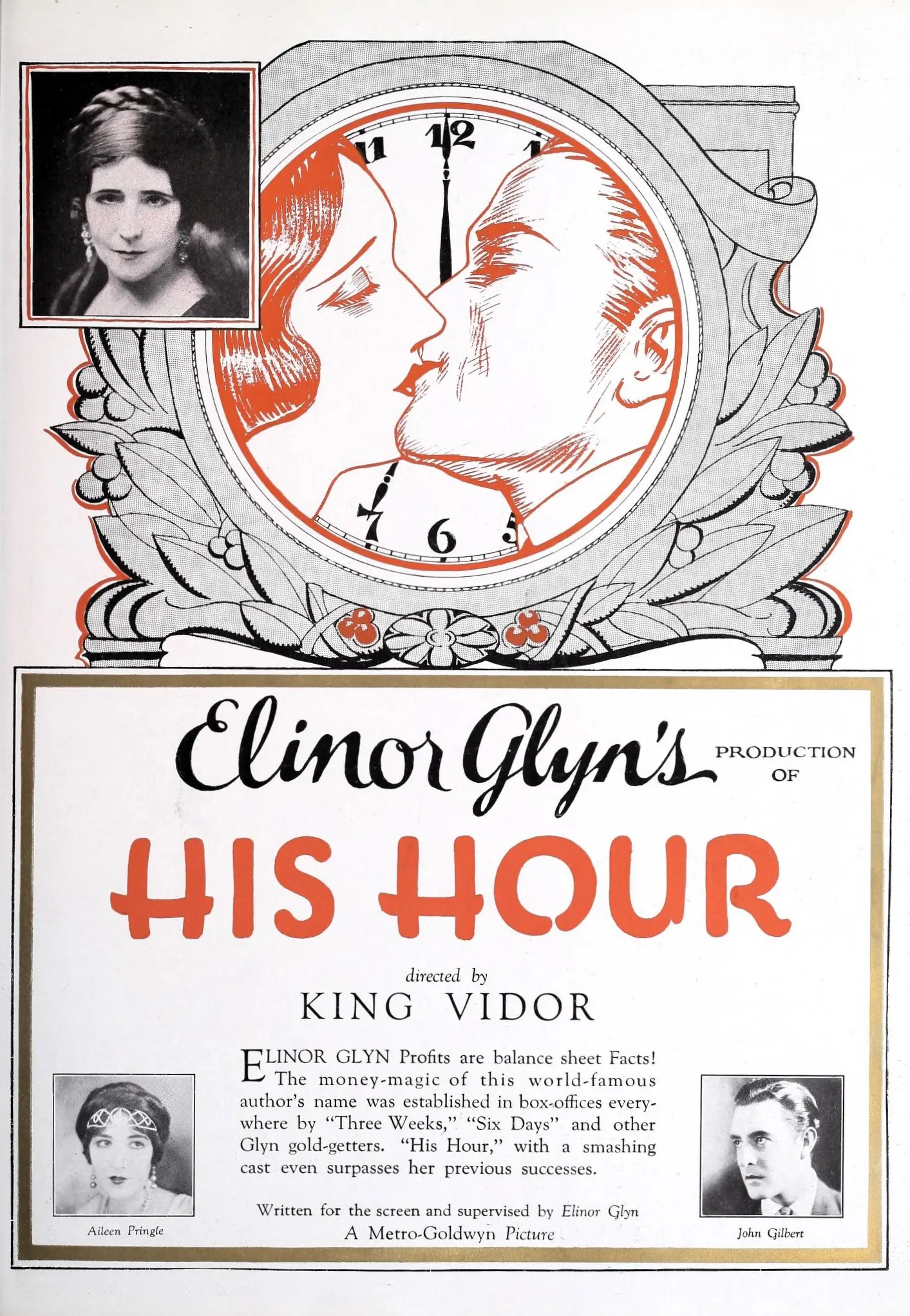
In the pantheon of silent cinema, few collaborations carry the weight of erotic tension and stylistic precision as found in the 1924 production of His Hour. Directed by the legendary King Vidor and adapted from the scandalous prose of Elinor Glyn, this film stands as a monumental testament to the era's obsession with the 'Great Lover' archetype. It is not merely a romance; it is a structural examination of the power dynamics inherent in the Russian aristocracy, filtered through the lens of early Hollywood’s burgeoning sophistication. Unlike the more whimsical or moralistic tales of its time, such as The Fortune Teller, *His Hour* plunges headlong into the murky depths of carnal pursuit and the eventual refinement of the soul.
John Gilbert, before the advent of sound would unfairly tarnish his legacy, was a force of nature. In *His Hour*, he portrays Prince Gritzko not as a mere caricature of royalty, but as a man possessed by a singular, almost terrifying focus. His performance is a masterclass in silent communication; every twitch of his mustache, every narrowing of his eyes, conveys a history of privilege and a current of restless energy. While some might find the portrayal of the 'Russian savage' trope dated, Gilbert imbues it with a humanity that transcends the script's limitations. He isn't just a predator; he is a man seeking a mirror for his own intensity. This is a far cry from the more grounded protagonists seen in films like Pure Grit, where the conflict is often external and physical. In *His Hour*, the battleground is the heart, and Gilbert is its most aggressive general.
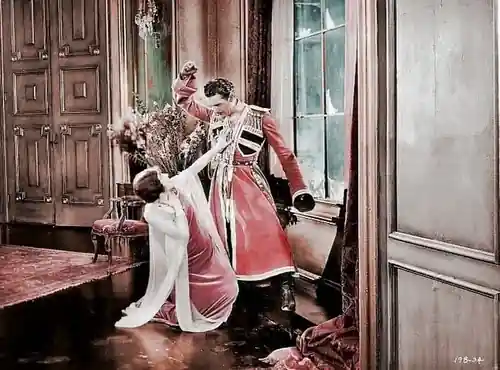
Opposite Gilbert, Aileen Pringle’s Tamara is a revelation of poise and simmering fire. She represents the 'English rose'—cool, collected, and seemingly impenetrable. However, Pringle plays the role with a subtle subtext that suggests her resistance to Gritzko is not born of a lack of interest, but rather a profound fear of the self-annihilation that comes with surrendering to such a man. The chemistry between the two is palpable, a rarity in an age where romance was often depicted through chaste glances and exaggerated gestures. Their interactions are reminiscent of the psychological tension explored in Her Moment, yet Vidor elevates the stakes by framing them within the gargantuan architecture of the Russian court. Pringle’s performance is essential to the film's success; without her grounded presence, Gilbert’s performance might have drifted into the realm of the absurd.
The supporting cast, featuring stalwarts like Lawrence Grant and Emily Fitzroy, provides a necessary social context. Fitzroy, in particular, excels as the formidable Princess Ardacheff, acting as the gatekeeper of a dying world. This ensemble creates a living, breathing environment that feels miles away from the stagey sets of contemporary low-budget productions like Call a Taxi. The world of *His Hour* is one of heavy velvets, flickering candles, and the constant, unspoken threat of social ruin.

In 1924, King Vidor was still refining the visual language that would later produce *The Big Parade* and *The Crowd*. In *His Hour*, we see the early flourishes of his genius. He utilizes the camera not just to record action, but to evoke atmosphere. The way he captures the Russian snow—vast, white, and unforgiving—serves as a metaphor for the social isolation of the characters. While Michael Strogoff would later capture the epic scale of the Russian landscape, Vidor focuses on the intimacy of the interior spaces. He treats the ballroom and the hunting lodge as psychological arenas where his characters are stripped of their social masks.
The editing is surprisingly modern for 1924. Vidor understands the power of the close-up, using it to punctuate moments of high emotion. When Gritzko and Tamara are alone in the cabin, the editing rhythm accelerates, mirroring the quickening pulses of the characters and the audience alike. This technical proficiency ensures that the film remains engaging even to a modern viewer accustomed to faster-paced narratives. It possesses a narrative density that far exceeds the episodic nature of something like Beatrice Fairfax Episode 9: Outside the Law.
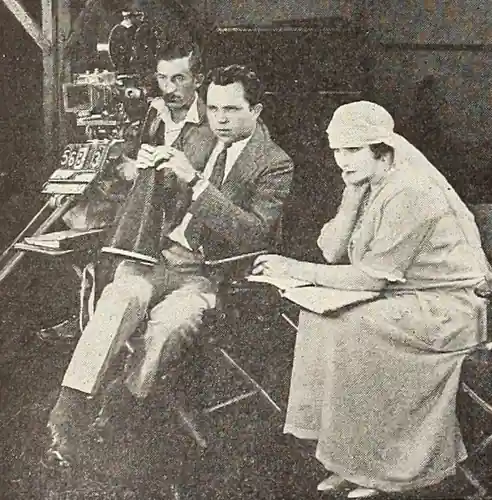
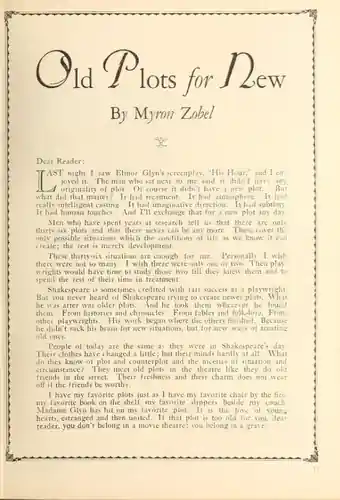
One cannot discuss *His Hour* without acknowledging the pervasive influence of Elinor Glyn. Glyn was the architect of the 'It' girl and the high-priestess of early 20th-century romantic fiction. Her involvement in the production ensured that the film would push the boundaries of what was acceptable on screen. The 'tiger rug' sensuality that Glyn championed is present in every frame of *His Hour*. It is a film that understands that the anticipation of a kiss is often more cinematic than the kiss itself. This is a sophisticated, adult romance that avoids the juvenile trappings of films like Don't Call Me Little Girl or June Madness.
Glyn’s writing, adapted here by Maude Fulton, provides a scaffolding for the actors to explore complex themes of consent, desire, and social redemption. The 'Hour' referred to in the title is the moment of reckoning, the point at which the protagonist must choose between his base instincts and his higher self. It is a thematic depth that elevates the film from a mere romance to a moral inquiry. While it may lack the experimental whimsy of Le peripezie dell'emulo di Fortunello e compagni, it compensates with a searing emotional honesty.
The production design of *His Hour* is nothing short of breathtaking. The recreation of the Russian court, with its intricate moldings and vast chandeliers, creates a sense of immersive history. The costumes, too, are a highlight—Gilbert’s ornate uniforms and Pringle’s ethereal gowns are not just clothing; they are symbols of their respective worlds. The contrast between the rigid formality of the court and the rustic, raw setting of the hunting lodge is visually striking. This attention to detail is what separates a Vidor production from a more utilitarian film like Monty Works the Wires. Here, the environment is a character in its own right, exerting its own will upon the protagonists.
Cinematographer John Mescall captures these settings with a soft-focus glow that adds to the dreamlike quality of the romance. The lighting, particularly in the night scenes, is atmospheric and moody, predating the noir aesthetics that would emerge decades later. It is a visual feast that rivals the artistic ambitions of Armenia, the Cradle of Humanity under the Shadow of Mount Ararat, albeit in a strictly narrative context.
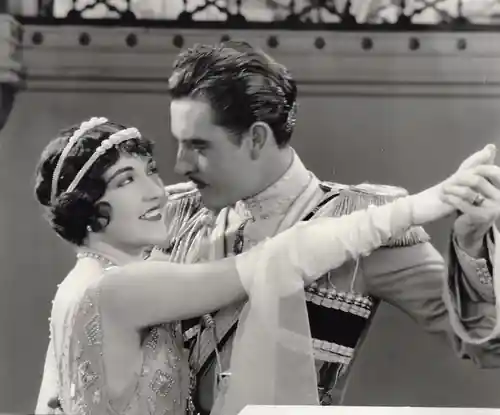
As we look back at *His Hour* a century after its release, its power remains largely undiminished. It is a quintessential example of the 'MGM style'—polished, star-driven, and unashamedly romantic. While it may not have the intellectual weight of a Griffith epic or the comedic perfection of A Pair of Sixes, it possesses a raw, emotional core that is rare in any era of filmmaking. The film is a bridge between the Victorian sensibilities of the past and the modern obsession with celebrity and sex appeal.
In the final analysis, *His Hour* is more than just a vehicle for John Gilbert’s stardom. It is a beautifully crafted, psychologically complex exploration of the human condition. It reminds us that behind the titles and the uniforms, we are all subject to the same primal desires and the same need for connection. Whether compared to the mystery of Fantomas - On the Stroke of Nine or the ruggedness of Bull Arizona - The Legacy of the Prairie, *His Hour* carves out its own unique space in cinema history. It is a film that demands to be seen, not as a relic of the past, but as a living, breathing work of art. The chemistry, the direction, and the sheer audacity of its romantic vision ensure that Gritzko and Tamara’s 'Hour' will continue to resonate for as long as there are audiences who believe in the transformative power of love.
IMDb 4.5
1932
Community
Log in to comment.