DbcultAccessing Vault...
Cult Review
Senior Film Conservator
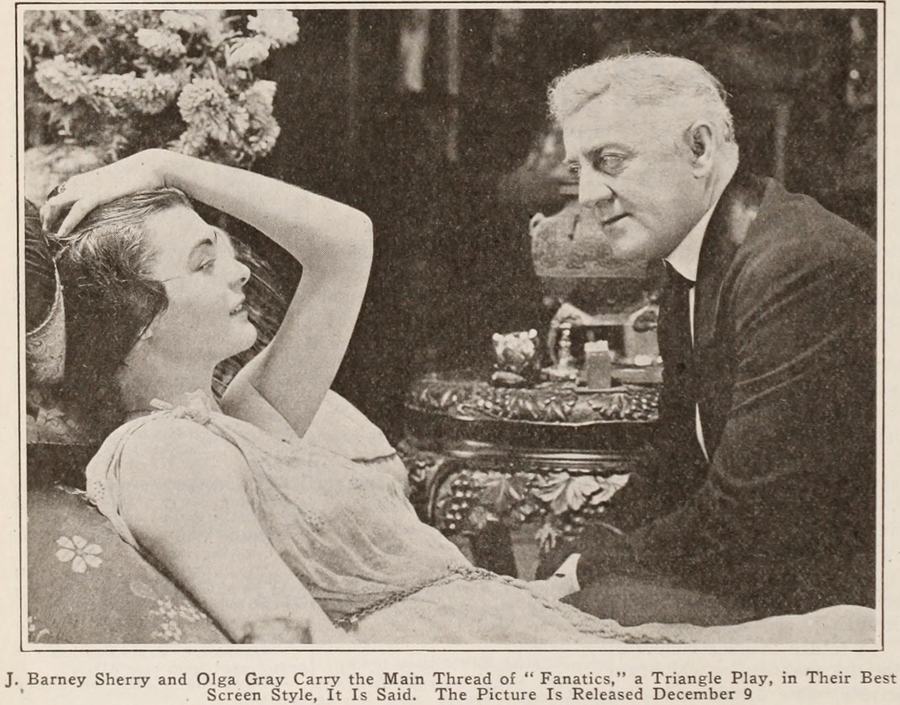
The year 1917 was a crucible for American cinema, a period where the medium began to shed its stage-bound infantility in favor of a more nuanced, psychological visual language. Fanatics, directed by Raymond Wells and penned by the formidable duo of Joseph Anthony Roach and John Lynch, stands as a stark monument to this transition. It is a film that eschews the simplistic moral binaries often found in contemporary works like The Dawn of Freedom, opting instead for a gritty exploration of avarice, infidelity, and the tragic irony of a vengeance built upon a foundation of lies.
At the heart of this domestic cyclone is Robert Lathrop, portrayed by William V. Mong with a palpable sense of frantic instability. Mong’s performance is a masterclass in the 'desperation of the weak.' Unlike the stoic protagonists found in The Learnin' of Jim Benton, Lathrop is a man defined by his hollow core. His initial interaction with Nicholas Eyre, the 'Steel King,' sets the tone for the entire film. Eyre, played with a rigid, monolithic authority by J. Barney Sherry, represents the uncompromising weight of capital. When Eyre refuses Lathrop a loan, it isn't merely a business transaction; it is a judgment on Lathrop’s character. The 'Steel King' sees through the veneer of respectability, sensing the rot that Lathrop attempts to hide behind his wife’s social standing.
The screenplay’s most venomous turn occurs when Lathrop induces his wife to beg for the money he intends to squander on his mistress. This manipulation of domestic sanctity is far more harrowing than the overt villainy seen in The Masked Motive. Here, the horror is intimate. The wife, played with a fragile dignity by Adda Gleason, becomes an unwitting accomplice in her own betrayal. The check she procures from Eyre is not a lifeline, but a tether that drags the entire family into the abyss. The visual storytelling here is subtle for its time; the way the camera lingers on the physical check emphasizes its role as a cursed object, a recurring motif in silent-era morality plays.
The transition from the cold, opulent offices of the Steel King to the claustrophobic, decadent apartments of Lola provides a jarring contrast in art direction. Lola, embodied by Olga Grey, is the quintessential 'vamp,' yet Grey imbues the role with a predatory realism that transcends the trope. When Lathrop arrives, flush with his ill-gotten gains, only to find her in the arms of Haskell (Eugene Burr), the film shifts from a social drama to a visceral thriller. The ensuing struggle is not a choreographed dance of heroes, but a messy, desperate scramble for survival. Lathrop’s death in the park, isolated and ignominious, serves as a grim punctuation mark to his life of deceit.
However, Fanatics truly distinguishes itself in its second act. The focus shifts to the widow’s grief, which quickly curdles into a toxic desire for retribution. Believing her husband took his own life because of Eyre’s financial refusal, she transforms into a figure of vengeance. This psychological pivot reminds one of the heavy emotional stakes in Sylvi, where social pressure drives characters to the brink of sanity. The widow’s campaign against Eyre is portrayed with a terrifying singular focus. She is a 'fanatic' in the truest sense—someone who redoubles their effort after having forgotten their aim. The irony is suffocating: she is destroying the only man who acted with integrity, all to honor a man who viewed her as a mere tool for extortion.
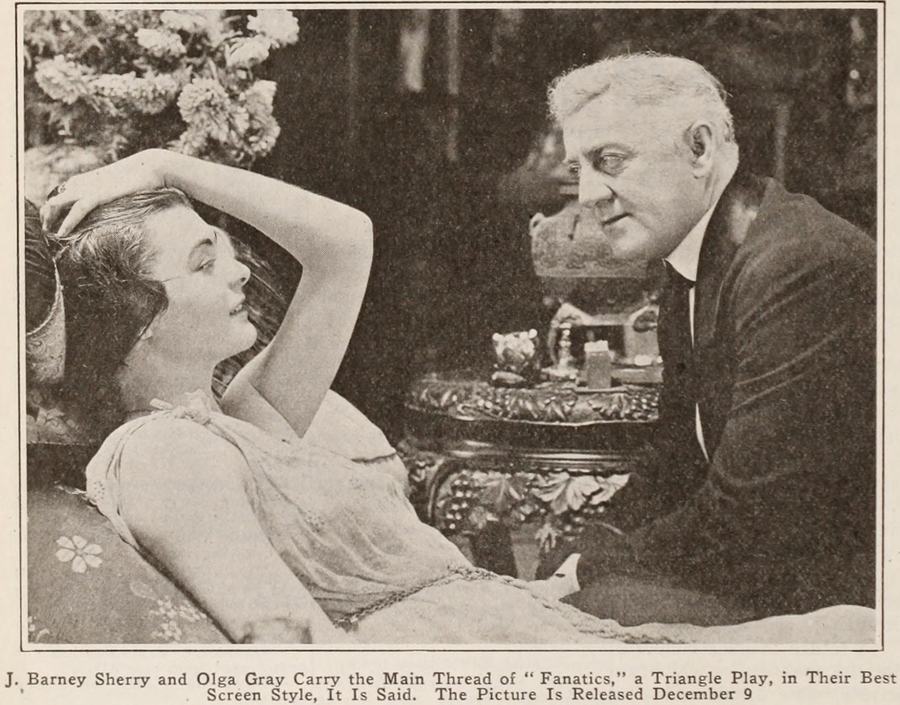
The cinematography during the revenge sequences utilizes shadow and light to reflect the widow's fractured psyche. There is a haunting quality to the way she stalks the periphery of Eyre’s life, a stark departure from the more lighthearted tone of My Best Girl or the comedic stylings of Poor Schmaltz. Wells understands that for the tragedy to land, the audience must feel the weight of the impending 'enlightenment.' We know the truth that she does not, and this dramatic irony creates a tension that is almost unbearable. It echoes the darker thematic concerns of The Crimson Wing, where the consequences of one's actions ripple out far beyond the initial sin.
The resolution of Fanatics is not a cathartic release but a sobering cold shower. When the truth of Lathrop’s double life and the circumstances of his death are finally revealed, the damage is already done. The enlightenment mentioned in the plot summary is not a moment of grace, but a moment of profound horror. The realization that her 'martyr' husband was a profligate and a liar shatters the widow’s world more effectively than his death ever could. This subversion of the 'redemption' arc, which was so prevalent in films like The Redemption of Dave Darcey, marks Fanatics as a sophisticated piece of early 20th-century art.
Technically, the film is a product of its time, yet it possesses an atmospheric depth that anticipates the noir sensibilities of later decades. The use of location shooting for the park scenes adds a layer of verisimilitude that was often missing from the highly stylized European imports like The Golem and the Dancing Girl or the Swedish realism of Gatans barn. The pacing is deliberate, allowing the audience to marinate in the discomfort of Lathrop’s machinations before the explosive violence of the second act. The writers, Roach and Lynch, deserve significant credit for constructing a narrative that feels both inevitable and shocking, much like the structural integrity of A Tale of Two Cities but on a much more intimate, domestic scale.
In the pantheon of 1917 releases, Fanatics serves as a cautionary tale about the dangers of blind devotion—whether to a lover, a spouse, or a narrative of one's own making. It avoids the melodramatic pitfalls of Her Wayward Sister by grounding its stakes in the very real anxieties of class, money, and reputation. It is a film that refuses to offer easy comfort, ending instead on a note of quiet, devastating clarity. For those interested in the evolution of the American thriller, Fanatics is an essential text, a grim reminder that the most dangerous fanatics are often those who believe they are fighting for the truth.
The performances remain startlingly modern. William V. Mong’s portrayal of Lathrop is devoid of the grandiosity that plagued many silent stars. He is small, petty, and utterly believable. Olga Grey, as the catalyst for his downfall, provides a performance that is both alluring and repellant, capturing the transactional nature of their affair with surgical precision. Even the minor roles, such as the secondary lover Haskell, are played with a grounded realism that elevates the film above the standard 'meller' fare of the era. This isn't a fairy tale like Dick Whittington and his Cat; it is a biopsy of a failing social structure. The film’s legacy lies in its refusal to look away from the ugliness of human nature, making it a precursor to the cynical masterworks of the 1940s. It is a cinematic experience that lingers, much like the toxic gas in Les gaz mortels, long after the final frame has flickered out.
IMDb 5.3
1916
Community
Log in to comment.