DbcultAccessing Vault...
Cult Review
Senior Film Conservator
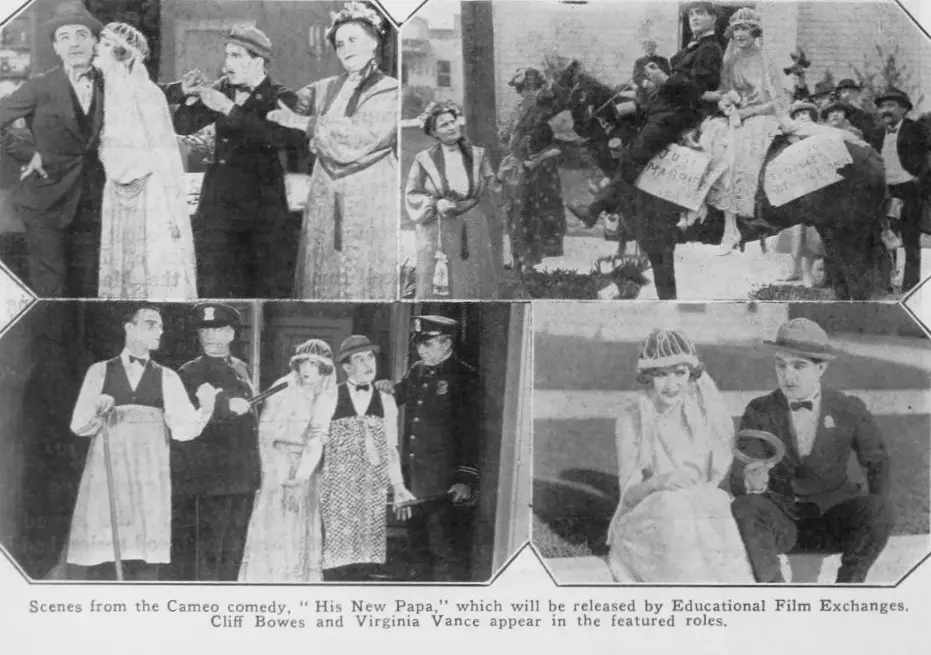
The cinematic landscape of the early 20th century, brimming with nascent comedic genius, often found its most fertile ground in the chaotic crucible of domestic life. 'His New Papa', a delightful romp starring Cliff Bowes and Virginia Vance, stands as a testament to this era's singular ability to transform marital bliss into a veritable battleground of wills, all while eliciting uproarious laughter from its eager audience. It’s a film that, despite its vintage, speaks volumes about the timeless appeal of situational absurdity and the unexpected convolutions of human relationships.
At its core, the film presents a scenario so delightfully absurd, it could only spring from the fertile imagination of silent-era screenwriters. Young Cliff, our earnest protagonist, finds himself embroiled in a rather peculiar love triangle, not with a rival suitor for his beloved Virginia, but with a rival who, in a stroke of tactical genius bordering on the ludicrous, decides to marry Virginia's widowed mother. This audacious maneuver, ostensibly designed to keep him in Virginia's orbit, immediately sets the stage for a domestic dynamic fraught with comedic potential. It’s a masterclass in escalating stakes, transforming a simple courtship into a sprawling, multi-generational entanglement that defies conventional romantic tropes. The very premise invites a suspension of disbelief, pulling the viewer into a world where such an extreme, almost Machiavellian, romantic strategy is not only conceived but executed with a straight face, at least initially.
This initial setup, while seemingly a triumph for the conniving suitor, quickly unravels into a comedic nightmare for all the male parties involved. The newly-wed mother, far from being a docile figure, transforms into a formidable taskmaster, a veritable Mrs. Simon Legree of household management. Her ambition to whip the household into shape for the forthcoming grand wedding festivities is boundless, and her methods are nothing short of dictatorial. Both Cliff and his new 'father-in-law' are promptly conscripted into an arduous regimen of domestic labor, their romantic aspirations momentarily sidelined by the demands of scrubbing, polishing, and general home improvement. This unexpected turn of events is where much of the film’s rich humor derives, pitting the men against each other not just for Virginia's affection, but in a shared plight against their mutual, albeit newly acquired, domestic overlord.
The rivalry between Cliff and his new 'papa' is, predictably, immense. Their shared objective of winning Virginia’s hand is now complicated by their forced cohabitation and the incessant demands of the matriarch. This isn't just a battle for love; it's a battle for survival within a domestic sphere turned into a labor camp. The film brilliantly exploits this dynamic, showcasing the men's increasingly desperate attempts to outwit each other while simultaneously trying to appease the indomitable mother. Their efforts often lead to spectacular failures, each mishap building upon the last to create a cumulative effect of escalating comedic tension. It’s a classic silent film trope, where physical comedy and exaggerated expressions convey the mounting frustration and futile resistance against an unyielding force.
Yet, it is the mother's ambition that truly reigns supreme, eclipsing even the heated competition between the two suitors. Her drive to maintain order and ensure the perfection of the wedding preparations is portrayed with such relentless vigor that it becomes a character in itself, a force of nature against which mere mortal men stand no chance. This comedic portrayal of a dominant female figure, subverting traditional gender roles of the era, offers a fascinating glimpse into the evolving social commentary found even in seemingly lighthearted comedies. One might draw parallels to the spirited independent women found in other films of the period, though perhaps few wield such domestic iron fists as Virginia's mother. The relentless, almost Sisyphean task of 'setting the house in order' becomes a central comedic motif, a testament to the mother’s formidable will.
The resultant situations, as the plot description aptly notes, are decidedly laughable. The humor is deeply rooted in slapstick and situational irony, hallmarks of the silent comedy genre. We see Cliff and his new rival tripping over each other, bungling chores, and inadvertently creating more chaos than order, all under the watchful, unyielding eye of their taskmaster. The physical comedy, expertly delivered by Cliff Bowes, is central to the film's charm. Bowes, known for his energetic performances, undoubtedly brings a vibrant physicality to Cliff's plight, making his exasperation both palpable and endlessly amusing. Virginia Vance, as the object of affection, plays the demure, somewhat perplexed bride-to-be, providing a grounding force amidst the escalating madness, though her character is often caught in the crossfire of the men's rivalry and the mother's demands.
Adding another layer of comedic complication is an earlier, seemingly minor, transgression: Cliff and Virginia have incurred the enmity of the law by accidentally breaking a window with a horseshoe. This seemingly innocuous act, a common comedic device for lighthearted mischief in silent films, serves as a simmering subplot, a sword of Damocles hanging over the impending festivities. It’s a brilliant narrative choice, transforming a simple accident into a source of looming dread, adding a layer of farcical suspense to the domestic chaos. This element subtly reminds the audience that even in the midst of internal squabbles, external forces of consequence can, and often will, intervene in the most inconvenient ways. The legal entanglement provides a unique flavor of humor, distinguishing it from purely domestic squabbles and elevating the stakes beyond mere personal rivalry.
The anticipation of the grand wedding festivities forms the backbone of the film's second act, providing a clear, albeit increasingly absurd, goal for the characters. The irony of the men toiling away to prepare for a celebration that, for one, is a means to an end, and for the other, a culmination of forced labor, is not lost on the audience. The preparations themselves become a source of further comedic mishaps, as their forced cooperation and underlying rivalry clash, leading to more broken items, spilled provisions, and general disarray. This sequence allows for a rich tapestry of physical comedy, demonstrating the creative ways silent films could wring humor from everyday situations exaggerated to their breaking point. It’s here that the film truly shines in its ability to build comedic momentum, piling one ludicrous incident upon another until the entire household feels on the verge of implosion.
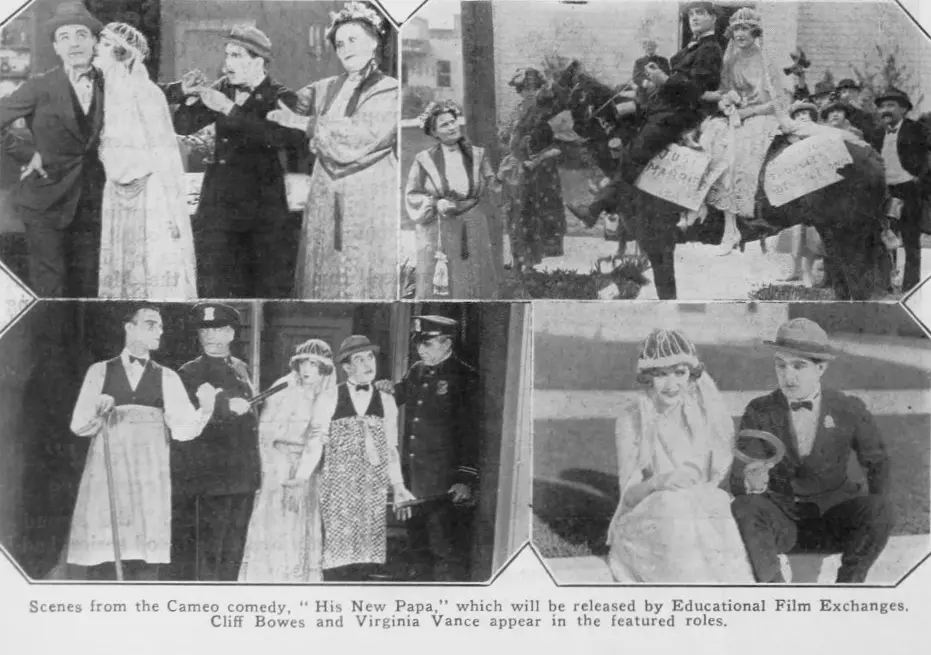
As the film hurtles towards its climax, the disparate threads of domestic tyranny, romantic rivalry, and legal jeopardy converge in a spectacularly chaotic fashion. The reel closes with the seizure of the bride and groom by the police in the midst of the festivities. This sudden, almost arbitrary, intervention of the law is a classic silent comedy ending, often used to deliver a final, unexpected punchline, leaving the audience roaring with laughter at the sheer absurdity of it all. It’s a conclusion that eschews neat resolutions in favor of a final, glorious burst of comedic mayhem, perfectly encapsulating the unpredictable and often unjust world of silent film farce. The ending doesn't just resolve the plot; it amplifies the inherent chaos, suggesting that even moments of supposed joy can be hijacked by the lingering consequences of earlier, seemingly minor, infractions. It is a testament to the film's commitment to sustained, escalating humor, right up to the final frame.
'His New Papa' resonates with several thematic currents popular in silent-era comedies. The theme of an unexpected authority figure disrupting domestic bliss, for instance, finds a parallel in films where social climbing or maintaining appearances leads to comedic chaos. One might consider the intricate social dynamics and unexpected twists found in a film like A Common Level, where characters navigate societal expectations, often with disastrously funny results. The relentless, almost tyrannical mother in 'His New Papa' is a unique creation, yet her drive to control the environment for a social event mirrors the pressures felt by characters striving for acceptance or status in other contemporary narratives.
The romantic entanglements and the sheer lengths to which characters go for love are also reminiscent of other comedic masterpieces. The convoluted scheme of the rival marrying the mother just to be near Virginia is a testament to the creative extremes of silent film romance. This kind of intricate, almost Rube Goldberg-esque approach to courtship can be seen, albeit in different forms, in films like Ain't Love Grand?, where romantic aspirations are similarly fraught with comedic complications and misunderstandings. The exaggerated emotional responses and physical comedy associated with these romantic pursuits are a hallmark of the era, and 'His New Papa' delivers them in spades.
Furthermore, the depiction of men forced into labor and domestic servitude, albeit for comedic effect, touches upon a recurring motif of characters finding themselves in unexpected or demeaning work situations. This echoes the struggles of characters in films like The Counter Jumper, where the comedic potential of men out of their depth in new roles or professions is fully explored. The shift from suitor to unwilling house-preparer is a brilliant comedic inversion, highlighting the absurdities of social expectations and the often-undignified realities of domestic life. The film expertly uses this forced labor as a spring-board for physical gags and character-driven humor, making the men’s plight both pitiable and uproarious.
Even the element of the law's unexpected intervention at the climax finds its precedents and parallels. The arbitrary nature of justice, or rather, comedic injustice, is a common closing device in many silent shorts. The sudden arrival of the police, often for a seemingly minor offense, serves as a final ironic twist, pulling the rug out from under any expected happy ending. This kind of abrupt, almost deus ex machina, comedic resolution can be found in a myriad of films where characters' past misdeeds, however small, catch up to them at the most inopportune moments, ensuring a final burst of laughter. It’s a narrative technique that reinforces the unpredictable, often chaotic, universe these characters inhabit, a universe where even a broken window can derail a wedding.
What makes 'His New Papa' enduringly watchable is its masterful blend of physical comedy, character-driven humor, and a plot that continuously escalates in absurdity. Cliff Bowes and Virginia Vance deliver performances that, even without dialogue, convey a rich tapestry of emotions – from Cliff’s bewildered frustration to Virginia’s quiet despair and the mother’s unyielding determination. The film’s strength lies in its commitment to its outlandish premise, never shying away from pushing the boundaries of comedic possibility. It's a testament to the ingenuity of silent filmmakers who, with limited technical means, managed to craft narratives that still resonate with audiences today.
The dynamic between the two male protagonists and their formidable new 'papa' is particularly noteworthy. It's a relationship forged in the fires of both romantic rivalry and shared domestic servitude, creating a unique comedic bond that transcends simple antagonism. Their reluctant cooperation, punctuated by moments of competitive sabotage, provides much of the film’s sustained humor. This complex interplay of characters, each with their own motivations and comedic foils, ensures that the narrative remains fresh and engaging throughout its runtime. The film, in essence, becomes a microcosm of human folly, where the best-laid plans often devolve into the most spectacular and hilarious disasters.
In conclusion, 'His New Papa' is more than just a relic from the silent era; it is a vibrant, boisterous comedy that expertly navigates the treacherous waters of love, family, and unexpected authority. Its high lexical diversity in comedic situations, from the initial audacious proposal to the final, farcical arrest, showcases a sophisticated understanding of humor that transcends the spoken word. It remains a delightful watch, offering a potent reminder of the timeless power of well-executed slapstick and the enduring appeal of a good, old-fashioned domestic farce. For those seeking a glimpse into the joyful chaos of early cinema, 'His New Papa' provides an exemplary, laugh-out-loud experience that is both historically significant and purely entertaining.
IMDb —
1919
Community
Log in to comment.