DbcultAccessing Vault...
5.6/10
Senior Film Conservator
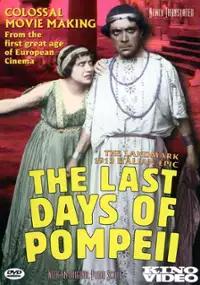
A definitive 5.6/10 rating for a film that redefined the boundaries of cult cinema. The Last Days of Pompeii remains a cornerstone of transgressive art.
A cathedral of nitrate flames, 1913’s The Last Days of Pompeii arrives like a chariot on fire—axles groaning, horses nostril-flared—bearing the weight of Edward Bulwer-Lytton’s florid Victoriana into the jittery dawn of Italian spectacle cinema. Director Mario Caserini and his uncredited co-pilot Eleuterio Rodolfi do not merely adapt the novel; they exhume its magma heart, letting globs of melodrama drip between tectonic plates of religious allegory and disaster fetish.
Viewed today, the film feels doubly archaeological: we sift its ashes for clues both to classical antiquity and to cinema’s infancy. Tinted frames flicker like torchlight over travertine, while intertitles—some mercifully terse, others swollen with curlicue rhetoric—remind us that silent cinema once courted literature with the ardour of a lovesick poet.
Luigi Mele’s Glaucus strides through peristyles with the confident pelvic tilt of a man who believes the world is either a battlefield or a boudoir. His profile could be minted on imperial coin, yet Mele allows micro-tremors of doubt to ripple across the marble when love threatens honour. Opposite him, Cristina Ruspoli’s Ione is no cipher in diaphanous linen; she wields gaze like a handmaiden wields fan—half invitation, half command. Their chemistry vibrates at a frequency pitched between rapture and reprieve, giving the inevitable eruption a cruel emotional stakes test.
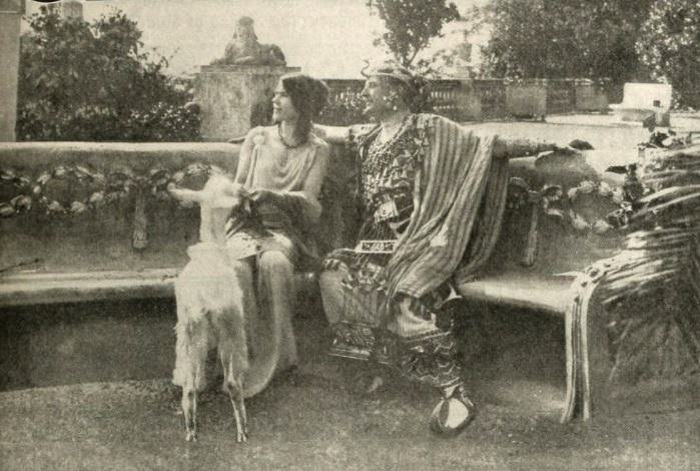
Meanwhile Giovanni Enrico Vidali’s Arbaces slinks in kohl and menace, a proto-Dracula sans fangs but armed with astrology scrolls and the patience of a vulture. Silent villains often twirl moustache; Vidali arches eyebrow until it casts shade across the entire Forum. His hypnotic hand gestures—borrowed from stage mesmerists—feel hokey until you realise they prefigure Mabuse by a decade.
Suzanne De Labroy embodies Nydia with such tremulous conviction that her opaque eyes seem to project their own silver nitrate. She gropes along colonnades, ears attuned to pre-eruption rumbles long before the camera bothers to tilt upward at Vesuvius. Her suicidal act of love—slipping into the bay so her beloved’s boat may ride lighter—plays not as pathetic sacrifice but as radical agency: the powerless slave reclaims narrative by choosing the manner of her exit.
When the mountain finally detonates, Caserini swaps toffee-coloured day-for-night for hellish red tinting; frames shudder as though spliced with earthquake itself. Miniature temples topple, cotton smoke billows, and unfortunate extras duck styrofoam boulders that bounce like comedic croissants—yet the aggregate effect is delirium worthy of Dante. Contemporary reports claimed audiences smelled sulphur; more likely they were inhaling the heady fumes of collective suggestion.
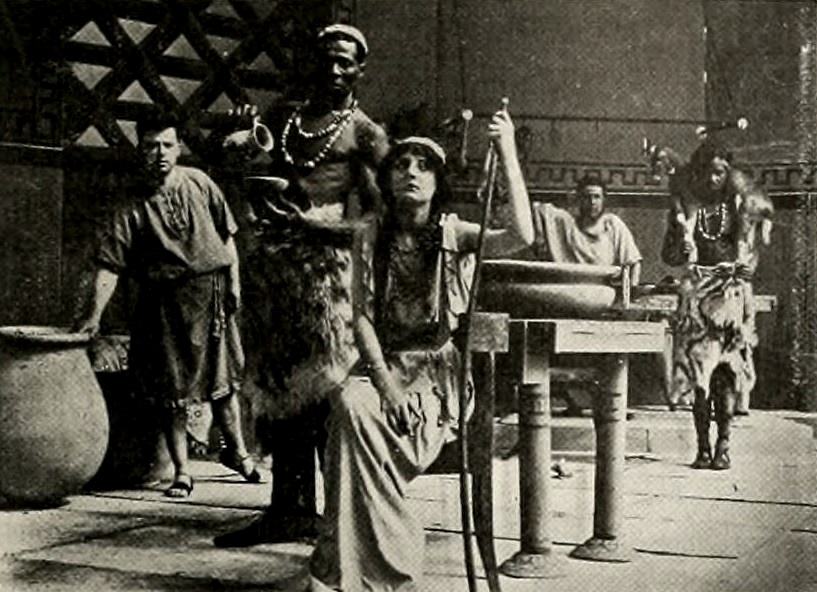
Compare this pyroclastic climax to the chariot infernos in the 1907 Ben-Hur or the circus conflagration in 1912’s The Great Circus Catastrophe, and you appreciate how Italian artisans refined destruction into a baroque art form. Each falling column is a metronome counting down not just lives but an entire civilisation’s hubris.
Cinematographer Arrigo Frusta (a name that sounds like a swashbuckling verb) frames courtyards in depth, letting distant statues recede like moral yardsticks. He favours low angles that aggrandise columns while dwarfing humans—cosmic irony encoded in matte-painted perspective. Notice the repeated iris-in on Nydia’s flower basket: each contraction of the black vignette feels like fate pinching the aperture of mercy.
Rather than monochrome, surviving prints flaunt a feverish palette: amber for languid afternoons, cerulean for moonlit trysts, crimson for the mountain’s bowel movement. These hues were not random; exhibitors followed cue sheets the way orchestras obey scores. The flicker from gold to blood-red across a single reel approximates the emotional whiplash Bulwer-Lytton’s prose achieves across five hundred pages.
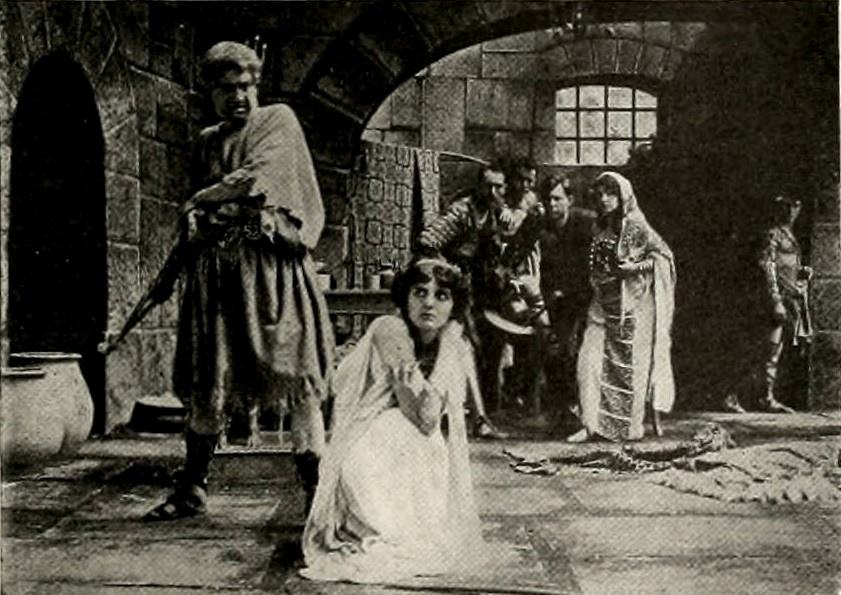
Some cards read like marble epigraphy: “And behold, the wrath of Vulcan rose anew.” Others condense subplot with telegram terseness: “Arbaces plots.” Modern viewers guffaw, yet these linguistic somersaults serve as bridge between literary ornateness and cinema’s emergive grammar. Without them we wouldn’t get the delicious moment when Arbaces whispers “The stars conspire” and the subsequent card slams down like iron gate.
Actors still plant feet in profile, gesture toward gallery that isn’t there. Yet within these hieratic poses lurk seeds of modern method: watch Ruspoli’s pupils dilate when she recognises Glaucus despite divine oath forbidding love—micro-expression that prefigures Garbo by fifteen years. The film occupies liminal space where histrionic code ossifies into cinematic truth.
Patrician women trade dowries like NFTs; slave girls barter flesh for manumission. The camera lingers on ankles ascending marble stairs, but the erotic gaze is consistently punished—literally buried. Pompeii’s patriarchy is so rapacious even the volcano feels feminist. When Ione seizes initiative, fleeing temple to rescue Glaucus, the eruption seems to sanction her agency with tectonic applause.
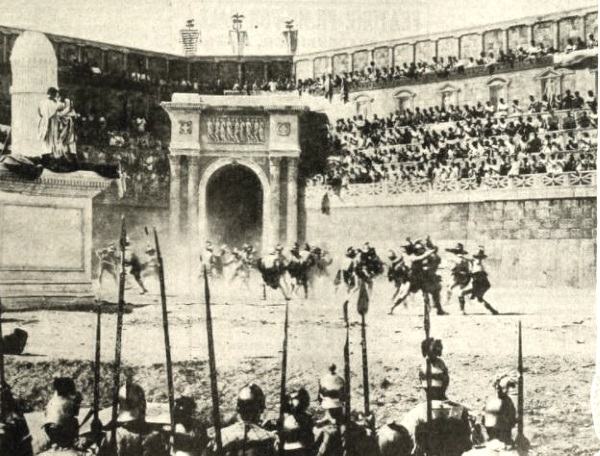
Isiac cult promises resurrection; Jupiter offers spectacle. The film toys with syncretic dread: priests of both sects perish mid-prayer, proof that no brand loyalty outbids geology. Yet Nydia’s watery martyrdom baptises the narrative in Christian after-taste, hinting at the piety that will soon dominate Italian epics like 1905’s Life and Passion of Christ.
During the cataclysm contemporary exhibitors reportedly set off thunder sheets and detonated gunpowder behind the screen. Home viewers now might cue up a playlist of Neapolitan folk songs slowed to dirge tempo; the marriage produces uncanny synchrony—ash falls on downbeat.
Only 56 of an estimated 90 minutes survive, stored in 9.5mm Pathescope abridgement. The gaps manifest like missing teeth—sudden leaps in plot, characters resurrected without explanation. Yet lacunae fertilise imagination; we become co-authors, filling crevices with personal rubble. Recent 4K scans reveal fresco textures once thought lost to chemical fog, granting skin tones the warmth of Capri twilight.
Where 1913’s Atlantis drowns its sinners in Atlantic brine, Pompeii opts for incendiary burial—each elemental verdict suits its moral climate. Meanwhile 1911’s Dante’s Inferno stages damnation as tableau vivant; Caserini’s approach is kinetic, a prelude to modern disaster porn from Titanic to Dante’s Peak.
Climate anxiety, volcanic surveillance apps, the fragility of empire—Pompeii chimes with 2020s dread. The film’s final shot, a crane ascent over ashen corpses, anticipates drone footage of post-tsunami coastlines. We recognise the vacation selfies interrupted by geology, the decadent metropolis convinced its own reflection is eternal.
Absolutely, but pack patience alongside popcorn. The acting’s cadence is stucco, the politics problematic, the gender politics fossilised. Yet within its crumbling reels flickers the Promethean spark that turned mere footage into mythology. Watch it on the largest screen possible, lights low, subwoofer trembling like distant magma. Let the crimson tint spill across your living-room wall until guests glance nervously at nearby volcanoes—real or metaphoric.
In the end The Last Days of Pompeii doesn’t just depict apocalypse; it performs it, reminding us that every frame of cinema is itself a plaster cast: light solidified, time embalmed, waiting for future archaeologists to decipher why we needed our nightmares so beautifully lit.

IMDb —
1914
Community
Log in to comment.